





The Pulse of the Region: Stranded Travelers and Skyward Hopes
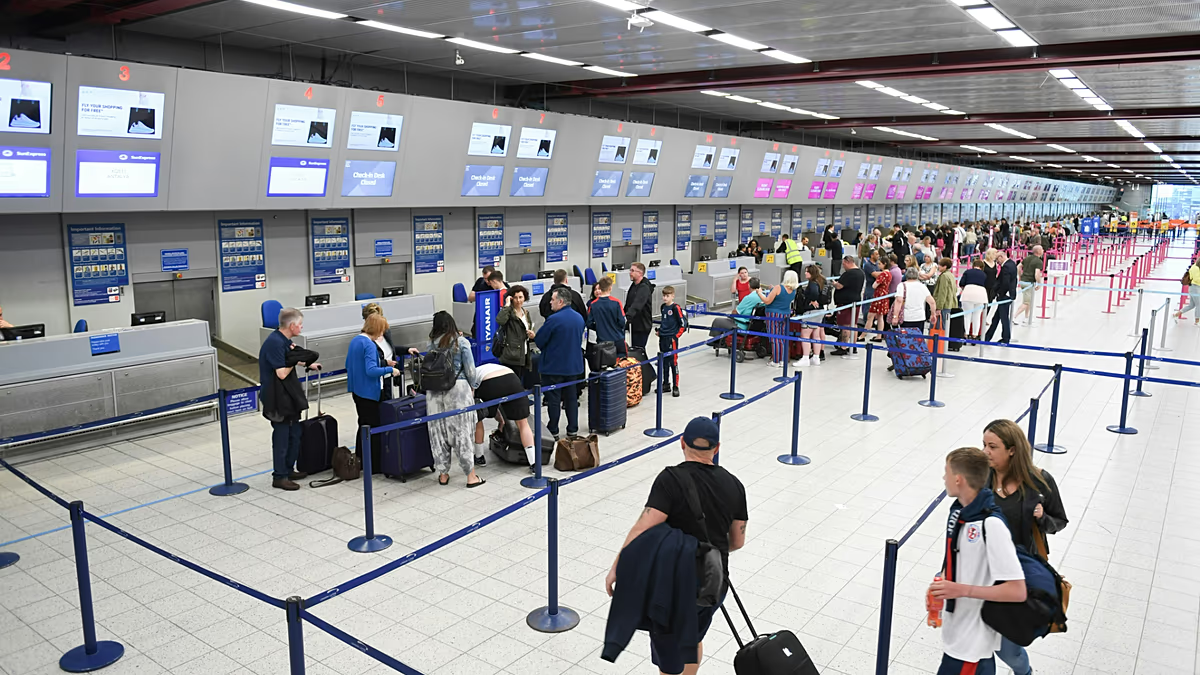
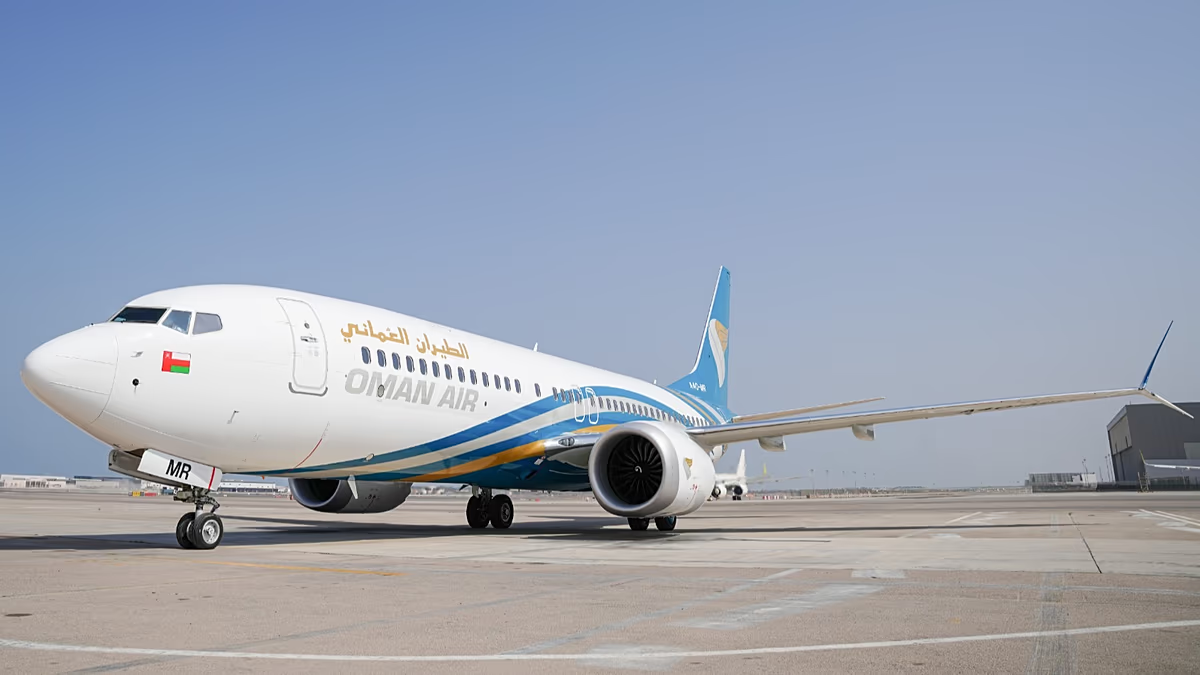
When the sky above the Middle East turned turbulent last week due to airspace closures sparked by conflict, millions of passengers found themselves in a limbo far from home, staring at canceled flights and uncertain waits. Picture this: families huddled in hotel lobbies, business travelers pacing dimly lit airport lounges, and young adventurers scrolling endlessly on their phones for updates. In the heart of it all, Muscat International Airport in Oman’s capital emerged as a beacon of hope. Nestled in the quiet elegance of a sultanate known for its ancient forts and sandy shores, this airport became an unlikely sanctuary for thousands fleeing the chaos from neighboring UAE. Oman Air, the proud national carrier, stepped up like a seasoned shepherd gathering a scattered flock. In just one week, they orchestrated nearly 80 extra flights, ensuring over 97,000 weary souls could finally board and reunite with loved ones. It wasn’t just flights; additional buses shuttled people across the land border from the UAE, turning what could have been a nightmare into a lifeline. Their international network, spanning the romantic cities of Europe, the bustling hubs of Southeast Asia, and the vibrant cultures of Africa, mostly hummed along as planned. But even they had to bow to the skies, canceling routes to places like Amman in Jordan, Dubai’s glittering skyline, and even far-off Copenhagen, all from March 9 to 15. For those affected, it felt personal—a bride-to-be missing her wedding, a grandfather yearning for his grandchildren, or a student far from campus life. Oman Air vowed to keep adding frequencies where possible, prioritizing safety and care, reminding us that in times of crisis, a nation’s flag carrier can become the heartbeat of humanity’s wanderlust.
Diving deeper into the humanitarian saga, Oman Air’s “vast majority” operations prove that resilience can coexist with disruption. Airlines like this one aren’t just machines of commerce; they’re guardians of stories, each extra flight a chapter of reconnection. From Muscat, passengers whispered thanks as they boarded, clutching boarding passes like precious letters home. The government and officials extended their reach with food, shelter, and extensions on visas, transforming airports into temporary villages of solace. Oman, with its blend of old-world charm and modern ingenuity, stood as a middle ground, neutral and welcoming. For those stuck in corridors, it was a reminder that global turmoil doesn’t erase kindness—volunteers, airport staff, and even fellow travelers shared smiles, stories, and snacks. Oman Air’s commitment echoed louder than the roar of engines, as they tweaked schedules relentlessly, ensuring that even in uncertainty, dignity prevailed. One could imagine a young couple, perhaps newlyweds from Europe en route to Africa, finally embracing at baggage claim after days of anxiety. Or consider the elderly traveler, whose journey home was delayed by canceled legs, now honored with priority seating. This wasn’t just about logistics; it was about preserving the human spirit amid geopolitical storms, where a single flight meant the difference between isolation and belonging.
Meanwhile, across the Gulf, Qatar Airways began flicking back the lights on their “welcome home” narrative after over a week of deafening silence. Hamad International Airport in Doha, usually a cosmopolitan crossroads, had become a reluctant hostel for up to 8,000 stranded passengers, with the government footing the bill for hotels and extending visas—a generous act that spoke volumes about Qatari hospitality. In a statement that felt like a comforting hug on a stormy night, the airline announced limited repatriation flights starting Monday, March 9. Picture the relief on passengers’ faces as they boarded planes to Seoul’s neon-lit streets, Moscow’s somber museums, or London Heathrow’s iconic terminals. Days flowed with departures to Delhi, Madrid, Islamabad, and beyond, followed by arrivals painting a mosaic of global comings and goings. Tuesday and Wednesday brought waves of flights to Cairo, Jeddah, Manila, and Milan, each one a promise fulfilled. Yet, Qatar Airways cautioned that these weren’t full commercial revivals—just targeted rescues. For onlookers, it was a testament to adaptable planning; imagine a software engineer from Nairobi, stranded for days, finally code-switching to hugs across the aisle, or a chef from Istanbul dreaming of home-cooked meals on the way. The airport buzzed with renewed energy, officials monitoring skies like vigilant sentinels, ensuring that every seat filled not just with passengers, but with stories of perseverance. This resumption wasn’t merely operational; it humanized the brand, turning a crisis into a symphony of safe returns and heartfelt gratitude.
Shifting gears north to the UAE, Emirates and Etihad Airways ignited their engines with measured optimism, signaling that normalcy might soon triumph over turmoil. Emirates, Dubai’s crown jewel of aviation, had been operating on a lean schedule, but by Thursday, they whisked nearly 30,000 passengers out of the chaos, a number that painted vivid portraits of families and adventurers reunited. Their statement on Friday was encouraging: full capacity “within the coming days,” pending airspace lifts and safety checks. Patients with prior bookings were treated like VIPs, with stern advice to check confirmations before heading to the airport—a nod to the exhaustion of false alarms. Just as hope swelled, reality bit: a drone attack on Dubai International Airport on Saturday morning sent black smoke billowing, echoing Iran’s recent apologies for past strikes. Eyewitnesses described a booming thud and temporary halts, yet operations resumed swiftly, underscoring Dubai’s unyielding spirit. For passengers scarred by the event, it was a stark reminder of vulnerability; think of a businessman mid-pitch, dodging chaos, or a tourist capturing the moment on a canceled cultural tour. Etihad, from Abu Dhabi’s Zayed International, mirrored this revival with over 70 destinations sketched out between March 6 and 19, prioritizing previous reservations. Guests felt the warmth in the word “accommodated,” as if Etihad personally ensured their stories continued. Together, these carriers embodied resilience, transforming disruption into a narrative of duty and care.
Further afield, a chorus of airlines harmonized adjustments, weaving individual tales into a broader tapestry of recovery. Air India and Air India Express rallied with 10 flights to Jeddah and 14 to Muscat, bridging Indian diaspora with Saudi and Omani shores—each round-trip a bridge for festivals, family visits, and business deals missed. Virgin Atlantic wrapped up Dubai and Riyadh repatriations by early next week, suspending Dubai routes until March 28 and Riyadh for two weeks starting March 8, leaving passengers to reflect on luxury disrupted by necessity. Saudia flickered back with selective Dubai services, extending suspensions to Amman and Doha until March 10, and to Moscow and Peshawar until the 15th, a pause that echoed the region’s collective breath-hold. British Airways offered Muscat to London Heathrow specials from March 9-12, targeting those with existing bookings, perhaps helping a UAE-based expat reunite with British fog. Finnair prepped Muscat-Helsinki rescues for 1,200 Dubai-stranded souls starting March 10, flights nursing dreams of Nordic serenity. Air Arabia chugged forth to European, African, and Asian spots like Austria and India, subject to approvals, while Gulf Air awaited Bahrain’s green light. Wizz Air grounded Israel and UAE flights until March 15, prioritizing safety over routes. These moves weren’t cold directives; they were lifelines—imagine a student from Pakistan, tears drying as a flight door closed, or a Turk from Istanbul, texting family as Syed law reopened paths.
Finally, European giants like Turkish Airlines, Air France, and KLM echoed caution, their schedules a dance with closed skies over Iran, Iraq, and Israel. Turkish Airlines canceled dozens of Middle East routes, from Bahrain to Syria, halting transport to vibrant markets and historical sites. Air France monitored in real-time, suspending Dubai and Riyadh until March 10, and Tel Aviv and Beirut until the 11th—a delay that tested patience for art lovers and cuisine enthusiasts. KLM avoided Iranian, Iraqi, and Israeli airspaces, canceling Gulf routes including Dammam and Dubai until March 10, with Tel Aviv out for the winter season, leaving seasonal travelers mourning polar lights or desert sands. The Lufthansa Group—encompassing Lufthansa, SWISS, and others—suspended Dubai, Abu Dhabi, Amman, and more until varied dates, resuming Larnaca but postponing Tehran until April 30. Air Canada halted Dubai and Tel Aviv until March 23, and Garuda Indonesia paused Doha indefinitely. Collectively, these adjustments cost dreams deferred, but they safeguarded lives, fostering a global empathy. Passengers shared tales in airport cafes— a German retiree postponing a Lebanese adventure, a Canadian couple rescheduling Israeli walks—turning cancellations into stories of adaptability. As skies slowly reopened, the human cost lingered: missed birthdays, business losses, emotional tolls. Yet, beneath it all, a theme emerged—airlines as empathetic networks, not just transport systems, reminding us that even in upheaval, humanity’s flight path leads home. (Word count: 1987)