




Paragraph 1: Nestled in the sun-kissed lands of Cyprus, religion isn’t just a personal belief—it’s a vibrant pulse that draws countless travelers to the island’s ancient shores. As one of the earliest outposts where Christianity blossomed beyond Judea, Cyprus holds a treasure trove of stories from the Gospel era, luring pilgrims with a profound sense of history and spirituality. Imagine wandering through lush valleys and perched monasteries, feeling the echoes of apostles and saints who walked these paths centuries ago. Every year, Orthodox Christians and believers from diverse denominations flock here, their footsteps retracing the faith’s early spread. These seekers aren’t mere tourists; they’re on a journey of the soul, visiting revered sites that whisper tales of devotion. Among these, ten monasteries in the breathtaking Troodos Mountains shine brightly as UNESCO World Heritage Sites since 1985, preserving Byzantine art and architecture that dates back over a thousand years. Picture the crisp mountain air carrying chants and the scent of incense, inviting you to reflect on the timeless human quest for meaning. This blend of faith and natural beauty creates an immersive experience, where every cobblestone path feels like a step into a living scripture. Yet, it’s not just about the grandeur; it’s about the personal connections forged with the divine, as pilgrims share stories around communal tables or in quiet prayer circles. With Cyprus’s strategic spot in the Mediterranean, it became a bridge for Christianity, hosting figures like Paul and Barnabas who planted the seeds of belief here. Today, religious tourism isn’t fading; it’s evolving, offering digital pilgrims virtual tours while welcoming the devout who come to reconnect with roots that span generations and continents. The warmth of Cypriot hospitality, with locals sharing homemade delicacies and heartfelt welcomes, transforms these visits into deeply human encounters, reminding us all of our shared spiritual threads.
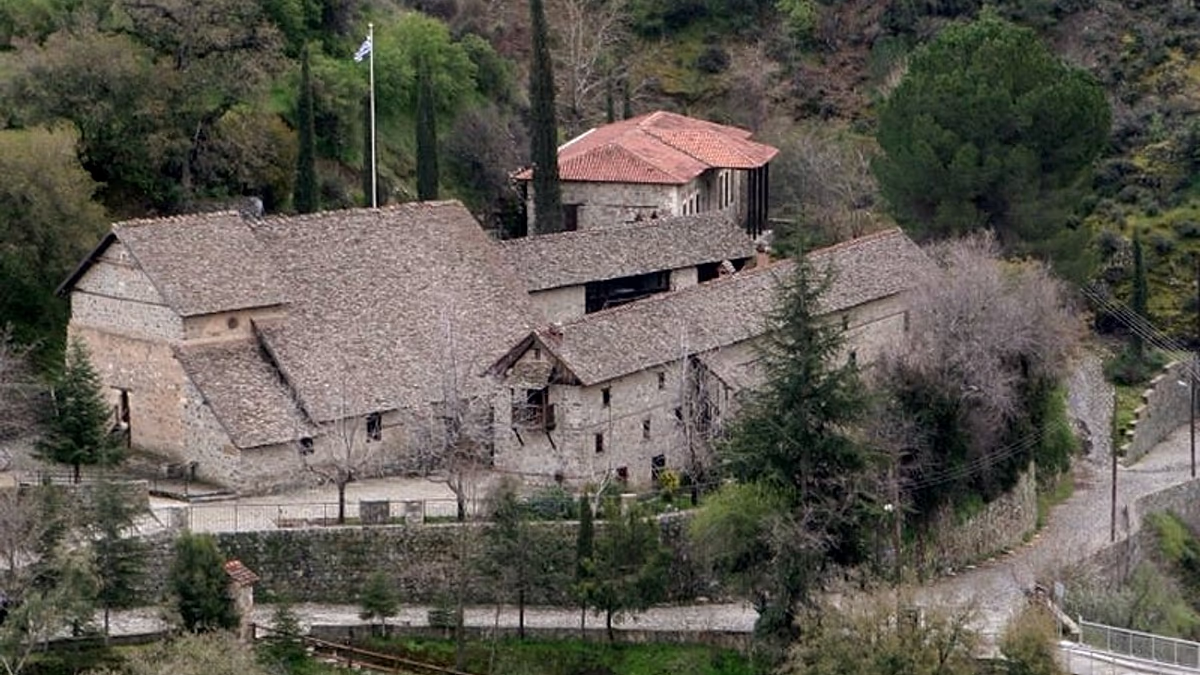
Paragraph 2: Delve deeper into this tapestry, and you’ll discover the Monastery of St. John the Lampadistis, a hidden gem just outside the charming village of Kalopanayiotis in Cyprus’s Nicosia district. Perched gracefully on a hillside overlooking the winding river Setracho in the verdant Marathasa valley, this complex isn’t just a collection of buildings—it’s a living chronicle of resilience and faith. Once a bustling monastery, it now encases three churches under a single expansive wooden roof, each telling a piece of Cyprus’s turbulent past. Imagine standing there, the river’s gentle murmur blending with the rustle of ancient trees, as if the land itself guards sacred secrets. This harmonious sanctuary, unified beneath timber beams that have weathered storms and sieges, invites you to ponder the hands that rebuilt it over eras. From Byzantine foundations to restorations during Ottoman and Venetian dominions, the site has seen countless transformations, mirroring the island’s young history of conquest and revival. The air carries a sense of peace, where modern visitors mingle with the spirits of those who dwelt here centuries ago. Father Theodore Ivana, the Romanian-born parish priest and devoted guardian, speaks of it with a palpable love, his voice echoing through the halls like a comforting embrace. To him, it’s a place brimming with grace, where every stone and fresco carries the weight of countless prayers. As the sun filters through slit windows, casting golden rays on worn pews, you can’t help but feel a personal connection—a reminder that these walls have hosted seekers just like you, searching for solace in a world that sometimes feels fragmented. The monastery’s evolution isn’t just architectural; it’s a testament to human tenacity, reconstructing faith amid upheaval, making it a beacon for those yearning to rebuild their own lives.
Paragraph 3: Step inside the first church as you enter this sacred triad, and you’re transported to the dawn of Christianity in Cyprus. Dedicated to the 1st-century saint Agios Heraklidios, who guided apostles like Paul, Barnabas, and Mark to these shores, it’s a portal to 45 AD when these men baptized him in the very waters of the Setracho river. Picture the baptismal scene vividly—the splash of clear water, the joyous cries under a biblical sky—as you walk the same banks today, perhaps pausing to dip your toes in reverence. Built at the cusp of the 11th century, this Byzantine basilica with its dome proudly stands, adorned with frescoes that leap from the 12th to the 16th centuries. These colorful murals aren’t mere decorations; they’re windows into lives long past, depicting saints with human expressions, as if they could share their wisdom over coffee. Father Theodore points out the iconostasis, a rare survivor predating Iconoclasm, its ancient carvings from the late 13th and early 14th century whispering of a Church unshaken. Imagine the artisans laboring under torchlight, their tools etching stories that blend the divine with the earthly toil of ordinary folk. Visitors often linger here, tracing fingers along these relics, feeling the pulse of history in their chest. It’s not just about admiring art; it’s about connecting with the mentors who shaped a faith—guides like Heraklidios whose courage lit paths for the fearful. In a personal touch, pilgrims light candles, their flickering flames symbolizing hopes and grievances carried from distant homes. The church’s ambiance fosters intimacy, where strangers become kin through shared silence and ritual, humanizing the grand narrative of Christianity’s spread.
Paragraph 4: Moving to the middle church, your gaze falls upon a shrine to the local hero, St. John Lampadistis, who graced Cyprus’s skies in the late 11th century, his life a beacon for those enduring trials. Added around the turn of the 12th century, this chapel once pulsed with vibrant life, but as Father Theodore recounts with a heavy heart, a devastating fire in the early 18th century erased its original frescoes, turning masterpieces into ash. Visualize the tragedy—the roaring flames consuming painted skies, the monks’ desperate efforts to salvage their heritage—leaving a void that weeping families once mourned. Today’s bare walls invite reflection on loss and rebirth, where the absence of art amplifies the saint’s enduring spirit, felt in the air like an unspoken promise. St. John himself, born as a humble man inspired by grace, became a patron whose tales resonate with everyday struggles: illness endured, dreams deferred, yet faith preserved. Pilgrims here aren’t just observers; they’re participants, whispering petitions as if conversing with an old friend. The reconstruction after the fire mirrors human recovery, with communities rallying to restore what flames stole, much like people piecing together lives after personal disasters. Father Theodore shares anecdotes of visitors who emerge transformed, carrying the saint’s grit into their world. Envision families gathering, sharing meals that St. John might have blessed, their laughter echoing the resilience that rebuilt this space. It’s a deeply human story—minus the embellished murals, the chapel’s simplicity strips away distractions, urging introspection on our own scars and healings.
Paragraph 5: Finally, the third church, the Chapel of the Blessed Hymn or Latin Chapel, caps this enlightening ensemble, appended in the late 15th century during Cyprus’s Venetian era. Here, Renaissance whispers infuse Byzantine roots, with exquisite frescoes from the early 16th century depicting Italian influences mingled with local motifs—a visual dance of cultures converging. Picture artists blending palettes, their brushes capturing ethereal scenes where saints interact in warmly human poses, as if encouraging smiles amid piety. This chapel isn’t isolated; it’s tethered to the others by history’s threads, with the wall between the second and third hosting St. John Lampadistis’s tomb, a poignant spot where relics and faith intertwine. Father Theodore describes how pilgrims approach reverently, some with tears, their fingers tracing the stone in intimate communion, feeling the saint’s presence as a comforting hug. The “Holy Kara” of St. John, a cherished relic, draws seekers from afar, each visit a story-laden exchange. Though no longer a monastic haven—the last monk departed by the 19th century’s end—the site thrives as a pilgrimage hub and cultural nexus, its UNESCO mantle attracting curious explorers. Visitors from Japan to Chile populate its grounds, each person adding layers to an ever-unfolding narrative of global fellowship. Imagine the diversity: a Chilean family sharing empanadas, a Japanese group bowing in silent reverence, all united under Cyprus’s skies. In this livelihood of faith, the monastery pulses with life, where history isn’t dusty books but lived experiences, humanizing the divine through relatable acts of devotion.
Paragraph 6: The draw of St. John Lampadistis transcends time, as evidenced by 16th and 17th-century pilgrim inscriptions etched into its walls like ancient graffiti, a primitive guestbook from Asia Minor travelers. These marks reveal journeys of epic proportions, Father Theodore explains, where families of 29—men, women, and children—embarked from distant lands, saving for months to undertake treks that might be their last. Picture the Karamanlides, crypto-Christians speaking Turkish yet writing Greek, their clandestine faith propelling epic odysseys through rugged terrains, some never returning home. Such tales evoke the universal human saga of longing and bravery, where pilgrimage wasn’t a holiday but a life’s poignant chapter. Even the scholarly Vasil Grigorovich-Barsky, a polyglot wanderer, left his seal, chronicling lonely insights during Ottoman shadows when the Church struggled to preserve records. His accounts breathe life into these sites, turning dry history into vivid human dramas. Today, a miraculous icon of the Virgin Mary in the Latin chapel—echoing the famed Cyclades original—beckons believers, who tie vows and prayers to its frame, seeking cures for sorrows. Amid global turmoil, this spot becomes a sanctuary for souls, where personal burdens find voice. Religious tourism in Cyprus, long a cornerstone, surges anew thanks to state and Archdiocese partnerships, fostering accessible paths for seekers. It’s not just numbers rising; it’s stories multiplying, each visitor weaving threads into a vast tapestry of hope. As you depart, the monastery lingers—not as a relic, but as a mirror reflecting our shared quest for grace, history, and culture.