





Flight Chaos in India as New Crew Rules Ground IndiGo Flights
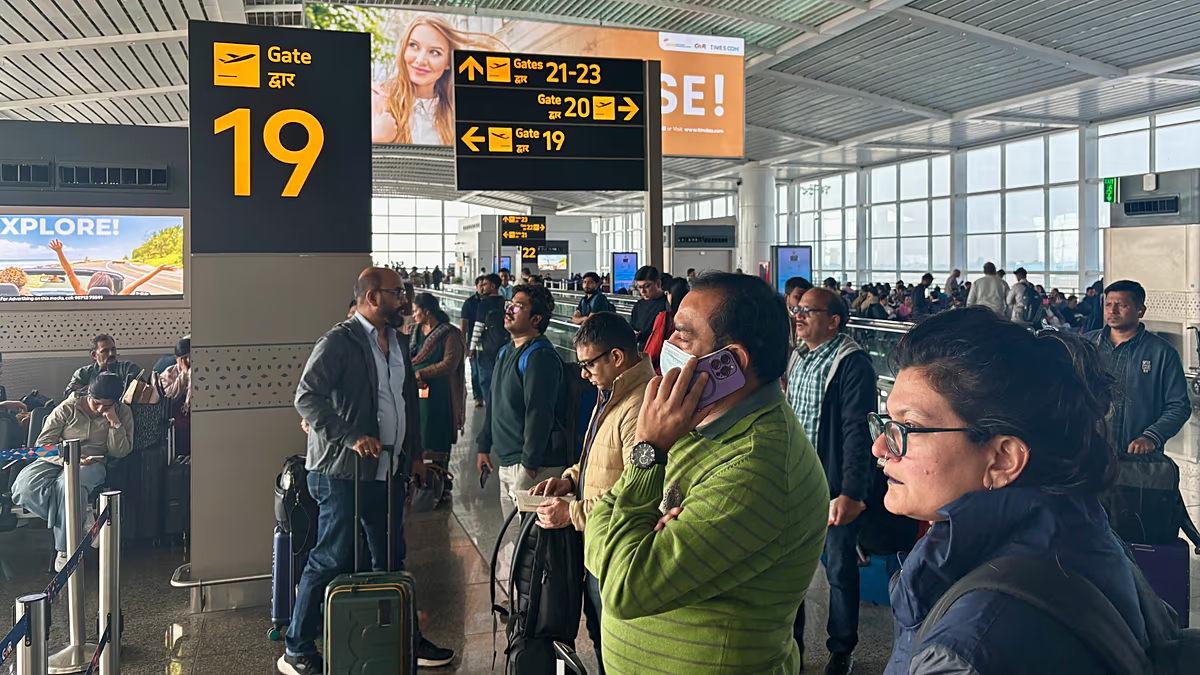
India’s skies have been thrown into disarray as IndiGo, the country’s largest airline, grapples with extensive flight cancellations and delays, leaving thousands of passengers stranded and frustrated. The crisis, now in its fourth consecutive day, stems from newly implemented regulations designed to combat crew fatigue by mandating longer rest periods and limiting night flying hours. The sudden enforcement has created scenes of chaos across major Indian airports, with passengers sleeping on terminal floors, enduring hours-long queues at customer service counters, and facing uncertainty about their travel plans without adequate communication from the airline. For IndiGo, which operates approximately 2,300 flights daily and commands nearly 65% of India’s domestic aviation market, this operational nightmare has exposed significant planning failures and raised questions about the airline’s ability to adapt to regulatory changes that were announced months in advance.
The new safety regulations have been implemented in two phases – the first in July and the second in November – but IndiGo has struggled particularly with the latter phase, which further restricts working hours. The airline’s failure to adequately adjust its crew scheduling systems has resulted in more than 300 flights being grounded on Thursday alone, with hundreds more experiencing significant delays. The situation became so dire that Delhi airport issued an advisory on Friday stating all domestic IndiGo flights would remain cancelled until midnight, a devastating blow for travelers who depend on the carrier’s extensive network. Surprisingly, other major Indian airlines, including Air India, have managed to implement the same regulatory changes without experiencing similar disruptions, raising questions about IndiGo’s operational management and contingency planning. This disparity has only heightened passenger frustration, as many wonder why the country’s largest and supposedly most efficient airline was caught so unprepared.
The human toll of these cancellations extends far beyond mere inconvenience, as illustrated by the experience of senior citizen Sajal Bose and his wife Senjuti. The elderly couple had planned to travel from Kolkata to New Delhi for a friend’s silver jubilee celebration, only to have their flight cancelled just an hour before the scheduled departure. Left with few options, they were forced to embark on a grueling nine-hour train journey to Bagdogra, where they hoped to secure seats on another airline’s flight to New Delhi. “It’s very irresponsible and complete negligence. Very difficult for older people like us,” Bose told The Associated Press, encapsulating the sentiment shared by thousands of affected passengers. Stories like these highlight the real-world consequences of the airline’s operational failures, particularly for vulnerable passengers such as the elderly, families with young children, and those traveling for medical treatment or urgent business matters who find themselves stranded without adequate support or alternatives.
In an internal email to employees obtained by The Associated Press, IndiGo CEO Pieter Elbers acknowledged the crisis and offered an apology, citing a perfect storm of contributing factors including technology glitches, schedule changes, adverse weather conditions, heightened congestion, and challenges implementing the new crew fatigue rules. However, India’s Civil Aviation Ministry was less forgiving in its assessment, stating bluntly that the disruptions stemmed primarily from “misjudgment and planning gaps” as the airline implemented phase two of the regulations. The ministry noted that IndiGo itself admitted the effect on crew availability had exceeded their expectations – a surprising admission given that the airline had months to prepare for these changes. This acknowledgment has done little to appease stranded passengers, who question why a carrier of IndiGo’s size and resources failed to anticipate and mitigate these problems, especially when its competitors managed to adapt to the same regulatory environment without major disruptions.
The airline’s response to the crisis has involved seeking temporary exemptions from the new regulations while assuring authorities that corrective measures are underway. IndiGo has promised passengers that operations will be fully restored by February 10 – a timeline that provides little comfort to those currently affected or planning to travel in the coming weeks. In an attempt to bring stability to its operations, the airline has announced plans to reduce its flight schedule starting December 8, a move aimed at minimizing further disruptions but one that will inevitably mean more cancellations in the short term. This preemptive reduction reflects the airline’s acknowledgment that it cannot maintain its current schedule while complying with the new crew fatigue regulations, highlighting the severity of its operational challenges and raising questions about its previous crew management practices. For passengers, this means continued uncertainty and the potential need to make alternative travel arrangements, often at significantly higher last-minute costs.
The crisis at IndiGo serves as a stark reminder of the delicate balance between commercial aviation operations and safety regulations. While the new crew fatigue rules were implemented with the crucial goal of enhancing aviation safety by ensuring pilots and cabin crew are adequately rested, IndiGo’s struggles to adapt have paradoxically created a different kind of disruption for thousands of travelers. The situation also underscores the dominance of IndiGo in India’s aviation market, where its 65% market share means that disruptions to its operations have an outsized impact on the country’s overall air transport system. As passengers continue to navigate cancellations and delays in the coming weeks, the incident raises important questions about contingency planning, communication strategies during crises, and whether India’s aviation market would benefit from less concentration and more robust competition. For IndiGo, once this immediate crisis is resolved, the greater challenge will be rebuilding passenger trust and ensuring that similar planning failures do not recur as the industry continues to evolve with new safety standards and regulations.