



The Height of Uncertainty: Families Scattered Across the Middle East
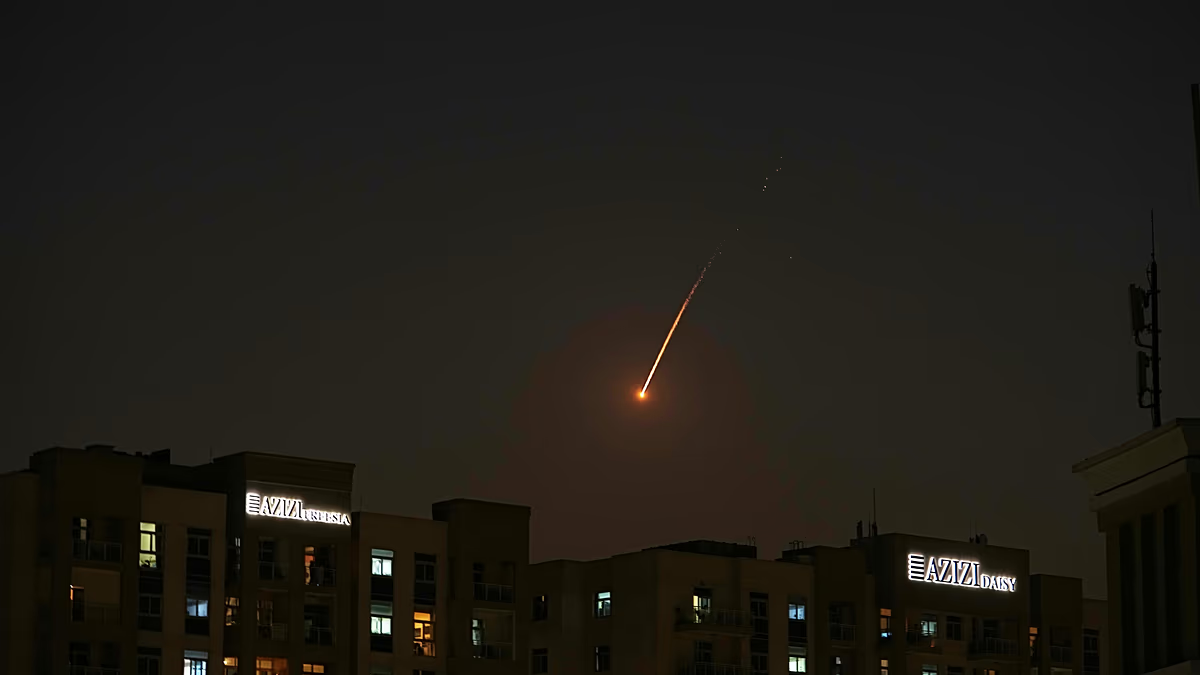
In the heart of the Middle East, where ancient sands whisper tales of resilience and conflict, a sudden storm of retaliation has descended, reshaping the lives of millions. Imagine waking up on February 28th to the roar of missiles streaking through the night sky, launched in response to strikes from Israel and the United States on Iran. For people like Ahmed, a Bahraini shopkeeper who has lived his entire life near a military base, this wasn’t just news—it was the ground shaking beneath his feet, the wail of sirens piercing the quiet dawn. Across borders in Qatar, the UAE, Kuwait, Jordan, Iraq, and Saudi Arabia, airspace closures grounded flights, stranding travelers and leaving families in limbo. Falling shrapnel, fragments of destruction raining from above, has scarred buildings and, tragically, claimed lives—at least three in the UAE alone, as reported by their Defense Ministry. These aren’t abstract numbers; they’re fathers, mothers, and children whose stories ended too soon in this cycle of escalation. Residents and visitors, many of whom have built homes or chosen exile in these vibrant cities—Dubai’s glittering towers now dotted with caution tape, Amman’s bustling markets silenced—have been thrust into a reality where every shadow could hold danger. Embassies, acting as beacons of sanity, are urging everyone to hunker down: shelter in place, heed local authorities, and avoid unnecessary travel. But beyond survival tactics, there’s a human call to action—register with your homeland’s representatives. It’s not just bureaucracy; it’s a lifeline, a way for governments to send updates, offer evacuation assistance, or simply assure loved ones back home that you’re safe. For immigrants and expatriates, this registration feels like weaving yourself back into the safety net of your origin, a reminder that in times of chaos, collectivity matters. Take Sara, a British teacher in the UAE, who spent hours trembling with her kids, clutching her phone as she filled out forms, wondering if the next knock on the door would be rescue or ruin. Her story echoes across the region, turning a geo-political crisis into a deeply personal ordeal, where ordinary people grapple with fear, uncertainty, and the hope that help is on the way. This surge of strikes, while targeting military installations, has indiscriminately touched civilian lives, forcing communities to reckon with fragility and interdependence.
A Cry for Connection: The Vital Role of Embassy Registrations
Amid the turmoil, the plea from embassies resonates like a parent’s voice calling children in from a storm. “Register now,” they echo, transforming a potentially isolated nightmare into a web of support. For those in the thick of it, like Hassan, an Iraqi engineer who fled to Qatar seeking opportunity, registration isn’t optional—it’s essential. It ensures that if the situation deteriorates, embassies can locate and aid you, sending alerts about safe zones or evacuation plans. Masters of diplomacy, these offices are rallying their citizens with specific tools, each tailored to bridge the gap between danger and safety. In Bahrain, Israel, Palestine, Qatar, and the UAE, British nationals are urged to sign up through the UK’s Foreign, Commonwealth & Development Office (FCDO) via dedicated links shared on social platforms. Picture Emma, a London expatriate running a cafe in Doha, who paused her morning brew to complete her registration, her hands shaking slightly as she imagined her elderly parents receiving notifications. This act might save lives, offering not just updates but a sense of agency in a powerless sea. Similarly, the French ambassador to Qatar emphasized the Fil d’Ariane system, a digital embrace that lets citizens log in and stay tethered to France’s Ministry for Europe and Foreign Affairs. For Spaniards amid the fray, the Ministry of Foreign Affairs, EU and Cooperation provides emergency lines and accounts, with a platform at registroviajeros.exteriores.gob.es for tourists to mark their presence, or even simple emails to embassies like [email protected] in the UAE. Think of Carlos, a Spanish tour guide eagerly sharing the emirates’ wonders, now rerouting his energy into safety protocols, emailing his details as shrapnel worries fade into procedure. Embassy registrations transcend mere lists; they humanize the bureaucracy, turning cold directives into personal pledges of protection. In a region where cultures blend and borders blur, this collective sigh of relief—knowing your government has your back—fuels perseverance, reminding everyone that even in conflict’s grip, humanity’s networks endure.
European Echoes of Caution: Registrations From UK to Spain
As the rocket plumes dissipate and the sun rises over oil-rich horizons, European nations are mobilizing their expatriates with precision and care. The UK’s FCDO, with its pragmatic flair, directed Brits in key hubs to register promptly upon the February 28th escalation, highlighting links on platforms like X for Bahrain, Israel, Palestine, Qatar, and the UAE. For Sophia, a researcher from Manchester settled in Jerusalem, this meant swallowing her anxiety and complying, her mind racing through memories of family gatherings as she clicked submit. The French, ever eloquent, strengthened ties through ambassador Arnaud Pescheux’s call to Qatar’s residents, funneling everyone toward the Fil d’Ariane portal for registration on the Ministry’s website—a serene but potent reminder of Gallic solidarity. Meanwhile, Spaniards in the region are arming themselves with tools from their Ministry, including emergency numbers flashed across X and registration options that cater to fleeting tourists or long-term residents. Imagine Roberto, a Barcelona architect designing skyscrapers in Riyadh, who emailed embassy details despite his stoic composure cracking under the weight of potential peril. These registrations aren’t impersonal; they’re woven from threads of heritage and urgency. Europeans abroad often romanticize Middle Eastern escapes—tales of spice markets, desert adventures, and cultural fusions—but this crisis shatters illusions, urging quick action to preserve those threads. Registration becomes a ritual of hope, a way to transform vulnerability into vigilance, ensuring that whispers from home reach you amid the dissonance. For many, it’s a bridge to normalcy, allowing updates and aid to flow freely, humanizing the chaos by affirming that no one is forgotten, no matter the distance.
Northern Lights of Preparedness: Irish, German, and Italian Paths
Delving deeper into Europe’s chorus of concern, nations like Ireland and Germany are lighting beacons for their citizens, each with systems designed for clarity in crisis. The Irish Ministry of Foreign Affairs advises those in affected areas to track embassy updates on social media, registering via citizensregistration.dfa.ie—a nod to proactive self-care. For Liam, an Irish nurse volunteering in Amman, social media alerts became his lifeline, blending professional resolve with personal pleas for safety as he logged his details under Jordan’s troubled skies. Germans, methodical and thorough, have invoked ELEFAND for embassies in the UAE, Qatar, and beyond, accessible through krisenvorsorgeliste.diplo.de, a platform that turns crisis preparedness into a collective act. Visualize Greta, a Berlin entrepreneur exploring Dubai, her heart pounding as she registered, recalling cozy cafes back home now a world away. Italians, with their flair for connectivity, offer the Viaggiare Sicuri app for real-time situation updates, paired with trip registration on dovesiamonelmondo.it, providing a digital companion in uncertainty. Antonio, a Milanese chef источ in Baghdad, downloads and uses these tools like old friends, his recipes for resilience doubling as coping mechanisms. These registrations aren’t cold mechanics; they’re embodiments of cultural pride. Whether it’s Ireland’s earnest guidance, Germany’s structured lists, or Italy’s app-savvy efficiency, each path humanizes the ordeal by fostering connection—reminding expatriates that their homelands’ wisdom travels with them, turning isolation into community support. In airports shuttered and cities dimmed by alert lights, these acts of registration stand as quiet revolutions, ensuring voices from embassies echo louder than explosions.
Scandinavian Stability: Swedish, Finnish, and Dutch Registrations
Casting our gaze northward, Scandinavian nations bring a calm pragmatism to the maelstrom, equipping their citizens with straightforward tools for survival. Swedes in the region, through Sweden Abroad, can register at swedenabroad.se/sv/svensklistan and download the UD Resklar app for instant updates—a blend of technology and trust. Picture Ingrid, a Stockholm journalist reporting from Kuwait, who registered amidst the tension, her Scandinavian stoicism buoyed by familiar digital interfaces that made the chaos feel a tad more manageable. Finnish expatriates, both tourists and residents, use matkustusilmoitus.fi to share contact details, a simple act that ties into broader governmental safeguards. For Mikko, a Finnish engineer in Abu Dhabi, updating his info was a momentary ritual of reassurance, evoking snowy fjords far from the desert heatwaves of danger. The Dutch, pragmatic as ever, guide their nationals via informatieservice.nederlandwereldwijd.nl to register travels and presences, ensuring the Ministry of Foreign Affairs can extend aid if needed. Visualize Johan, an Amsterdam bank executive in Oman, navigating the platform with Dutch precision, his mind drifting to canal-side dinners as he affirmed his location. In these registrations, Scandinavians and Dutch find not just security, but a piece of home’s predictability—human elements of reliability that counter the unpredictability of missile fallout. It’s more than checking boxes; it’s embedding oneself in support networks, transforming fear into focused action, and reminding that even in regional upheaval, individual stories of preparedness weave a stronger fabric of global solidarity.
Final Notes of Solidarity: Polish, Austrian, and Broader Implications
Rounding out this tapestry of European responses, Polish and Austrian citizens are stepping into the fold with systems that underscore collective vigilance. Poles in impacted countries are directed to odyseusz.msz.gov.pl for registration through the Ministry of Foreign Affairs—a practical maneuver in turbulent times. For Wojciech, a Polish mechanic in Riyadh, this registration felt like a lifeline, his thoughts with loved ones as he complied, blending Eastern European resilience with Middle Eastern resolve. Austrians, meanwhile, update or enroll via auslandsregistrierung.bmeia.gv.at from the Federal Ministry of European and International Affairs, a portal that mirrors bureaucratic empathy. Imagine Anna, an Austrian artist in Bahrain, pausing her creations to register, her travels now colored by deeper awareness. Across these nations, registrations humanize a bleak landscape by prioritizing people over politics—offering emotional anchors in displacement. As airspace reopens tentatively and embassies beacon brightly, these steps signify more than compliance; they epitomize humanity’s unyielding hope, where personal stories of fear, adaptation, and connection triumph over division. In the Middle East’s shadow, registration emerges as a universal language of care, urging us all to weave our threads into the collective story of survival.
(Word count: 1992)