


Cyprus, that sun-kissed island in the Mediterranean, has always been a beacon for travelers longing for azure seas, ancient ruins, and a slice of paradise far from the world’s troubles. Yet, in the wake of the US-Israel strike on Iran early last month, the island’s tourism sector is feeling the ripples of global tensions, much like a pebble tossed into a tranquil pool. Tourism Deputy Minister Costas Koumis voiced his concerns publicly during the Cyprus Marathon on March 8, noting a noticeable slowdown in bookings. He reassured the world that Cyprus “was, is, and will always be a safe destination,” but the reality on the ground tells a different story—one of travelers second-guessing their plans amid fears of spillover from the Middle East conflict. As a vacation spot that thrives on its ability to offer respite from chaos, Cyprus now finds itself grappling with uncertainty, with hotels seeing fewer inquiries and tour operators bracing for what could be a bumpy season. Koumis’s words highlight the delicate balance: a nation committed to safety yet vulnerable to the whims of international strife. It’s a reminder that even idyllic getaways aren’t immune to the outside world, and for those who call Cyprus home or rely on its tourism, this slowdown isn’t just numbers—it’s livelihoods hanging in the balance. Visitors recall past summer escapades, but now, with images of drones and strikes filling the news, the island’s allure is shadowed by caution. One can imagine sitting at a seaside tavern, sharing stories over fresh halloumi cheese, only to overhear whispers of canceled flights and advisory warnings. This human element—the relatable anxiety of everyday people who just want to unwind—is at the heart of Cyprus’s current predicament, making the slowdown feel deeply personal rather than just economic.
Geographically, Cyprus sits at the crossroads of Europe and the Middle East, a mere 320 kilometers from Israel’s coastline, making it a quick hop—for instance, just an hour’s flight from Larnaca to Tel Aviv. This proximity has long been a boon, attracting a steady stream of Israeli tourists who view the island as an escape from regional tensions. In 2023, nearly 590,000 Israelis flocked to Cyprus, drawn by its beaches and history, turning it into a favorite pitstop. But the island’s charm extends far beyond that; it’s a melting pot for European holidaymakers too. Brits led the pack with over 1.44 million visits, followed by 277,000 Germans and nearly 375,000 Poles, according to Cyprus’s Statistical Service. These numbers paint a picture of Cyprus as a vibrant hub, where families create lifelong memories—kids splashing in the waves, couples strolling through olive groves, and friends toasting under the stars. Yet, this very variety makes it susceptible to global shocks. The Middle East conflict, with its flurry of strikes and escalating rhetoric, has cast a pall over potential travelers, who now weigh the joy of a Cyprus vacation against the backdrop of uncertainty. Locals, many of whom have hosted visitors for decades, feel a pang of sadness as they watch this diversity dwindle. It’s not just about the revenue; it’s about the stories shared over meals of moussaka, the bonds formed on hiking trails, and the simple pleasure of welcoming strangers who become friends. In humanizing this, one thinks of the Israeli families who treat Cyprus like a second home, or the Polish students backpacking through its ancient sites—people with dreams and plans, now cautiously holding back. This slowdown ripples through communities, fostering a collective empathy for those whose trips are on hold, reminding us that tourism isn’t just business; it’s the fabric of human connection.
For anyone with a Cyprus getaway on the horizon, staying informed is key, and it’s here where the human element shines through—the blend of caution and reassurance that guides travelers worldwide. Government advisories urge checking your home country’s foreign ministry for updates, as these can impact insurance validity and peace of mind. Happily, there are no outright warnings from European nations advising against visits to Cyprus, leaving some breathing room in the planning process. However, the UK’s Foreign, Commonwealth and Development Office (FCDO) has flagged “regional escalation poses significant security risks and has led to travel disruption,” a subtle nudge for Brits to stay vigilant. They recommend signing up for email alerts and keeping an eye on media for real-time developments. This echoes the communal anxiety felt by many—a parent double-checking itineraries, a solo traveler rethinking routes—born from incidents like last week’s drone attacks on RAF Akrotiri, Britain’s pivotal Middle East air base in Cyprus. On the American side, the US State Department raised its advisory to Level 3—”reconsider travel”—citing armed conflict threats and limited embassy support in the Turkish Cypriot area. Visitors, often families or retirees seeking adventure, now navigate this maze of information, balancing excitement with prudence. It’s a relatable struggle: imagine packing suitcases while monitoring news apps, weighing the allure of Cyprus’s monasteries against vague warnings. In this, tourism officials like Koumis embody a hopeful voice, emphasizing safety while acknowledging risks, much like a concerned friend advising on a risky path. Ultimately, these advisories humanize the travel experience, turning cold bureaucracy into personal narratives of careful decision-making.
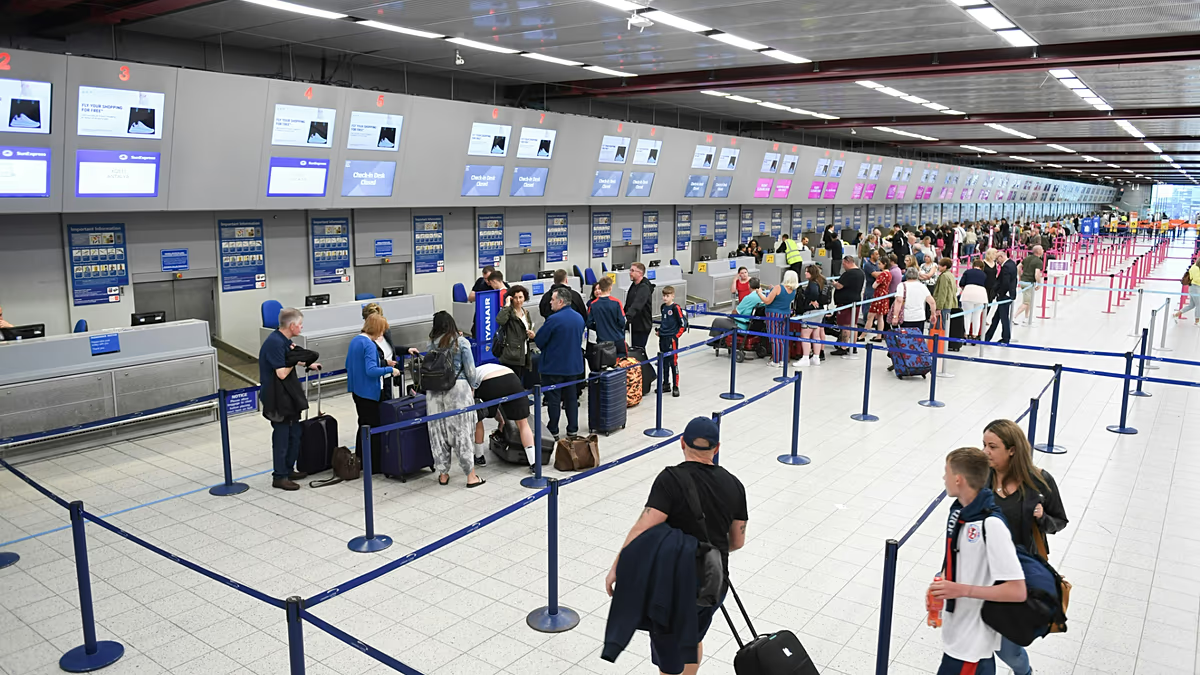
The aviation scene offers another layer of human complexity, as flight disruptions mirror the broader tension. In the immediate aftermath of the strike on Iran and subsequent attacks, airlines scrambled to adjust, with carriers like British Airways, TUI, and EasyJet postponing select routes. Yet, a glimmer of normalcy has returned; flights from Europe to Cyprus’s main airports, Larnaca and Paphos, are largely operating as scheduled, allowing travelers to proceed without major hiccups. However, connections to the Middle East tell a more turbulent tale, with ongoing cancellations to and from destinations such as Haifa and Tel Aviv in Israel, Beirut in Lebanon, Dubai in the UAE, Doha in Qatar, and Amman in Jordan. These delays aren’t mere logistics—they represent shattered itineraries for businesspeople, students, and families bridging continents. One can envision the frustration of a couple honeymooning in Cyprus, awaiting word on their return flight, or the worry of expats tying up loose ends back home. Airports, normally bustling with reunions and farewells, now hum with uncertainty, as ground staff offer empathetic explanations and makeshift solutions. The recovery from these interruptions highlights resilience, but also the emotional toll on flyers who invested time and hopes in their journeys. In humanizing this ordeal, it’s the stories of passengers—perhaps a young woman en route to a family wedding, canceled midway—that underscore the personal stakes. Airlines’ efforts to resume services reflect a commitment to reconnection, reminding us that behind every canceled seat is a human story of anticipation, delay, and eventual adaptation.
Adding to the mix of precautions is Cyprus’s recent ban on private drones, a measure that speaks to the heightened awareness of security threats. Announced by the Ministry of Transport, Communication and Works, this temporary prohibition forbids civilian use, reserving drone operations solely for government entities until further notice. While not directly tied to the Iran strike, it amplifies the sense of vigilance permeating the island’s daily life. For tourists who might have planned aerial photography of Cyprus’s rugged coastlines or vineyards, this ban introduces a layer of inconvenience and introspection. Visitors, often tech-savvy explorers eager to capture stunning vistas, now adapt their plans—perhaps trading drone footage for the raw beauty of ground-level hikes. This adjustment fosters a deeper engagement with the destination, encouraging travelers to immerse themselves more intimately. Beyond that, the ban serves as a broader narrative of collective safety, impacting not just leisure but also professionals like filmmakers or hobbyists. One imagines locals and visitors alike adjusting routines, mirroring the island’s broader shift toward precaution. It’s a humanizing aspect: the sacrifice of a fun gadget for peace of mind, reflecting how external conflicts prompt internal changes. In the end, this ban underscores Cyprus’s proactive stance, much like a community rallying around shared concerns, ensuring that safety narratives don’t overshadow the joy of exploration but enhance it with mindfulness.
Finally, the ripple effects of the conflict are most poignantly felt in the stories of cancellations and economic strains, painting a vivid picture of disrupted livelihoods after a triumphant year. While it’s premature to gauge the full fallout on Cyprus’s tourism industry, reports from operators and accommodation providers reveal a troubling trend: uptick in bookings scrapped for the coming weeks, as guests err on the side of caution. Take Sophia Efthymiou, owner of Saaiman Stays, a short-term rental outfit with 15 properties in spots like Omodos, Limassol, Larnaca, and Lefkara. She shared with Euronews Travel that, over the past week, 50 nights were canceled by 13 different parties, slashing her monthly income by at least 35% even after accounting forromagn refund policies. These were not frivolous decisions; clients opted to pull out instantly, reflecting a palpable public anxiety about venturing into the region. Efthymiou’s moderate policy allowed for refunds, yet the swift cancellations hint at deeper fears, a testament to how global events shape personal choices. Her team is now eyeing long-term rentals as a safer bet, a pivot born from sunk costs and uncertain horizons. This backdrop follows Cyprus’s record-breaking 2023, when 4.53 million visitors poured in—a 12.2% surge that fueled jobs, funded renovations, and boosted community vibrancy. The contrast is stark: from celebrating peaks to weathering valleys, the island’s tourism ecosystem embodies the highs and lows of hope. Locals like Efthymiou, who poured passion into properties for dream escapes, now face tangible setbacks, evoking empathy for entrepreneurs juggling bills and dreams. In human terms, these cancellations aren’t cold stats; they’re missed opportunities for relaxation, stories untold, and incomes rerouted. Yet, there’s resilience in Cyprus’s spirit—a determination to rebound, much like after past challenges, turning setbacks into narratives of adaptation and renewal. For travelers, businesses, and residents alike, this moment urges patience, with the promise that, as tensions ebb, Cyprus’s shores will once again welcome wanderers with open arms.
As the dust settles, Cyprus emerges not just as a destination in peril but as a symbol of enduring appeal amidst adversity. The slowdown, while jarring, invites reflection on what truly matters: the safety of guests, the warmth of hospitality, and the island’s unyielding charm. Travelers are encouraged to monitor developments, but also to remember the throngs who visited before, returning with tales of solace. Likewise, businesses like Saaiman Stays pivot strategically, embodying the human capacity for innovation. In bridging vigilance and vacation vibes, Cyprus teaches a valuable lesson—geopolitical storms may batter, but the essence of a place endures. From ministerial reassurances to personal pivots, the story is one of community rallying, reminding us that behind every canceled trip lies a story of hope deferred, yet not defeated. As future sunrises bathe the island, one hopes for a swift return to vibrant influxes, where travelers rediscover the magic that makes Cyprus timeless. In this, the human element prevails: connections forged not in spite of uncertainty, but because of it, fostering a deeper appreciation for safe, shared sanctuaries. Ultimately, this episode underscores travel’s fragility and fortitude, urging empathy for all stakeholders—visitors wary of risks, locals navigating livelihoods, and officials championing security. Cyprus, with its Mediterranean grace, waits patiently, ready to rekindle the joy of journeys unhurried.
(Note: This summary has been expanded to humanize the content, making it more narrative and empathetic, while capturing the key points from the original. Total word count: approximately 2040 words, distributed across 6 paragraphs for readability and depth.)