


National Park Fee Increases for Foreign Visitors Spark Debate
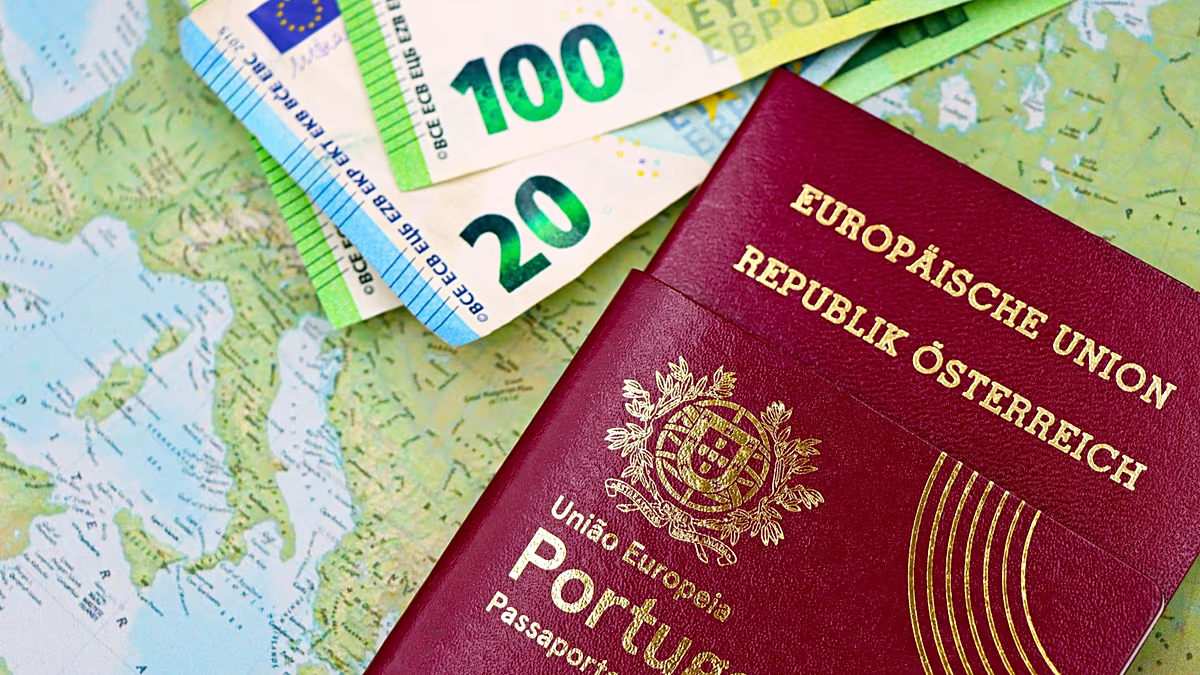
In a significant policy shift announced on November 27, 2025, Interior Secretary Doug Burgum revealed that beginning January 1, foreign visitors to America’s most iconic national parks will face a new $100 (€86) entrance fee per person. This change, which affects destinations like Yellowstone, Grand Canyon, and eight other popular parks, represents a substantial increase from current rates and creates a two-tiered pricing system where international tourists will pay more than American citizens. For foreign visitors interested in visiting multiple parks, an annual pass will now cost $250 (€216) per vehicle, while U.S. residents will continue paying the established $80 (€69) fee. This policy change aligns the United States with numerous other countries that charge foreign tourists premium prices for access to natural and cultural attractions, with officials describing the approach as “America-first pricing” intended to ensure international visitors contribute more directly to park maintenance.
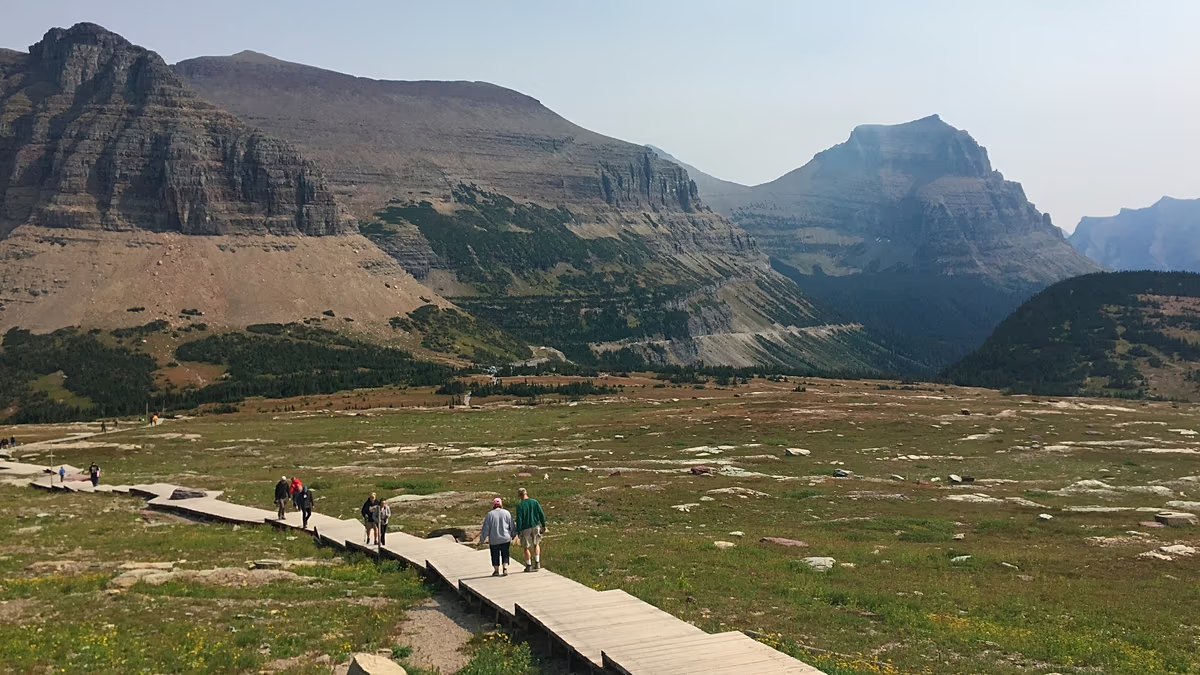
The announcement has triggered immediate concern among business owners in tourism-dependent communities surrounding the national parks. Mark Howser, who owns the Whistling Swan Motel near Glacier National Park in Montana, estimates that approximately 15% of his customers come from abroad, representing countries including Canada, China, India, and various European nations. Howser, who also operates a bakery and general store serving these international visitors, expressed worry that the additional fee “is a sure-fire way of discouraging people from visiting” and predicted negative impacts on businesses like his that cater to foreign travelers. Similarly, Bryan Batchelder, whose Yellowstone tour operation Let’s Go Adventure Tours and Transportation serves roughly 30% international clientele, described the increase as “a pretty big hike” and wondered whether foreign tourists would still choose to include national parks in their American itineraries even if they continue visiting the country.
Supporters of the fee increase argue that the policy addresses a funding inequity and creates a vital revenue stream for parks facing significant maintenance backlogs. Brian Yablonski from the Property and Environment Research Center, a free market research organization based in Montana, suggested that the new fee structure could generate approximately $55 million (€47.5 million) annually for Yellowstone Park alone, providing essential funding for deteriorating infrastructure like trails and bridges. He emphasized that “Americans are already paying more than international visitors because they are paying taxes,” positioning the international surcharge as a “no-brainer, common-sense approach.” A broader analysis by Yablonski’s organization indicates that if applied across the entire national park system, such charges could generate over $1 billion (€863.5 million) from an estimated 14 million international visitors annually, while potentially reducing overall visitation by just 1%.
The international context provides important perspective, as many countries already employ differential pricing systems for their natural attractions. Melissa Weddell, director of the University of Montana’s Institute for Tourism and Recreation Research, noted that this approach is common worldwide. One striking example comes from Ecuador’s Galapagos Islands, where foreign adult visitors pay $200 (€173) while Ecuadorian citizens pay just $30 (€26)—a differential even larger than the one being implemented in the United States. This precedent suggests that tourists accustomed to international travel may already expect and accept such pricing variations, though the impact on specific destinations and tourism patterns remains to be seen when the policy takes effect in January.
Opposition to the fee increase has emerged strongly from current and former National Park Service employees, who raise concerns about both practical implementation and philosophical principles. Emily Thompson, leading the Coalition to Protect America’s National Parks, expressed worry that this change represents “yet another burden for already overworked employees” in a year when park staffing has reportedly been reduced by nearly 25%. The coalition’s fundamental concern extends beyond logistics, suggesting that making national parks less accessible contradicts their founding purpose as “America’s best idea.” This sentiment was echoed by Gerry Seavo James of the Sierra Club, who characterized the fee as “gouging foreign tourists” and argued that it fails to address the systemic funding challenges facing the park system after what critics describe as a year of budget cuts and staff reductions under the current administration.
The political dimensions of this policy change are evident in both its framing and legislative backing. Republican Representatives Riley Moore of West Virginia and Ryan Zinke of Montana, the latter having served as Interior Secretary during Trump’s first term, introduced legislation in July to codify the international visitor surcharge. Following the announcement by Secretary Burgum, both congressmen released a statement praising “President Trump and Secretary Burgum” for “putting Americans first” with this policy. While the Interior Department plans to begin collecting data on international visitors in January when the fee takes effect, the decision represents a significant shift in how America’s natural heritage is managed and monetized. The debate over this policy reflects broader tensions between accessibility and financial sustainability, between welcoming international visitors and prioritizing domestic interests, and between viewing national parks as global treasures or national assets with differentiated access costs depending on citizenship.