






The Shadows of Conflict: Ramifications for Global Tourism and Aviation
The ongoing Israel-Hamas war, which escalated with Iranian involvement following the Hamas attack on October 7, 2023, has cast a long shadow over the Middle East and rippled outward, profoundly disrupting global tourism and aviation. For travelers and industry workers alike, this isn’t just a geopolitical headline—it’s a personal upheaval. Imagine families postponing dream vacations to Dubai’s glittering skylines or Tel Aviv’s bustling markets, or business executives canceling key meetings in the region. Reports indicate that the conflict is hemorrhaging the Middle East travel and tourism industry, with estimated losses topping €515 million daily. This figure isn’t abstract; it represents livelihoods shuttered, hotel chains sitting empty, and local economies straining under the weight of uncertainty. Tourists, who once flocked to the region’s rich cultural tapestry—from Jerusalem’s ancient stones to Iran’s saffron fields—are now grappling with safety concerns, prompting widespread cancellations and rerouting of plans. Airlines, the lifelines of this global movement, are feeling the pinch as demand for flights to the Middle East plummets, creating a domino effect of reduced schedules and delayed international travel. One passenger, Sarah, a teacher from London who had booked a year-long sabbatical to explore Iraq’s heritage sites, shared her frustration: “We were so excited, planning every detail. Now, it’s all on hold, and who knows when we can go.” For locals in the tourism sector, the pain is even sharper—hotels laying off staff, tour guides idling with sudden unemployment. This conflict underscores how intertwined tourism is with world events, turning leisurely pursuits into narratives of resilience and adaptation. As tensions fluctuate, the aviation industry at large is witnessing a shift where operational disruptions are not just logistical but deeply human, affecting the dreams and aspirations tied to exploratory journeys. In this climate of unpredictability, there’s a growing empathy among travelers who turn inward, seeking solace in domestic stays or virtual tours, yet yearning for the day when borders reopen and journeys resume their allure.
Economic Fallout: Oil Supply Disruptions and Rising Costs
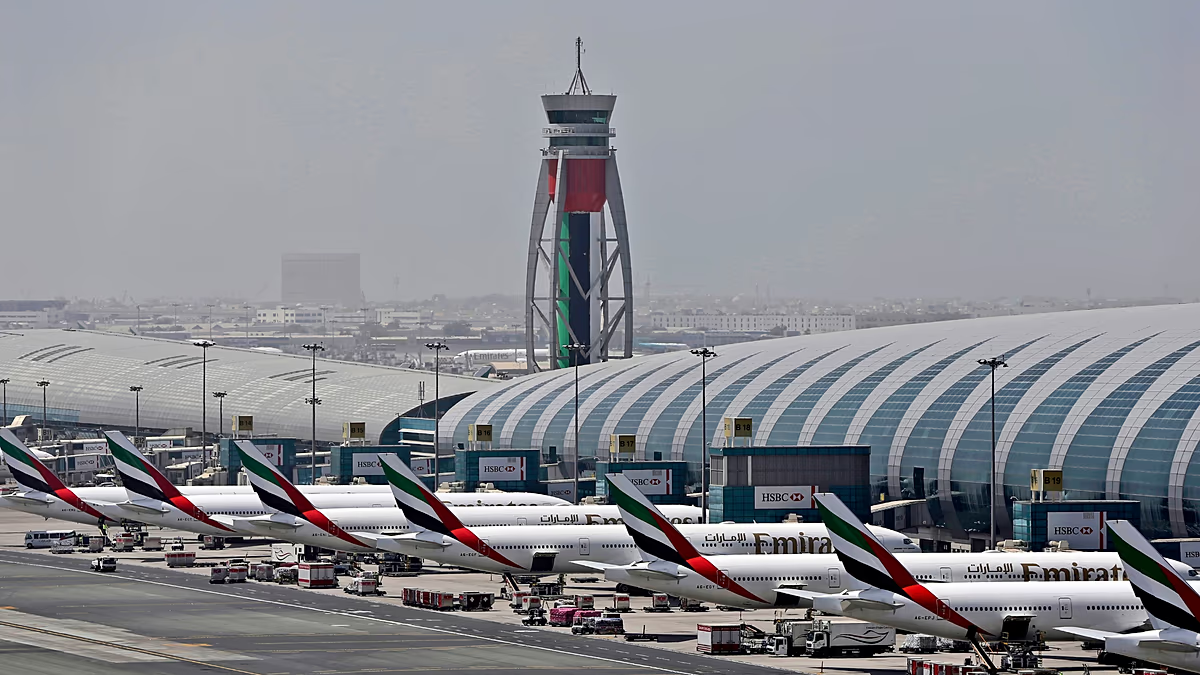
Diving deeper into the economic fallout, the Israel-Iran war has exacerbated vulnerabilities in the global oil supply chain, hitting aviation head-on. With Iran’s oil exports curtailed amidst sanctions and hostilities, jet fuel prices have soared, cascading into higher airfares that pinch passenger wallets everywhere. For a family of four flying domestically in the U.S., what might have been a $800 round-trip could now skyrocket to $1,200, making even essential travel prohibitive. In the Middle East, where aviation fuel is a cornerstone of the region’s economic engine, this spike is particularly devastating. Pilots, cabin crew, and ground staff in Gulf carriers are witnessing firsthand how their profession, once a beacon of opportunity, is now fraught with financial strain. Consider Ahmed, a flight attendant for Emirates based in Dubai: “Fuel costs are up 20% in the last month alone. We’re flying less, and when we do, fares are higher, but salaries stay the same. It’s tough juggling family budgets.” This isn’t isolated to big players; small leisure flights and charters are canceling altogether, leaving independent operators scrambling. From an industry perspective, aviation analysts warn that prolonged disruptions could stifle recovery post-pandemic, pushing airlines to cut routes and possibly delay new aircraft deliveries. Passengers like Maria, a retiree from Spain, recount her recent attempt to book a flight to Tehran for a cultural festival: “The prices doubled overnight. It’s heartbreaking—I’m passionate about Persian art, but now affordability trumps adventure.” Such stories humanize the data, revealing a global ripple where every euro or dollar increase at the pump translates to lost vacations, strained familial bonds, and eroded trust in the stability of international travel. Yet, amidst this turbulence, ingenuity emerges; airlines are exploring sustainable alternatives like biofuel blends, though the transition is gradual and costly. The conflict, thus, isn’t just a distant rumble but a catalyst for reevaluating energy dependence, forcing consumers and corporations alike to confront the human cost of geopolitical chess.
Airline Adaptations: Loyalty Programs in a Time of Turmoil
In response to these seismic shifts, major Gulf airlines are pivoting their strategies, particularly in loyalty programs designed to retain customer allegiance during prolonged downturns. Etihad and Qatar Airways, both key players in the region, have rolled out compassionate changes to ease the burden on frequent flyers whose travel has been derailed by the war. For the average traveler, these tweaks aren’t mere corporate niceties—they represent a lifeline, acknowledging the emotional toll of canceled trips and uncertain futures. Loyalty programs, after all, are more than miles and perks; they’re a promise of future adventures, a way to build a personal connection with the skies. As the conflict drags on, airlines recognize that retaining members means addressing their anxieties head-on. This period of disruption has spotlighted empathy in corporate behavior, transforming rigid policies into flexible support systems. Travelers like Tom, a tech entrepreneur from California, share how his planned miles upgrade got stymied: “I had just enough for Gold status, but with flights canceled, it felt like starting from scratch. These changes give me hope.” Such human stories highlight how airlines’ adaptations foster loyalty beyond transactions, creating advocates who might otherwise churn to competitors. Moreover, these modifications signal a broader preparation for extended volatility, hinting at potential industry recalibrations like route diversions or reroutings around conflict zones. In essence, as tourism slows, these programs become emotional anchors, softening the blow of what feels like an unpredictable storm, and reminding passengers that while wars rage afar, their travel aspirations are still valued and nurtured.
Etihad’s Empathy Initiative: Easing Upsets on the Fly
Etihad Airways, headquartered in Abu Dhabi, stepped up with a particularly thoughtful adjustment to its Etihad Guest loyalty program, reducing air miles requirements for tier qualifications by a full 25%. This change, announced amid the war’s turbulence, allows members to maintain or ascend tiers with significantly fewer miles earned during their existing 12-month cycle, effective automatically until March 31, 2027. For passengers, this isn’t hostile bureaucracy—it’s a heartfelt recognition of real-world obstacles. Picture Leila, a marketing executive from Paris, who recounted her ordeal: “My upgrade to Pearl Club status was almost complete, but with flights to the Middle East banned, I was stuck. This reduction means I can finally breathe easy and keep my benefits.” Etihad’s decision to make it seamless—no registration or extra steps required—speaks to a deep understanding of traveler fatigue. In a press release, the airline empathized, stating, “The change recognizes that many members have experienced disruptions to their travel plans in recent weeks and provides greater flexibility…”. This initiative goes beyond mere discounts, embedding a layer of compassion into the loyalty framework, ensuring that status isn’t lost to external forces. For frequent flyers, it preserves the rhythm of reward-earning, turning potential frustration into renewed motivation. Behind the scenes, Etihad’s team has been burning the midnight oil to implement this, collaborating with IT systems to recalibrate algorithms overnight. Anecdotes from customer service chats reveal gratitude: “Thank you for understanding—I’ve been in limbo for months.” Ultimately, Etihad’s move exemplifies corporate responsibility, transforming a crisis into an opportunity for deeper passenger connections, and signaling to the world that even in conflict’s wake, the skies remain a space for aspiration and human kindness.
Qatar Airways’ Generous Outreach: Standing by Their Flyers
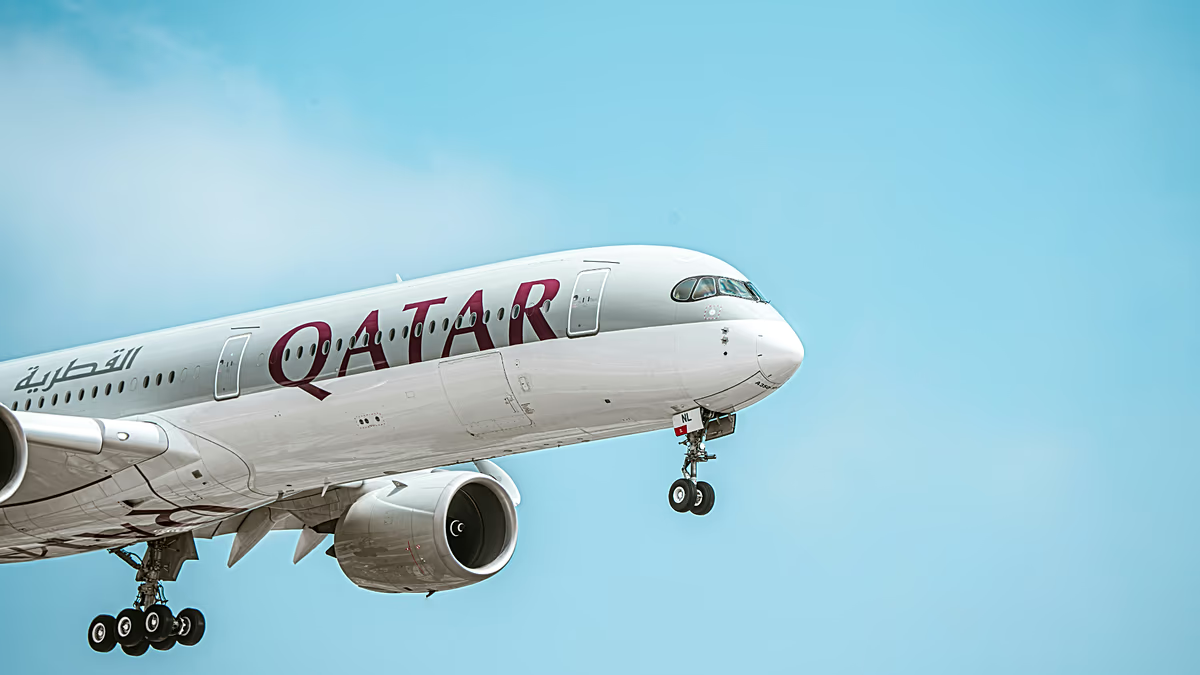
On a parallel path, Qatar Airways, the Doha-based titan of Middle Eastern aviation, has extended a similar vein of support through its Privilege Club program, directly emailing affected members to announce tier status extensions. This gesture, “implementing tier status extensions for all members whose status was due to be renewed and may have been affected during this period,” ensures uninterrupted access to beloved perks like priority boarding, lounge access, and extra baggage allowances. For members like Raj, an IT consultant from Mumbai, it was a relief amid chaos: “My business travel to Europe vanished when supply lines got hit. Losing Gold status would have been demoralizing, but this extension lets me keep flying confidently.” The airline’s proactive communication underscores a commitment to resolution, promising further details in upcoming emails and diligent work on open bookings, refunds, and complaints. Such efforts humanize the process, alleviating the stress of bureaucratic hassles that can amplify travel woes. Internally, Qatar’s customer relations department is fielding a surge of inquiries, each story a testament to the war’s personal impact—parents rerouting family getaways, professionals dodging client meetings. By addressing these empathetically, Qatar fosters trust, positioning itself as a reliable companion through volatility. This isn’t just policy; it’s a narrative of partnership, where the airline’s responsiveness mirrors the resilience of its passengers. Reports from loyalty forums echo this sentiment: “Qatar stepped in when it mattered most.” In broadening their horizons, these changes hint at a proactive stance against prolonged disruptions, perhaps inspiring sector-wide shifts toward more flexible reward systems, all while rebuilding the human fabric of international travel.
Looking Ahead: Lessons and Hopes Amidst Unrest
As the Israel-Iran war continues to reshape the travel landscape, the responses from Etihad, Qatar Airways, and the broader industry offer glimpses of hope and adaptation, reminding us that beneath the disruptions lie profound human stories of perseverance and connection. Economically, the daily €515 million bleed underscores the fragility of regional prosperity, prompting calls for diplomatic resolutions that stabilize oil flows and revive tourist flows. For individuals, this crisis has catalyzed a reimagining of travel—not as unstoppable indulgence but as a resilient pursuit anchored in empathy. Passengers like Amina, a student from Sudan dreaming of global exchanges, reflect on the silver linings: “It’s paused my adventures, but programs like these keep the flame alive.” From an aviation viewpoint, soaring fuel costs demand urgent innovations in sustainable energies, potentially reducing reliance on volatile supplies. Loyalty program tweaks, while tactical, inspire a future where airlines prioritize emotional intelligence, building communities rather than mere catalogs of miles. As conflicts ebb and flow, the industry might emerge stronger, with diversified routes and inclusive policies that accommodate all travelers. Yet, the human cost lingers—displaced families, shattered itineraries, and dreams deferred. In thisждения, empathy from carriers like Etihad and Qatar serves as a beacon, illustrating that in times of global strife, the true essence of aviation lies in uplifting spirits and connecting the world, one flexible tier status at a time. Moving forward, collective advocacy for peace could soon restore the vibrant tapestry of Middle Eastern tourism, where travelers once again embrace the region’s wonders without fear, transforming turmoil into tales of triumph and shared humanity.
(Word count: 2,048)