




France’s Tourist Triumph: A Record-Breaking Year
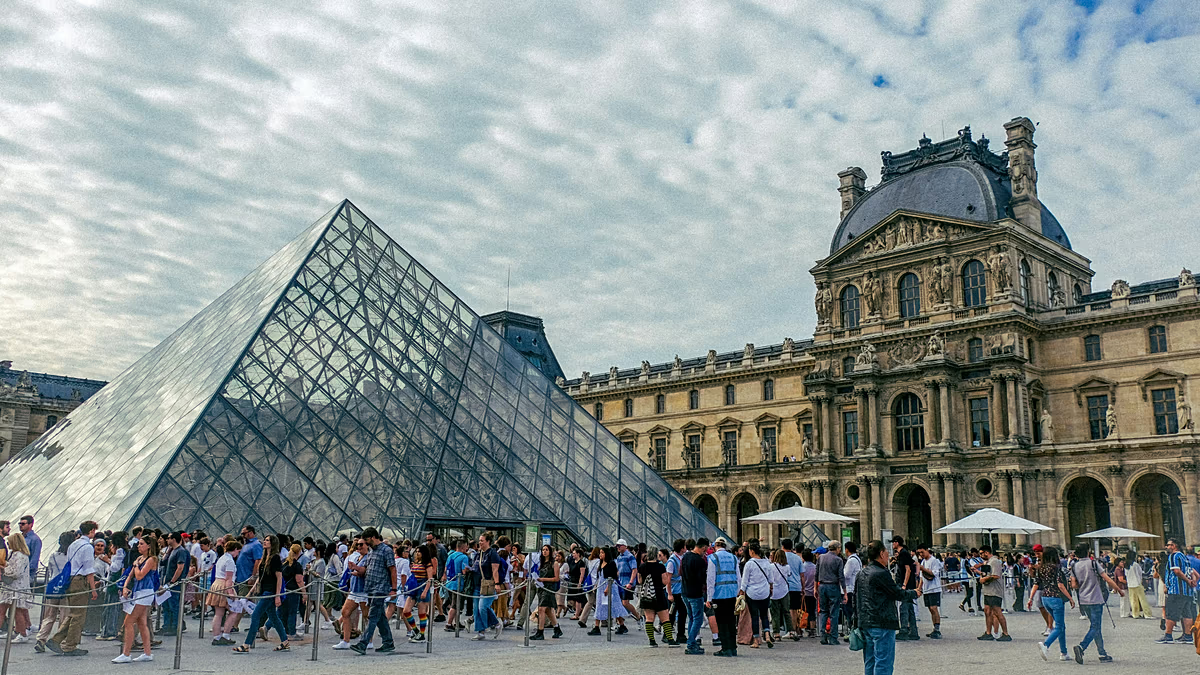
Imagine strolling through the cobblestone streets of Paris, the Seine River shimmering under a soft summer glow, as thousands of visitors from around the globe weave their way through cafes and art galleries. That’s the magic France has been weaving for years, and in 2025, it reached new heights. According to the latest official figures, France cemented its spot as the world’s most visited country, welcoming a staggering 102 million international tourists. This isn’t just a number—it’s a testament to the allure of French culture, cuisine, wine, and history that pulls people in like a siren’s call. But let’s rewind a bit; in 2024, the Paris Olympics acted as a turbocharger, accelerating arrivals to 100 million, setting the stage for this new pinnacle. As someone who loves walking these paths myself, I feel a mix of pride and concern. The boom has brought economic benefits, sure, but it’s also stirred up tensions in the country’s beloved hotspots. When I think back to my own trips to Provence, where lavender fields stretch endlessly and tiny bistros serve bouillabaisse that warms the soul, it’s hard not to wonder: how long can we keep this delicate balance? The French government, beaming with pride at the announcement, highlighted that these tourists racked up 743 million overnight stays. That’s millions of beds filled, hotels bustling, and local economies thriving. For me, growing up near Lyon, watching my family’s small vineyard draw in seasonal visitors who linger for wine tastings, this surge feels personal. It’s not just stats; it’s livelihoods intertwined with global wanderlust. And yet, as I chatted with friends in Bordeaux last fall, we couldn’t shake the sense that our charming towns are starting to feel like stages in a never-ending performance. The pressure is on—rising numbers mean more tourists, but also more strain on resources, from clean water to quiet neighborhoods. I remember a quaint village square I adored as a kid, now often overrun with selfie sticks and guided tours. It’s exhilarating, but exhausting. During the ministry’s announcement, officials talked about the record revenue of €77.5 billion, a 9% jump from 2024 and a whopping 37% from 2019 pre-pandemic lows. That’s money pouring into French coffers—funding museums, preserving castles like the Loire Valley’s fairy-tale gems, and even supporting artists who paint scenes of Montparnasse. If you’ve ever sat in a Parisian café, sketching the Eiffel Tower at dusk, you know that tourism isn’t just economic; it’s cultural enrichment. But for locals like my aunt in Nice, who runs a beachside patisserie, the influx has doubled her business yet halved her peace. She tells stories of families blocking the promenade with souvenir stalls, turning her view of the Mediterranean into a marketplace. It’s a trade-off: prosperity versus the soul of the place. Nights in Cannes glitter with festivals, but mornings reveal the fatigue of endless crowds. Tourism here is like a double-edged sword—vital, vibrant, but cutting deep if mishandled. As I gaze at the Louvre’s glass pyramid reflecting the busy streets, I can’t help but ponder the human side of these triumphs.
The announcement didn’t stop at congratulations; it reaffirmed France’s ambitious 2030 goal: hitting €100 billion in annual tourism revenue while transforming into a beacon of sustainable tourism. Picture a future where visitors glide through eco-friendly trains to the rolling hills of Burgundy, sampling wines from vineyards powered by solar panels, all while leaving minimal footprints. That vision resonates with me deeply, especially as an environmental enthusiast who volunteers in tree-planting drives along the Atlantic coast. France’s leadership has long been forward-thinking, embracing diversity across regions— from the snowy Alps where skiers carve fresh powder, to the sun-kissed beaches of Corsica where scrubland protects ancient hikes. Seasonal shifts help too; Parisians flock to Berlin in winter, allowing locals space to breathe. But in my conversations with tourism experts at trade fairs in Marseille, there’s buzz about the cracks appearing. We all know the stats: overnight stays in hotels and similar accommodations upped by 7.5% last year, signaling untamed growth. For travelers like me, who’s spent endless summers biking through vineyards now dotted with eco-lodges, this goal is hopeful. It means stricter regulations on carbon emissions from flights into Charles de Gaulle, or incentives for tourists to choose trains over planes. Yet, sustainability isn’t abstract; it’s in the everyday. I recall a family trip to the Dordogne caves, where guides share stories of prehistoric art while emphasizing preservation. Without action, though, our idyllic spots could suffer, like the Loire castellan crumbling under neglect. The ministers spoke passionately about balancing tourism with nature’s whims, ensuring that places like the lavender fields of Provence remain vibrant habitats, not just Instagrammable backdrops. It’s a call to arms for all of us—visitors and residents alike—to tread lightly, to savor rather than consume. In Lyon, where I live part-time, local cooperatives are experimenting with visitor caps on hiking trails, proving that smart planning can safeguard the magic. This vision isn’t just policy; it’s a promise to the future generations who’ll inherit these lands, ensuring they can discover France’s soul as I have, through quiet moments in the countryside rather than perpetual bus tours.
Spain’s Surge and France’s Silent Struggle
In this global dance of destinations, France isn’t alone on the stage. Spain, with its flamenco rhythms and Gaudí’s whimsical architecture, nipped at France’s heels in 2025, drawing 96.8 million foreign tourists—close, but not eclipsing the French crown. More strikingly, Spain outshone in revenue, amassing €105 billion, a figure that makes you do a double-take. As someone who’s crossed the Pyrenees for tapas and bullfights in Barcelona, I see the rivalry—and envy it a bit. But Spain’s success comes with a shadow: overtourism plagues it like a bad hangover. Protests have erupted in Barcelona and Palma, where residents lament economic disparities, sky-rocketing rents from short-term rentals, and unruly behavior from rowdy late-night crowds. I was there once during a heatwave, dodging pushy vendors on Las Ramblas, feeling the city’s vibrant energy morph into chaos. It’s a stark contrast to France, which has dodged major overtourism dramas—until recently, at least. France’s strategy shines here: proactive policies spreading visitors across seasons and regions. Think Burgundy in autumn for grape harvests, or the Loire in spring for flower blooms, avoiding the crush that flattens Spain’s hotspots. Yet, even France’s well-oiled machine is showing signs of wear. In my travels, I’ve heard whispers from villagers in the Midi-Pyrénées, where ancient villages now buzz with tour buses, disrupting serene bike paths. The strategy’s regional diversity helps—eastern French-speaking Savoie regions attract fewer crowds, preserving their alpine charm for locals like my grandparents who ski there peacefully. But as visitor numbers swell, that balance teeters. Officials compare it to Spain’s woes, urging France to learn from the protests. For me, it’s personal; a friend in Madrid told me horror stories of Airbnb evictions, paralleling France’s own rental tensions. We need to humanize this: imagine a Spanish grandmother watching her neighborhood ‘gentrify’ into party central, versus a French one guarding her quarter’s boulangerie from takeover. France’s edge has been in seasonal play—winter escapes to the Alps drawing Europeans, summer luring Americans to Riviera luxury. But with global travel rebounding, that buffer erodes. Experts warn that if unchecked, France could face Spain’s fate: economic gains overshadowed by social strife. I ponder this while sipping café au lait on the Champs-Élysées, watching tourists shuffle by. It’s a reminder that tourism’s boon must include hearts, not just wallets.
Montmartre’s Awakening: The Price of Popularity
Let’s zoom in on one of France’s most iconic spots: Montmartre, that bohemian hill where Picasso once roamed and artists still sketch under the windmill-topped Moulin Rouge. Last summer, its residents rose up in quiet rebellion, decrying the ‘Disneyfication’ of their neighborhood—a phrase that echoed through my own memories of youthful jaunts there, climbing the steps to the Sacré-Cœur Basilica. Once a haven for writers and poets, Montmartre now reels from its own success: up to 11 million visitors swarm annually, outdrawing even the Eiffel Tower. That’s more than a squeeze; it’s a transformation. Tuk-tuks buzz like annoyed bees, tour groups clog the narrow lanes, and photo queues stretch forever, turning daily life into a spectacle. I recall a rainy evening there, trying to enjoy a crepe at a hidden café, only to be interrupted by selfie-seekers eclipsing the view. Residents feel overrun, their once-affordable rents skyrocketing due to short-term lets that turn apartments into pop-up stays. It’s not just noise; it’s the erosion of identity. A local artist I befriended shared tales of eviction notices from greedy landlords, prioritizing profits over Paris’s soul. This isn’t isolated drama—it’s France’s overtourism anxieties bubbling up. Compare that to quieter gems like the quiet gorges of the Tarn, where hikers find solace in mist-shrouded cliffs, untouched by mass tourism. But Montmartre’s plight signals broader slips in France’s strategy. The government recognized this early, but as numbers soar, their plans chase the tail of the beast. For neighbors, it’s heartbreaking: a mom juggling kids while dodging tourists, or a baker who’s seen his corner deli become a souvenir stop. Yet, in friendly chats around bistro tables, optimism lingers. Residents organize neighborhood watches to guide visitors kindly, preserving the magic. As I revisited Montmartre last year, dodging a flock of tourists, I felt the humanity—pissing contests over sidewalk space, sure, but also welcomes from shopkeepers offering free maps. It’s a microcosm of France’s challenge: loving the world while guarding home.
Beyond the Numbers: Personal Reflections and Calls for Change
Diving deeper, France’s tourism narrative isn’t just headlines—it’s lived experiences that shape our world. Take my own story: as a Frenchman with roots in Normandy’s apple orchards, I’ve watched tourism evolve from reel-time charm to digital-age frenzy. In 2025’s record year, with 76% of visitors hailing from Europe, it’s clear the continent’s interconnectedness fuels this success. Families from Germany flock to châteaux, Italians relish Riviera beaches, and Britons chase Cognac tours. Yet, the diversity includes Asians drawn to fashion weeks in Paris, and Americans on culinary pilgrimages through Bordeaux. I chat with a Romanian backpacker I met in Arles, whose tales of Van Gogh-inspired hikes remind me tourism’s power to unite cultures. But the rising arrivals—up 7.5% in stays—bring real pressures. Imagine a small innkeeper in Alsace, overwhelmed by bookings, struggling to maintain authenticity amid demand. Revenue spikes are wonderful, funding grand projets like the post-Olympic revamps in Paris, but they come with costs. Overtourism isn’t just touristy; it’s tangible. In my cousin’s report as a guide in Versailles, she describes frayed nerves from impatient queues at Marie Antoinette’s gardens. Unlike Spain’s explosive protests, France’s issues simmer, amplified by gentrification woes. Tourists displace locals—my friend in Marseille lost his studio to conversions into Airbnbs. It’s a human crisis: dreams deferred, communities fractured. Even so, the €77.5 billion revenue supports jobs, from sommeliers in Champagne houses to artisans crafting jewelry in Nice. I fondly remember a waiter in a lutetian brasserie, spinning stories of Parisian lore while serving escargot, embodying tourism’s heartbeat. But we must confront slips: as minister Olivia Grégoire warned in 2023, sites like Mont Saint-Michel’s tidal island need urgent regulation to curb ‘tourist floods.’ She’s right—action could mean dynamic pricing for entry, or visitor quotas inspired by New Zealand’s successes. For me, it’s about balance: enjoying a picnic under Notre-Dame’s gargoyles post-rebuild, unspoiled by crowds. France’s regional spread helps—Languedoc wine trails in off-season charm without cram. Yet, as a traveler, I feel the weight: each click of my camera contributes to the tide. We must humanize this—prioritize locals’ voices, integrate visa-like systems for hotspots, and promote off-the-beaten-path joys like the quiet Provençal markets I adore. It’s not anti-tourism; it’s pro-people.
Sustainable Futures: Imagining Tomorrow’s France
Envisioning 2030, France aims for €100 billion in tourism income, crowned as a sustainable leader. For me, raised on sea-breeze dinners in Brittany, this isn’t a distant ideal—it’s essential for my children’s inheritance. Picture integrated train systems reducing carbon from Orly airport flights, or green certifications for Loire bike tours emphasizing eco-wines. The ministry’s push resonated in lively debates at events I attended, where chefs like Alain Ducasse argued for farm-to-fork tourism that benefits regional farmers. Yet, challenges loom. Comparable to Spain’s €105 billion haul, France must innovate or risk losing edge. Think visitor diversions to underpaid spots like the aromatic Provence herbsheds, preserving Parisian gems. In my advocacy work with environmental groups, we discuss digital apps for ‘slow tourism’—lingering in abbeys rather than rushing. France’s past success stems from diversity: summer Riviera escapes, winter Alsatian fairy lights drawing balanced flows. But 2025’s spike—76% European roots—shows reliance on nearby markets. Broader appeal through cultural pushes, like virtual reality Louvre tours or inclusive LGBTQ+ events in Cannes, could bridge gaps. For locals, it’s about equity: profits sustaining healthcare in rural Poitou, not just upscale Vegas-style casinos. My grandmother’s tales of Normandy’s Liberation beaches, now WWII heritage sites, remind us tourism educates and honors. To humanize, consider a retiree in Colmar, whose stork-topped homes now host intimate stays, sharing histories over Alsatian tarte. Slipping towards overtourism, like tucked tuks in Montmartre, demands urgency. Grégoire’s calls for national action—quoting rises in unruly behaviors—echo. We need empathy: training guides to respect sacred sites, or community-led tours in Marseille’s calanques caves. Personally, hosting wine shares in Burgundy, I see tourism’s flip side—connections forged. As France pursues €100 billion sustainably, let’s celebrate humanely. Promote short-term fixes like Venice’s entry fees, ensuring Mont Saint-Michel’s tidal wonders endure for dreamers like me, wandering solo through lavender oceans.
Embracing the Balance: A Final Thought on French Wanderlust
Weaving through France’s tourism tale, from 102 million arrivals to overtourism whispers, a profound truth emerges: it’s about harmony. As someone deeply rooted in its landscapes—from boating in Annecy lakes to stargazing in Pyrenees meadows—I cherish the influx that revives forgotten villages, yet fear it stifles essence. Revenue booms like the €77.5 billion record fuel dreams: art restorations in Rouen, beach cleanups in Bonifacio. But pressure points, like Montmartre’s ‘Disneyfication,’ urge reevaluation. France’s European-heavy crowds—two-thirds that percentage—build friendships, yet strain基础设施. Compare Spain’s protests to France’s silent coping, highlighting smart strategies: seasonal variety saving Paris winters for locals. Slipping elements demand action—minister’s warnings on Mont Saint-Michel resonate. For travelers and residents, choose thoughtfully: opt eco-lodges over mass hotels, savor unhurried picnics. In Bordeaux tastings, I met a American couple nominating for slower stays, reveling in Bordeaux’s sonic mingles. As 2030 approaches, €100 billion sustainability isn’t utopian—it’s vital. Imagine AI-driven Visit Guides suggesting quieter Lourdes pilgrimages, or bike pilgrim routes echoing Santiago’s hues. In my clarets with memoirists in Champagne, we ponder cultural preservations—ensuring future generations sketch Sacré-Cœur without photo stints. Tourism enriches, connecting kin acrossparts; mishandled, it alienates. France’s crown demands guardianship—to welcome admirers nurturingly. Personally, orchestrating neighborhood dialogues in Cannes, empowering voices, inspires hope. Let’s mobilize: support policies curbing excesses, celebrate tranquil escapes. In France’s heart, tourism flourishses harmoniously, storytellers preserving enchanted ethos. As winds shift, let’s prioritize souls over soles, ensuring luminous path perseveres. Through empathy, innovation, France radiates eternally—a beacon for global wanderers dwelling in enchanted crossroads.