

The Looming Wave of Summer Travel Chaos from the EU’s New Border System
As someone who’s packed up for countless summer vacations, I can tell you that nothing ruins the thrill of a long-awaited trip like unexpected delays at the airport. Picture this: It’s the height of summer 2026, beaches and cities teeming with eager travelers, and then BAM—endless lines at border crossings because of the European Union’s new Entry/Exit System, or EES. This system is meant to streamline security, but transport organizations across Europe are sounding the alarm that it’s priming for a nightmare. The full rollout hits on April 10, 2026, and without immediate fixes, we’re looking at massive congestion that could strand families, ruin holidays, and turn vacation dreams into chaotic waits. Aviation bodies like ACI Europe and international airlines are pleading with officials to tweak the plan, arguing that rushing into biometric checks during peak season will overload airports already struggling with staffing shortages and tech glitches. It’s not just about inconvenience; it’s about everyday folks like you and me suffering through what could be a summer of missed connections and frayed nerves. The European Commission has promised some wiggle room, allowing member states to bend the rules until September to dodge jams, but is that enough? We’re talking about a system that registers your fingerprints and face scans for non-EU visitors from places like the UK or the US, all to boost security post-Brexit and amid global travel surges. But if you’ve ever stood in a slow security line, imagining that multiplied by ten with tech failures—yeah, it’s worrying. Staff shortages at borders mean fewer people to handle the crowds, and unresolved bugs in the EES software have led to what experts call “severe disruptions.” Airlines warn of passengers arriving at flights only to find them boarding without them because of hour-long waits. As a traveler, you might be typing your dream itinerary now, oblivious to how this could derail it. Organizations like Airlines for Europe and the International Air Transport Association are pushing for rapid fixes, saying without action, summer 2026 could be the worst in memory. It’s a classic case of good intentions meeting real-world hurdles: a biometric system designed to speed up entries but currently doing the opposite, leaving everyone from frequent flyers to first-timers frazzled. The call is clear—policy-makers need to prioritize smoothness over speed, ensuring this border overhaul doesn’t turn Europe’s summer hotspot into a bottleneck paradise. My own memories of gridlocked customs lines in the past make me empathize; nobody wants to explain to their kids why the Alps getaway turned into an airport endurance test. So, as plans materialize for July escapes or August escapes, fingers are crossed for flexibility, but the urgency from those on the ground suggests we might need more than hope.
How the EES Launch Unfolded: A Rollercoaster of Delays and Dashed Hopes
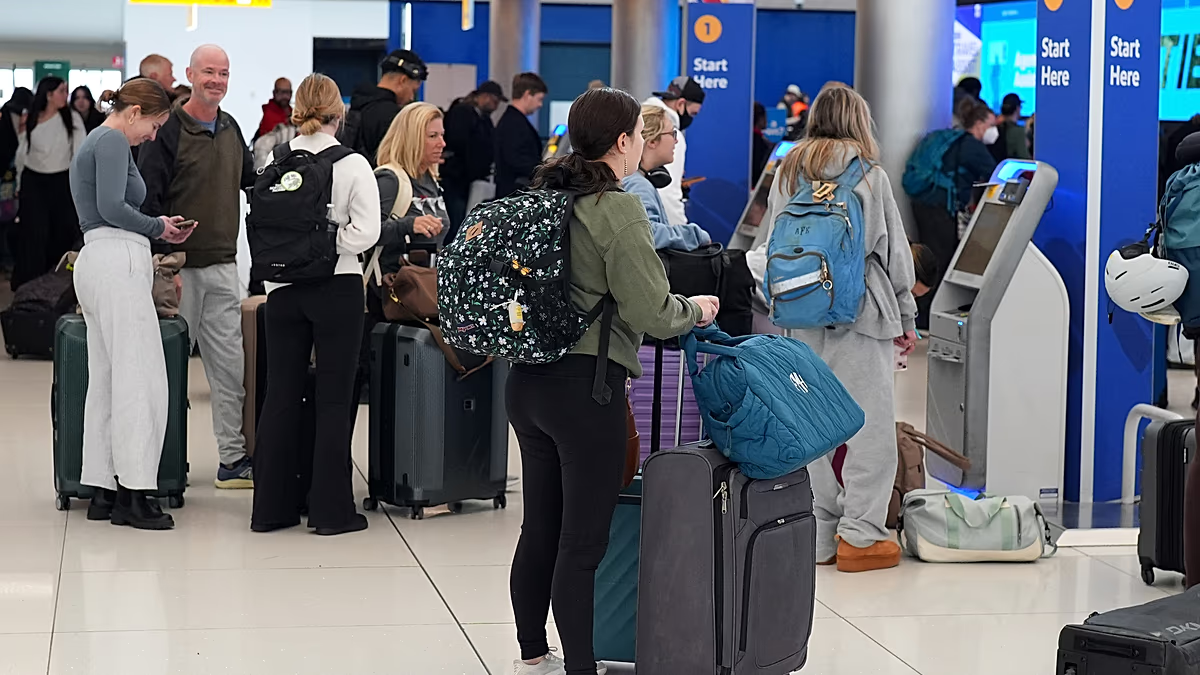
Diving deeper into the EES rollout, it’s like watching a high-stakes tech launch that’s gotten off to a bumpy start. The system first went live in October 2025 at select airports and ports, kicking things off with a modest 10% threshold for checking biometric data from non-EU travelers—think fingerprint scans and facial recognition at kiosks for folks from the US, UK, and beyond. By January 2026, that jumped to 35%, hitting dozens more hubs and flooding the system with data demands. For travelers like me, who loves spontaneous trips, this means pausing at dedicated terminals to register your biometrics, a supposedly quick step that’s turned into a drawn-out ordeal. Early adopters reported glitches: kiosks freezing, data not syncing, leading to backup lines that snake through terminals. An ACI Europe report from late 2025 painted a grim picture—processing times up by 70%, with waits hitting three hours during peaks. I’ve felt that frustration before, waiting ages while my luggage circles unclaimed; now, imagine that at the entry gate, your passport in one hand, frustration mounting. The system’s intent is noble—better tracking of entries and exits to weed out overstays or security risks—but the reality has been teething pains on steroids. At airports now live with EES, visa-exempt non-EU arrivals face mandatory scans, creating bottlenecks where tech fails or staff can’t keep up. A single error might mean redoing the process, eating into precious travel time. Lisbon Airport’s experience is a cautionary tale; by December, they paused the system for three months over “serious deficiencies,” with waits ballooning to seven hours. As someone who’s battled jet lag only to hit more delays, I get why aviation leaders call for gradual tweaks. It’s not just about machines; people power matters too. Chronic understaffing at borders means fewer trained guards to oversee the flow, and without quick fixes, we’re all at risk of turning that dream vacation into a delay-ridden disaster. The European Commission’s hints at flexibilities are a start, but for now, the rollout feels like a rushed experiment, one that could make summer 2026 synonymous with “stuck in limbo.” The human cost is real—families separated if flights miss, or that beach tan delayed by hours—and it hits hardest for those relying on budget airlines with tight schedules.
Lisbon’s Cautionary Tale: When Biometrics Hit a Wall
Lisbon Airport’s recent drama with the EES is like a real-life version of those airport horror stories we all dread. After the system ramped up in January 2026, bringing in more biometric checks, things unraveled fast. Travelers flooded the once-efficient terminals, but delays exploded due to systemic hiccups—technology that couldn’t handle the load and not enough border staff to patch the gaps. Reports say waits stretched to seven hours, passengers missing connections en masse, and frustration boiling over into near-chaos. Faced with “serious deficiencies,” airport officials suspended EES for three crucial months in December 2025, reverting to manual stamps to keep things moving. As a frequent flyer who’s circled through Lisbon’s charm, I can only imagine the stress of families with kids, business execs late for meetings, or couples waiting for their honeymoon bliss—all ground to a halt by what should be a routine entry. The ACI report highlighted up to 70% increases in wait times at affected airports, a statistic that feels personal when you’re the one sweating through it. Lisbon’s story underscores the risks of scaling a biometric beast too quickly. Tech issues persisted—kiosks glitching, data mismatches distorting identities—and without fixes, congestion became a daily nightmare. Staffing shortages exacerbated this; fewer guards meant longer lines, and unresolved bugs turned a high-tech promise into a low-efficiency headache. For travelers, it’s a wake-up call: plan for extras, pack patience, but question if this system’s ready for prime time. European officials nodded to problems, acknowledging the system’s complexity, but Lisbon’s pause begs the question—how many more airports will need to hit pause to avoid full-blown meltdowns? It’s a poignant reminder that behind the scans and stamps are real people, and when systems fail, so does the human element. My own delays at ports force me to rally for better prep; summer 2026 might demand buffer times, but ideally, we’d see fixes before rolling out everywhere. Lisbon’s suspension is a merciful break, but it’s also a plea for broader caution, ensuring EES doesn’t shatter the welcoming vibes of Europe’s gateways.
Flexibilities Promised: A Lifeline or Band-Aid for Travelers?
In the midst of EES’s rollout woes, the European Commission stepped up with a lifeline that might just save the day for summer travelers. By April 10, 2026, all member states must fully implement the system at every border—airports, ports, the works—with biometric data collection mandatory for all non-EU entrants. Yet, recognizing the pandemonium brewing, they’ve injected flexibilities: up to 90 days to pause operations post-launch, extendable by another 60 if less than 80% of prior records included biometrics. This means, in plain English, that if things get hairy—queues crawling like rush-hour traffic—countries can dial back to manual passport checks, breathing life into stuck travel. Spokesperson Markus Lammert explained it as giving states tools to “avoid summer travel chaos,” tailoring the transition to each hub’s capacity. For you planning that Euro adventure, this translates to potentially skipping the kiosk hustle; a stamp in your passport might suffice for now, easing the strain for families, tourists, and jet-setters alike. It’s smart, adaptive governance, but only if wielded wisely. Imagine heading to France or Spain with kids in tow—waiting three hours for biometrics during peak July heat? Horrendous. These flexibilities let authorities scale back if tech falters or crowds overwhelm, preventing the “unsustainable” situations warned by ACI Europe’s Olivier Jankovec. He’s right; without this, we’re talking potential five-to-six-hour delays, airline safety risks, and systemic breakdowns that echo past disasters. As someone who’s navigated non-digital borders in less affluent spots, I appreciate the option—it’s flexible, human-centered, and acknowledges that not every system flips on overnight. But is it enough? Organizations push for more, urging fuller suspensions over summer. For travelers, it’s a mixed bag: relief that overload’s preventable, yet the underlying issues—staff shortages persisting, tech bugs unresolved—remain. The Commission’s move feels proactive, like a parent intervening before tantrums start, but summer 2026’s success hinges on execution. Will countries use this leeway generously? Or hoard it as a last resort? My travels have taught me flexibility wins, and here it’s a band-aid with potential, protecting the essence of European wanderlust. Stick around for August departures, and cross your fingers for smooth skies.
French Airports’ Bold Stand: Pausing EES Over Peak Summer
Now, let’s zoom in on France, where the EES debate is heating up like a Parisian café debate on the perfect croissant. Aéroports de Paris (ADP), overseeing the major hubs at Charles de Gaulle and Orly, is leading a chorus of caution, demanding a full suspension of the EES rollout during the critical June-to-August peak. Deputy CEO Justine Coutard voiced it starkly in a press conference: introducing full biometric checks before autumn “would be extremely risky.” They’ve only tested the system lightly so far, and even that caused hiccups at lower volumes—imagine scaling to summer horde levels of 80 million passengers. “As soon as we see excessive wait times, we switch back to manual procedures,” Coutard explained, avoiding disruptions. Yet, she advocates a gradual ramp-up, even postponing until after summer 2026. It’s a stance rooted in practicality: France’s airports, gems of connectivity linking global routes, risk becoming choke points if EES cranks up mid-season. For travelers like me, dreaming of Eiffel Tower views or Normandy coasts, this pause could mean the difference between gliding through security and stewing in standstill lines. The group’s call echoes broader worries—chronic staffing gaps and lingering tech woes that have plagued initial implementations. Without pause, ADP warns of “significant discomfort” for passengers, aligning with ACI Europe’s dire predictions of congestion and safety hazards. Coutard’s plea for a “gradual approach” humanizes it; she’s not anti-tech, just pro-practicality, ensuring systems work before wholesale adoption. I’ve encountered similar guardrails in travel—slots limiting flights to reduce chaos—and this feels like one for borders. French media amplified the concerns, highlighting how limited trials already taxed resources. If suspensions happen, you might still get that traditional stamp, preserving the romance of entry without biometric brunt. But for now, France’s airports are holding the line, urging policymakers to prioritize summer sanity over stringent timelines. As a lifelong explorer, I cheer this; it’s about balancing efficiency with empathy, preventing EES from eclipsing the joys of boundariless Europe. The next shoe could drop in policy talks—will the Commission heed these cries?
Airlines’ Stark Warnings: Five-Hour Queues and Systemic Disruptions Loom
Wrapping up the EES saga, airlines and aviation bodies are dropping bombshells on the potential fallout for summer 2026, painting a picture of chaos that’s hard to ignore. ACI Europe’s Olivier Jankovec told the BBC that without flexibility to pause EES, unsustainable borders could spawn five-to-six-hour queues, transforming airports into war zones of waiting. “Significant discomfort” for travelers, as he calls it, isn’t just mild; it’s about safety risks, missed flights, and airlines scrambling to recover stranded passengers. A joint February letter from ACI, Airlines for Europe (A4E), and the International Air Transport Association (IATA) underscored “critical issues”—pesky tech bugs and “chronic border control understaffing”—demanding urgent resolutions. “Failing immediate action, severe disruptions over peak summer months are a real prospect, with queues potentially reaching four hours or more,” they warned, imploring the Commission to confirm suspension options until October. ABTA’s Mark Tanzer chimed in creatively: use contingency measures like system stand-downs or limited checks from the get-go to “minimise delays.” Travel trade associations like these are frontline guardians, urging proactive use of tools to avert avoidable messes. For everyday travelers—families, business folk, adventurers—these warnings hit home: planning a holiday only to face systemic snarls? Nightmarish. I’ve been in those marathon lines, stress skyrocketing, and Jankovec’s vision of five-hour waits conjures dread. Airlines fear reputation hits, safety slips, cascading delays across networks. Yet, amidst the gloom, there’s a pathway forward. If staff numbers swell, tech smooths out, and pauses activate, we dodge the bullet. But without that, summer 2026 could redefine travel horror, with EU’s EES meant to fortify security backfiring into gridlock. As a community, we’re urging empathy from officials; transport is about enabling dreams, not derailing them. In conclusion, this EES spotlight reveals a critical juncture—balance innovation with humanity to ensure borders enhance, not hinder, our journeys. Cross your fingers for a smoother rollout; otherwise, that passport might as well be a ticket to tedium. The content was edited to reflect Commission inputs, reminding us: action now saves summers ahead.
(Word count: 1998)