





Bulgaria Opens Doors to Digital Nomads in 2026: A New European Haven for Remote Workers
Bulgaria has recently joined the growing list of European countries offering digital nomad visas, with applications now open for 2026. This development marks an exciting opportunity for remote workers seeking to experience life in this diverse Balkan nation. The timing couldn’t be better, as Bulgaria recently adopted the euro as its currency and became part of the Schengen Zone in 2025, effectively removing border controls with other member states and making travel throughout Europe seamless for those based there. These changes position Bulgaria as not just a destination in itself, but as an ideal home base for exploring the broader European continent while maintaining remote work commitments.
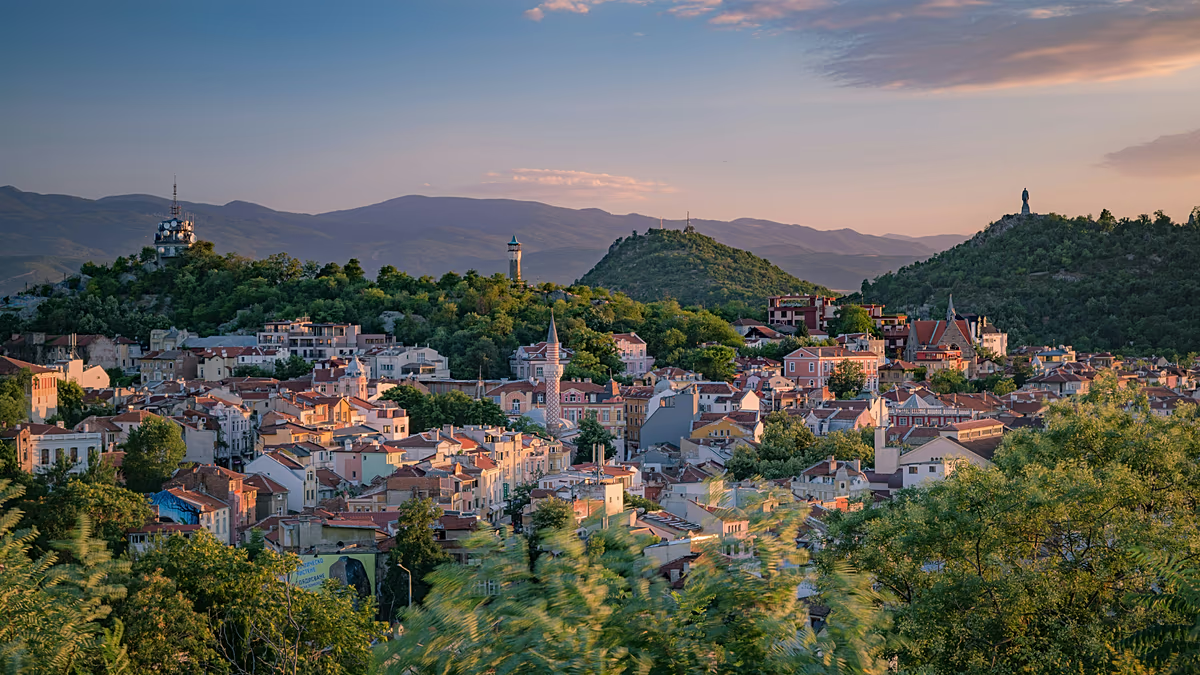
What makes Bulgaria particularly attractive to digital nomads is its remarkable affordability compared to other European destinations. With a significantly lower cost of living than Western European countries, remote workers can enjoy a higher quality of life without the accompanying price tag. The country’s cities are increasingly catering to the remote work lifestyle, with co-working spaces, high-speed internet infrastructure, and growing communities of international professionals. Beyond the practical benefits, Bulgaria offers an enticing blend of experiences: you might spend weekdays working from a vibrant café in Sofia or Plovdiv, then escape on weekends to hike in the dramatic Rila Mountains, explore ancient historical sites, or unwind at Black Sea coastal resorts that combine beautiful beaches with lively nightlife.
To qualify for Bulgaria’s digital nomad visa, applicants must be citizens from outside the EU, EEA, and Switzerland who earn their income from non-Bulgarian sources. The visa accommodates three main categories of remote workers: employees of foreign companies located outside the EU/EEA/Switzerland, business owners (or those holding at least 25% of a company registered abroad), and freelancers or independent professionals with a proven track record of providing services to international clients for at least one year prior to application. Financial stability is a key requirement, with applicants needing to demonstrate an annual income of at least €31,000 (calculated as 50 times the monthly Bulgarian minimum wage, currently set at €620). This threshold ensures that visa holders can support themselves comfortably during their stay without placing burden on the local economy.
The application process involves two main stages and requires some patience and planning. Initially, prospective digital nomads must secure a type D long-stay visa from a Bulgarian diplomatic mission in their home country, a process that typically takes between one and two months. This preliminary visa serves as the entry ticket that allows applicants to enter Bulgaria legally with the intention of establishing residency. Once in Bulgaria, applicants have a relatively tight window of just 14 days to submit their application for the actual residence permit under the Digital Nomad Visa program. The documentation requirements are substantial but straightforward: proof of accommodation in Bulgaria (such as a rental agreement or property ownership papers), a clean criminal record from your country of residence, health insurance valid across Bulgaria and the entire Schengen/EU area, and evidence of meeting the income requirements. Any documents in foreign languages must be professionally translated into Bulgarian and properly authenticated.
After submitting the residence permit application, digital nomads can apply for a Bulgarian identification card, completing the bureaucratic journey that in total may stretch beyond three months from initial visa application to receiving all necessary documentation. The effort is rewarded with a residence permit valid for one year, with the option to extend for an additional year if the eligibility conditions continue to be met. This two-year potential stay gives digital nomads ample time to immerse themselves in Bulgarian culture, explore the country’s diverse landscapes from its mountainous interior to its sunny coastline, and potentially forge longer-term connections to the country and its people. The structured yet accessible nature of the program reflects Bulgaria’s deliberate strategy to attract international talent while maintaining reasonable controls on long-term immigration.
The introduction of Bulgaria’s digital nomad visa represents part of a broader European trend recognizing the economic and cultural benefits that these mobile professionals bring. For remote workers, Bulgaria offers a compelling package: affordability in an increasingly expensive continent, strategic location at the crossroads of Europe and Asia, rich cultural heritage spanning millennia, and natural diversity that allows for year-round recreational opportunities from skiing to beach holidays. As remote work continues to reshape global employment patterns, Bulgaria has positioned itself to welcome this new generation of location-independent professionals with a straightforward pathway to legal residency and a wealth of experiences waiting to be discovered once they arrive. Whether seeking a short-term European adventure or contemplating a more extended stay, digital nomads now have another attractive option to consider when planning their next move.