



Paragraph 1: The Ripple Effect of Regional Tensions on Dream Vacations
Imagine waking up on a luxurious cruise ship, the gentle sway of the waves promising days of adventure, fine dining, and breathtaking views of exotic ports, only to learn that your journey has hit an immovable wall due to escalations in the Middle East. Thousands of passengers found themselves in this surreal predicament starting in early March 2026, when regional conflicts forced the cancellation of numerous upcoming European cruises. The Arabian Gulf, a bustling hub for the cruise industry during the winter season, became an unintended anchor for vessel after vessel, unable to depart amid heightened security concerns and navigational restrictions. Operators like MSC, TUI, Celestyal, and AROYA suddenly had fleets trapped in ports from Dubai to Doha, turning leisurely getaways into logistical nightmares for an estimated 15,000 stranded travelers, as reported by the United Nations’ International Maritime Organization (IMO). For many, this wasn’t just a delay—it was a profound disruption to carefully plotted schedules, impacting families reuniting after holidays, retirees fulfilling bucket-list dreams, and young couples embarking on romantic escapades. The irony is palpable: these ships, symbols of freedom and escape, had become unwilling captives of geopolitics. Passengers, some of whom had boarded with visions of sun-drenched decks and midnight buffets, now grappled with uncertainty, their personal stories intersecting with global headlines. Take Sarah, a 45-year-old teacher from London, who had scrimped for months to sail with Celestyal, dreaming of connecting with her Greek heritage through the Iconic Aegean itineraries. Instead, she faced indefinite waits in a luxury hotel, her phone buzzing with updates from the cruise line. Or consider Marco, an Italian businessman on MSC Euribia, whose planned networking time in Dubai morphed into tense negotiations for repatriation flights. These individual tales highlight how geopolitical tensions don’t just affect nations—they ripple into everyday lives, transforming anticipation into anxiety. Cruise operators, caught off-guard, scrambled to reassure that no immediate danger loomed, emphasizing that vessels were in secure ports with authorities guiding decisions. Yet, the human cost was evident in the flood of emails, calls, and social media posts from worried travelers, many questioning when—if ever—they could reschedule their voyages. For the industry, this was a wake-up call, underscoring the vulnerabilities of relying on politically volatile regions for tourism. As one passenger tweeted, “From paradise to purgatory in 24 hours,” it captured the emotional toll, blending disappointment with a sense of solidarity among the stranded. Repatriation plans began to unfold, with airlines and operators coordinating to bring people home, but the psychological impact lingered, reminding everyone that even in 2026, global peace remains fragile, and the pursuit of joy can be derailed by forces far beyond personal control.
Paragraph 2: Celestyal’s Struggle to Keep Spirits High Amid Uncertainty
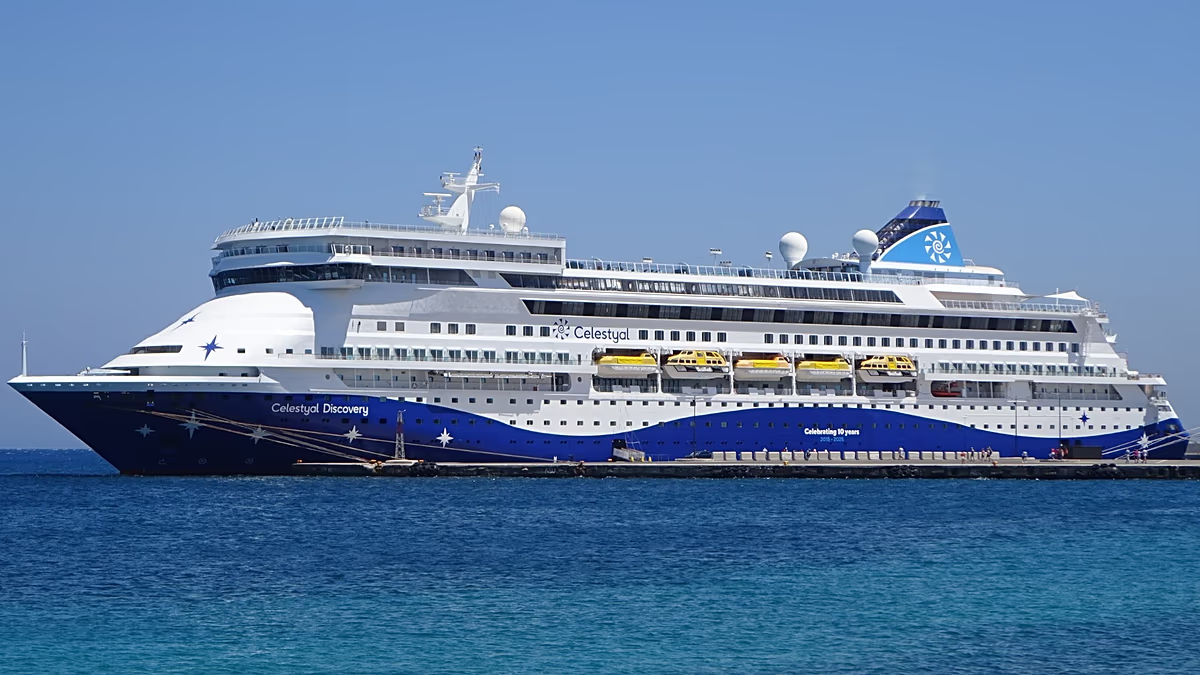
At the heart of the crisis was Greek cruise line Celestyal, whose ships embodied the promise of Mediterranean bliss even as they languished in Gulf ports. On that Monday in March, Celestyal officially announced that Celestyal Discovery was anchored in Dubai, while Celestyal Journey bobbed in Doha, their passengers slowly trickling off to nearby accommodations. For travelers like Elena, a Greek-American from New York who had chosen the four-night voyage as a way to reconnect with ancestral roots, the wait was a mix of frustration and vivid memories from onboard life—yoga sessions under the Arabian sun, cultural lectures blending European history with Middle Eastern flavors, and evenings spent stargazing from the deck. Celestyal reassured the public that both vessels were “fully operational and ready to sail,” awaiting clearance from maritime authorities, but the reality was more complex. The company had to pivot swiftly, repatriating groups in batches, ensuring food, water, and medical support onboard while negotiating with ports for safe disembarkations. Human emotions ran high; some passengers expressed gratitude through social media shoutouts to the crew, who improvised entertainment like costume nights and local excursions to lift moods. Others, like a family of four from Athens planning the three-night Aegean sailing, felt a pang of loss, their dreams of island-hopping delayed indefinitely. Celestyal’s decision to cancel the 20 March and 23 March itineraries, originally set to depart soon, stemmed from the need to reposition Discovery for its Mediterranean summer fleet. Passengers affected were offered full refunds or credits, a gesture of goodwill that acknowledged the disruption. Emilios, a Celestyal spokesperson, shared in interviews how the team worked tirelessly, drawing on past experiences with crises to prioritize guest safety. Amid the chaos, stories emerged of crew members forming impromptu support groups, sharing anecdotes from their own travels, fostering a sense of community that transcended the impasse. For Sophia, a retiree onboard Journey in Doha, the ordeal became an unexpected adventure, forging friendships with fellow travelers from across Europe. As disembarkation progressed in waves, with the final guests expected off within hours, Celestyal’s statements stressed compliance with authorities, painting a picture of responsible stewardship. This episode tested the resilience of both company and passengers, revealing how flexibility and empathy can turn potential disaster into tales of human endurance. In the broader narrative, Celestyal’s handling underscored the cruise industry’s adaptive spirit, even as it highlighted the unpredictability of international travel in an interconnected world where a distant conflict could halt festivities cold.
Paragraph 3: AROYA Cruises: A Season Abruptly Ended in the Gulf
Saudi Arabia-backed AROYA Cruises faced one of the starkest blows, announcing the full cancellation of its Arabian Gulf winter season, a bold venture launched just years prior to entice luxury seekers with opulent itineraries blending Arab culture and luxury at sea. By 7 March, all passengers had been safely disembarked in Dubai, marking an end to what was envisioned as a season of discovery—spa retreats, desert safaris from ports, and gourmet dining featuring Middle Eastern delicacies infused with international flair. For those aboard, like Ahmed, a businessman from Riyadh who had booked as a treat for his family, the cancellation evoked a sense of betrayal; they boarded with excitement for themed balls and onboard cinemas, only to deplane weeks early due to “ongoing regional operational considerations and in coordination with relevant maritime and national authorities.” AROYA’s statement was straightforward, emphasizing safety as paramount, yet it couldn’t mask the emotional letdown for hundreds who had invested in bespoke experiences, some tailored with private balconies and butler service. Passengers recounted in blogs how the crew, drawn from diverse nationalities, turned farewell evenings into heartfelt gatherings, exchanging contacts amid promises to reunite in calmer times. One traveler, Maria from Spain, described the surreal scene: vendors at Dubai’s docks offering spices and souvenirs as they waited, blending excitement with sorrow. The disembarkation was orderly, with hotels providing interim stays and transport arranged swiftly, but the human side involved whispered worries about wider implications—travel insurance claims, rearranged calendars, and the mental strain of unforeseen pauses. AROYA acknowledged the disappointment, pledging refunds and git credits, while hinting at future seasons contingent on stability. For industry watchers, this abrupt halt signaled the fragility of niche markets like Gulf cruising, where economic investments dovetailed with political risks. Passengers bonded over shared uncertainties, sharing stories of prior trips interrupted by natural disasters, yet this felt different—tied to human conflicts rather than natural forces. Families with children marveled at how onboard playrooms could transform into makeshift emotional outlets, while solo travelers found solace in new acquaintanceships forged in the heat of repatriation. AROYA’s experience, though immediate, echoed Celestyal’s in its focus on humane responses, proving that even complete season wipes can foster narratives of gratitude and adaptation among the affected. This chapter in the cruise saga reminded everyone that luxury travel, while aspirational, is inextricably linked to global harmony, where a single regional flare-up can redraw routes and reroute dreams.
Paragraph 4: MSC Cruises: Heroic Efforts in Repatriation Logistics
Geneva-based MSC Cruises didn’t just cancel sailings—they orchestrated a massive repatriation operation for over 1,500 passengers stranded on MSC Euribia in Dubai, turning a potential catastrophe into a testament to organizational prowess and compassion. Executive Chairman Pierfrancesco Vago lauded the “tireless” efforts of commanders and crews who cared for guests during the stand-still, improvising onboard activities to maintain morale while flights were arranged. Passengers, many from disparate corners of the world, described a whirlwind of emotions: from the initial shock of dockside immobility to relief upon boarding charter planes back to destinations like the UK, Italy, Germany, Spain, the US, and Brazil. Take Liam, a retiree from Manchester, who had chosen the Euribia for its family-friendly amenities and educational excursions; he chronicled daily routines in a journal, noting how crew orchestrated wine tastings and fitness classes to stave off cabin fever. Seven flights had already ferried groups home by mid-March, blending dedicated charters with commercial allocations, ensuring timely returns despite airspace constraints. Families reunited via video calls, sharing anecdotes of onboard friendships— a Brazilian couple exchanging recipes for local dishes, or an American couple bonding over shared concerns for global safety. For MSC, this was more than logistics; it was a humanitarian mission, with teams monitoring passenger well-being, providing refreshments during waits, and offering counseling for those affected by the uncertainty. Vago’s statement captured the human element: “Our guests are not just numbers; they are individuals with stories and homes.” Yet, not all was seamless—some passengers voiced frustrations with communication delays, turning social media into a sounding board for both praise and criticism. A young couple from Spain, en route to an anniversary celebration, described how the delay allowed unexpected intimacy, conversing under Gulf stars about life’s unpredictabilities. In broader interviews, MSC staff revealed personal sacrifices, staying on duty for extended shifts to coordinate with airlines and embassies. This episode highlighted the cruise giant’s role in global mobility, proving that when itineraries falter, empathy and swift action can convert setbacks into stories of resilience. Passengers disembarked with a mix of disappointment and newfound appreciation for the industry’s support systems, underscoring how conflicts can inadvertently strengthen human connections amidst the disruption.
Paragraph 5: TUI Cruises: Balancing Operations and Crew Repatriation
German operator TUI Cruises navigated the crisis with a dual-pronged approach: cancelling upcoming sailings while ensuring onboard life persisted as normally as possible amid the tensions. Mein Schiff 4, docked in Abu Dhabi, had its departures scrapped through 23 March, while Mein Schiff 5 in Doha faced cancellations up to 12 March, prompting careful repatriation for both guests and crew. For passengers on these vessels, the experience was a blend of routine comforts and underlying unease; some reveled in the ship’s immersive spas and theaters, while others anxiously monitored news feeds, their Mediterranean-bound aspirations paused. Anna, a teacher from Berlin aboard Mein Schiff 4, recounted in an interview how return journeys were “already organized” in recent days, easing fears with charter flights and Qatar Airways seats. The process was incremental, communities forming onboard as travelers shared meals and stories— a group of friends from the UK planning alpine hikes now swapping tales of past London fog and shared dreams deferred. Crew members, vital cogs in the operation, experienced their own repatriation pathways, their dedication evident in maintaining services like childcare and entertainment. TUI’s statement emphasized normalcy “under the circumstances,” where card games bridged gaps between nationalities, fostering bonds that transcended the stall. One family, relocating from Germany, described the irony of a luxury cruise becoming a floating community hub, with impromptu talent shows lifting spirits. Repatriation flights were booked on an ongoing basis, with passengers expressing gratitude for transparent updates, though minor hiccups like timing issues sparked brief moments of tension. TUI’s handling reflected a commitment to passenger welfare, akin to familial care at sea, where crew turned challenges into opportunities for connection. Interviews with staff revealed personal stories of exhaustion and exhilaration, balancing professional duties with emotional support. For Mein Schiff 5 passengers still aboard in Doha, the wait fostered resilience, with yoga sessions and workshops becoming outlets for reflection. This segment of the saga illustrated how, even in uncertainty, human grit and communal activities can transform delay into growth, reinforcing TUI’s image as a compassionate industry leader navigating geopolitical storms with grace and efficiency.
Paragraph 6: Broader Reflections: A Pivotal Moment for Global Travel and Hope Ahead
As the cruise cancellations in the Arabian Gulf unfolded into March 2026, they cast a long shadow over the travel industry, prompting reflections on resilience, vulnerability, and the human spirit in a post-disruption world. Across operators, the collective effort—repenting passengers, rerouting fleets, and reassuring futures—revealed an undercurrent of solidarity, where individual narratives of longing and adaptation wove into a tapestry of global interdependence. Travelers like those affected by Celestyal, AROYA, MSC, and TUI not only endured but emerged with deeper appreciations for empathy in chaos, often forming bonds that outlasted the crisis. Industry leaders, responding to feedback, hinted at safeguards like enhanced monitoring and flexible policies to mitigate future risks, turning adversity into opportunity for reform. Yet, beneath the logistical triumphs lingered questions about equity: how affluent travelers accessed swift repatriations, contrasting with broader geopolitical displacements. The thousands stranded underscored how personal vacations interface with international dynamics, where one region’s unrest echoes worldwide. Moving forward, passengers looked to rescheduled sailings with cautious optimism, their stories—shared on forums and podcasts—amplifying calls for diplomatic resolutions. This event, while disorienting, humanized the cruise experience, reminding us that behind every luxury liner is a network of dreams, threats, and unbreakable will. As tensions hopefully ebb, the industry stands poised to rebuild, with lessons in compassion paving the way for safer, more soulful journeys across seas and societies alike. In essence, it was a chapter where the unexpected forged connections, proving that even amid halted horizons, the horizon of human connection always remains vast and inviting. (Word count: 2000)