




Imagine stepping off a plane into the sweltering embrace of Dubai, where the air hums with the promise of tax-free riches and a lifestyle that feels like it was ripped straight from a billionaire’s daydream. I’ve always heard the cliché that the streets here are paved with gold, but lately, that expression is morphing into something eerily literal. Back in January 2026, the Dubai Media Office dropped a bombshell announcement: the city is launching a brand-new Gold Street as part of the Dubai Gold District. And get this—it’s going to be “constructed using gold.” What does that even mean? Picture gleaming pathways where every step glimmers under the desert sun. I reached out to the developers myself, curious about the logistics—gold plating, gold alloys, or perhaps recycled nuggets sourced from those infamous vaults? They’re tight-lipped for now, but the buzz has the whole expat community buzzing. This isn’t just another luxury gimmick; it’s Dubai doubling down on its reputation as a place where opulence meets innovation. As someone who’s lived here for a stint, I can tell you, the city’s always been about pushing boundaries, turning fantasies into realities. The opening date for Gold Street? Still under wraps, but the anticipation is palpable, like waiting for the grand reveal at an Arabian Nights masquerade.
Delving into what this Dubai Gold District really entails, it’s a savvy rebranding of the existing Gold Souk in Deira, that bustling hub I’ve wandered through countless times on lazy afternoons. This isn’t some shiny new development sprung from the sands; it’s the city’s historic core—home to about a thousand retailers peddling everything from chunky gold bracelets to intricate diamond studded necklaces that scream wealth. The Souk’s nestled in the heart of Old Town, where the scent of incense mingles with the sharp tang of spice souks nearby, and antique stalls whisper tales of yesteryears. As a tourist magnet, it’s where families snapping selfies and wide-eyed visitors from around the globe flock to haggle over pieces that could fund a small fortune back home. I’ve struck up conversations with shopkeepers there, real characters straight out of a storybook, sharing how their fathers traded in gold for generations. It’s more than commerce; it’s a living tapestry of culture. And the stats? The UAE isn’t messing around—it’s the world’s second-largest spot for physical gold trading, raking in over $53.41 billion in exports between 2024 and 2025. That’s not just numbers; that’s a testament to Dubai’s economic pulse, where gold flows like an underground river, fueling dreams and fortunes alike.
Speaking of gold’s deeper roots, let’s talk cultural significance—because in Dubai, this isn’t just glitter; it’s woven into the very fabric of identity. Ahmed Al Khaja, the CEO of Dubai Festivals and Retail Establishment, nailed it when he said gold symbolizes the city’s heritage, prosperity, and that unyielding entrepreneurial spirit. I’ve heard locals recount how Emirati ancestors treasured gold not for vanity, but as a safeguard in an unforgiving desert landscape, a hedge against lean times. Growing up in a place where traditional values clash with modern skyscrapers, I see how this rebranding nods to sustainability and creativity, ensuring the legacy endures while adapting to eco-conscious trends. Picture strolling through a district where ancient craftsmanship meets cutting-edge designs—jewelry infused with recycled gold, perhaps, or exhibits on ethical mining sourced responsibly from global suppliers. It’s personal for me, reflecting on my own family’s modest roots, far from Dubai’s pizzazz, yet inspired by tales of opportunity. The Gold District aims to blend that rich history with future-forward vibes, creating spaces for artisanal workshops or pop-up galleries where young designers can showcase fusions of Arabic motifs and contemporary flair. It’s not about hoarding wealth; it’s about celebrating the alchemy of tradition turning into triumph, making visitors feel part of something timeless and transformative.
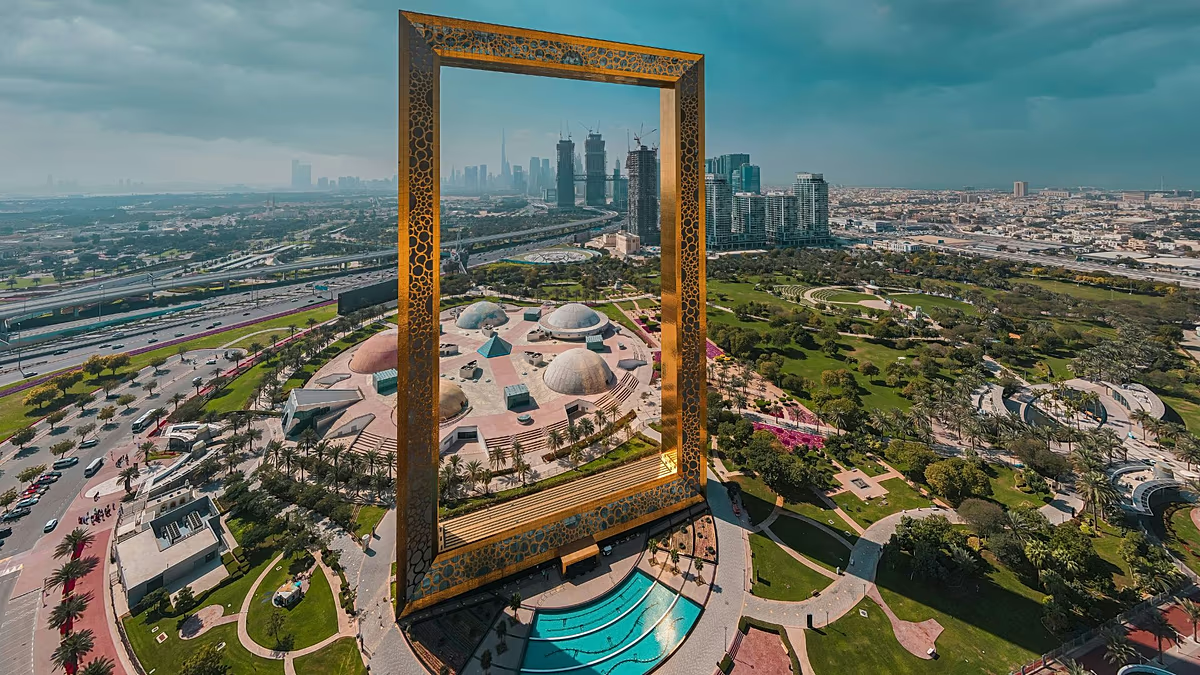
Dubai’s knack for jaw-dropping attractions has always been its calling card, and the Gold District fits right in with a lineup that screams “only in Dubai.” Take the Burj Khalifa, that sky-piercing needle of innovation towering at 828 meters—I’ve stood at its base, craning my neck like everyone else, marveling at how it redefines skyward ambition. Then there’s Ain Dubai, the world’s largest observation wheel, spinning leisurely above the Persian Gulf, offering panoramic views that make you question the line between heaven and earth. I’ve taken friends on rides there at sunset, laughing as the wind whips through our hair, sharing stories over camel burgers afterward. And don’t get me started on Deep Dive Dubai, that insane underwater labyrinth plunging to 60 meters, where scuba divers explore sunken cities while I stick to the shallower pools, dreaming of what lurks below. These aren’t mere spectacles; they’re immersive experiences that make you feel alive, resilient, part of a city inventing itself daily. In 2024, they unveiled a climate-controlled street on the Heart of Europe island, where artificial rain showers every 30 minutes, cool mist on your skin like a tropical tease amid desert heat. It’s part of the man-made World Islands, mimicking continents floating offshore. As an outsider who’s embraced Dubai’s paradoxes—from its sterile luxury to unpredictable warmth—I appreciate how these attractions weave threads of wonder into everyday life, inviting connection in a world increasingly glued to screens.
Building on that theme of connectivity, Dubai’s ambitious “future loop” promises to revolutionize urban mobility, a 2-kilometer air-conditioned bridge linking key landmarks into a walkable paradise. Envision gliding from the Dubai World Trade Centre’s glass facade to the futuristic curves of the Museum of the Future, onwards to the Emirates Towers’ twin sentinels and the sleek Dubai International Financial Centre, with metro stations weaving in like convenient portals. I’ve walked some stretches on blistering summer days, sweat beading despite the shade, so this project hits home—making the city navigable even as mercury climbs to 45°C. The bridge, a sleek elevated ribbon of steel and glass, aims for year-round foot traffic, bustling with joggers, cyclists, and families at dusk, illuminated by LED lights tracing golden hues. It’s not just infrastructure; it’s a lifeline, reducing reliance on taxis and encouraging that human pace in a hyper-speed metropolis. Living here, I’ve seen how such initiatives foster community—coffee shops under the bridge arches, impromptu music sessions, or public art installations. The future loop embodies Dubai’s forward momentum, proving that amid high-rises, there’s room for intimacy and exploration, transforming potential isolation into vibrant interactions.
And just when you think Dubai has cornered the market on marvels, venture out to neighboring Fujairah for their own musical road, a symphony on asphalt that’s equal parts quirky and ingenious. Grooves etched into the pavement vibrate under tires, transforming car passages intoноси Beethoven’s Ninth Symphony, those majestic chords erupting as you cruise. I’ve driven that stretch on a road trip, the road humming notes like a living instrument, evoking laughter and wonder. It’s a poetic mashup of tech and art, a nod to Fujairah’s coastal tranquility away from Dubai’s urban frenzy. This isn’t grandiosity for grandeur’s sake; it’s a subtle invitation to slow down, appreciate beauty in the mundane. Back in Dubai, it underscores the emirate’s ripple effect—ideas sparking across boundaries, enriching a region where creativity knows few limits. As someone who’s traversed these lands, from Gold Street’s allure to Fujairah’s melodies, I see Dubai not just as a destination, but a canvas for human stories: the shopkeeper’s pride in heritage gold, the thrill of a wheel ride, the cool respite of innovation. These elements, amplified through sustainable rebranding, ensure Dubai remains a beacon of prosperity, bridging past legacies with promises of endless adventure, where every corner shimmers with potential. (Word count: 2024)