






The Grand Exhilaration and Exhaustion of Chunyun: China’s Epic Lunar New Year Journey
China’s Lunar New Year, or Chunyun, is an annual spectacle that dwarfs any other migration on Earth, a testament to the unbreakable bonds of family and tradition in a nation of 1.4 billion people. According to the National Development and Reform Commission, an astounding 9.5 billion trips are projected for the 40-day period around the festival, set to kick off on February 17. This surge, a record breaker, reflects the pent-up longing of workers who toil relentlessly throughout the year—often clocking long hours into weekends with minimal annual leave. Imagine the sheer scale: 540 million journeys by train, 95 million by air, and the rest by road, weaving a human tapestry across sprawling cityscapes and vast rural expanses. For many, this is not just travel; it’s a pilgrimage home, a chance to reconnect with roots amid the concrete jungles of urban life. Picture the energy: platforms heaving with anticipation, families reuniting, strangers sharing stories of hardship and hope. Yet beneath the excitement lies a sobering reality—a relentless economic grind where the festival emerges as the one sacred pause. People like Liu Zhiquan embody this spirit, enduring 30-plus hour train rides to swap skyscrapers for ancestral hearths, their fatigue a currency paid for fleeting moments of joy. In this ritual, we see humanity’s resilience, the quiet heroism of those who, year after year, traverse mountains and delays to honor family, culture, and the simple act of being together. It’s a reminder that even in a modern superpower, the heart’s desires often outweigh logistical nightmares. The air hums with nostalgia for simpler times, when celebrations weren’t fragmented by screens and schedules. Travelers pack not just bags, but memories—childhood lanterns, festive dumplings, laughter echoing through generations. This year, as whispers of a bad economy add shadows to the ordeal, the determination shines brighter, turning Chunyun into a metaphor for perseverance in life’s unyielding journey.
Liu Zhiquan’s Tireless Voyage: A Microcosm of Sacrificial Labor
Liu Zhiquan stands as a poignant symbol of China’s migrant workforce, his story unfolding against the backdrop of Beijing’s towering construction sites where he labors day in and out. Waiting at the train station for that grueling 30-plus hour journey to Chengdu in Sichuan province—over 2,000 kilometers away—he’s part of the hundreds of millions converging for the world’s largest human migration. “Things feel worse this year than last,” he reflects, voice tinged with weariness, the economic downturn hitting harder, making ends meet a daily battle. Yet, Liu chooses the slower, cheaper train option—a stark contrast to the sleek high-speed rails that could whisk him there in nine hours for over twice the cost. This decision isn’t just fiscal prudence; it’s a deliberate embrace of hardship for the reward of home. Imagine the monotony: hours spent in cramped seats, the rhythmic clatter of wheels on tracks, shared compartments where strangers become temporary confidants, swapping tales of bosses who demand overtime without respite. Liu’s journey is more than travel; it’s a emotional odyssey. For him, the Lunar New Year is the annual wellspring of humanity’s softer side—jettisons of routine to bask in familial warmth, dodgy sticks of firecrackers with kids, and hearty meals that mend the soul’s fractures. His partner might call him a fool for not flying, but deep down, they understand: this sacrifice mirrors the millions who forego comfort for connection. In Sichuan’s embrace, Liu will forget the dust of Beijing’s exoskeletons, instead cradling his elderly parents or playful nieces, knowing the festival’s magic justifies every aching bone. Such narratives humanize the statistics, revealing faces behind the numbers—folks whose dreams pivot on these brief interludes, turning economic malaise into a personal crusade against isolation.
Economic Shadows and Familial Resilience Amidst the Rush
The Chunyun phenomenon is deeply intertwined with China’s economic undercurrents, where the festival serves as both escape and mirror to societal struggles. With the economy reputedly faltering, the effort to save for trips grows heavier, forcing choices like Liu’s that echo broader privations. Workers nationwide, often juggling relentless schedules with scant leave, view these days as a lifeline— a precious interlude from the grind that defines their existence. Think of the countless employees in factories or offices who spend holidays fueling global supply chains, only to dream of reunions. The bad economic vibe Liu mentions isn’t isolated; it reverberates in conversations across waiting rooms, where pessimism mixes with hope. Yet, this adversity fuels an indomitable spirit—families stretching budgets for the “festival of the year,” as it’s hailed. Amidst empty wallets and rising costs, the pull of home transforms burdens into blessings. For instance, consider how these journeys mend frayed ties: a father, absent for months, finally holds a toddler who’ve grown so quickly; siblings, scattered by ambition, share secrets under starlit skies. Emotional depth enriches the narrative; stories of deferred joys, like a missed promotion to afford rail fares, reveal vulnerability, but also strength. People endure not with bitterness, but a quiet defiance, reminding us that human bonds thrive on adversity. In this context, Chunyun isn’t merely mass transit—it’s a collective response to isolation, a silent protest against modernity’s intrusions, where love’s currency outbids economic woes. Travelers humanize the hustle, their sacrifices a raw testament to prioritizing heart over wallet in a nation racing towards prosperity yet clinging to heritage.
Crowded Stations and Casual Intimacies: The Pulse of Departure
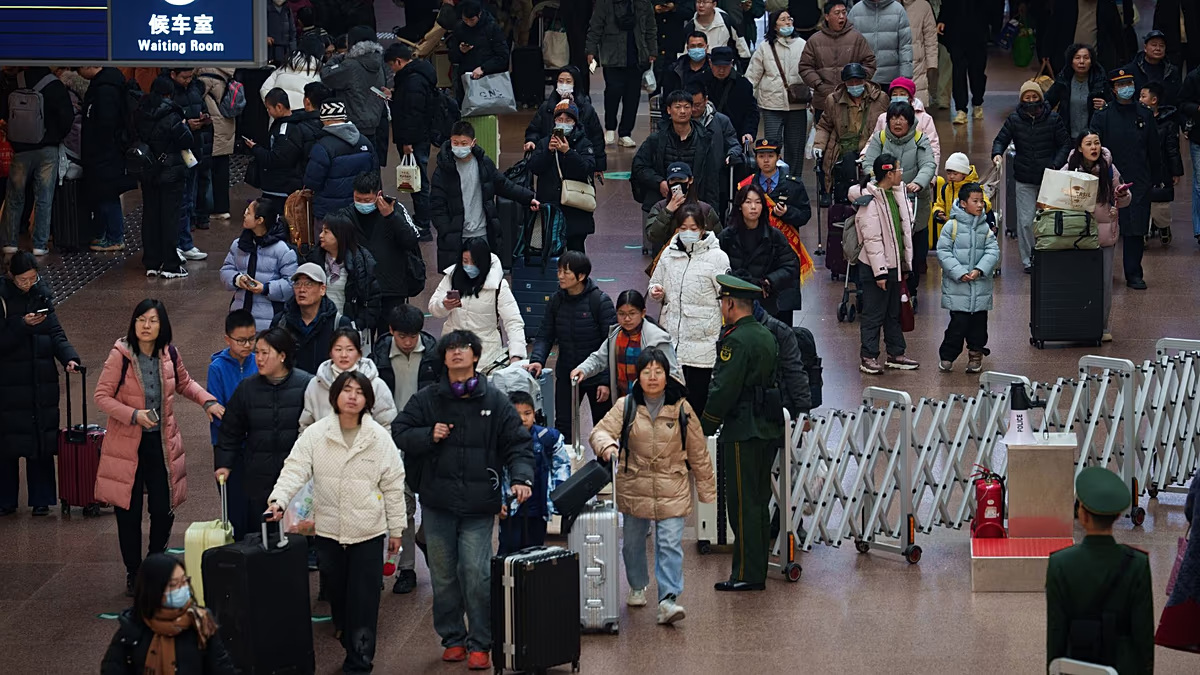
At Beijing’s train stations, the energy of Chunyun materializes in vivid chaos—crowds spilling into waiting areas, laden with oversized bags and stories tucked inside. Passengers cluster around ticket counters, munching instant noodles prepared with free hot water, a simple ritual that fosters camaraderie. These scenes aren’t alienating; they’re intimate snapshots of shared humanity, where a shared pot of boiling water becomes a hub for swapping snacks and stories. Many, like Liu, nibble alone, reflecting on the 30-hour trek ahead, perhaps imagining the chaos of Chengdu’s arrival. But here, strangers bond over frustrations: delayed trains due to the crush, or debates on holiday jobs eroding precious downtime. For newcomers to the city, Chunyun stations are classrooms of resilience—teaching patience amidst the cacophony. A young professional might chat with an elderly migrant, both dreaming of reunion dinners. Emotional undercurrents flow: anxiety for jammed compartments, joy at impending reunions, subtle grief for those postponed. This atmosphere humanizes the ordeal, turning logistical hurdles into communal experiences. Picture the hopeful buzz as trains pull in, families merging in joyful reunions, or lone travelers finding solace in fleeting connections. It’s a microcosm of China’s diversity—urban elites rubbing shoulders with rural kin, bridging divides through necessity. In these moments, the festival’s essence shines: not in grandeur, but in the everyday human tapestry, where a steaming bowl of noodles warms both body and spirit, reminding us that journeys are as much emotional as physical.
Personal Reflections: Tian Duofu’s and Tian Yunxia’s Fight for Family Ties
Tian Duofu, a young woman new to Beijing’s workforce, encapsulates the generational shift within Chunyun’s saga. Fresh from securing a full-time job, she eagerly anticipates the nine-day holiday kicking off February 15, viewing it as a rare oasis in a desert of deadlines and commutes. “It has become more difficult for a big family to get together,” she laments, her words dripping with the melancholy of modernity’s fractures. Starting work pulled her into a vortex of long hours, leaving less room for in-person gatherings—moments once taken for granted now cherished relics. For Tian, the Spring Festival isn’t mere tradition; it’s a lifeline to reconnection, a bridge to touch bases with kin scattered by life’s centrifugal force. Her sentiment echoes universally: the pain of absence softened by the festival’s magic, where phone calls give way to embraces. Similarly, Tian Yunxia, from Henan province, embodies maternal grit as she runs a breakfast stall in Beijing, dreaming of her children, grandchildren, and husband waiting back home. “The new year is the festival of the year,” she declares fervently, underscoring its irreplaceable allure. For her, skipping the trip means forfeiting the festival’s soul—the crackling firecrackers, homemade feasts, ancestral stories. These women’s narratives add profound human layers: Tian Duofu’s blend of excitement and sadness mirrors youthful ambitions clashing with familial duties, while Tian Yunxia’s resolve reflects the enduring strength of women balancing livelihoods and love. Their stories humanize the migration, revealing emotional depths—dreams deferred, joys savored, sacrifices made. In their voices, we hear China’s heartbeat: a nation where the festival combats life’s isolating currents, fostering bonds that transcend distance and discord. Travelers like them aren’t statistics; they’re narrators of poignant tales, their journeys woven with hope, proof that in the rush, human connection reigns supreme.
The Enduring Soul of Chunyun: Tradition’s Triumph Over Modernity
Chunyun stands as China’s heartbeat, an annual exodus that redefines humanity’s capacity for endurance and affection. Amidst the projected 9.5 billion trips, 40 days of frenzy culminating on February 17, the festival’s essence persists as a counterpoint to relentless urbanization and economic pressures. It’s where grueling 30-hour train sagas and high-speed sprints converge in a dance of sacrifice, with 540 million opting for rail, 95 million for skies. Beyond numbers, it’s personal: Liu Zhiquan’s toil to Chengdu, Tian Duofu’s longing for familial closeness, Tian Yunxia’s yearning for her brood. These lives paint a richer picture—workers defying bad economies, braving crowds for festival’s embrace. Stations buzz not with chaos alone, but with human vignettes: noodle-sharing rituals, story-exchanges that alleviate loneliness. Emotionally charged, Chunyun humanizes national woes, turning migrations into metaphors for resilience. Families reunite amid fireworks, laughter mending months of absence, reminding us that tradition’s call trumps convenience. In a workaholic society, this is respite—a proclamation that love endures, even in tumult. As travelers embark, they carry more than baggage: hopes for futures unbound, lessons in gratitude. Ultimately, this spectacle affirms that amidst global turbulences, the human spirit prioritizes connection, making China’s Lunar New Year not just a holiday, but humanity’s triumphant nod to togetherness.