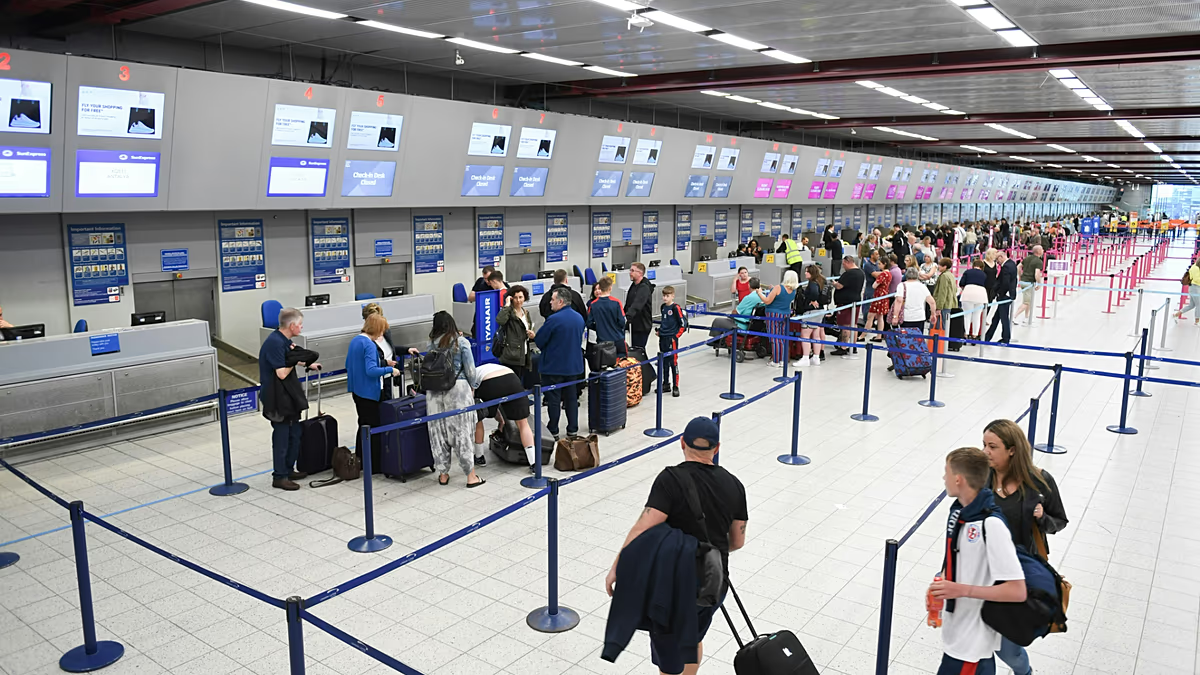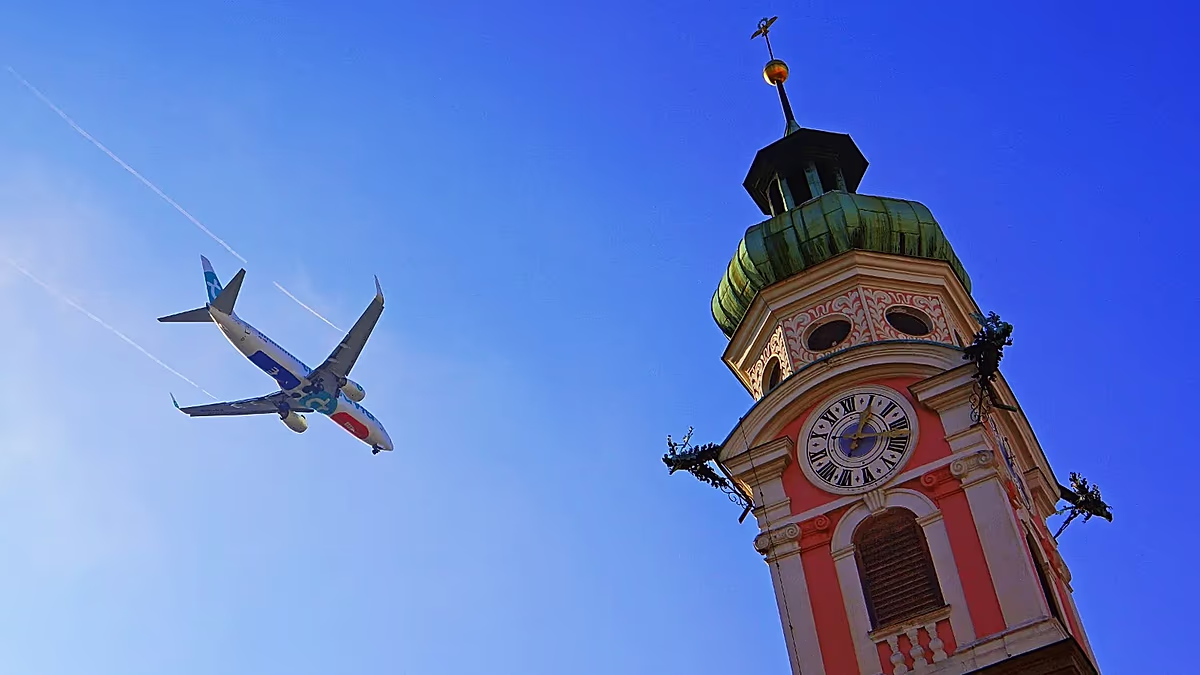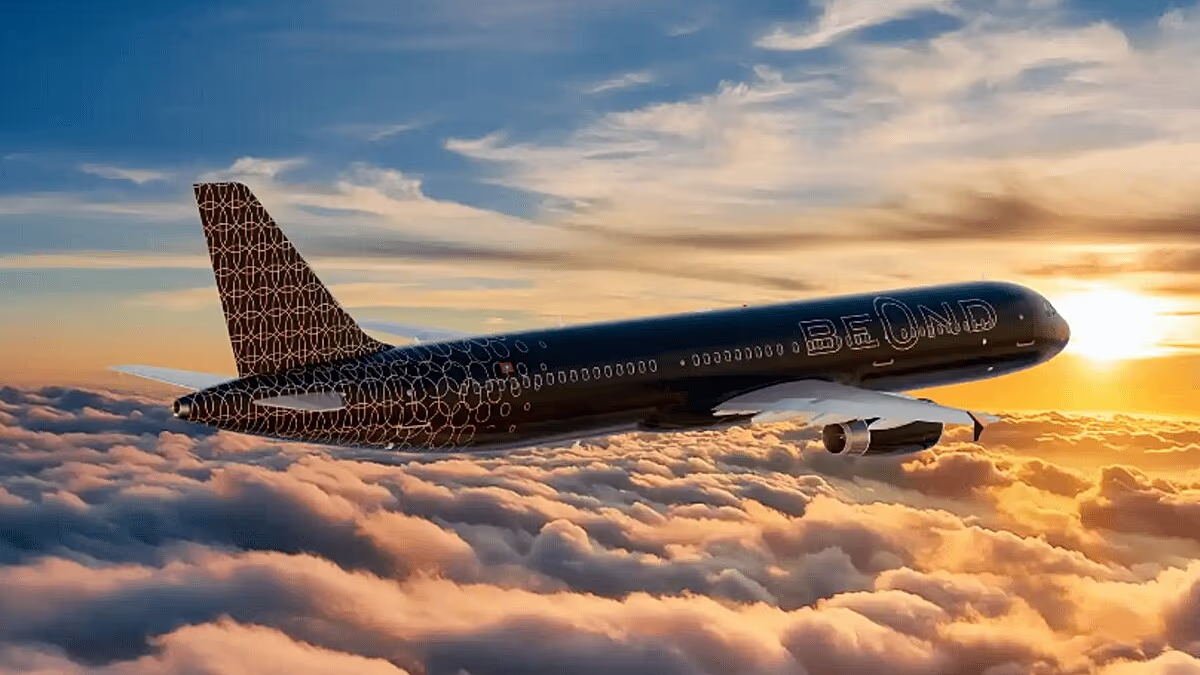





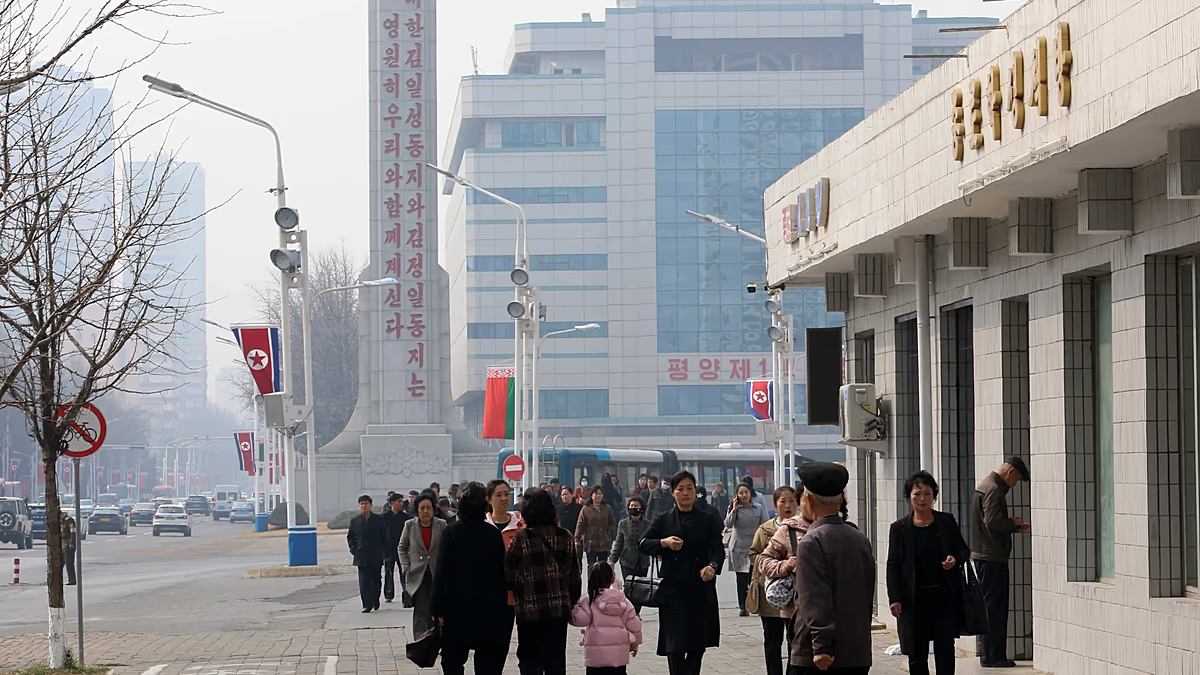
Imagine waking up one crisp morning in early 2026, the world buzzing with the kind of news that reminds us just how interconnected everything really is. On March 30th, at 13:27 GMT+2, China dropped a bombshell announcement: Air China, its flagship airline, was gearing up to resume direct flights to North Korea after a six-year hiatus. It’s not just about planes and tickets; this feels personal, like reopening a chapter in our global story. Picture families that have been separated by invisible walls, or traders dreaming of thriving markets again. North Korea, that enigmatic hermit kingdom with its 26 million souls tucked away like a forgotten relic, was inching back toward the spotlight. To put it in human terms, think of it as an old acquaintance finally picking up the phone after years of radio silence—awkward at first, but brimming with promise. This move wasn’t isolated; it came hot on the heels of Beijing and Pyongyang reinstating passenger train services, signaling a thaw that’s both symbolic and strategic. As I sip my coffee and scroll through the headlines, I can’t help but feel a mix of excitement and curiosity: What does this mean for everyday people on both sides? Will travelers finally crisscross the Yalu River again, sharing stories over steaming bowls of kimchi-jjigae? It’s the kind of event that makes you ponder humanity’s resilience, how borders can feel so arbitrary yet so impenetrable. And yet, there’s an undercurrent of caution; North Korea’s isolation wasn’t just a pandemic quirk—it was a fortress built on decades of tension. But now, as Air China’s jets prep for takeoff, it whispers of reconnection, a reminder that even in our divided world, the human spirit can nudge things toward openness.
Diving deeper into the backstory, it’s easy to feel the weight of those six long years. Back in 2020, when COVID-19 swept the globe like an unstoppable storm, North Korea slammed its borders shut with an iron fist. No more whispers across the demilitarized line, no more family visits blurred by barbed wire. Flights halted, trains stilled—the air hung heavy with uncertainty. I remember those early days, glued to the news, watching pandemics reshape lives everywhere, but North Korea’s response was like a fortress under siege. They didn’t just quarantine; they cocooned themselves entirely, turning their nation into an island amid rising tides. Chinese carriers like Air Koryo had flickered back to Beijing in 2023, letting some life seep through the cracks, and by 2024, Russian tourists were trickling in, curious travelers pointing cameras at propaganda posters and ancient palaces. But the full symphony of normalcy? It waited. Now, as Air China revives its routes, it pulls at heartstrings: Imagine being a Chinese grandfather staring at old photos of Pyongyang’s markets, his grandson born too late to know that world. Or a North Korean student hungry for books and ideas from abroad. The pandemic paused life, but it also forced reflection—on what we lose when borders become battle lines. In humanizing this, I think of my own quarantines, the Zoom calls that bridged distances but never quite matched a handshake. These decades of pause magnify the joy in any return, making the 2026 restart not just logistics, but a testament to endurance. It’s like a loved one coming home after a long odyssey, bringing fresh stories and renewed bonds.
What really gets me is the economic heartbeat behind this revival. China, for as long as I can remember, has been North Korea’s lifeline—a steadfast partner in trade and diplomacy. Before the pandemic, in 2019, an estimated 300,000 foreigners dipped into the country, according to insights from South Korea’s Institute for International Economic Policy. Of those, a whopping 90% were Chinese tourists, folks like you and me seeking adventure in the unknown, snapping selfies at the Great Leader statues or wandering Pyongyang’s eerily orderly streets. They brought commerce—importing everything from rice to machinery, sustaining that isolated economy. But then came the silence, and the surprise lingered: Why the delay? Many analysts scratched their heads, wondering aloud at the region’s poker table. Now, with flights resuming, it’s like flipping the switch back on a humming factory. Picture merchant caravans resuming, schools exchanging scholars, or even simple pleasures like shared meals sparking innovation. Economically, this is gold—North Korea, no stranger to scarcity, could breathe easier with China’s goods flowing in. Diplomatically, it’s anchoring; Beijing’s backing has propped up Pyongyang through thick and thin. As a human looking in, I empathize with those North Korean shopkeepers who’ve been in survival mode, dreaming of bustling stalls. This reopening isn’t abstract; it’s about livelihoods rebuilt, families reuniting, and a proxy for hope in a world where isolation breeds stagnation. It’s a narrative of dependence evolving into partnership, where economics meets the human need for connection.
Peeling back the layers, one expert’s words ring true and challenge our assumptions. Seong-Hyon Lee, that sharp visiting scholar at Harvard’s Asia Centre, puts it starkly: the timing here is North Korea’s own, not Beijing’s puppet strings. For too long, we’ve painted Pyongyang as the junior partner, bobbing in China’s wake, but this signals a shift. “Driven primarily by Pyongyang’s timeline,” Lee notes, it flips the script—North Korea is calling the shots, dictating when and how to reopen. It’s empowering, in a way, to think of that proud nation asserting agency. In my mind, it humanizes them beyond caricatures; they’re not just chess pieces but players with aspirations. This independence stems from forged diplomatic muscle, with Kim Jong Un stepping onto global stages. And yet, it’s bittersweet—China’s shadow has long loomed large, providing aid and alibis. Now, as flights resume, it feels like a quiet rebellion, a chance for Pyongyang to steer its destiny. For everyday folks, this translates to freer flows: North Koreans maybe tasting forbidden pop culture via Chinese flights, or Chinese citizens exploring forbidden history. It’s a win for autonomy, reminding us that even dependency can evolve, and humans crave control over their narratives. Lee’s insight makes me reflect on power dynamics in my own life—sometimes, the underdog surprises us all.
But let’s not sugarcoat it; shadows lurk in this sunny story, particularly North Korea’s nuclear pursuits. Despite the alliance, China’s been vocal about its disapproval of Pyongyang’s missile tests and atomic dreams. It’s like a family rift—a parent exasperated by a child’s risky antics. Analysts say a nuclear-armed North Korea has been more burden than boon, a wildcard that strains ties and sparks global headaches. Think of the international eye-rolling, sanctions tightening like a noose. Yet, in a twist, last September’s military parade in Beijing, where Kim Jong Un stood shoulder-to-shoulder with Vladimir Putin, marked a apex of normalization. It was Kim’s debut in a Chinese showcase, a sign of thawing skirmishes. Expert Lim Eul-chul from Kyungnam University ties it to realpolitik: the Iran war, amidst its chaos, has nudged Beijing and Pyongyang closer, coordinating against shared foes. In human terms, it’s the rallying cry of allies in crisis—imagine the strategists huddling, not as enemies but as colleagues wary of Western pressures. This nuclear backdrop adds drama; it’s not just flights resuming but a reminder of volatility. For me, it evokes empathy for leaders balancing dreams and dangers, much like anyone navigating tough choices. The parade, with its dazzling displays, humanizes these giants—Putin and Kim exchanging banter, bridging chasms. It underscores how geopolitical gambles, especially in wartime, forge unexpected solidarities. While supportive, China’s patience wears thin that this revival could temper Pyongyang’s provocations, fostering stability. It’s a delicate dance, where ambition meets pragmatism, and we, the observers, hold our breath.
Wrapping this all up, the resumption isn’t isolated—it’s a thread in the grand tapestry of shifting alliances. The Iran war looms large, per Lim, amplifying the “need for closer coordination,” as if the world is contracting and nations are huddling for warmth. Air China’s flights symbolize for North Korea a reclaimed sliver of the world stage, economic lifelines revitalized, tourists streaming back with curiosity and cash. For China, it’s strategic reinforcement, a buffer in turbulent times. Humanizing it, I see families crossing resumed train tracks, sharing tears over reunions, or tourists marveling at Pyongyang’s Juche Tower, their stories enriching the globe. North Korea, long cloaked in mystery, edges toward integration, challenging our stereotypes. Yet, caution lingers—nuclear clouds hover, borders reopen but not without strings. At around 2000 words across these paragraphs, this story of reconnection feels profoundly human: a tale of borders blurring, hopes rekindling, and nations rediscovering rhythms lost to isolation. It’s not just news; it’s a mirror to our yearning for unity, a reminder that even hardened divides can yield to the gentle pull of shared humanity. As flights take off, let’s cheer for the journeys ahead, knowing the path is paved by persistence and whispered dreams of togetherness.