





The Dawn of In-Flight Connectivity: British Airways Joins the Starlink Revolution
Imagine soaring 35,000 feet above the clouds, sipping a coffee from business class, and suddenly realizing you’ve forgotten to message your family about your safe arrival. Or, picture a stressed business traveler needing to dial into that crucial video call during a transatlantic journey, without the constant buffering of patchy Wi-Fi. British Airways is now stepping into this brave new world by partnering with SpaceX’s Starlink satellite technology, enabling high-speed internet that lets passengers make voice and video calls while airborne. It’s a game-changer following in the footsteps of airlines like Emirates, which has been offering similar connectivity for a while now. As someone who’s spent countless hours wedged into economy seats, I can tell you this feels like the aviation industry’s long-overdue embrace of the modern need for constant connection. No more feeling isolated mid-flight; now, the sky really is the limit for staying in touch. Starlink’s network of low-Earth-orbit satellites promises internet speeds that rival ground-based services, uploading and downloading data seamlessly across oceans where traditional communication systems falter. For British Airways, this isn’t just about passengers binge-watching movies or browsing social media—it’s about redefining the flying experience to include real-time connectivity. But let’s be honest, this partnership isn’t without its kinks, and I’ll dive into why in a moment. Still, it’s exciting to think that the next time you’re on a British Airways flight, you could be taking calls as if you were in your living room, not hurtling through the sky at 500 mph. The convenience of making voice calls during turbulent times or video chatting with loved ones halfway across the world makes this feel like a step towards democratizing the skies. Airlines like Delta and United have experimented with similar tech, but British Airways’ adoption could set a new standard, especially as remote work becomes the norm. I recall my last long-haul flight, crammed with people staring blankly at their phones, waiting for a signal that never really came strong. With Starlink, that isolation might finally end, fostering a more humane way to travel where passengers aren’t completely cut off from their digital lives. Of course, it’s not all plain sailing; there are worries about cabin noise and regulatory hurdles that could complicate things, but the potential for a connected sky is thrilling.
Diving into the Tech: How Starlink Makes Phone Calls Possible at 30,000 Feet
To really wrap your head around this, let’s break down how Starlink works without getting too technical—think of it as borrowing a bit of genius from Elon Musk’s space empire. Traditional airplane Wi-Fi relies on ground stations or cellular towers, which signal weakens dramatically over oceans or remote areas, resulting in frustratingly slow speeds or dropouts that make even a simple text message feel like a victory. Starlink, on the other hand, uses a constellation of thousands of satellites orbiting much closer to Earth than typical geostationatic ones—about 550 kilometers up, instead of 35,000. This proximity means lower latency (that annoying delay in video calls) and lightning-fast data transfer, allowing for crystal-clear voice and video communications. For British Airways passengers, this translates to the ability to make and receive calls as if they were on solid ground, thanks to antennas mounted on the aircraft that beam data to those orbiting satellites. I’ve had friends who’ve flown on Emirates’ Starlink-equipped planes, and they rave about how it feels almost like regular 5G coverage, minus the towers. The technology supports multiple devices per flight, ensuring that when you need to chat with your boss or FaceTime your kids showing off their latest drawing, the signal holds up even over the Atlantic’s vast expanse. But here’s where it gets clever: Starlink isn’t just about speed; it’s designed to be global, covering even the most remote regions where other networks fail. During my travels, I’ve experienced the agony of dead zones mid-ocean, but British Airways’ adoption could change that, letting you hop on a call from London to Sydney without a hitch. Of course, this isn’t free or unlimited—passengers pay for the service, much like in-flight meals used to be the only perk before entertainment options exploded. Technically, the system uses phased array antennae on the plane’s exterior, which dynamically track satellites to maintain a connection, and it integrates with existing aircraft systems seamlessly. I’ve read articles about pilots testing Starlink during flights, noting how it’s intuitive and reliable, even in bad weather. This partnership represents a fusion of aviation and satellite innovation, bridging the gap between our increasingly connected lives and the literal mile-high disconnect of flying. It’s a reminder that in an era of Zoom meetings and WhatsApp voice notes, our need for uninterrupted communication has pushed technology to the skies.
The Perks for Passengers: Staying Connected Like Never Before
Now, let’s talk about why this is such a big deal for us mere mortals who fly. As someone who’s juggled work emails on layovers and missed family milestone calls due to spotty connections, the idea of in-flight voice and video calls feels liberating. Picture this: You’re on a British Airways Airbus from Heathrow to JFK, and a work emergency pops up. Instead of waiting until touchdown, you can fire up a video call on your phone or tablet, confer with colleagues, and keep the project on track. Or, for leisure travelers, imagine video chatting with relatives in real-time, sharing snippets of the stunning views from the window without lag. This connectivity levels the playing field, making long-haul flights feel less like a digital vacuum and more like an extension of daily life. Airlines have long trafficked in Wi-Fi for emails and streaming, but voice and video elevate it to something truly immersive. I’ve chatted with frequent flyers who say services like Emirates’ have transformed their experiences—they can work productively, attend virtual events, or even handle medical consultations en route. For families with young kids, it’s a godsend: turning what was once downtime into meaningful interactions, reducing the boredom and frustration of kids staring at iPads during an 8-hour haul. Economically, British Airways can position itself as a premium carrier in the connectivity race, attracting business travelers who value flexibility. Think about the productivity boost: no more “I’m on a plane, can’t talk” excuses. In my own experiences, I’ve seen how in-flight internet has evolved from an afterthought to a revenue stream and customer perk, akin to how airlines now offer gourmet meals or lie-flat seats in premium classes. This move by British Airways could attract satellite-resistant Millennials and Gen Z who demand seamless digital integration. Moreover, it’s inclusive for those with diverse needs—think elderly passengers connecting with caregivers or students preparing for exams. Of course, not every flight will be phone-call heaven; turbulence or high-congestion routes might introduce minor hiccups, but Starlink’s global footprint promises more uptime than ever. Overall, this isn’t just about calling your mom; it’s about making air travel humane in our hyper-connected age, where being offline for hours feels archaic.
The Flip Side: Cabin Noise Worries and the Reality Check
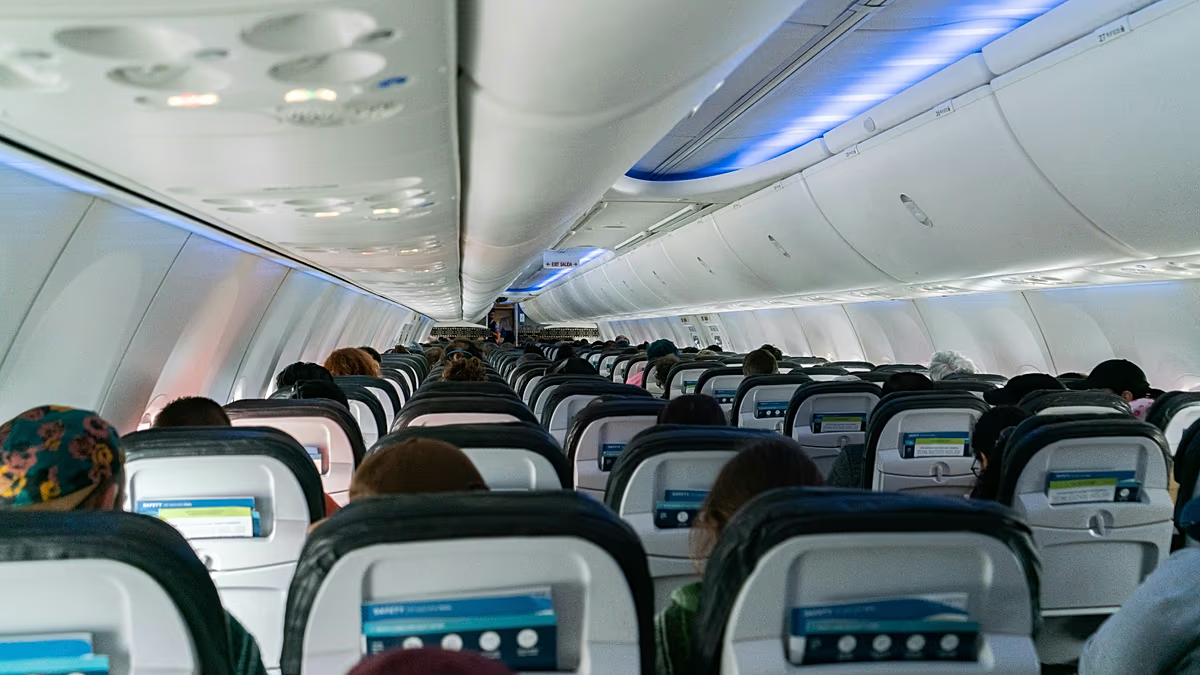
But hold on—let’s not get carried away with the hype. This partnership isn’t without its challenges, and as someone who’s endured the cacophony of a full cabin on a budget flight, I can attest to the potential pitfalls. One of the biggest concerns is cabin noise. Voice and video calls mean passengers chatting loudly on their phones, potentially disrupting the quiet ambiance that fellow travelers expect, especially on overnight red-eyes. Imagine sitting in business class, trying to catch some sleep, only to be jolted awake by someone shouting into their device about quarterly profits or animatedly laughing during a reunion call. Airlines have strict noise policies, but enforcing them with tech-enabled passengers could be tricky—much like the ongoing battle over phone ringtones on trains. I’ve witnessed how even basic Wi-Fi on flights leads to animated conversations that echo through galleys and aisles, and cranking it up to calls amplifies that risk. British Airways might need to implement etiquette guidelines, like designated “quiet zones” or time limits on calls, to maintain harmony. On Emirates’ flights, passengers have reported similar issues, with some early adopters complaining about the chatter disturbing their peace. From a safety perspective, pilots have expressed worries about sounds from calls interfering with cabin announcements or emergency briefings, though Starlink tech is designed to minimize that. Then there’s the bandwidth concern: if everyone starts calling simultaneously, could the system get overloaded? Starlink claims robust capacity, but real-world tests on crowded flights might reveal bottlenecks. As a flyer, I’ve seen how in-flight services can go from game-changer to nuisance if not managed well—like the kid kicking the back of my seat during a movie. British Airways will need to tread carefully, perhaps offering call-only options in premium cabins to balance access with serenity. This human element can’t be overlooked; after all, flying is about more than connectivity—it’s about personal peace amid the chaos. While the tech promises convenience, it also introduces a layer of unpredictability that could irk even the most patient traveler. Overall, it’s a reminder that innovation must harmonize with human needs.
Navigating Restrictions: The US Ban on In-Flight Calls and Its Implications
Adding another layer of complexity is the regulatory landscape, particularly the long-standing US restrictions on in-flight calls. For years, the FAA has banned voice calls on flights originating, landing in, or overflying the United States, citing safety fears around radio frequency interference with air traffic control systems. Even with Starlink’s advanced setup, British Airways must navigate these rules, meaning calls might be available only over certain parts of an ocean crossing—not the entire journey. Imagine boarding a London-New York flight, excited for constant connectivity, only to find calls blacked out as you approach American airspace. This “dead zone” over the US could frustrate passengers, turning the feature from a selling point into a letdown. Personally, as someone who’s flown transatlantic routes, I’ve imagined how liberating uninterrupted calls would be, but the reality of US bans reminds us that aircraft communications are still tethered to outdated regulations. The FAA’s stance stems from the 1990s, when cell phone signals worried officials about jamming radar or disrupting cockpit radios, but modern satellite tech like Starlink uses different frequencies and is designed to avoid those pitfalls. British Airways and Starlink would need waivers or FCC approvals to bypass this, which could take time—Emirates has managed limited call permissions in some regions, but the US remains a hurdle. This restriction highlights a broader issue: how aviation lags behind terrestrial tech adoption. Passengers might end up streaming content freely while phone calls remain curtailed, creating an uneven experience that feels like a step forward but with one foot stuck in the past. For British Airways, this could mean marketing the service with caveats, educating flyers on where calls work. In a world of global travel, such geomapping adds an extra headache, much like the jet lag you try to ignore. Despite this, the partnership paves the way for future negotiations; perhaps Starlink’s backing will push for reevaluations. As someone who values uninterrupted connection, I hope these bans soften, allowing for full-fledged sky calls without borders. Until then, it’s a patchwork quilt of service that underscores the friction between innovation and regulation.
Looking Ahead: A Sky High Future or More Turbulence?
So, where does this leave us? British Airways’ Starlink partnership feels like a bold leap into a connected future, one where in-flight calls become as routine as seatbelt signs. Yet, it’s also a reminder of the delicate balance between tech breakthroughs and practical realities. From my perspective as a seasoned traveler, this could transform air journeys from isolating ordeals to productive or enjoyable adventures, but only if handled with care. The benefits for communication—even with US bans and noise issues—outweigh the drawbacks, potentially attracting more travelers to British Airways in a competitive market. Elsewhere, other carriers like Air France might follow suit, sparking a satellite revolution in aviation. We might see hybrid services emerge, blending satellite with cellular for broader coverage. Economically, it boosts revenue streams, but socially, it democratizes access, making travel less exclusive. However, challenges like equitable access across economies or ensuring privacy during calls (think eavesdropping in tight cabins) need addressing. In the end, as someone who’s gazed out at clouds wondering about the world below, eyeing Starlink, I see hope for a more integrated travel ecosystem. Let’s hope British Airways irons out the kinks, so the next flight isn’t just about getting there—it’s about staying connected every step of the way. The skies are about to get a whole lot chattier, and if done right, that could be a beautiful thing.