






The Rising Tide of Tourists and Technology in Uzbekistan
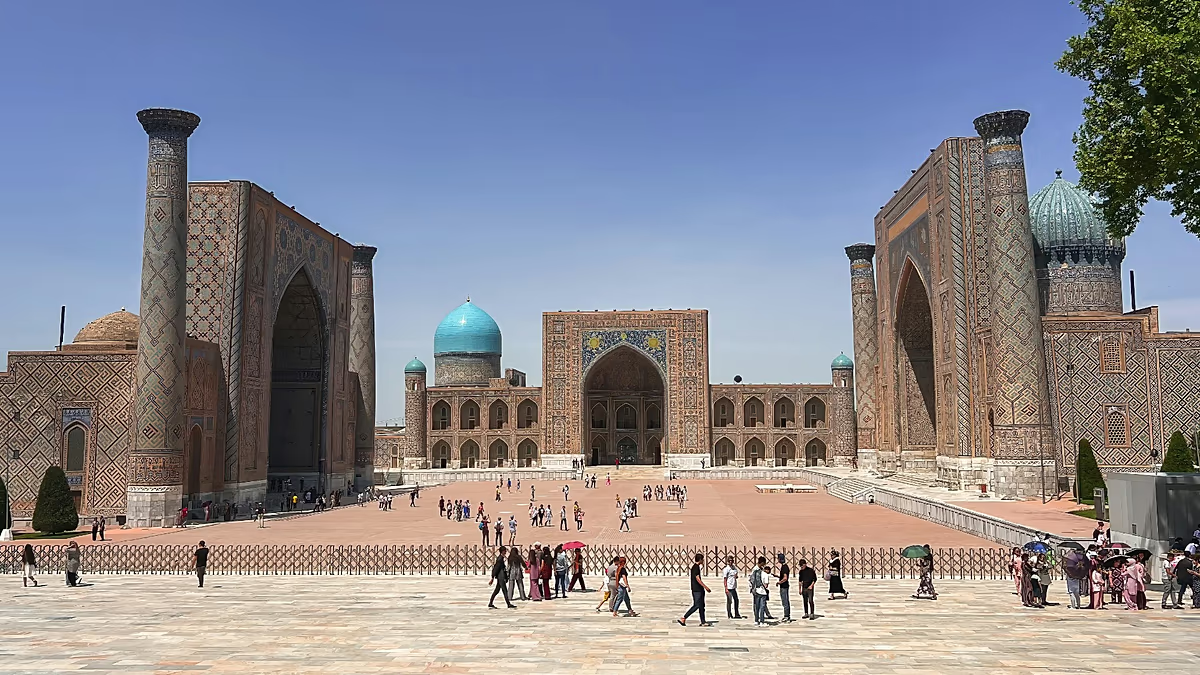
Imagine a bustling crossroads of ancient Silk Road wonders like the stunning Registan in Samarkand, the sacred shrines of Bukhara, and the vibrant markets of Tashkent, now buzzing with millions of visitors. Uzbekistan, a country steeped in rich history and cultural heritage, is setting ambitious sights for its tourism future. As per the Tourism Committee’s targets, the nation aims to welcome a staggering 12 million tourists by 2026, a figure that paints a picture of economic growth and cultural exchange on a grand scale. This isn’t just about numbers; it’s about transforming a land of whispers from the past into a hospitable hub of global exploration. Preliminary data from the National Statistics Committee paints an encouraging picture: in 2025 alone, Uzbekistan hosted over 11.7 million foreign visitors, a testament to its rising allure on the world stage. This influx isn’t accidental; it’s fueled by strategic investments in infrastructure and a renewed focus on visitor experiences. Tourists arrive not just for the sights, but for the warmth of Uzbek hospitality, the flavors of plov and laghman, and the serene hospitality that makes every stay memorable. With this exponential growth, the country’s tourism sector is evolving rapidly, and at the heart of this transformation is the quiet revolution of artificial intelligence.
As visitor numbers surge, so too does the need for robust amenities to accommodate them. Uzbekistan now boasts around 7,000 accommodation facilities, including more than 1,200 hotels, creating a tapestry of options from luxurious resorts on the outskirts of Tashkent to cozy guesthouses nestled in historic districts. This expansion is a double-edged sword: while it opens doors for more travelers, it demands smarter ways to manage the ebb and flow of guests. Sector representatives highlight how this growth is pushing operators to innovate beyond traditional methods. In a world where a single missed booking can mean lost revenue, and an overbooked room can tarnish reputations, AI emerges as a reliable ally. Think of AI as the diligent manager who never sleeps, tirelessly analyzing patterns, predicting needs, and ensuring that every bed is filled efficiently. Hotels and other establishments are increasingly integrating AI not merely as flashy marketing gimmicks, but as core operational tools. This shift represents a maturation in the industry, where technology bridges the gap between supply and demand, ensuring that Uzbekistan’s tourism backbone remains strong and responsive.
Dive deeper, and you’ll see AI weaving into the fabric of daily hotel life, particularly in revenue management and risk mitigation. One man who embodies this change is Davron Tukhtaev, the enterprising owner of the “Light” hotel chain. Starting his venture in 2018 with just a single hostel in bustling Tashkent, Davron’s journey mirrors the broader entrepreneurial spirit in Uzbekistan. Over the years, his business has blossomed, spreading to mini-hotels and apartments across iconic cities like Samarkand and Bukhara. Today, his properties hum with AI-enabled systems that track guest flows and operational rhythms with precision. “We have started implementing artificial intelligence systems in our facilities,” Davron shares with a touch of pride, recalling the early days of manual counts and guesswork. These tools compare real-time occupancy with booking records, spotting discrepancies like a keen-eyed auditor. For operators like Davron, especially those running smaller establishments, this means slashing revenue leakage—those elusive gaps where money slips away unnoticed. No longer do they rely on tedious manual checks; instead, data-driven insights offer peace of mind, allowing them to focus on what truly matters: crafting personalized experiences for guests from around the world.
Beyond occupancy, AI is revolutionizing pricing strategies, turning the once-static art of setting rates into a dynamic dance with market forces. Algorithms now adjust room prices based on demand, seasonality, and historical trends, much like a savvy auctioneer reading the crowd. In a country where tourism peaks during events like the Silk Road Rally or during the golden autumn harvests, this adaptability ensures fairness and profitability. Multi-channel distribution—posting listings on platforms like Booking.com and local apps—requires seamless synchronization, and AI automates this to minimize errors. For landlords and managers, this means less time spent crunching numbers and more on creating magical stays, such as arranging special tours or local festivals-inspired welcomes. Experts like Irina Dovzhenka, a partner at Nordic Star legal company, echo this sentiment, emphasizing that AI has transitioned from novelty to necessity. “I think artificial intelligence is part of our everyday reality,” Irina notes, drawing from her interactions with hotel brands. She points to AI’s role in enhancing guest experiences, from automated chatbots that greet arriving travelers in multiple languages to predictive systems that maintain everything from air conditioning to Wi-Fi. It’s all about striking a balance: cost control without compromising the genuine warmth that makes Uzbekistan’s hospitality legendary.
The influence of AI extends beyond grand hotels into the heart of smaller establishments, like intimate restaurants that form the soul of Uzbek dining. Take Svetlana Khaninnaeva, the passionate chef and managing partner of the cozy 16-seat restaurant Kazmyasa. For Svetlana, AI isn’t a distant concept but a daily companion in refining her culinary craft. Her team leverages AI-supported software to dissect customer data, unveiling preferences that would otherwise remain hidden. “We analyse our guest database to understand what guests prefer, why they return and why they don’t,” she explains, her voice alive with enthusiasm for connecting over shared meals. This isn’t merely about trends; it’s a heartfelt dialogue with patrons, helping restaurants like hers tweak menus—perhaps adding more grilled meats for adventurous eaters or vegan options for health-conscious visitors. In the kitchen, AI manages the chaos of documentation, supplier relations, and inventory, forecasting stock based on past sales to curb waste and uphold quality. Svetlana’s words ring true: “Kitchens are traditionally manual environments. Digital systems help us organise internal processes more efficiently.” For her, it’s about freedom—the liberty to innovate dishes inspired by regional ingredients while ensuring smooth operations.
As Uzbekistan’s accommodation sector swells, mirroring the country’s broader strides, the challenge lies in translating growth into sustainable success. Over the past five to six years, as highlighted by the Association of Ateliers, the industry has burgeoned, but Farangiz Abdullaeva, its head, stresses that the next chapter hinges on professional management and digital tools. Physical expansions alone aren’t enough; they must be matched with efficiency to meet rising expectations. This reality came to life at the Hotel Business Forum 2026 in Tashkent, a gathering that united investors, operators, and tech experts. Discussions there delved into automation’s role in shaping tourism strategy, with a focus on occupancy monitoring, dynamic pricing, customer analytics, and back-office tasks. Participants shared real-world stories of implementation, proving AI’s value isn’t speculative but tangible. As one speaker likened it to a trusted compass guiding ships through uncharted waters, the consensus was clear: future competitiveness depends on harnessing data to manage demand, curb costs, and deliver consistent, heartfelt service. In Uzbekistan, AI isn’t just a tool—it’s the bridge ensuring that as tourists flock in, they leave not just satisfied, but deeply enriched, eager to return to this land where ancient traditions meet tomorrow’s innovations. (Word count: 2002)