







WSU’s Innovative Apple-Picking Robot Tackles Agricultural Labor Challenges
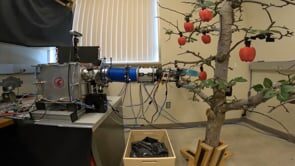
Washington State University researchers have developed a groundbreaking robotic apple-picking arm that could revolutionize fruit harvesting in an industry facing significant labor shortages. Moving beyond traditional agricultural competitions like the Apple Cup football rivalry, WSU’s School of Mechanical and Materials Engineering has shifted focus to practical innovations with their inflatable robotic arm designed specifically for apple orchards. This low-cost technology represents a promising solution to one of the most pressing challenges in modern agriculture: finding enough workers for labor-intensive tasks like harvesting and pruning in Washington’s vital apple industry.
The robot’s design prioritizes practicality and orchard compatibility. Weighing approximately 50 pounds and mounted on a metal base, the 2-foot-long inflatable arm operates through a surprisingly simple mechanism – a soft fabric filled with air that can extend and retract to pick fruit. While the current prototype takes about 25 seconds to identify and harvest an apple (significantly slower than human workers who can pick an apple every three seconds), the technology demonstrates remarkable potential. The research team has published their findings in Smart Agricultural Technology journal and is collaborating with experts at the Prosser Research Extension Center and Cornell University to adapt the arm for integration with automated moving platforms designed to navigate through orchard rows efficiently.
This innovation addresses a critical economic need in Washington state, which leads the nation in apple and sweet cherry production. The fruit industry contributes over $2 billion annually to the U.S. GDP, making it a vital economic sector. However, agricultural operations across the state face mounting challenges in securing adequate seasonal labor for essential orchard tasks including pollination, pruning, flower thinning, and harvesting. These difficulties stem from broader demographic shifts – an aging agricultural workforce combined with declining numbers of migrant farmworkers has created a perfect storm for growers trying to meet labor demands during critical harvest periods. The robotic arm represents a technological intervention that could help stabilize this essential industry.
Though still in development, the WSU robot offers distinct advantages over competing technologies. While robotic harvesting systems are being developed at multiple institutions including Oregon State University and Michigan State University, many existing solutions prove too large, expensive, or complex for practical orchard implementation. As PhD candidate and lead author Ryan Dorosh notes, “Having this very low-cost, safe robotic platform is ideal for the orchard environment.” The researchers acknowledge current limitations – particularly the rudimentary detection system that currently limits picking speed more than the mechanical arm itself – but are actively refining these components. The simplicity of the design suggests promising pathways for improvement that could eventually make the technology commercially viable.
The development of this technology represents a collaborative effort across multiple disciplines and organizations. The research team is working closely with WSU’s Office of Innovation and Entrepreneurship to protect intellectual property and explore commercialization opportunities. Financial support comes from several significant sources, including the National Science Foundation, the USDA National Institute of Food and Agriculture, and the Washington Tree Fruit Research Commission. Practical testing has been conducted at Allan Brothers Fruit in Prosser, Washington, demonstrating the researchers’ commitment to creating a solution that addresses real-world agricultural needs through direct industry engagement.
This robotic apple-picking arm exemplifies how targeted technological innovation can address specific economic and labor challenges in traditional industries. Rather than attempting to completely replace human workers, the technology offers a complementary approach that could help stabilize the agricultural workforce during peak demand periods. As the researchers continue refining the arm’s capabilities and exploring integration with mobile platforms, they’re creating a pathway toward more sustainable orchard management practices. The project demonstrates how university research can directly benefit regional economies while advancing technological capabilities in ways that respect the practical constraints and needs of established industries. By focusing on affordability, safety, and orchard compatibility, WSU’s robotic arm represents a thoughtful approach to agricultural innovation that could eventually transform fruit harvesting practices not just in Washington, but throughout the global apple industry.