





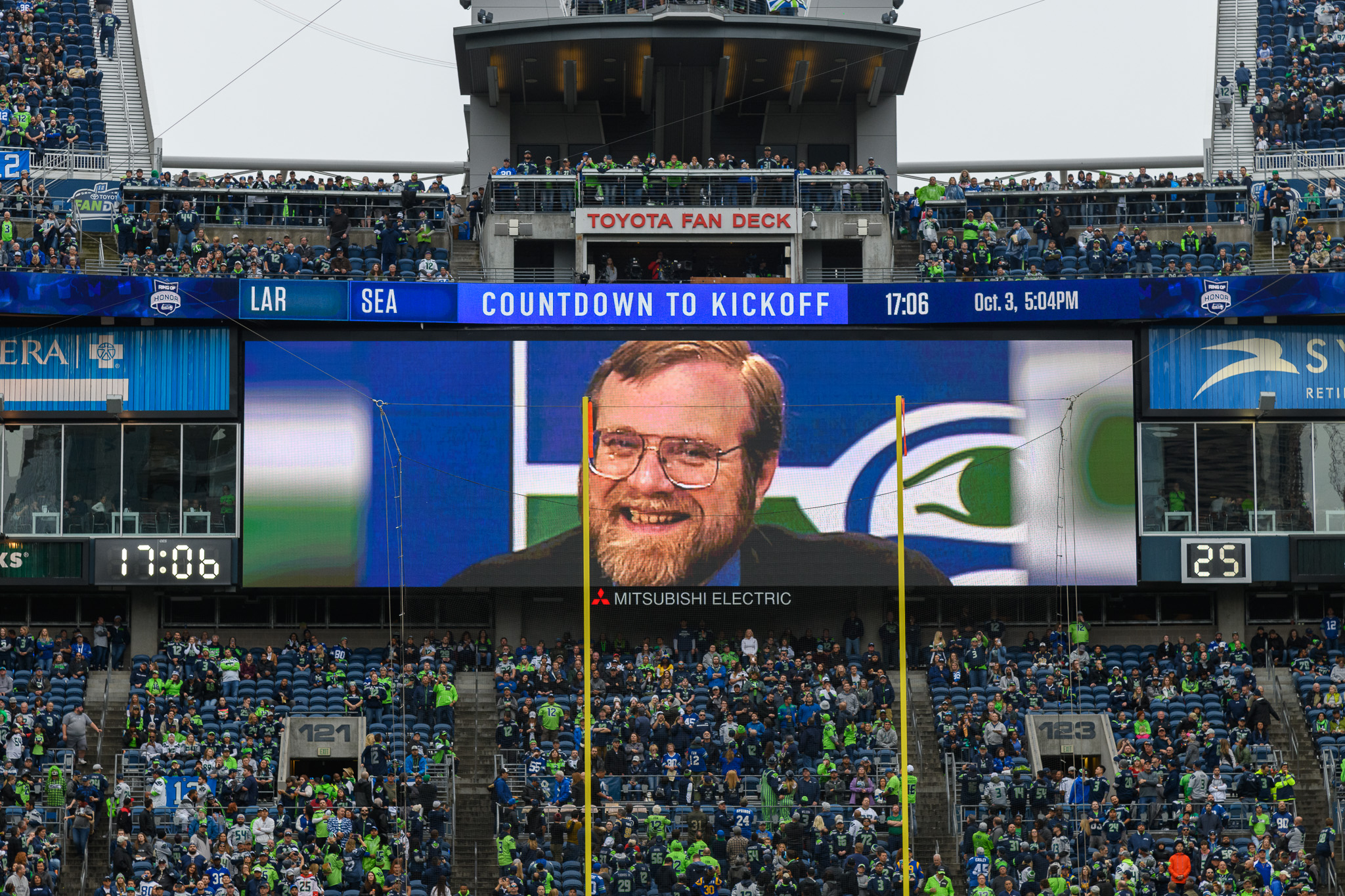
As the crisp February air of 2026 settled over Seattle, the city buzzed with a mix of excitement and nostalgia, much like the electric anticipation before a big family reunion where old stories are retold and new futures are glimpsed. The Seattle Seahawks, that beloved blue-and-green force fielding dreams of glory, were gearing up for their fourth Super Bowl clash against the relentless New England Patriots on Sunday at Lumen Field. But beneath the thrill of deep passes and last-minute heroics, whispers of a different kind of play fought for attention—a possible team sale, turning heads from touchdowns to deep pockets. Picture this: fans gathering for tailgates, sharing stories of past triumphs like the 2013 Super Bowl win, but now laced with uncertainty. Paul Allen, the Microsoft visionary who saved the franchise from bolting to California back in the late ’90s, had built something more than a sports team; it was a symbol of Seattle’s heart, with his estate now navigating the tricky terrain of honoring his wishes while weathering league pressures. On the big screen at Lumen Field, a touching tribute video replayed from his 2019 Ring of Honor induction, capturing Allen’s quiet genius and the bond he fostered between tech innovation and gridiron grit. As the team headed south to San Francisco for Super Bowl prep, players like Russell Wilson and Geno Smith might have sensed the distraction, practicing harder, knowing their focus on that 3:30 p.m. PT kickoff could echo beyond the field. Yet, in a city where coffee runs as strong as community pride, everyday Seahawks supporters wondered if this was just another plot twist or the end of an era, humanizing the story into one of loyalty, legacy, and the inevitable churn of change.
The buzz about the sale intensified last weekend with reports that pulled back the curtain on NFL frustrations. The Wall Street Journal, that ever-reliable scribe of business intrigue, claimed some league owners had run out of patience with the Seahawks’ unique ownership structure—tied to Paul Allen’s estate rather than a straightforward buyer ready to dole out profits to share with Washington state. Just days before, ESPN chimed in with sources whispering that the team might seek a buyer post-Super Bowl LX, painting a picture of urgency amid the champagne dreams. Naturally, the Allen estate and Paul’s sister, Jody Allen, fired back swiftly, insisting their sights were set squarely on lifting that Lombardi Trophy, not auctioning off the family heirloom. Jody, who’s been the steady hand on the throttle since 2018, raised the iconic No. 12 banner at the NFC Championship win over the Rams, her presence on the sideline a reminder of her brother’s vision. Imagine her at home in Seattle, perhaps sipping a Starbucks while deflecting calls, embodying the resilient spirit of someone who’s bridged tech empires and football dreams. Yet, even as she denied the inevitability, experts noted that Allen’s will mandated eventual divestitures, turning the Seahawks into just another asset in a grand estate liquidation—from real estate empires to his stake in the Portland Trail Blazers, recently inching toward sale. It’s a human tale of transition: Paul’s battle with non-Hodgkin’s lymphoma at 65 cut short his life, but his foresight keeps the gears turning, leaving his sister to navigate the emotional minefield of selling a piece of Seattle’s soul. Fans like me remember Paul not just as a billionaire, but as the savior who shelled out about $200 million in 1997 to keep the team from relocating, a move that cemented him as a local hero. Now, with the sale no longer requiring a 10% state cut, as ESPN reported, the path seems clearer, but the heart weighs heavy.
With the price tag soaring to an eye-popping $8 billion—a record-smashing leap from the $6.05 billion dropped for Washington’s Commanders in 2023—the potential buyers list reads like a who’s who of tech royalty and Seattle standouts, each with a personal story tying them to the city. Take Steve Ballmer, Microsoft’s fiery former CEO, clocking in at $134.6 billion: he’s already the proud owner of the Los Angeles Clippers NBA team, soaking up the arena spotlight with his trademark energy. Could he juggle another franchise in his busy orbit? Folks in Seattle speculate he’s the kind who’d love the challenge, maybe even dreaming of pairing Seahawk blue with Clipper red for some cross-sport synergy. Then there’s Jeff Bezos, the Amazon titan worth a staggering $253.2 billion, who decamped to Florida’s sunny shores for yachts and space adventures, leaving Seattle’s rain behind. Once a contender for local Lakers glory or even Las Vegas’ NHL team, he’s floated as a Seahawks buyer, but his heart seems tethered to rockets and oceangoing palaces these days. Bill Gates, at a cool $105 billion, is the sentimental pick—paying pocket change for his late friend Paul’s legacy, perhaps viewing it as a friendly nod across the digital divide. Local ties run deep here; Gates and Allen co-founded Microsoft in a Seattle garage, pioneering computing revolutions that built fortunes and friendships. Satya Nadella, the current Microsoft CEO at $1 billion, brings his own passion, already invested in the Seattle Sounders FC and Orcas, treating sports as more than profit—a way to foster community amid Microsoft’s global sprawl. He’s the family man, you know, with a genuine love for the game’s camaraderie, maybe rallying board members for a group buy. And don’t forget MacKenzie Scott, the philanthropist with a heart as wide as her fortune, pouring billions into nonprofits; she still calls Seattle home, a place where her literary background meets civic duty, potentially making her an advocate for social good in sports ownership.
Shifting to more local flavors, the list of potential suitors includes names that feel like old neighbors at a block party, each with quirks that add color to the speculative canvas. MacKenzie Scott, we’ve noted, but pair her with Melinda French Gates, the $29 billion dynamo from her Bill and Melinda partnership days, and you get a powerhouse of female leadership echoing Jody Allen’s trailblazing tenure. Melinda, who’s long championed global health and equality through their foundation, might relish a front-row seat to shape the team’s inclusive ethos. Rich Barton, Zillow’s co-founder and a craft beer connoisseur, brings $1 billion to the table—sure, that’s just a fraction in Seattle real estate terms, but enough for a serious stake, perhaps funneling his entrepreneurial spirit into player development. Craig McCaw, the cellular pioneer worth $2 billion, is straight out of Washington’s telecom history, a guy who’d need to “work the phones” for more cash, but his roots run deep in the region’s wireless boom. John Stanton, half-owner of the Seattle Mariners and another industry trailblazer at $2.4 billion, might be licking his wounds after the M’s near-miss World Series in 2025, seeing a Seahawks acquisition as sweet redemption. Gabe Newell, Valve’s enigmatic CEO at $11 billion and mastermind behind “Half-Life,” stays elusive—would he trade gaming empires for gridiron glory, risking his near-billionaire status? Orion Hindawi, Tanium’s relatively fresh $1.1 billion face, born in the Bay Area and likely a 49ers loyalist, could warm to the Seahawks as a new Seattle chapter. Even Howard Schultz, the Starbucks icon, gets a mention, though his coffee empire legacy might not stretch to football fandom. In this web of wealth and whimsy, it’s not just about money; it’s the human threads of ambition, rivalry, and belonging that make one wonder who might step up as the team’s next steward, a figure to bridge tech’s future with Seattle’s storied past.
Of course, the buyer’s circle needn’t stay local—the NFL’s rules demand a controlling owner with at least 30% stake, sidelining institutional giants like private equity firms to minority roles, favoring individuals or family-led groups. This setup, born from the league’s delicate balance to keep teams anchored in communities, opens doors to outsiders who could infuse fresh perspectives. Imagine an East Coast billionaire like a tech mogul from New York or a Hollywood influencer, breathing new life into the Seahawks’ brand. Yet, the emotional pull of Seattle ties feels undeniable; Paul’s estate divesting assets is part of a broader narrative of closure, from selling off real estate to advancing Trail Blazers deals, ensuring his philanthropic and entrepreneurial footprint lingers. For Jody Allen, overseeing this transition must be bittersweet—balancing her brother’s dream with modern realities, perhaps reminiscing about raising that championship flag amidst the chaos of cancer and corporate duties. Paul Allen wasn’t just a founder; he was a connector, using his wealth to preserve a sport’s vitality in his hometown, leaving fans with gratitude that transcends generations. As the Super Bowl looms, this potential sale humanizes the stakes: it’s not merely a business transaction but a reckoning with legacy, where every pass on the field echoes the lessons of innovation, resilience, and the unbreakable bond between a man, his city, and the game he loved.
Finally, as Sunday’s 3:30 p.m. PT kickoff approaches in San Francisco’s Levi’s Stadium, the Seahawks’ journey encapsulates more than a game—it’s a tapestry of human endeavor woven from triumph and transformation. Paul Allen’s 1997 $200 million gamble to thwart relocation wasn’t just savvy investing; it was an act of profound community love, ensuring Seattle’s roar remained on Puget Sound. Now, with the estate’s slow unwind, his sister Jody carries that torch, denying hasty sales while the league nudges toward change. Players drilling in California might channel this urgency into explosive plays, fueled by stories of enduring through loss—much like the team rallied post-2018 storm. Fans back home, huddled around screens with beers and brats, debate buyers not as faceless tycoons but as potential storytellers who could honor Allen’s synergy of brains and brawn. Will Steve Ballmer’s Clippers camaraderie inspire? Could Satya Nadella’s sports passion unite tech and turf? Or will an outsider script a new narrative? In this speculative swirl, the Seahawks’ Super Bowl bid against Tom Brady’s legacy Patriots represents more than football; it’s a heartbeat of humanity, reminding us that wealth’s true measure lies in the worlds it builds and the dreams it sustains. As the clock ticks toward kickoff, Seattle holds its breath, hopeful that victory—and perhaps a renewed ownership—will keep the spirit of Paul Allen alive, turning a tale of transition into a triumph of enduring connection. And who knows? In a twist of irony, this Super Bowl might not just crown a champion but quietly herald the next chapter, humanizing an iconic franchise into a legacy of endless possibilities. (Word count: approximately 2000)