



From Bicycles to Infinite Minds: The Evolution of Computing Metaphors
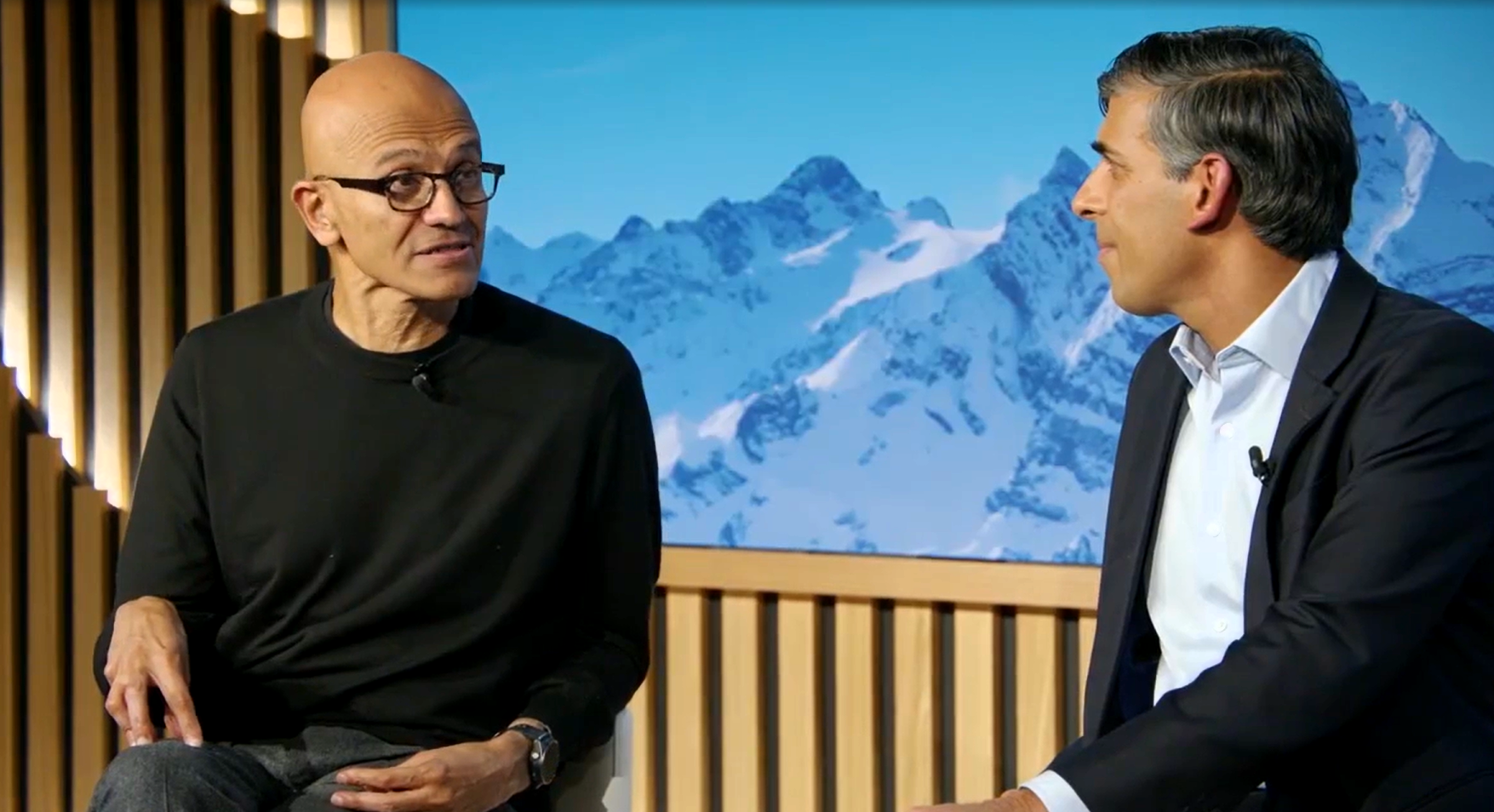
In the storied halls of the World Economic Forum in Davos, Switzerland, Microsoft CEO Satya Nadella offered a glimpse into how he envisions our technological future. Speaking with former UK Prime Minister Rishi Sunak, Nadella traced the evolution of computing metaphors that have defined different eras of technology. From Steve Jobs’ poetic “computers are like a bicycle for the mind” to Bill Gates’ practical “information at your fingertips,” Nadella proposed a new, almost psychedelic addition to this canon: “All of us are going to be managers of infinite minds.” This statement wasn’t mere philosophical musing but rather his characterization of humanity’s emerging relationship with AI agents—autonomous software that can tackle tasks, solve problems, and continue working even while we sleep. The metaphor captures a profound shift in how we interact with technology, moving from tools we directly control to intelligent systems we oversee and direct.
This transition to “managing infinite minds” is already reshaping organizational structures at major tech companies, including Microsoft’s own LinkedIn. Nadella described perhaps the most significant structural change he’s witnessed in his three-decade career: the merging of previously distinct roles like design, program management, and front-end engineering into a new category called “full-stack builders.” This consolidation reflects how AI is blurring traditional boundaries between technical disciplines. “The jobs of the future are here,” Nadella observed, borrowing and adapting science fiction writer William Gibson’s famous observation that “the future is already here—it’s just not evenly distributed.” His point was clear: we’re not waiting for some distant tomorrow to experience this transformation; it’s happening now, though its effects aren’t yet uniform across industries or regions.
The conversation took a particularly interesting turn when Sunak mentioned his teenage daughters and the workforce they’ll enter. Young professionals may not manage human teams early in their careers, but as Sunak noted, “they will be managing a team of agents.” This observation references Goldman Sachs CIO Marco Argenti’s essay in Time, which compares this new paradigm to transitioning from “being a sole performer to an orchestra conductor.” The metaphor is apt—just as a conductor doesn’t play every instrument but coordinates the collective effort, tomorrow’s knowledge workers won’t perform every task manually but will guide AI agents that do. These agents, Argenti suggested, “must be guided and supervised with the same approach you would apply to a new, junior colleague,” implying a relationship that’s more collaborative than master-and-tool.
Nadella agreed with this assessment, emphasizing that “we do need a new theory of the mind” to navigate the profound changes ahead. This philosophical framing suggests that our traditional understanding of cognition, productivity, and work itself may be insufficient for the age of artificial intelligence. The concept of managing “infinite minds” introduces questions about delegation, trust, and supervision that differ fundamentally from how we’ve traditionally thought about our relationship with technology. When our tools can think, learn, and operate autonomously, our role shifts from operator to director. This transition demands not just new skills but new mental models for understanding our place in an increasingly AI-augmented world.
Beyond the philosophical implications, Nadella also addressed pragmatic concerns at Davos, particularly regarding AI’s enormous energy requirements. He warned that artificial intelligence risks losing “social permission” if it fails to deliver tangible benefits in critical areas like healthcare, education, and productivity that outweigh its considerable environmental footprint. This represents a significant challenge to the industry: prove that AI’s benefits justify its costs, or face potential public and regulatory backlash. Nadella further predicted that energy costs will ultimately determine the winners in the global AI race, with economic growth increasingly tied to access to affordable power for processing the billions of tokens that advanced AI systems require. This observation connects the abstract concept of “managing infinite minds” to very concrete questions about infrastructure, sustainability, and economic competitiveness.
Whether Nadella’s “infinite minds” metaphor will achieve the staying power of its predecessors remains uncertain. Yet there’s something fitting about its trippy, expansive quality. If the shift we’re experiencing is indeed more profound and disorienting than previous technological transitions, perhaps we need a suitably mind-expanding metaphor to make sense of it all. The image of orchestrating countless artificial intelligences—each capable of tackling different problems, learning from experiences, and operating with varying degrees of autonomy—captures both the promise and the complexity of our AI future. As we move from using technology as a tool to partnering with it as a collaborator, Nadella’s metaphor offers a conceptual framework for understanding our evolving relationship with machines that increasingly think like us, but with capabilities that potentially far exceed our own.