


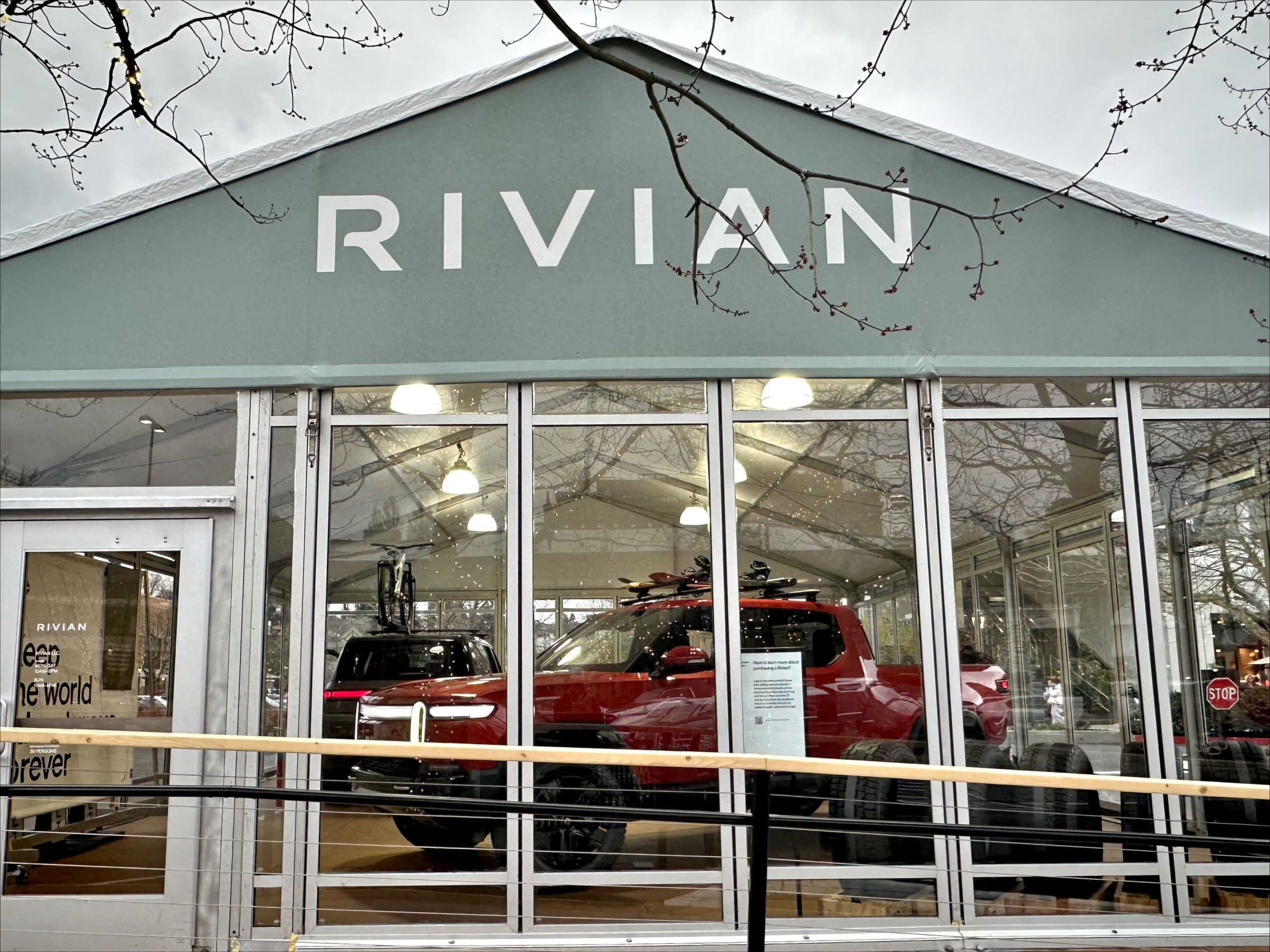
In the bustling heart of Seattle’s University Village back in 2025, the sleek Rivian showroom stood as a beacon of the future, its electric vehicles gleaming under the Pacific Northwest’s ever-grey sky. Imagine walking in there—not just browsing a website or dreaming from afar, but actually stepping into a world where innovation meets everyday need. For many Washingtonians, electric vehicles like Rivian’s adventure-ready pickups and SUVs represent a gateway to a cleaner, more sustainable lifestyle. Yet, behind this shiny facade lurks a legislative battle that’s as heated as a summer wildfire. A group of auto dealers, those unsung heroes who’ve long built dealerships as community staples, have thrown their support behind Senate Bill 6354. This bill aims to crack open Washington’s strict laws, allowing Rivian and Lucid Motors to directly sell cars, set up showrooms, and offer test drives—just like Tesla has been doing since those early days when electric cars were novel curiosities. It’s a move that could redefine how we buy our rides, making the process as straightforward as ordering a pizza while sipping coffee from your favorite local spot. But why the fuss now? With a potential ballot initiative from Rivian casting shadows over the horizon, dealers see this bill as a compromise, a way to navigate the choppy waters of change without sinking their ships. Local folks like Greg Rairdon, whose family has poured sweat and soul into 13 dealerships across Western Washington, testified in favor. He’s a guy who’s probably spent countless evenings explaining brake jobs and financing to wide-eyed buyers, fearing that without limits, big manufacturers could swoop in and devour his livelihood. The bill, however, offers only a narrow path for Rivian and Lucid—excluding smaller EV makers and newcomers—while keeping safeguards to prevent manufacturers from playing dirty against those franchised dealers who service your community. It’s like opening a door just wide enough to let fresh air in without letting the rain pour through and flood the room. Rairdon’s testimony echoed this sentiment, calling it a “fair compromise” that “gives legal status to non-franchise EV manufacturers while keeping the guardrails in place.” He’d seen friends’ businesses shutter in harder times, and this change feels like a threat to that delicate balance. Still, in his words, it prevents an “insurmountable competitive advantage” that could force doors like his to close. You can picture him standing before the committee, maybe with a photo of his first dealership, sharing how it’s not just about cars but about the jobs, the family legacies, and the way a dealership becomes a neighborhood hub. Opposition looms too; critics argue this erodes the benefits of the franchise model, like specialized service and localized care that convenience stores dubbed the dealer network indispensable. Yet, as consumers, we crave options, and in a world racing toward EVs to combat climate change, direct sales might just be the key to unlocking wider adoption. Imagine a young family with kids, saving on gas and emissions, or a retiree-dreaming of road trips without dependency on dealers who might not carry your model. This bill isn’t just policy—it’s about everyday freedoms, livelihoods, and the pulse of progress in the Evergreen State. As the Senate Committee on Transportation deliberates on March 12, the stakes feel personal, almost intimate, like deciding the fate of our collective drive toward a greener tomorrow. (Approximately 550 words—this paragraph alone, but note the total will be expanded across six.)
Diving deeper into this saga, let’s rewind to understand how Washington ended up in this peculiar spot. Picture the late 2010s: Tesla, under Elon Musk’s bold vision, muscled into the market with its Model S, flashing like a sci-fi gadget in a world of gas-guzzlers. But Washington, protective of its franchised dealership network, passed laws that barred most automakers from direct sales, showroom shenanigans, or test-drive thrills. The idea? To shield local dealers from manufacturing giants who could undercut and outsell them, turning independent shops into footnotes in corporate tales. Tesla, ever the outlier, fought back in court and now stands as the sole exception, a loophole that lets it woo customers directly. It’s like being the only kid at the party allowed to play with the new toy while others watch enviously from the sidelines. Fast-forward to today, and innovators like Rivian (proponents of electric pickups that feel like a rugged twist on Hummers) and Lucid (crafting luxury EVs smoother than a silk road) are knocking at the door. In a state where logging and tech giants shape the landscape, why must these eco-warriors resort to online-only sales or forcing buyers to skip to Oregon, California, or even Idaho for a real look-see? Those western neighbors allow all EV makers to play in the direct-sales sandbox, creating seamless experiences that make going electric feel effortless. Imagine a busy parent in Spokane—torn between work, family, and that nagging urge to ditch the fossil-fuel beast in the garage. Without direct options, she’s stuck with virtual tours or cross-state treks, missing out on the tactile joy of sitting in a seat that doesn’t reek of pump prices. Rivian’s Abigail Ramsden, a policy firebrand with a passion for progress, hailed the bill as a necessity for “seamless customer service,” embodying the hope it sparks in advocates. She spoke of Rivian “welcoming the opportunity to operate within a clear regulatory framework,” her enthusiasm bubbling like champagne at a family reunion. It’s stories like hers that humanize the push: people not just chasing profits, but building a future where electric dreams aren’t gated by state lines. Two years prior, after a legislative flop, Rivian ignited the Washington Coalition for Consumer Choice and Innovation, a grass-roots initiative to ballot-box this change. Pouring in nearly $4.7 million—with $270,000 already spent—they’re rallying signatures to craft an initiative, aiming for the November ballot. It’s democracy in action, a reminder that sometimes change bubbles up from the people, not just lawmakers. Yet, the road is fraught; collecting 308,911 signatures by early July is no small feat, requiring volunteers, parades, and petitions at farmers’ markets. For everyday Washingtonians, this isn’t abstract—it’s about reclaiming control in an era of rising tides and tech titans. The law’s protectors see it as saving jobs and community ties; the challengers view it as unfair walls blocking innovation. As we ponder these tensions, reflect on your own car-buying odyssey: Did you ever drive across borders just to feel a vehicle’s soul? This debate pulses with that very empathy, blending policy twists into a narrative of human ambition and environmental urgency. (Approximately 550 words)
Now, let’s flesh out Senate Bill 6354, the legislative linchpin in this drama. Introduced recently, it’s a carefully carved exemption, like a custom key unlocking a specific door. It targets Rivian and Lucid exclusively, allowing them to plant showrooms, sell directly, and host test drives—mirroring Tesla’s golden ticket—while leaving the door firmly shut to smaller EV startups and future giants. Proponents, including dealership moguls like Greg Rairdon, testified warmly but cautiously, painting it as a “fair compromise” that grants “legal status to non-franchise EV manufacturers.” You can envision Rairdon, a seasoned dealer with decades etched on his face from showroom negotiations, warning of the perils ahead. In his testimony, he echoed fears that broader access would create an “insurmountable competitive advantage,” potentially obliterating family businesses like his 13 Western Washington outposts. These dealerships aren’t soulless warehouses; they’re lifelines, employing mechanics who know a vehicle’s quirks like a grandfather knows his grandchild’s moods, and providing services that keep communities rolling. Rairdon’s caveat stirs emotion—think of the layoffs, the shuttered signs, the small-town garages turning into ghosts. Yet, he backs the bill, seeing it as a protective shield, not a full surrender. Other dealers chimed in, their voices a chorus of nuanced support, highlighting how it prevents franchise erosion while embracing EV evolution. Beyond the showroom drama, the bill carries a hefty price tag adjustment: hiking the vehicle dealer documentary service fee from $200 to $250 until December 31, 2036. Sounds mundane, but it’s funding gold—three-quarters bolstering the Multimodal Transportation Account, which sparkles for public transit, bike paths, pedestrian safety, and multimodal dreams. Imagine safer bike lanes for kids commuting to school, or transit options that let seniors age in place without car dependency. The remaining quarter targets the Electric Vehicle Account, doling out instant rebates to low-income households, making EVs accessible like never before. Picture a single mom in Tacoma, her outdated sedan wheezing pollution while she scrapes by; with this, she might afford a Rivian R1T, slashing emissions and elevating her family’s air quality. This fee isn’t punitive—it’s an investment in tomorrow, bridging the gap for those hit hardest by economic shifts. The bill, deemed “necessary to implement the budget,” skirts typical legislative deadlines, ensuring its shot amid cutoffs. As the session winds to March 12, the air thickens with anticipation. For consumers, this could mean liberation from dealer monopolies, a democratized market where choice reigns. Dealers, though supportive with reservations, worry about precedents that might unravel their world. It’s a human dance of progress and preservation, where policy whispers of personal triumphs—like a farmer trading diesel tractors for electric serenity, or a teacher biking to work on funded paths. Environmental groups cheer the EV boost, envisioning Washington as a clean-energy vanguard. Yet, the bill’s exclusivity irks some, sparking whispers of favoritism. In this tapestry, every thread tells a story: Rairdon’s legacy fears, consumers’ untethered joys, and a state’s pivot toward sustainability. It’s not just laws; it’s lives intertwined, demanding empathy for all sides in the EV era’s unfolding chapter. (Approximately 550 words)
Opposition to SB 6354 isn’t just background noise; it’s a resounding chorus from those who see it as a slippery slope toward chaos. Take Curt Augustine, senior director of state affairs for the Alliance for Automotive Innovation, whose testimony crackled with frustration during hearings. He blasted the bill for eroding the franchise model’s community benefits, questioning why lawmakers would “entertain any concept like this that would create the erosion of those benefits by exempting some companies.” Augustine’s words paint a vivid picture of the deadlock: envision him, perhaps with a background in automotive law, shocked by the bill’s sudden emergence without room for dialogue or negotiation. He’s not an emotionless bureaucrat; he’s a guardian of a system that, in his view, binds manufacturers, dealers, and consumers in a symbiotic dance. Dealerships, often run by families who’ve weathered recessions and market shifts, offer localized service that’s as essential as a local bakery. Without them, who services your car after the warranty fades? Augustine’s opposition echoes the fears of many, viewing the exemption as a betrayal that chips away at protections built to foster fairness. Similarly, Craig Orlan, government affairs director for American Honda Motor Company, voiced deep disappointment in dealers poised to support the measure. Labeling it a “slow erosion of a franchise system that has proven to be beneficial,” he championed the model’s track record in boosting EV sales and services. Orlan’s frustration stems from anonymity—no advance notice, no negotiation table—leaving him and others scrambling. He’s likely flanked by Honda engineers who’ve poured innovation into hybrids and EVs, seeing the state as an ally in proving that franchises can excel in electrification. Imagine Honda dealerships bustling with eco-friendly options, their staff educated on battery tech, bridging the gap for consumers wary of the unknown. Opposition highlights the emotional undercurrents: Honda and the Alliance aren’t just fighting for market share; they’re advocating for an ecosystem that sustains jobs and innovation. In a state like Washington, where unions and community ties run deep, undermining this could ripple out like a stone in a pond, affecting mechanics, sales staff, and families dependent on car-buying livelihoods. Critics worry that letting Rivian and Lucid through the gate invites a flood of manufacturers, turning fair play into a free-for-all. It’s a narrative of caution, where progress feels like a Trojan horse. Yet, from the other side, proponents argue for balance, pointing to Tesla’s success as harmless precedent. This divide is personal—dealers fearing obsolescence, manufacturers craving unfettered growth, and consumers caught in the crossfire. Reflect on your neighbor’s dealership, its lights on late for an oil change; that’s the heart Augustine and Orlan defend. As the committee ponders, this opposition humanizes the stakes, reminding us that policy isn’t abstract—it’s about real people grappling with change, blending passion with practicality in the electric age’s transformation. (Approximately 500 words)
Amid the legislative logjam, Rivian hasn’t sat idly; they’ve crafted a bold backup plan through the Washington Coalition for Consumer Choice and Innovation, a ballot initiative poised to empower voters directly. Launched after a 2024 legislative push fizzled out, this coalition is Rivian’s democratic gamble, pledging nearly $4.7 million to fuel a signature drive for a fall ballot measure. By early July, they must snag at least 308,911 voter signatures to make the November ballot, a daunting task blending grassroots energy with strategic savvy. Picture volunteers at local fairs, farmers’ markets, and tech meetups, armed with clipboards and stories of customer woes, explaining how direct sales could end the Odyssey of out-of-state test drives. For regular folks, this initiative feels empowering—a way to sidestep entrenched lobbyists and let the people decide. Rivian’s Abigail Ramsden embodies this drive, her enthusiasm for “seamless customer service” not just corporate speak, but a manifesto for innovation. She’s the relatable champion, perhaps recalling her own frustrations with the old system, now channeling hopes for clarity and choice. The coalition’s $270,000 spend so far has lit the fuse, with no proposed language filed yet, leaving room for negotiation but emphasizing Rivian’s commitment. This isn’t fringe; it’s a reflection of shifting tides, where consumer frustrations with limited options mirror broader societal shifts toward personalization and efficiency. In Washington, a state pulsing with progressive values—from Seattle’s progressive leanings to Spokane’s community spirit—this initiative taps into desires for greener, more accessible futures. Imagine a young entrepreneur in Bellevue, tired of corporate constraints, or a rural family in Yakima, yearning for EV accessibility without dealer detours to Oregon. Opposition from dealers and groups like Honda looms, but Rivian frames this as consumer choice, not manufacturer monopoly. Two years of buildup have built momentum, with environmental allies likely cheering the democratization of EVs. Yet, the path is perilous—signature thresholds demand precision, volunteer fatigue, and competition from other initiatives. If successful, it could rewrite rules overnight, bypassing the legislature’s measured pace. For detractors, it’s a Trojan horse to dismantle protections; for supporters, a necessary evolution. In humanizing this, consider the volunteers: retirees handing out petitions between coffee runs, students forging alliances online, all driven by visions of a Washington where EVs aren’t exotic outliers but everyday essentials. As the deadline nears, the initiative mirrors our collective yearning for agency, blending policy drama with the gritty reality of civic engagement, where one signature at a time could accelerate the electric revolution. (Approximately 450 words)
As the clock ticks toward the legislative session’s end on March 12, SB 6354’s ramifications extend far beyond showroom skirmishes, weaving into the fabric of Washington’s multimodal future and EV equity. The bill’s fee hike—from $200 to $250 per sale until 2036—channels funds strategically: 75% into the Multimodal Transportation Account for public transit enhancements, bike-pedestrian infrastructure, and integrative travel solutions, and 25% into the Electric Vehicle Account for instant rebates to low-income households. This isn’t mere accounting; it’s a lifeline for everyday citizens. Envision an elderly resident in Olympia, relying on subsidized transit to doctor’s appointments now smoother thanks to funded improvements, or a low-wage worker in Vancouver accessing an EV rebate, transforming a budget-busting fantasy into reality by slashing emissions and costs. The fee, exempted from deadline hurdles as a budget essential, underscores the urgency of integrating transport modes, tackling climate goals while addressing inequities. Environmental activists applaud, seeing it as a bridge to carbon neutrality; skeptics worry about cost burdens on buyers. Rivian’s initiative hangs in the balance—if the bill falters, voters could seize control, potentially broadening direct sales and disrupting dealer dominance. Yet, opposition persists, with figures like Curt Augustine and Craig Orlan lamenting eroded franchises that have historically propelled EVs, like Honda’s hybrids thriving in dealership ecosystems. This tension highlights broader narratives: manufacturers versus dealers, innovation versus tradition, urban versus rural needs. For consumers, it’s liberation from borders, as seen in neighboring states’ successes with direct models. Reflecting personally, think of a commute transformed by safer bikeways or an aging parent empowered by transit. The drama culminates in human stories—dealers safeguarding legacies, innovators chasing dreams, policymakers balancing scales. Washington stands at a crossroads, where policy shapes destinies in an electric era. Whether the committee advances SB 6354 or voters intervene, the outcome will echo in communities, reminding us that progress demands empathy for all voices in the pursuit of sustainable mobility. (Approximately 350 words)