





The Distracted Driver: How Modern Car Touchscreens Impact Road Safety
In an era where digital interfaces have replaced physical controls in vehicles, researchers from the University of Washington, in collaboration with Toyota Research Institute, are shedding light on how touchscreens affect our driving abilities. As dashboard knobs and buttons become increasingly obsolete, this groundbreaking research aims to understand the cognitive demands placed on drivers who must navigate both the road and their vehicle’s digital interface. The findings, presented at the ACM Symposium on User Interface Software and Technology in Korea, build upon existing knowledge about distracted driving and could revolutionize how automobile manufacturers approach in-car interface design in the future. With vehicle touchscreens now ubiquitous features in modern automobiles, understanding their impact on driver attention and safety has never been more critical.
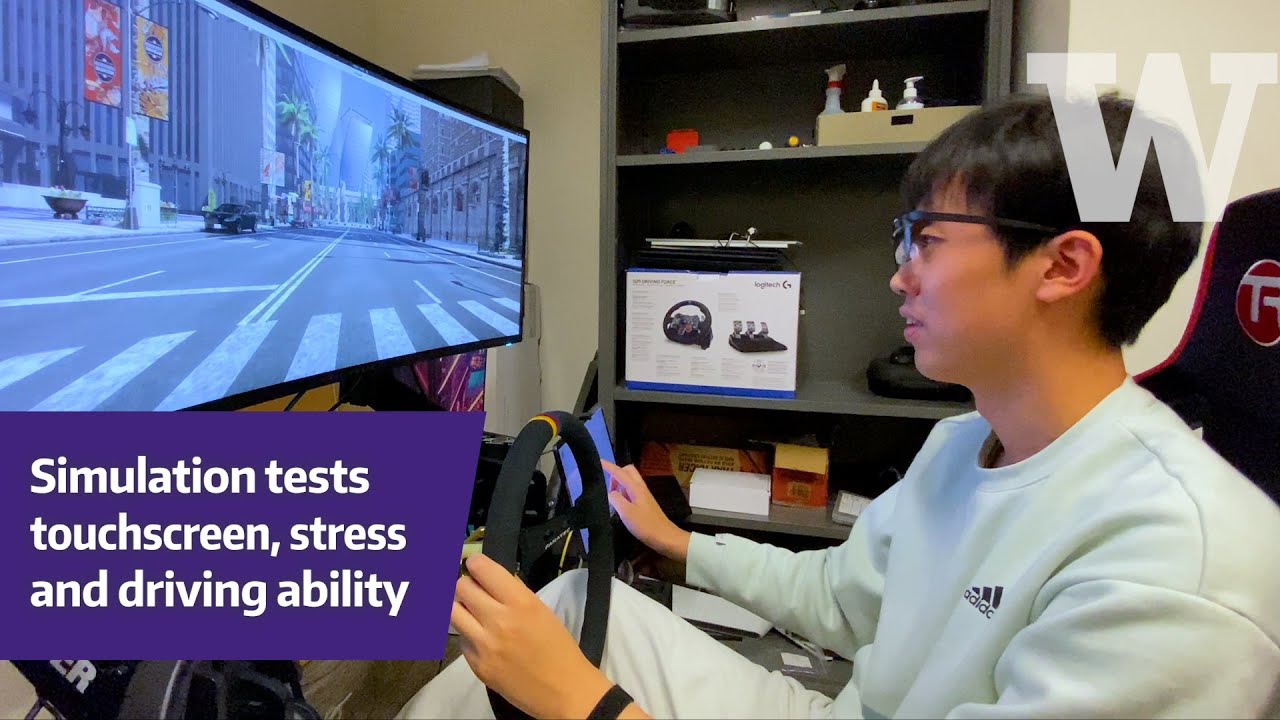
The research team devised an innovative study using a driving simulator equipped with a 12-inch touchscreen—similar to those found in many modern vehicles. Participants were asked to perform touchscreen tasks that mimicked real-world interactions with apps and widgets while simultaneously handling various levels of cognitive load. This cognitive challenge came in the form of an “N-back task,” where participants listened to sequences of numbers and had to recall specific digits when prompted, simulating the mental demands of navigating traffic or processing road information. Throughout the experiment, researchers collected comprehensive data using sensors that tracked eye movements, finger precision, pupil dilation, and even subtle changes in skin conductivity that indicate stress or cognitive strain. This methodical approach allowed researchers to objectively measure how dividing attention affects both driving performance and touchscreen interaction.
The results were clear and concerning: multitasking behind the wheel significantly impairs both driving performance and touchscreen usability. When participants attempted to manage both tasks simultaneously, their vehicles drifted within lanes more frequently, and their touchscreen interactions became both slower and less accurate. This performance deterioration was directly correlated with increasing cognitive demands, suggesting that even seemingly simple touchscreen tasks can compete for the limited mental resources needed for safe driving. The findings confirm what many drivers intuitively sense—that modern touchscreens, despite their sleek appearance and advanced functionality, may be creating new safety challenges on the road by requiring precise finger movements and visual attention at moments when a driver’s focus should remain primarily on traffic conditions.
“Touch screens are widespread today in automobile dashboards, so it is vital to understand how interacting with touch screens affects drivers and driving,” explained Professor Jacob O. Wobbrock, co-senior author and UW Information School faculty member. His observation highlights the significance of this research as one of the first scientific examinations of how in-car touchscreens affect driver performance. Unlike physical controls that can often be operated by touch alone, touchscreens typically require visual confirmation and precise finger placement—mental bandwidth that drivers can ill afford to spare. Popular Mechanics has also highlighted this issue, noting the concerning level of attention and finger precision that many modern infotainment systems demand from drivers who should be focused on the road ahead. The UW study provides concrete evidence for these concerns, showing measurable decrements in both driving safety and interface usability when attention is divided.
Based on these findings, the research team has proposed innovative solutions that could make future vehicle interfaces significantly safer. Rather than simply recommending a return to physical controls, they suggest that next-generation touchscreen systems could incorporate adaptive intelligence. Using sensors already available in many vehicles—such as eye-tracking cameras or touch sensors embedded in steering wheels—car systems could continuously monitor driver attention and cognitive load in real-time. When the system detects that a driver is experiencing high cognitive demand from traffic conditions or other distractions, the touchscreen interface could automatically adapt by making critical controls more prominent or temporarily simplifying the interface. This responsive design approach would allow touchscreens to remain feature-rich while adjusting to prioritize safety during challenging driving situations.
As vehicle manufacturers continue the trend toward larger, more complex touchscreen interfaces, this research serves as both a warning and a roadmap for safer implementation. The study doesn’t suggest eliminating touchscreens altogether but rather highlights the need for thoughtful design that acknowledges human cognitive limitations while driving. By understanding exactly how and why performance suffers when drivers interact with touchscreens, designers can create interfaces that minimize distraction and maximize safety. The collaboration between the University of Washington and Toyota Research Institute represents an important step toward vehicle interfaces that complement human abilities rather than competing with them for limited attention resources. As we navigate toward an increasingly digital driving experience, this research reminds us that the primary purpose of any in-car technology should be to enhance the driving experience while maintaining—or ideally improving—safety on the road.