





When Public Meets AI: University of Washington Receives $10 Million Federal Boost
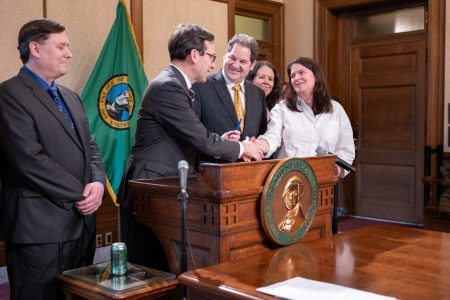
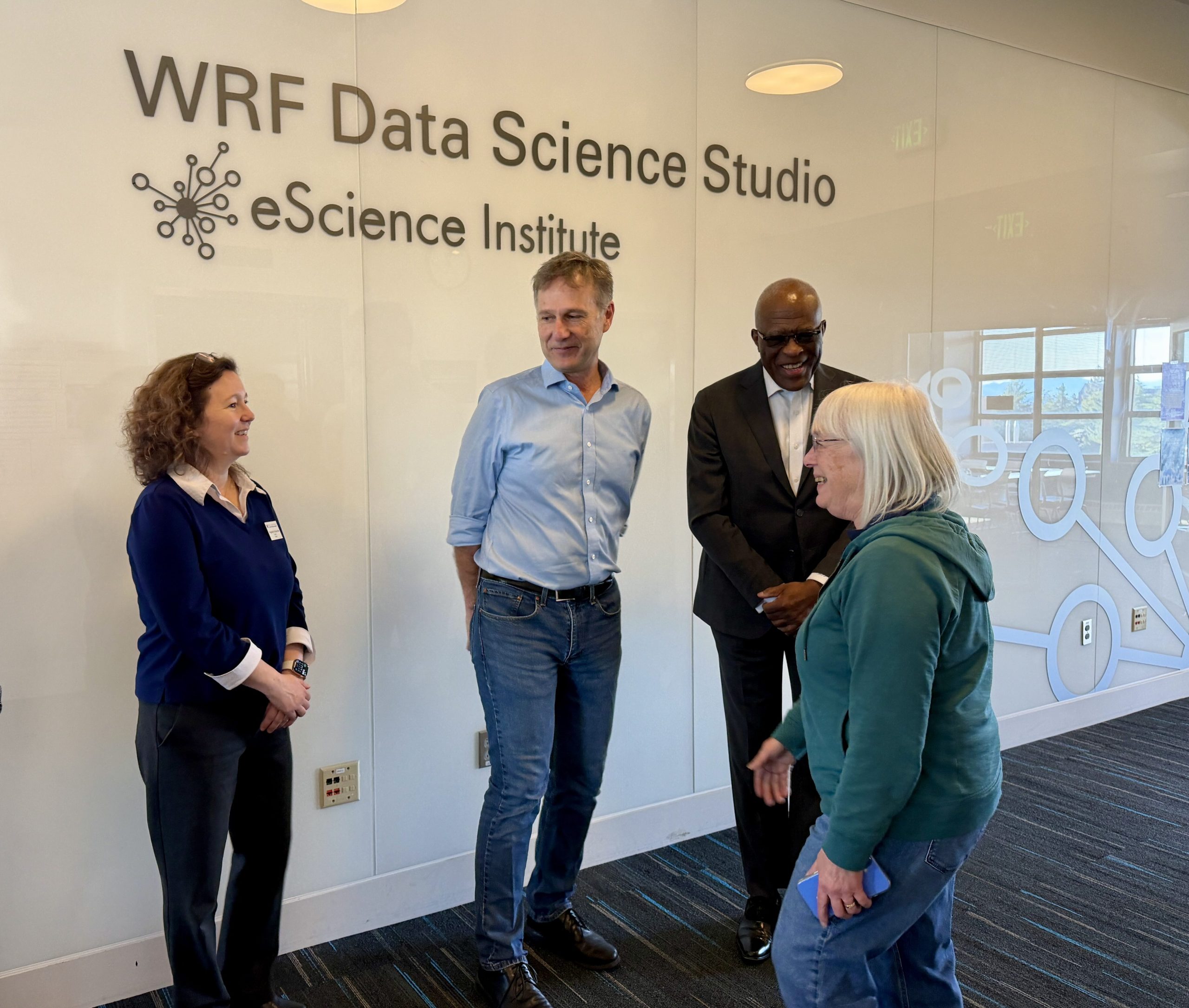
In a significant development for public artificial intelligence research, Washington Senator Patty Murray announced a $10 million federal funding package for the University of Washington during a campus tour on January 16, 2026. The funding, secured through Congressionally Directed Spending in the Commerce-Justice-Science appropriations bill, aims to expand the university’s capacity for data-intensive AI workloads. During her visit, Senator Murray emphasized the importance of democratizing AI development beyond corporate interests, stating: “If just billionaires are creating and using AI for their own projects that make money, then we lose out on most of the benefits of AI.” This investment represents a deliberate counterbalance to the AI landscape increasingly dominated by private capital and commercial interests, positioning universities as crucial guardians of public-interest technology development.
The federal funds will directly support Tillicum, UW’s next-generation computing platform launched in October. University leaders view this investment as transformational, enabling faster research cycles while reducing dependence on commercial cloud providers that often present both financial and data sovereignty challenges. Andrew Connolly, director of the eScience Institute, highlighted how this funding would keep UW “at the cutting edge of AI and AI research.” Meanwhile, Magdalena Balazinska, director of the Paul G. Allen School of Computer Science & Engineering, emphasized the fundamental difference between private and academic AI development: “Unlike private companies that ultimately answer to shareholders, public universities answer to taxpayers. That means our goal is to do what’s best for society.” This philosophical distinction underscores the unique role universities play in ensuring AI advances serve broader public needs rather than narrow commercial interests.
During her campus tour, Senator Murray witnessed firsthand how UW researchers are applying AI to areas ranging from healthcare to environmental science. One demonstration featured a conversational AI system developed by Ph.D. student Vidia Srinivas that helps track health symptoms and generates summaries for doctors. Other projects showcased how academic AI research can address societal challenges while maintaining strong data privacy practices. Researchers repeatedly emphasized how keeping sensitive data on campus-owned infrastructure—rather than sending it to third-party cloud providers—creates both ethical and practical benefits. This local computing capacity not only protects private information but also allows students and faculty to experiment more freely, adapting their research as new insights emerge without being constrained by commercial platforms.
The funding comes at a critical moment when universities nationwide struggle to compete with private companies for computing resources essential to modern AI research. Balazinska noted that access to computational infrastructure is often the first question prospective faculty ask when considering UW, highlighting how such resources directly affect the university’s ability to attract and retain top talent. While $10 million might seem modest compared to the billions tech giants invest in AI infrastructure, Balazinska described it as “a very significant amount” in an academic context where even relatively modest investments can prove transformative. The computational expansion will benefit researchers across disciplines, democratizing access to tools that might otherwise remain exclusive to well-funded commercial labs or elite research groups.
Beyond the immediate technical benefits, Senator Murray framed the investment as essential infrastructure for Washington state’s economic future. “If you don’t have the computers, if you don’t have the basic infrastructure, you’re stymied,” she explained. “This benefits everybody—whether it’s creating jobs, whether it’s creating better healthcare, whether it’s creating more innovators who come here to Washington state to be able to create jobs for the future and make a better way of life for all of us.” The UW funding package represents just one component of Murray’s broader efforts to support scientific research in the face of potential federal cutbacks. As the top Democrat on the Senate Appropriations Committee, she also secured an additional $3 million for new fan blades at UW’s Kirsten Wind Tunnel and $1.5 million for improvements to UW’s Radiocarbon Lab, resisting proposals that would dramatically reduce federal research spending.
The University of Washington’s position at the intersection of technology innovation and public service makes it an ideal testing ground for this federal investment approach. During the tour, researchers like Kyle Lo demonstrated OLMo, an open-source language model developed by the Seattle-based Allen Institute for AI—highlighting the region’s ecosystem of complementary public and non-profit research initiatives. University President Robert Jones joined the tour, underscoring the institution-wide commitment to responsible AI development. This federal funding package ultimately reflects a strategic vision where public universities serve as counterweights to purely commercial AI development, ensuring that artificial intelligence advances in ways that benefit society broadly rather than enriching only a select few. As AI continues transforming virtually every sector of society, investments like this $10 million grant represent crucial stepping stones toward a future where technological progress and public good remain fundamentally aligned.