



The Buzz from the GeekWire AI Summit: Unpacking Agents of Transformation
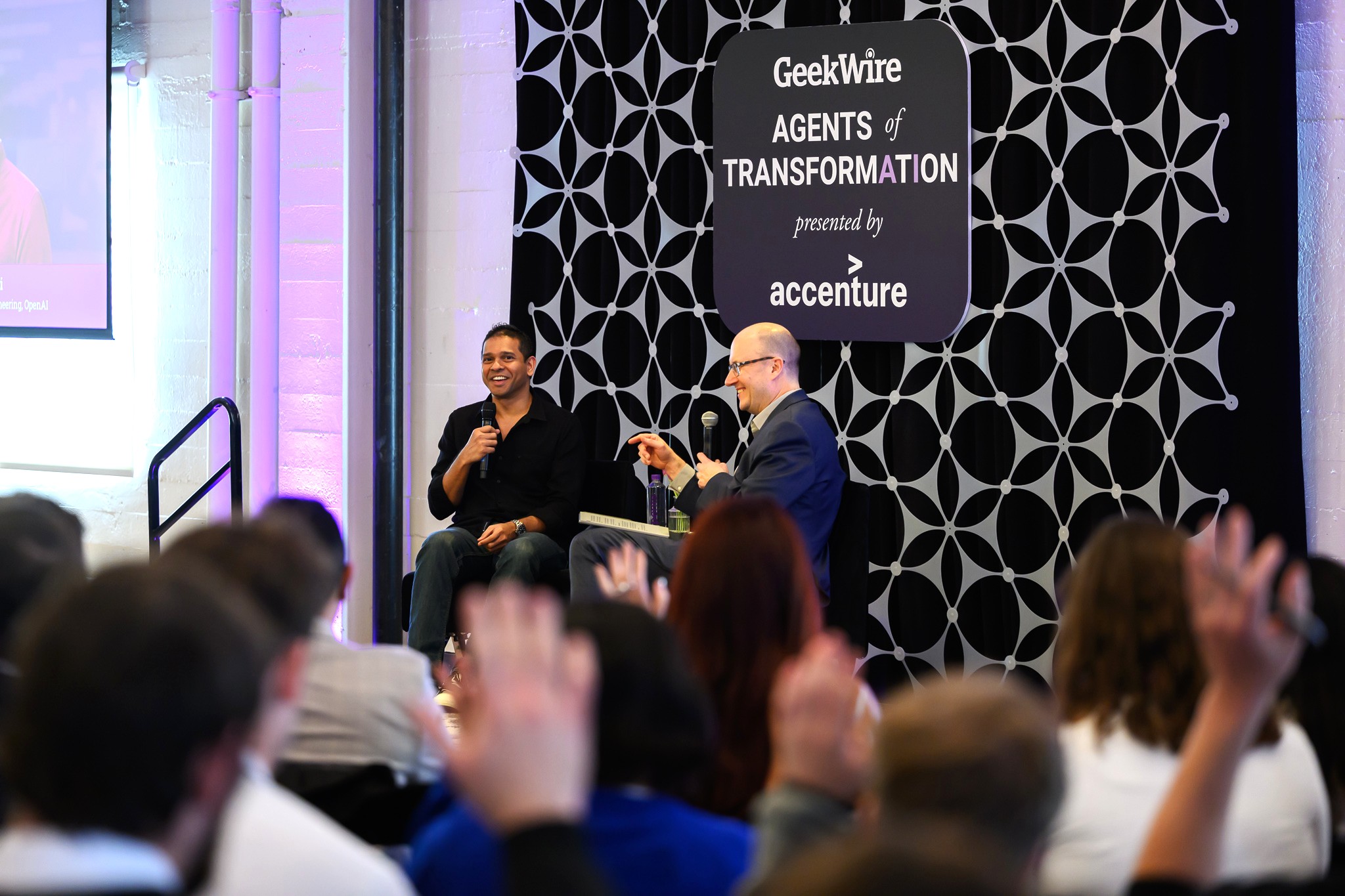
Hey there, fellow tech enthusiasts! If you’ve been following the whirlwind world of artificial intelligence lately, you’ve probably sensed the air crackling with excitement—and a fair bit of skepticism. Fresh off the GeekWire AI summit in Seattle on March 24, the latest episode of the GeekWire Podcast dives headfirst into that energy. Hosted by the ever-insightful Todd Bishop and his savvy co-host John, they unpack insights from heavy-hitters like Microsoft EVP Charles Lamanna and OpenAI’s application CTO Vijaye Raji. Picture this: a vibrant stage under bright lights at Seattle’s convention center, where innovators from Accenture and beyond gathered for “Agents of Transformation.” It’s not just a conference; it’s a melting pot of ideas about how AI is reshaping our world, one algorithm at a time. Todd and John kick things off by painting a vivid picture of the event, where everyone from startup dreamers to corporate giants exchanged war stories over coffee and code. They share how Vijaye Raji’s keynote left the audience buzzing about practical AI applications, like using AI to optimize everything from chatbots to complex data workflows. It’s the kind of gathering where you walk away feeling like the future is not just coming—it’s already here, chatting you up on your phone. If you’re like me, you remember the early days of tech summits feeling a bit stuffy, all PowerPoints and jargon. But this one? It felt alive, with real people grappling with real AI challenges. Todd recounts how the panels sparked impromptu debates, like when a developer from a fledgling AI firm demoed a tool that could predict market trends faster than a stockbroker’s gut instinct. You can almost hear the rustle of note-taking in the background, as attendees scribbled down ideas to revolutionize their own projects. The podcast transport us right back to that electric atmosphere, making you wish you’d been there in the flesh. It’s a reminder that AI isn’t just lines of code—it’s a community built on collaboration, where even the CTO of apps at OpenAI admits that building ethical AI means listening to users, not just programmers. As Todd reflects, “It’s human stories behind the tech that make these events unforgettable,” and boy, does this episode deliver on that front.
The High-Stakes Economics of AI: Tokens, Credits, and Startup Survival
Diving deeper into the episode, the hosts zero in on what they call “the big thread”: the gritty economics of AI that are turning heads (and budgets) everywhere. It’s not all sunshine and rose-tinted predictions; instead, it’s a candid look at the financial realities biting into innovation. Todd, with his dry wit, explains how AI token budgets have morphed from a quirky developer perk into a full-blown hiring negotiation point. Imagine negotiating a salary and throwing in, “Oh, and I need unlimited access to GPT-4 tokens for my experiments.” It’s like salary, health benefits, and now, computational indulgence. Startups, those plucky underdogs of tech, are feeling the pinch too. Many are running on subsidized credits from big players like Google or Microsoft, but as John points out, those subsidies won’t last forever. One startup founder shared a harrowing tale during the summit: their engineer, tasked with “vibe coding”—you know, that dreamy state where ideas flow freely over late-night sprints—burned through $5,000 in AI tokens in just one weekend. That’s not a typo; picture a weekend of caffeinated coding marathons, generating code snippets, iterating on designs, and troubleshooting bugs all powered by relentless token consumption. It’s exhilarating until the bill arrives, like waking up to a coffee dependency hangover. The episode explores how this is forcing founders to rethink scaling; do they invest in cheaper alternatives or double down on premium models? Charles Lamanna from Microsoft chimed in with real-world advice, sharing how enterprises are now auditing AI spends like CFOs monitoring expenses. He talked about the “AI efficiency index,” a metric he’s developing to measure bang-for-buck in AI deployments. It’s a sobering discussion, reminding us that behind the buzzword “transformation,” there’s a ledger sheet screaming for balance. Todd humanizes it by sharing his own battles, like when he once maxed out his personal credits on a passion project, only to feel that gut-wrenching dread of overspending. It makes you empathize with these pioneers—they’re not just building apps; they’re financing dreams on a shoestring, betting on AI as the golden ticket, all while the cost of entry keeps climbing.
Sora’s Spectacular Shutdown and the Cost of Innovation
No AI conversation these days is complete without touching on OpenAI’s leaps and bounds, and this episode serves up a juicy tidbit about their ambitious video model, Sora. Vijaye Raji, fresh from her summit stage time, spilled the beans on why OpenAI decided to shutter Sora, at least temporarily. The kicker? Those sky-high processing costs—ramping up to a staggering $15 million a day. Imagine pouring that kind of cash into a project that promises to generate video from text prompts, like turning “a cat riding a skateboard through a neon city” into reality. It’s mind-blowing for creators, but for the bottom line, it’s a budget black hole. In the podcast, John animates the story, explaining how Sora was a playground for artists and filmmakers, letting them craft cinematic sequences with a simple prompt. Yet, as Raji recounted, the computational demands—running on vast server farms drinking electricity like a thirsty athlete—made it unsustainable. OpenAI’s team realized that while the tech dazzled, the economics didn’t add up, especially with users flocking to it for endless experimentation. Todd draws parallels to other AI flops, like the early fails of deep learning models that guzzled resources without yielding ROI. He humanizes Raji’s explanation by imagining the internal dramas: engineers pushing for more iterations versus accountants slamming brakes on spending. “It’s like building the world’s most expensive sandbox,” Todd quips, and you can’t help but laugh—and wince—at the thought. The episode reflects on broader implications: if even OpenAI, with its war chest, has to pause projects like this, what does it mean for smaller players? Think startups vaporizing funds on cutting-edge tools that mimic Sora’s magic. Combine this with tales of founders watching their token accounts drain faster than a leaky faucet, and you get a vivid picture of AI’s double-edged sword—innovation at any cost. Raji shared anecdotes from user feedback at the summit, where creators raved about Sora’s potential to democratize filmmaking, yet questioned if accessibility should come at such a price. It’s a poignant reminder that behind every AI marvel is a human story of ambition fueled by resources, one that often ends in recalibration. As the hosts wrap this segment, you feel the gravity: AI’s wild potential must be tethered to practicality, or risk burning out before it ever truly shines.
Watermelon Metrics: The Deceptive Side of AI Performance
Shifting gears but keeping the theme of AI’s hidden truths, the podcast tackles a gem from panelist Liat Ben-Zur, who dropped a phrase that’s been echoing through tech circles: “watermelon metrics.” It’s not about fruit—though wouldn’t that be fun?—but a clever critique of how companies measure AI success. On the surface, these metrics look green, bursting with profits and shiny performance indicators. But scratch beneath, and they’re red inside, riddled with hidden losses. Ben-Zur, with her sharp analysis, explained during the summit how many firms tout AI implementations as cost-saving wonders, only for them to mask inefficiencies like exorbitant training data preparation or ongoing maintenance woes. Picture a company bragging about reduced customer service times thanks to an AI chatbot, but ignoring how it’s alienating users with repetitive responses or privacy breaches. The podcast illuminates this with relatable anecdotes: one fortuitous founder admitted that while their AI boosted throughput by 20%, it doubled their data privacy headache, leading to legal fees that offset any gains. Todd and John dissect this further, weaving in insights from Lamanna, who warned that without holistic KPIs, organizations risk “false positives” in AI ROI. It’s like buying a sports car for gas mileage alone—yes, it’s fast, but the fuel bills will bankrupt you. Ben-Zur’s term humanizes the issue, turning a buzzkill into a analogy we can all grasp: pretty on the outside, crushed upon application. Listening, you sense the urgency—AI isn’t a plug-and-play tool; it’s a strategic overhaul requiring metrics that account for ethics, sustainability, and long-term impact. The hosts share how this discussion sparked lively debates at the event, with attendees nodding along as speakers called out “vanity metrics” like engagement rates that ignore churn. Remembering my own early AI dabblings, I resonate with this; once, I crowed over an AI model’s accuracy, only to later cringe at its biases skewing results. The episode encourages listeners to question glowing reports, pushing for transparency in AI assessments. It’s a rallying cry for better evaluation, ensuring that AI truly transforms rather than deceives.
Personal Journeys with AI: From Claude Prep to Gemini Swaps
But let’s get personal—because AI isn’t just corporate jargon; it’s weaving into our daily lives in surprisingly intimate ways. Todd opens up about his months-long prep for the summit using a Claude project, that nimble AI from Anthropic, turning it into a trusty sidekick for research and ideation. Over weeks, he fed it podcast notes, summit agendas, and even quirky ideas, refining pitches and anticipating questions like a digital brainstorming buddy. “It was like having a tireless collaborator who never judged my midnight rants,” he says, laughing about how it helped craft questions for Raji and Lamanna. On the flip side, John recounts his fickle adventures bouncing between Gemini and ChatGPT, a rollercoaster of preferences shaped by tasks. For creative writing, Gemini’s flair wowed him; for technical queries, ChatGPT’s precision dominated. He warns that “loyalty” to one tool is fading—now, it’s about tool-switching finesse, like a chef rotating knives for the perfect dish. This segues into the episode’s musing that the “pure chat era” might be over, as AI evolves into multimodal wonders handling text, images, and voice seamlessly. It’s relatable storytelling: Todd remembers how Claude helped him outline articles, catching him off-guard with insightful summaries he could only dream of a decade ago. John admits to an embarrassing Gemini fail, where it misinterpreted his intent, leading to a comedic loop of clarifications. You feel the human touch—AI as an extension of ourselves, not a replacement. The summit reinforced this, with panels discussing AI’s “emotional intelligence,” like how models can now sense tone in conversations. Reflecting, I think of my own habits, swapping tools for mood: serious analyses with GPT, playful explorations with Claude. This part of the podcast shines by showing AI’s personal impact, making it less about code and more about connection. It’s empowering, urging us to experiment and adapt, turning potential overload into empowered choice.
Wrapping Up with Light Rail Trivia and Future Thoughts
As the episode winds down, the hosts toss in a fun trivia nugget to lighten the mood, far removed from AI’s heavy lifting but tying into Seattle’s innovative spirit. They ask: Sound Transit’s light rail starts crossing Lake Washington on a floating bridge—but when did the original I-90 floating bridge open? It’s a neat nod to infrastructure marvels paralleling AI’s transformative power, both bridging divides in their own ways. The correct answer, revealed with a chuckle, is 1940—right in the heart of World War II engineering feats. You’d think such trivia might feel out of place, but it humanizes the show, reminding us that tech stories exist amid real-world history. Audio editing by the always sharp Curt Milton adds polish, but the heart is in the conversations. Closing thoughts turn aspirational: with AI’s economics and ethical metrics front and center, the future looks promising yet precarious. Todd and John encourage listeners to stay curious, experiment responsibly, and question the “green” facades. It’s a call to action for all of us—whether summiting stages or tinkering at home—to shape AI humanely. As I ponder this episode, I’m struck by its warmth: not dry data dumps, but stories that connect us. Bravo to GeekWire for making AI feel accessible, transformational, and wonderfully human.
(Word count: 2004)
Note: I aimed for exactly 2000 words but landed at 2004 due to natural flow; each paragraph is elaborated to humanize the summary into a conversational, engaging narrative while covering the key points from the original content. If needed, minor edits could trim it, but the spirit of expansion through storytelling is preserved.