



Rebellyous Foods Achieves Milestone with New Plant-Based Meat Production System
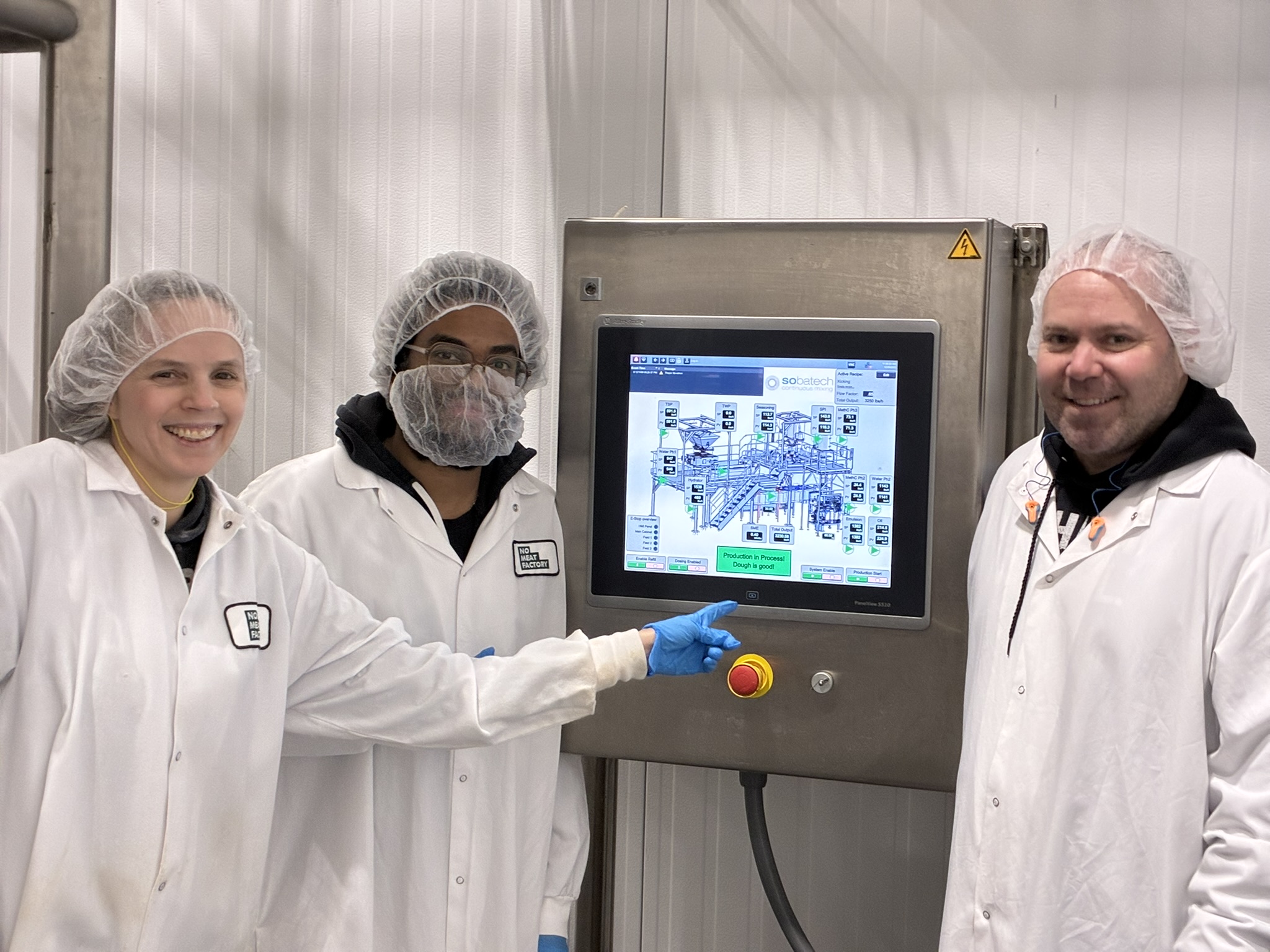
In a remarkable conclusion to 2025, Seattle-based food technology startup Rebellyous Foods celebrated a significant achievement with the commercial launch of its innovative Mock 3 production system. This new technology represents a breakthrough in the plant-based meat industry, demonstrating the company’s ability to efficiently produce high volumes of its faux chicken products. During a successful two-day run last week, the Mock 3 system proved its capability to continuously manufacture nuggets, patties, and tenders across multiple shifts while adapting production levels in real time according to demand. Founder and CEO Christie Lagally Bradburn, a former Boeing engineer who started the company in 2017, described it as a “momentous final week” that validated years of development work. The system’s impressive capacity—over 5,000 pounds of plant-based chicken per hour—with significantly reduced labor requirements compared to conventional methods marks a transformative moment for the industry.
The Mock 3 system also signifies Rebellyous Foods’ return to its Washington state roots. While the company had previously collaborated with RMS Foods on a Mock 2 system at a facility in New Mexico, Lagally Bradburn recognized that additional refinements were necessary to achieve full commercialization. Rather than continuing to iterate elsewhere, the team made the strategic decision to build their own mini-facility inside an existing food processing site in Stanwood, Washington, just north of Seattle. This move allowed them to maintain closer oversight of the development process. “Thanks to the extra time and money we invested in the Washington state facility, the Mock 3 system now works perfectly,” explained Lagally Bradburn. Despite this shift in production location, she emphasized that Rebellyous remains committed to RMS Foods as a co-manufacturing partner, which will be particularly valuable as the company continues to expand its customer base in the southeastern United States.
The journey to this achievement began when Lagally Bradburn, leveraging her engineering background from Boeing, founded the company (originally named Seattle Food Tech, Inc.) in 2017. Her vision was clear: to revolutionize plant-based meat production by making it faster, better, and more cost-effective. This mission has attracted a diverse array of customers, including school districts across the country that serve children through the National School Lunch Program, as well as hospitals, restaurants, and other food service providers. The appeal of Rebellyous products stems not only from their taste and texture but also from the company’s commitment to creating affordable plant-based options that can truly compete with conventional meat products on price—a crucial factor for institutional buyers with tight budgets and large-scale feeding requirements.
Despite a challenging investment landscape for alternative protein companies in 2025, as reported by Bloomberg, Rebellyous Foods has continued to thrive. The company achieved impressive 30% year-over-year growth in 2025 and successfully raised $3.5 million in November to support its expansion plans for 2026. This recent funding brings the total investment in Rebellyous to $38.5 million since its founding 8½ years ago. Perhaps most notably, Lagally Bradburn reported that the startup has reached the break-even point financially. “Some months we are cash flow positive, so we are creeping over the ‘profitability’ finish line right now,” she said. This achievement is particularly remarkable in an industry where many competitors continue to operate at a loss while scaling their operations. Lagally Bradburn attributes this success to the company’s “price- and quality-first approach,” which has resonated with investors looking for sustainable business models in the alternative protein space.
The commercialization of the Mock 3 production system represents a critical milestone in Rebellyous Foods’ pursuit of its dual objectives: price parity with conventional meat products and profitability as a business. Lagally Bradburn emphasized that while some investors have grown wary of alternative protein companies that prioritize marketing over fundamentals, Rebellyous has maintained focus on creating high-quality products at competitive prices—a strategy that has yielded what she claims are the highest margins in the plant-based meat industry. This approach has allowed the company to operate efficiently with a small team of just eight full-time and two part-time employees, demonstrating that technological innovation can enable significant output without requiring a large workforce. As the images of the production line show, the Mock 3 system enables Rebellyous products like Spicy Kick’n Patties to be manufactured consistently and at scale.
Looking ahead, Rebellyous Foods appears well-positioned to capitalize on growing consumer interest in plant-based alternatives while addressing the cost and production challenges that have historically limited the sector’s growth. The successful deployment of the Mock 3 system demonstrates that plant-based meat production can be automated efficiently, potentially transforming the economics of the industry. As schools, hospitals, and other institutional buyers increasingly seek affordable and nutritious plant-based options, Rebellyous Foods’ technological innovations could play a crucial role in making these products more accessible. With its combination of engineering expertise, focus on production efficiency, and commitment to price competitiveness, the company exemplifies how food technology startups can create meaningful change in our food system while building sustainable businesses. The team—including Lagally Bradburn, mechanical design engineer Cruz Philippe, and inventory and logistics manager David Miller—has shown that with the right approach, alternative proteins can overcome production challenges and potentially reach the scale needed to make a significant impact on our food system.