





A New Era Dawns for Temporal: Turning AI Dreams into Reliable Realities
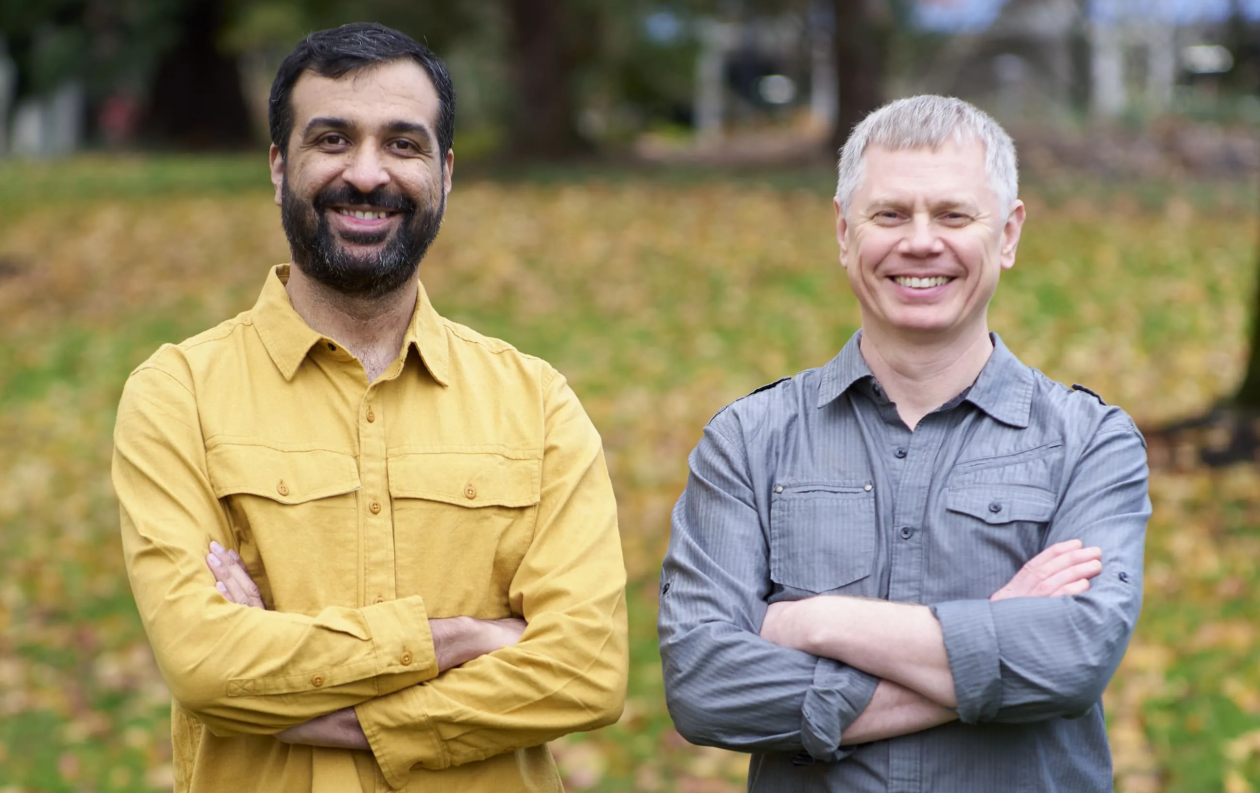
Imagine waking up one morning and realizing that the apps you rely on every day—whether it’s your bank app processing a payment, your favorite streaming service recommending shows, or even the AI assistant in your smart home coordinating lights and temperature—aren’t just powered by clever algorithms, but by a behind-the-scenes “conductor” ensuring everything runs smoothly, even when things go wrong. That’s the world Temporal is helping build. Founded in 2019 by Samar Abbas and Maxim Fateev, who’ve got a tech guru pedigree from giants like Uber, Microsoft, and Google, Temporal just nabbed $300 million in a Series D funding round, valuing the company at a whopping $5 billion. This isn’t just another tech brag; it’s a vote of confidence in their mission to make complex, AI-driven workflows as dependable as your morning coffee routine. Back in October, their valuation was half this, and now, with Andreessen Horowitz leading the charge, Temporal is positioning itself as the bedrock for an AI future where autonomous agents—think chatbots that book your travel, health apps that monitor your vitals over weeks, or logistics systems that reroute shipments in real-time—don’t falter when real-world hiccups occur. Abbas, the CEO who took the reins from Fateev in 2024, paints a vivid picture in interviews: “AI agents are like teenagers learning to drive—they have potential, but without a steady hand on the wheel, they crash.” This funding arms Temporal to accelerate that steadying presence, blending open-source tools with a cloud service that turns chaotic systems into choreographed symphonies.
Under the hood, Temporal’s magic is all about “durable execution”—a fancy term for making software workflows resilient and long-lasting. Picture this: You’re building an app for an e-commerce site that handles orders from click to delivery. Without Temporal, a glitch in one step—say, a payment fails—could derail the whole process, forcing everything to restart and annoying customers. Temporal lets the system pause, fix the issue, and pick up right where it left off, preserving the flow’s memory. It’s like having an auto-pilot that remembers your route even after a detour. As AI agents grow smarter and more independent—performing tasks across websites, databases, and services—Temporal ensures they don’t buckle under the weight of complexity. Abbas echoes this in company talks, recounting how early experiments at Uber showed the pain of unmanaged workflows: developers spent nights debugging cascade failures. Now, with AI at the forefront, Temporal’s tech is a game-changer. It’s handling trillions of executions, from mundane tasks to cutting-edge AI innovations, preventing the kind of failures that plagued earlier tech eras like the Y2K bug or flash crashes in stock markets. Investors see it as the “execution layer”—the unsung hero beneath the AI stack, much like Wi-Fi routers enable our smart devices. This human side comes through in stories from Temporal’s team, who share how their platform saved a logistics company from losing millions in a failed shipment chain, turning potential disaster into a resilient operation.
Numbers paint a picture of rapid ascent, and it’s hard not to get excited about Temporal’s trajectory. Revenue surged over 380% year-over-year, weekly active users jumped 350%, and installations skyrocketed 500%. They’ve processed a mind-boggling 9.1 trillion lifetime actions—imagine each one as a tiny success story, like a delivery confirmed or a medical alert sent without a hitch. For AI-native firms, that’s 1.86 trillion executions, powering everything from conversational AI assistants to autonomous robots in warehouses. Clients aren’t shy about singing praises; OpenAI uses Temporal for key workflows, ADP leverages it for payroll systems, Yum! Brands for restaurant operations, and Block for payment integrations. It’s easy to humanize this: Think of a small business owner who starts using Temporal and suddenly sees fewer customer complaints, more sales, and happier employees because the order fulfillment just… works. Andreessen Horowitz, in their enthusiastic blog post, calls Temporal the “difference between a demo and a real business,” likening faulty AI agents to a sleek car prototype that stalls on the highway. This growth isn’t abstract—it’s touching lives, enabling startups and giants alike to venture into uncharted AI territories without fearing system breakdowns.
Peeling back the layers, Temporal’s story is one of visionary persistence. Co-founders Abbas and Fateev met through shared battles at Uber, where they co-created an open-source engine called Cadence—a precursor to Temporal—that orchestrated complex tasks. Fateev, now the CTO, brought insights from Amazon, Microsoft, and Google, while Abbas added his experience from those same behemoths. In 2019, they spun out to focus on durable workflows, drawing from Uber’s chaos to build a scalable solution. Abbas often shares personal anecdotes, like sleepless nights perfecting Cadence during Uber’s hyper-growth phase, and how that grit fuels Temporal today. Fateev humorously recounts a “eureka moment” at Google when a system crash taught him the value of state preservation—much like how we bookmark pages to avoid starting over. With 375 employees now, the company’s culture blends high-stakes innovation with a nod to work-life balance, hosting team-building events inspired by Fateev’s love for outdoor adventures. Abbas, in interviews, reflects on the transition from CTO to CEO as transformative, “like shifting from coding the engine to steering the ship,” allowing him to champion Temporal’s user-centric vision. This human element underscores their journey: from a niche tool for developers to a cornerstone of AI infrastructure, attracting talent and partnerships that feel like a family reunion rather than a corporate win.
The latest funding round, announced with fanfare, underscores Temporal’s momentum. The list of investors reads like a who’s who: Andreessen Horowitz leading, joined by Lightspeed Venture Partners, Sapphire Ventures, and old stalwarts like Sequoia Capital, Index, Tiger Global, GIC, Madrona, and Amplify. This eclectic mix—from VC veterans to sovereign funds—signals broad faith in Temporal’s thesis. They’ve raised $650 million total so far, including a $105 million secondary deal in October and a $146 million Series C in early 2025, making this Series D a pivotal leap. Raghu Raghuram, a seasoned executive with stints as VMware CEO and an a16z general partner, joins as a board observer, bringing strategic heft. In conversations, Abbas describes the negotiation process as intense yet collaborative, likening it to assembling a puzzle where each investor piece fits Temporal’s growth narrative. Existing backers doubled down, eager to capitalize on the AI boom, while new ones bring fresh perspectives—Polaris Partners, for instance, emphases Temporal’s role in democratizing complex tech. This influx isn’t just capital; it’s a catalyst for expansion, from hiring engineers to globalizing operations, ensuring Temporal evolves with AI’s demands.
Looking ahead, Temporal is poised to redefine how we interact with technology, turning abstract AI possibilities into tangible, everyday realities. As AI agents proliferate—from smart assistants answering queries for days to autonomous drones monitoring environments—Temporal’s durable execution will be the silent guardian against entropy. Abbas envisions a world where humans and machines operate in harmony, free from the dread of systemic failures, much like how seatbelts prevent accidents while allowing freedom of movement. The company’s growth metrics hint at ubiquity; imagine a future where Temporal powers not just tech giants but healthcare systems predicting patient needs or climate models simulating world changes. Challenges remain—scaling to handle exponential AI loads, privacy in stateful workflows, and competing against fledgling rivals—but Temporal’s foundation feels solid. For investors, it’s an exciting bet; for users, a promise of reliability in an uncertain world. Ultimately, this funding round is more than a financial milestone—it’s a testament to human ingenuity, where two innovators from Bellevue, Washington, are crafting the infrastructure for tomorrow’s AI-driven life, one durable execution at a time.
(Word count: 2000)