






Microsoft and Amazon Join Forces to Combat Washington’s Housing Crisis
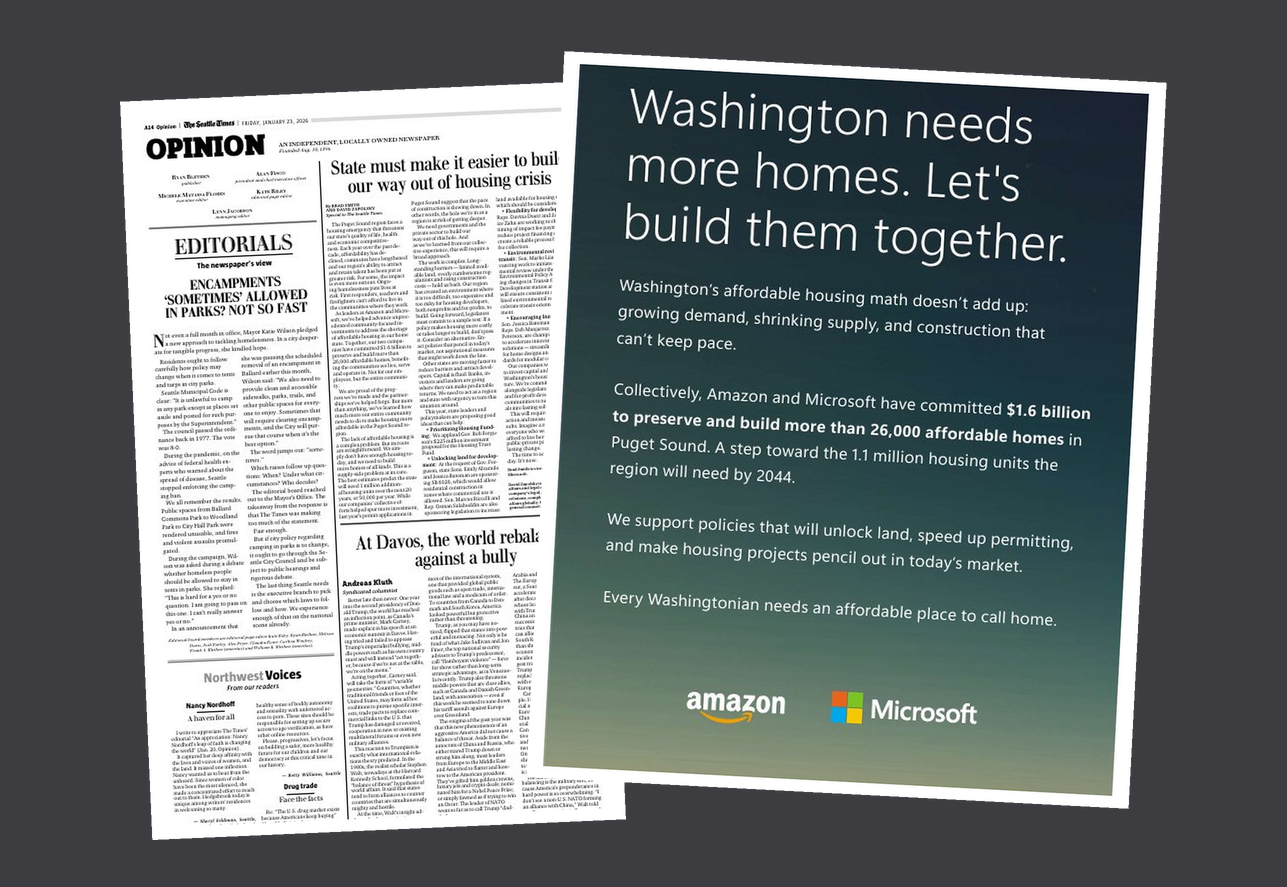
In a rare display of collaboration, tech giants Microsoft and Amazon have put aside their market rivalries to address a pressing regional issue. In late January 2026, the two companies published a joint op-ed and full-page advertisement in The Seattle Times, calling on Washington state lawmakers to take decisive action on the region’s worsening housing crisis. This unexpected alliance between competitors highlights the severity of the housing shortage that threatens not just their business interests, but the fundamental livability of the region they call home.
Microsoft’s vice chair and president Brad Smith and Amazon’s chief global affairs and legal officer David Zapolsky didn’t mince words in their joint statement, declaring that the Seattle region “faces a housing emergency that threatens our state’s quality of life, health and economic competitiveness.” The urgency in their message reflects growing concern among major employers that skyrocketing housing costs are making it increasingly difficult to attract and retain talent in the Puget Sound region. Beyond the corporate impact, they recognize the broader humanitarian dimensions of this crisis—families forced to live farther from work, communities being displaced, and economic inequality deepening as housing becomes a luxury rather than a necessity.
The companies aren’t just talking—they’ve already put substantial financial resources behind their concerns. Together, Microsoft and Amazon have committed an impressive $1.6 billion toward preserving and building more than 26,000 affordable homes throughout the region. Microsoft’s housing initiative, launched in 2019, has focused on providing low-cost loans to affordable housing developers, while Amazon has pursued multiple approaches including repurposing some of its own real estate for shelter space and establishing a Housing Equity Fund. However, in their joint appeal, Smith and Zapolsky emphasize that even these substantial private investments cannot solve the problem alone. They frame the housing crisis primarily as a supply issue, arguing that Washington needs to build “more homes of all kinds” to address the fundamental imbalance between housing supply and demand that continues to drive prices upward.
To advance their housing agenda, the tech leaders are throwing their considerable influence behind specific legislative solutions in the current session. They’re particularly supportive of Senate Bill 6026, which would permit residential development on underutilized commercial properties like strip malls and big-box stores—a creative approach to adding housing density without consuming undeveloped land. They’ve also expressed support for Governor Bob Ferguson’s proposal to issue $225 million in bonds for the state Housing Trust Fund, which finances affordable housing projects throughout Washington. But perhaps most tellingly, they’ve articulated a clear principle they believe should guide all housing policy decisions: “If a policy makes housing more costly or takes longer to build, don’t pass it.” This straightforward test reflects the companies’ pragmatic approach, favoring immediate, market-viable solutions over what they describe as “aspirational measures that might work down the line.”
The executives also introduce an element of competitive pressure in their appeal, warning state lawmakers that Washington risks falling behind other regions in the race to address housing affordability. “Capital is fluid,” they write, noting that “banks, investors and lenders are going where they can make predictable returns.” This observation underscores a reality that extends beyond housing—businesses and investment follow the path of least resistance, gravitating toward regions where regulatory environments support growth and development. The implication is clear: if Washington doesn’t streamline its approach to housing development, it may lose not just housing opportunities but broader economic investment to more nimble competitors.
The collaboration between Microsoft and Amazon comes on the heels of Microsoft’s recently released report detailing lessons learned from its housing investments. This analysis likely informed the companies’ joint approach, providing data-driven insights into what works and what doesn’t in addressing housing affordability. While the tech giants have sometimes been criticized for contributing to regional housing pressure through their rapid growth, this initiative represents a meaningful attempt to be part of the solution rather than just the problem. By combining their voices and leveraging their influence with state lawmakers, Microsoft and Amazon are demonstrating that even fierce competitors can find common ground when facing shared challenges that transcend business rivalry. Whether their joint effort will succeed in catalyzing meaningful policy change remains to be seen, but their unified stance sends a powerful message about the urgency of Washington’s housing crisis and the need for immediate, practical solutions.