



Microsoft’s CTO Urges AI Startups to Act Now and Focus on Practical Solutions
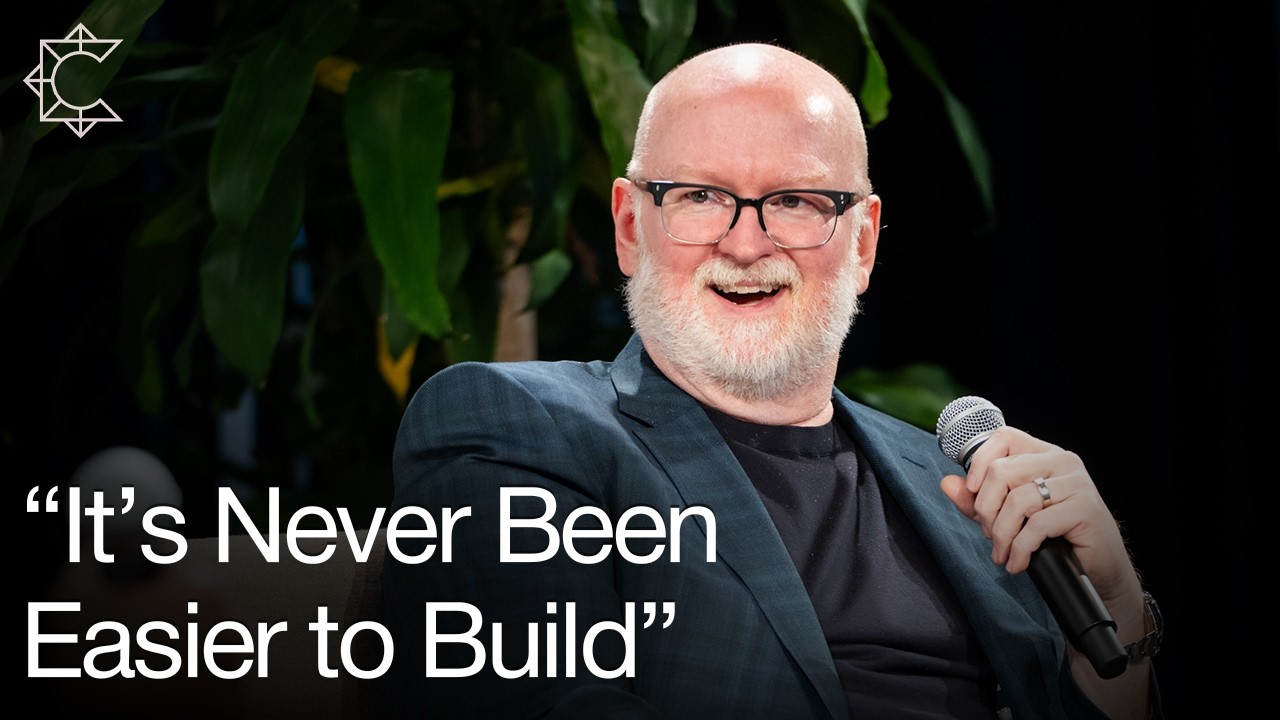
In a candid conversation at a South Park Commons event, Microsoft CTO Kevin Scott offered valuable insights for AI entrepreneurs feeling paralyzed while waiting for the next revolutionary model. His message was refreshingly straightforward: stop waiting and start building with what’s already available. According to Scott, there exists a “gigantic capability overhang” in today’s AI landscape – current systems possess far more potential than most applications are utilizing. This gap represents an enormous opportunity for founders willing to roll up their sleeves and do the integration work needed to transform existing AI capabilities into practical solutions. Scott pointed to ChatGPT as a prime example, noting that when it launched, the underlying model was “pretty old,” yet nobody anticipated it would evolve into what could potentially become a trillion-dollar product. This history lesson serves as a powerful reminder that timing and execution often matter more than having access to the absolute cutting-edge technology.
The economics of AI experimentation have never been more favorable, Scott emphasized. “The cost of doing the experiments has never been cheaper,” he urged, “So do the damned experiments. Try things.” This straightforward advice cuts through the hesitation many founders feel when confronting the rapidly evolving AI landscape. Scott acknowledged that unlocking the full potential of today’s models often involves “ugly-looking plumbing stuff, or grungy product building” – the unglamorous yet essential work of integration and implementation. Rather than seeing this as a deterrent, Scott framed it as the natural territory of startup life: “But you’re in a startup, that’s kind of your life. It’s more about the grind.” His message reinforces that creating valuable AI applications isn’t just about accessing sophisticated models; it’s about the painstaking work of making them useful in specific contexts – work that creates defensible business value beyond the underlying technology itself.
Perhaps most valuably, Scott cautioned founders against confusing online attention with genuine market traction. In today’s AI ecosystem, he observed, there’s an abundance of “false signal” – from media coverage to investor interest – that may have little correlation with whether you’ve actually built something useful. “You’ve got a bunch of people whose business model is getting clicks on articles online or getting people to subscribe to their Substack,” he noted, warning that steering by this feedback could lead founders “in exactly the wrong direction.” This insight highlights a particularly challenging aspect of building in the AI space, where hype cycles can create misleading impressions of what matters. Instead, Scott emphasized that real validation comes from creating something customers genuinely love – a timeless principle that applies equally in the AI era as it did in previous technological revolutions.
The conversation also explored the often-polarized debate between open-source and closed-source AI models. Rather than positioning these as opposing approaches requiring an ideological commitment, Scott pragmatically framed them as different tools in a comprehensive toolbox. He noted that Microsoft itself employs both approaches depending on the specific needs of different situations. This perspective offers a refreshing alternative to the sometimes tribal discourse around AI development philosophies, suggesting that founders might be better served by considering which approach best suits their particular use case rather than pledging allegiance to either camp. This practical viewpoint aligns with Scott’s overall emphasis on results over ideology – what matters is building something that works and creates value, not how purely you adhere to a particular development philosophy.
Scott also highlighted the significance of expert feedback in AI training, suggesting this could represent a competitive advantage for startups. While large models are trained on vast quantities of general data, systems that incorporate specialized domain knowledge and expert input can potentially outperform in specific contexts. This insight points to a strategy where startups might leverage domain expertise in particular industries or functions to create AI applications that perform exceptionally well in narrower contexts, rather than attempting to compete with tech giants on general-purpose AI. For founders with deep knowledge of specific sectors or access to expert networks, this approach could represent a path to creating distinctive and valuable AI applications without requiring the massive resources needed to train foundation models from scratch.
Looking toward future challenges, Scott addressed the infrastructure requirements for building memory systems for AI agents – a complex problem he believes won’t be solved merely by training larger models. This perspective hints at opportunities for startups working on the supporting technologies that will enable more sophisticated AI applications, rather than focusing exclusively on the models themselves. Throughout the discussion, Scott’s message embodied a balance of optimism about AI’s potential with pragmatism about what it takes to realize that potential in practice. For founders navigating the complex and rapidly evolving AI landscape, his advice serves as a valuable compass: focus on solving real problems, be willing to do the unglamorous work of integration, validate with actual customers rather than online buzz, and recognize that today’s models already offer vast untapped potential for those willing to put in the work to harness it.