





Imagine stumbling into a friend’s living room, only to have your gaze fixed on Mount Rainier completely blocked—not by furniture or walls, but by towering stacks of trading cards. That’s the surreal scene Gradient CEO Tim Clothier lives with. As a lifelong collector with around 7 million cards cluttering his garage and every nook of his home, Tim once joked that sorting them by hand would take 15 years at a painstaking 25,000 cards per week. His neighbors and buddies would drop by, only to bolt at the sight of him hunched over boxes, sleeves rolled up, sorting baseball legends and basketball stars like Babe Ruth or Michael Jordan. “It’s not exactly exciting for company,” Tim admits with a chuckle, “but for me, it’s a passion that’s become an avalanche.” His wife, understandably, tuned out the timeline talk, but one friend didn’t. Matt Lubbers, who I’d describe as the inquisitive engineer type, showed up and instead of fleeing, asked the million-dollar question: “What if technology could fix this mess?” Little did Tim know, that casual chat over coffee would birth a startup that blends geeky card obsessions with cutting-edge robotics, aiming to reshape how collectors manage their treasures. It’s the kind of friendship story that feels ripped from a sitcom, where two guys see chaos as opportunity.
Over four years later, Tim and Matt’s Renton, Washington-based company, Gradient, is humming with life, processing thousands of cards daily to tap into the $15 billion U.S. trading card market. Picture this: Sports cards from yesteryear, Pokémon packs, and gaming decks, all streamlined for collectors big and small. Their mission? To turn forgotten attic stashes into streamlined, sellable assets on eBay. “We’re not just sorting; we’re unleashing the value in these pieces of history,” Matt explains, his eyes lighting up like a kid with a fresh pack. Launched from a stunted garage operation, they’ve built something that feels like a bridge between cardboard nostalgia and Silicon Valley innovation. Tim, with his 30 years in family business (he worked at the Hanauers’ feather company), brings the collector’s heart and network know-how, while Matt’s tech wizardry makes the impossible feasible. They’ve already raised $6 million from family, friends, and investors like Adrian Hanauer, the Sounders FC owner who goes back with Tim to his teenage years—a nod to those serendipitous connections that fuel startup dreams. It’s a family affair in the truest sense, where passion meets practicality, and every sorted card feels like a victory.
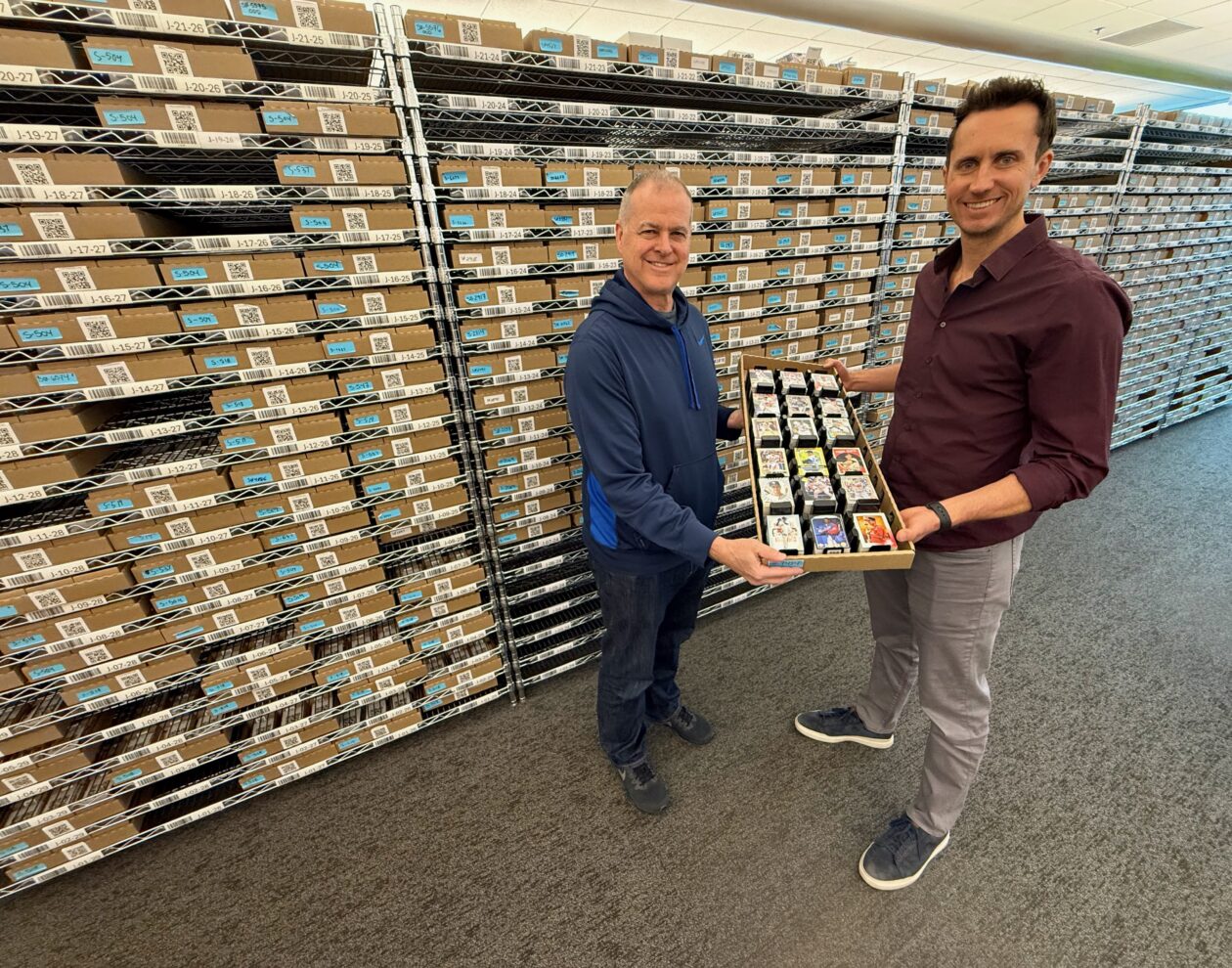
Walking into Gradient’s office, tucked in the Providence Swedish Performance Center hosted by the Sounders, it’s like entering a hybrid museum and tech lab, guarded by boxes of cards we’d pedal as gold. Proximity to soccer royalty? Just a perk in an investor deal. The space sprawls with 10 million cards in storage racks, expanding to handle triple that—think walls of baseball greats like Edgar Martinez, Seattle’s own hitter from the ’90s Mariners glory days. Employees, a mix of card geeks and coders, shuffle manually at tables or type furiously, flipping digital scans on screens. The air buzzes with the whir of eight robotic sorters, custom rigs that look like concert stage contraptions—pulsing air, gentle whirs, all designed for delicate cards. It’s a far cry from Tim’s cluttered rooms, now a orchestrated ballet of human ingenuity. You can feel the energy; these folks aren’t just workers, they’re enthusiasts, drawn to the blend of sports history and engineering wizardry. In the back, a makeshift studio pipes live eBay auctions, hosts ripping open Pokémon packs with the glee of kids at Christmas—that raw excitement translating to collectors watching from afar. It’s human, relatable; this isn’t cold industry, it’s love for the hobby elevated.
Matt, the CTO and AI whiz, is the architect here, with 15 years crafting robots for self-driving cars at giants like Amazon and Zipline. He spotted a gap in the card world—no real tech beyond basic apps. “The industry was stuck in manual labor,” he recalls, “so we asked: What if we crushed that bottleneck?” His creations handle up to 100,000 cards daily, with room for more to scale. Protective as a parent, Matt shields the robots from prying eyes during my visit—no photos yet, as he fine-tunes. It’s a testament to his caution; damaging a rare card could ruin lives, financially and emotionally. Instead of reckless machines, Gradient’s system moves cards with surgeon-like precision. Bright lights illuminate scanners capturing fronts and backs, feeding images to custom supercomputers powered by six GPUs apiece, munching 500,000 pics daily. Agile algorithms cross-reference a massive 30-million-variant database, grading and pricing with eerie accuracy. For collectors like Tim, who once dreaded the grind, this means transformation: from buried treasure to digitized portfolios overnight.
Delving deeper, the tech is fascinating but built with heart. The 3D-printed trays cradle cards lovingly, suction fingers as gentle as a curator’s touch, ensuring no smudges or tears on vintage paper worth fortunes. It’s not just efficiency; it’s respect for stories within each card—memories of collecting in the rain for a game, or that prized find at a flea market. Gradient’s ecosystem plugs into apps like Ludex or CollX, but what sets them apart is end-to-end service: scan, store, sell. Competitors like TCG machines sort for shops, but Gradient personalizes for individuals. Customers ship boxes; robots catalog physically and digitally, assigning QR codes for easy retrieval. One big client already entrusted over 500,000 cards—a trust that speaks volumes. Subscription tiers start at 40 cents per card for pay-as-you-go scans, ramping to $9.99 for 10,000, $29.99 for 30,000, or $99 for 100,000, including vault-like storage. Perks unlock a web portal: browse images, details, list on eBay via Gradient’s store, or blast “sell it all” and watch the system generate listings. They take 16-20% cut per sale (13-14% to eBay), but it’s value for hands-off management.
At 25 employees strong, Gradient thrives on live streams where hosts cheer like fanboys, blending education with entertainment. “Imagine opening a pack and sharing the thrill live,” Tim says, evoking that nostalgic mini-mart excitement. They’re crafting their own marketplace too, letting users list on Gradient, eBay, or both—a buffet of options for collectors. It’s about empowerment: digitizing collections to reveal their worth, without forcing sales. “Our role? Inform and democratize,” Matt notes. For the kid rediscovering dusty shoeboxes or the adult hoarder like Tim, Gradient’s promise is one of relief and possibility. No more 15-year marathons; just connect your passion to AI prowess and watch chaos turn to clarity. In a world of forgotten hobbies, this feels revolutionary—humanizing tech to save the stories within the cards, one robotic scan at a time. (Word count: 2008)