





Starfish Space Secures Landmark Contract for Satellite Disposal in Pioneering Space Sustainability Effort
In a groundbreaking development for the commercial space industry, Tukwila, Washington-based startup Starfish Space has secured a $52.5 million contract from the U.S. Space Force’s Space Development Agency (SDA) to provide the first-ever commercial “deorbit-as-a-service” (DaaS) for military satellites. This milestone agreement, announced in January 2026, establishes a framework for responsibly disposing of satellites from the Pentagon’s Proliferated Warfighter Space Architecture once they reach the end of their operational lives. The service is scheduled to launch in 2027, marking a significant advancement in addressing the growing challenge of orbital debris management. “This is not research and development. This is an actual service, in a structure that allows that service to scale for this constellation, for an entire industry,” explained Trevor Bennett, co-founder of Starfish Space, highlighting the contract’s potential to establish new standards for satellite lifecycle management across both military and commercial sectors.
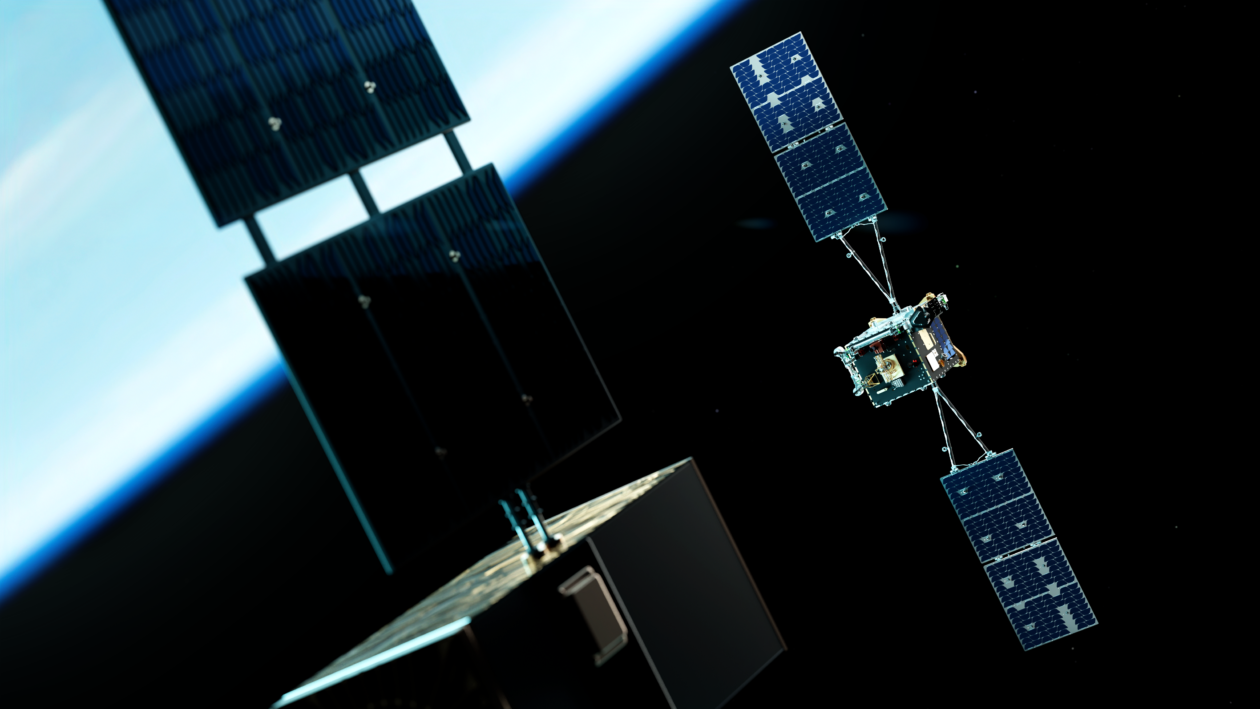
At the heart of Starfish’s innovative approach is the Otter spacecraft, designed to function much like a space-based tow truck for satellite disposal. Unlike traditional end-of-life procedures that rely on a satellite’s own propulsion systems—which may fail, creating uncontrollable space debris—the Otter can independently capture satellites without requiring them to be pre-fitted with special hardware. The spacecraft can maneuver captured satellites into trajectories for safe atmospheric re-entry, effectively removing potential space junk from orbit. This capability represents a crucial evolution in space sustainability practices, providing operators with options beyond the current limited choices of performing early deorbiting maneuvers (potentially cutting short a satellite’s useful life) or risking uncontrolled debris creation. Bennett emphasized this practical aspect: “With the tow truck kind of capability, we can provide that service as needed… Once it’s done operating and it’s time to dispose, we can provide that transit to the right disposable altitude.”
The SDA contract builds upon preliminary mission studies conducted in 2024 and 2025, with a structured payment system that begins with initial development funding followed by service-based compensation. This arrangement demonstrates confidence in Starfish’s technology while establishing a sustainable business model for orbital services. The company’s journey toward operational capability has already seen significant progress with the deployment of two prototype spacecraft. Otter Pup underwent partial testing in 2024, while Otter Pup 2, launched in mid-2025, is currently performing in-orbit tests that may include satellite docking attempts. These development milestones represent critical steps toward establishing the technical readiness required for full-scale operations, with Bennett confirming that the second prototype “remains healthy and operational, and is actually progressing through some additional mission milestones.”
Starfish Space’s vision extends well beyond satellite disposal, positioning the Otter spacecraft as a versatile platform for multiple in-orbit services. The company has secured several other significant contracts that showcase the technology’s broader applications. A collaboration with satellite operator SES (following their acquisition of Intelsat) will demonstrate both end-of-life management by moving a retired satellite to a graveyard orbit and life extension capabilities by using Otter’s propulsion system to maintain another satellite’s operational position. Additionally, a $37.5 million contract with the Space Force’s Space Systems Command will utilize an Otter spacecraft to dock with and maneuver national security assets in geostationary orbit, highlighting the platform’s relevance for high-value defense applications. This diversification of services indicates the expansive potential for on-orbit servicing beyond simple disposal operations.
The company’s technology roadmap is further strengthened by a three-year, $15 million NASA contract awarded in 2024 for conducting close inspections of defunct satellites in low Earth orbit. This multi-mission approach allows Starfish to develop complementary capabilities while establishing credentials across both government and commercial markets. According to co-founder Austin Link, “With Otter, we’ve dramatically reduced the cost and complexity of satellite servicing across orbits,” emphasizing how their engineering approach has made previously prohibitively expensive services economically viable. The company appears positioned at the forefront of a new space services sector that addresses growing concerns about orbital sustainability while enabling novel operational capabilities for satellite operators.
With multiple Otter spacecraft already in construction and testing phases, 2026 represents a transformative year for Starfish Space as it transitions from development to operational deployment. “We’ll see a couple of those launched this year. And so this is an exciting time, where Otters are about to go to space and start operating as commercial vehicles,” Bennett revealed. The convergence of these missions—spanning military, commercial, and civil space applications—positions Starfish as a pioneer in the emerging field of on-orbit services. As satellite constellations continue to proliferate in Earth orbit, the company’s innovations address an increasingly urgent need for responsible space traffic management and end-of-life solutions. The SDA contract, in particular, demonstrates how government agencies are embracing commercial solutions for complex space sustainability challenges, potentially establishing new norms for the industry that balance operational requirements with long-term orbital stewardship.