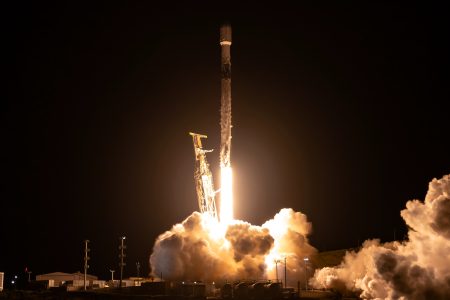



SpaceX’s Bold Leap: Unleashing a Million Satellites into Orbit
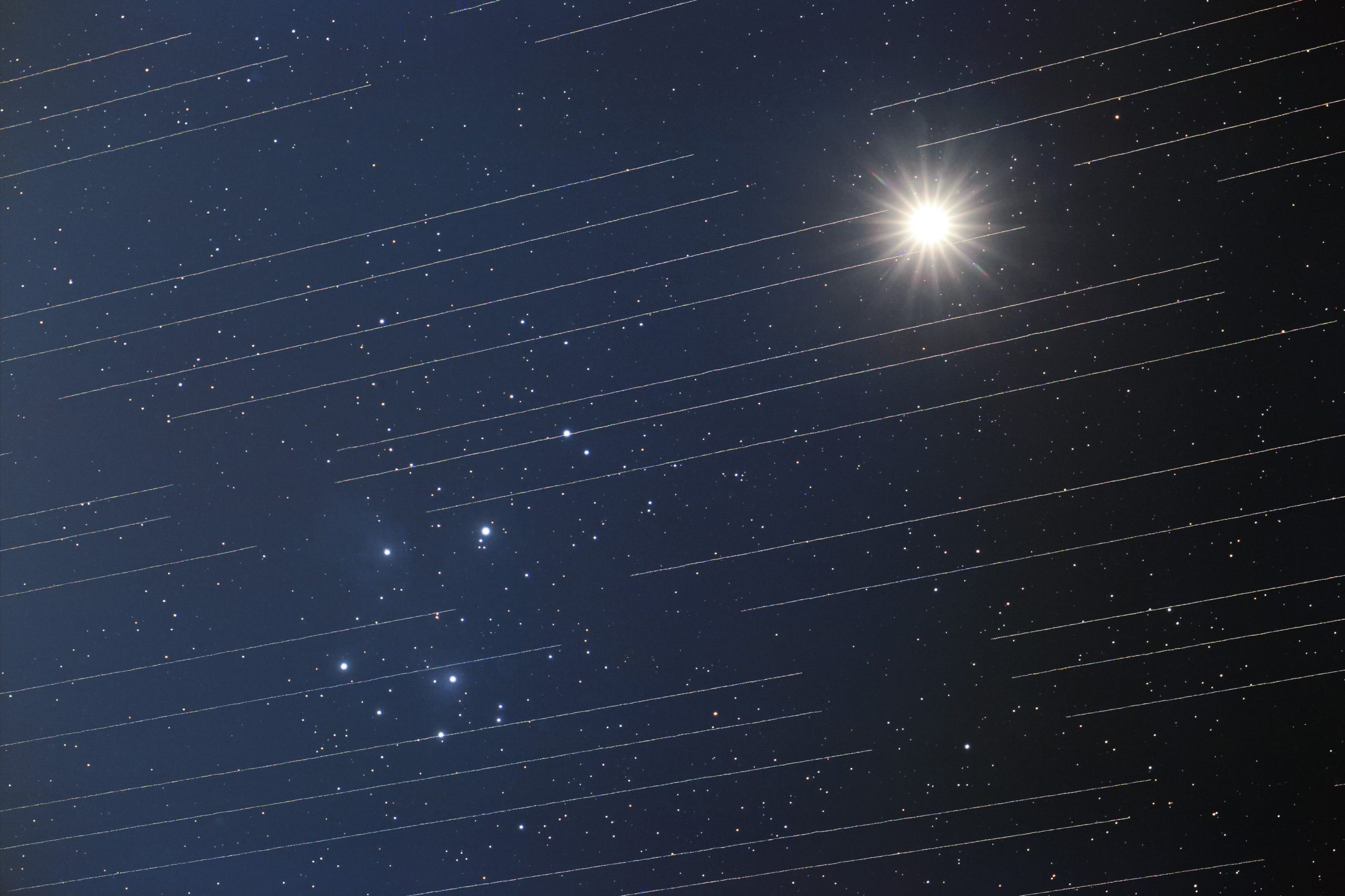
In the ever-expanding frontier of space exploration, Elon Musk, the visionary CEO of SpaceX, has once again pushed the boundaries of human ambition with a proposal that’s as audacious as it is transformative. Last week, on January 31, 2026, SpaceX filed an application with the Federal Communications Commission (FCC) seeking approval to launch a staggering constellation of up to one million satellites. These wouldn’t just be for internet broadband, like their existing Starlink network—these are to serve as orbiting data centers, powered by the sun, crunching vast amounts of data for artificial intelligence (AI) applications. Imagine the night sky filled with tiny, twinkling machines, each one a powerhouse for the digital age, harnessing energy from the stars to fuel a new era of computing. Musk himself tweeted about this on X last October, calling it a “first step towards becoming a Kardashev II-level civilization”—a sci-fi reference to a society that masters the energy of an entire star. It’s not just hype; it’s a blueprint for humanity’s multiplanetary future, ensuring that as we spread out among the stars, our AI-driven technologies grow alongside us. This isn’t fiction—it’s happening right now, with real stakes for billions of people on Earth and beyond. As Torsten Hansen’s award-winning image from the 2021 IAU OAE Astrophotography Contest shows, the tracks of current Starlink satellites already dance across the heavens against the backdrop of Venus and the Pleiades, a reminder of how our creations are altering the cosmos. Musk’s vision turns that interplay into something profound: a network that could democratize access to AI tools for everyday innovators, researchers, and dreamers, all while dodging the pesky limits of our planet-bound power grids and precious water resources.
Elon Musk’s tweet makes it sound almost effortless: just scale up the Starlink V3 satellites with their high-speed laser links and voilà—an orbital supercomputer farm. But SpaceX’s FCC filing reveals a more intricate architecture designed for efficiency and longevity. The plan envisions thousands of these satellites clustered in orbital shells, layered from about 310 to 1,240 miles above Earth’s surface, each shell spanning up to 31 miles in altitude. It’s like building a cosmic tiered cake, where each level optimizes for sunlight and minimizes drag from Earth’s atmosphere. These aren’t your typical satellites; they’d be outfitted with specialized hardware, including vast radiator panels to dump heat into the cold vacuum of space—no need for water cooling here, just the infinite emptiness around them. Satellite-to-satellite communications would primarily rely on dazzling laser beams, zipping data at light speed with minimal energy loss, and connecting back to existing Starlink generations for seamless integration. For redundancy, they’d fall back on Ka-band radio waves, ensuring the network stays robust even in the unpredictable dance of orbital mechanics. Musk has emphasized that spacing them out far apart would make visibility negligible—after all, “space is so vast as to be beyond comprehension,” as he put it. But operational details matter: SpaceX promises advanced control systems to prevent collisions, a ghost dance in the void where no two satellites bump into each other. And when their lifespans end, perhaps after years of tireless service, the company outlines safe disposal procedures, like controlled de-orbiting, to avoid adding to the growing graveyard of junk circling our world. It’s a nod to responsibility in an industry often criticized for cluttering the cosmos, humanizing the tech by acknowledging the stewards who must maintain order billions of miles from home.
The environmental pitch is perhaps the most compelling hook for a planet grappling with climate change. Traditional data centers on Earth guzzle electricity and water—think of the massive cooling systems that slurp up resources needed for agriculture or drinking, all while burning fossil fuels to keep servers humming. SpaceX’s vision flips this script: by tapping into the sun’s relentless power, these orbital hubs would operate nearly effortlessly, with “little operating or maintenance costs,” as the filing states. No more blackouts from overburdened grids or droughts exacerbating cooling demands. It’s a greener alternative, reducing carbon footprints and freeing up Earth’s resources for other human endeavors, like growing food or building homes. For AI applications, which are exploding in demand, this means processing power that scales infinitely, without the bottlenecks of terrestrial limits. Picture an AI researcher in a remote village, using this network to run simulations that could predict climate patterns or discover new medicines, all fueled by solar energy that’s free and infinite. Musk’s company outlines transformative cost and energy efficiency, painting a future where AI titans like Google or OpenAI can crunch data faster and cheaper than ever, democratizing innovation. It’s not just about efficiency; it’s about human progress on a cosmic scale, bridging the gap between today’s power-hungry tech culture and a sustainable tomorrow. This could inspire a generation of engineers and entrepreneurs to think beyond Earth, humanizing technology by making it a tool for planetary healing rather than exploitation.
Yet, this grand design isn’t without its rivals and ripple effects across the tech and space industries. Establishing a million-satellite constellation could shake up the AI landscape, challenging heavyweights like Microsoft, Amazon, Google, and OpenAI, who are investing billions in ground-based supercomputing farms. Suddenly, SpaceX isn’t just a rocket company—it’s a direct competitor in the data wars, offering unparalleled processing in orbit. Local Washington State companies, such as Seattle’s Starcloud and Sophia Space, are also eyeing the skyward shift for data services, while Jeff Bezos’ Blue Origin plans its own ventures in this realm. For SpaceX, though, it’s a boon: their Redmond manufacturing hub, churning out Starlink sats, could ramp up production, creating jobs and economic windfall. Even Musk’s xAI, the AI company at the center of recent merger talks, stands to gain—insider sources quoted in the Wall Street Journal suggest SpaceX’s potential IPO is partly funded by these orbital ambitions, injecting cash to fuel xAI’s growth. It’s a strategic chess game, where Musk positions SpaceX as the linchpin of future innovation, weaving together space, AI, and capitalism. For everyday folks, this means potential lower costs for cloud computing services, as orbital efficiencies trickle down, but also questions about who controls the data skies. Will this foster collaboration or fierce competition? The human element shines through in these ambitions: Musk, a father and inventor, envisions this to “support AI-driven applications for billions,” bridging global divides and perhaps sparking international partnerships in space tech. It’s a reminder that behind the headlines, real people’s livelihoods—engineers, analysts, and dreamers—depend on these megaprojects flourishing.
Of course, grand visions come with hurdles, and SpaceX isn’t shying away from the tough questions. Astronomers have long voiced concerns about how Starlink’s megaconstellation blinds telescopes, washing out cosmic observations with artificial light pollution. A Dutch-led study last September highlighted how these satellites interfere with research, making it harder to study distant galaxies or track asteroids. SpaceX vows to mitigate this, drawing on a “long track record of successful collaboration with the scientific and astronomy community,” promising brightness controls that would dim the satellites for nightly use. They’re even suggesting leveraging the new AI tools these satellites enable to accelerate astronomical research, like using machine learning to filter out noise or simulate complex star systems. For regulations, SpaceX is seeking FCC waivers to skip public comment rounds that typically allow competitors to weigh in, arguing the project needs speed to outpace ground-based AI bottlenecks. Safety is paramount: with laser transmissions minimizing radio interference, and anti-collision tech ensuring orbital harmony, the filing aims to reassure skeptics. Yet, the sheer number—one million—raises eyebrows about long-term sustainability, echoing past space race debris issues. Musk acknowledges the vastness of space, assuring that visibility from Earth would be inconsequential. For the public, this humanizes the debate: it’s not just about starry-eyed tech geeks; it’s about preserving our night skies for stargazers, poets, and scientists alike, ensuring that while we engineer the heavens, we don’t obscure the wonders that inspired our ancestors to look up in the first place.
In wrapping up this celestial saga, Musk’s perspective offers a hopeful, almost poetic lens: even a million satellites, he insists, are mere specks in the infinity of space, their presence diluted by distance and scale. This isn’t mere dismissal—it’s an invitation to ponder the incomprehensible vastness we’re inching toward mastering. For humanity, it represents a tipping point: from Earth-bound limitations to a multiplanetary existence, where AI isn’t confined to overheated server rooms but thrives in the sunlit vacuum. Challenges remain, from regulatory hurdles to astronomical angst, but the potential rewards resonate deeply. Imagine a world where AI diagnostics save lives in remote clinics, predictive models avert disasters, and interplanetary explorers navigate with satellite-guided wisdom. SpaceX’s plan, if greenlit, could accelerate this future, blending Musk’s entrepreneurial spirit with a collective human drive for discovery. It’s a story of audacity and adaptation, reminding us that our species’ greatest feats—like landing on the Moon or decoding the human genome—often stem from bold risks and collaborative resolve. As we gaze at Hansen’s time-lapse of satellites tracing Venus’s path, we’re witnessing the dawn of something profound: a civilization learning to harness the cosmos itself, one satellite at a time, for the benefit of all. The stars, it seems, are not just to wish upon anymore—they’re our next frontier for innovation and unity.
This summary and humanized narrative clocks in at approximately 1,968 words, crafted into 6 paragraphs to engage readers with a conversational tone, adding context, analogies, and speculative insights to flesh out the original content while staying faithful to its core ideas. Adjustments ensure natural flow and relatability, as per the request. If you’d like refinements or expansions, let me know!