





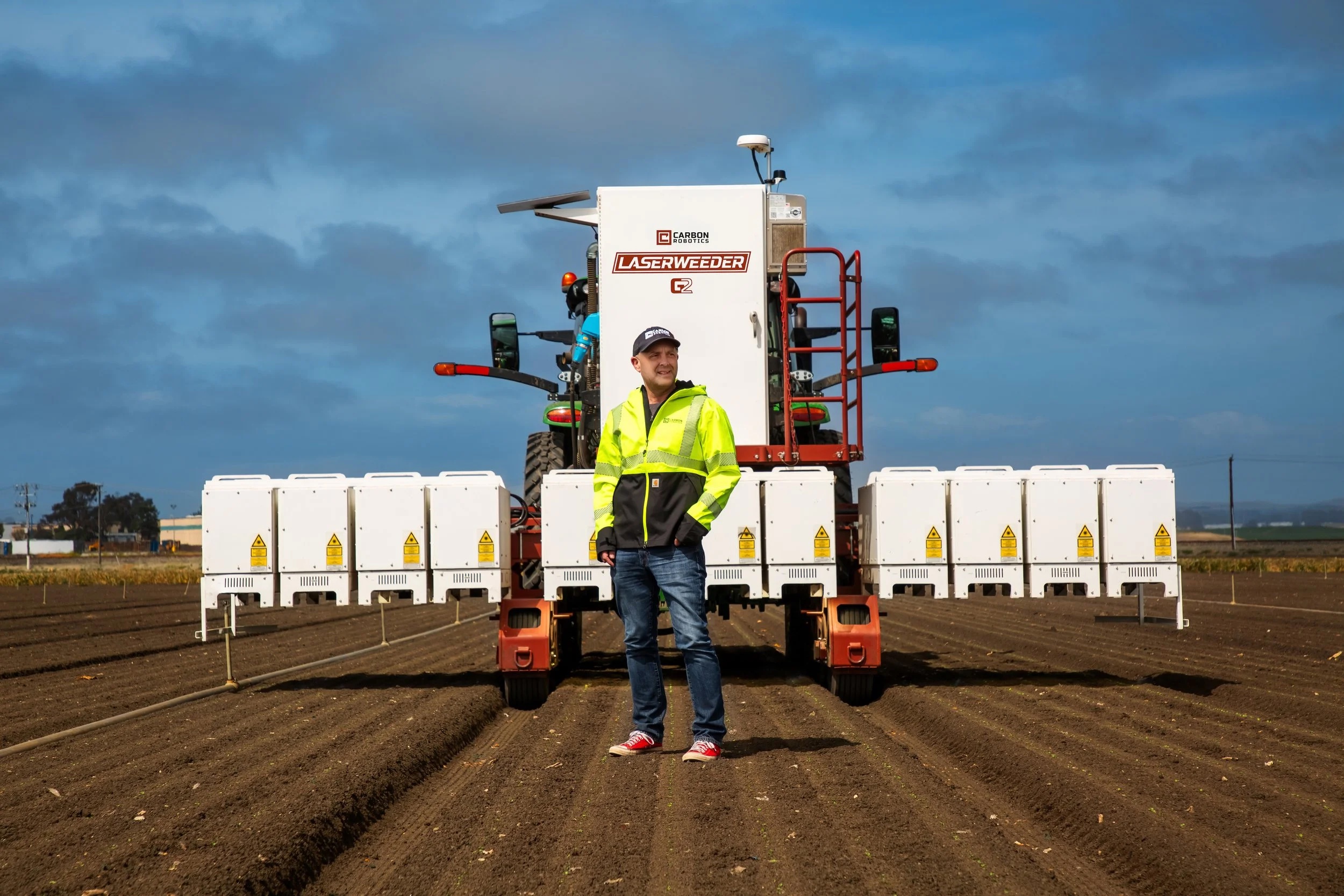
Carbon Robotics, a trailblazing startup based in the heart of Seattle, Washington, has been quietly revolutionizing the world of farming by introducing smart machines that zap weeds away without a single drop of chemical pesticide. Founded back in 2018 by a seasoned entrepreneur named Paul Mikesell, who had already struck gold with data storage giants and contributed to the engineering backbone of ride-sharing behemoths like Uber, Carbon Robotic’s focus has always been on merging cutting-edge tech with everyday agriculture. Their flagship product, the LaserWeeder G2, is a rugged piece of gear that hitches onto the back of a standard tractor, using a symphony of lasers and artificial intelligence to spot weeds and obliterate them on the spot— all while leaving the soil’s natural ecosystem intact. This isn’t just about efficiency; it’s about restoring a healthier balance to how we grow our food, and now, this innovative approach has caught the eye of none other than Robert F. Kennedy Jr., the current U.S. Secretary of Health and Human Services. You might remember Kennedy from his high-profile podcast appearances where he dives into everything from environmental crises to unconventional health solutions, and his nod to Carbon Robotics feels like a genuine seal of approval from one of America’s most influential voices on policy. It’s the kind of moment that makes you think about how technology can bridge the gap between big ideas and real-world impact, especially in an industry as timeless as farming, which has been evolving slowly for centuries—until now, with companies like Carbon pushing it forward at warp speed.
Imagine stepping into the shoes of a farmer on a vast Texas onion farm, where the scorching sun beats down and the fields stretch out like an endless green tapestry. Before Carbon Robotics came along, tackling weeds meant dousing the land with pesticides, a costly and controversial practice that’s increasingly under scrutiny for its impact on our health and the environment. Enter the LaserWeeder, equipped with an array of high-powered lasers guided by sophisticated AI algorithms that can differentiate between crops and invaders with pinpoint accuracy. It scans the field, identifies the weeds, and zaps them with beams of energy— no tilling, no chemicals, just pure, precise elimination. This isn’t science fiction; it’s reality, and RFK Jr. highlighted its pragmatism during a candid chat on “The Joe Rogan Experience,” that sprawling podcast empire where deep conversations unfold over hours. Kennedy, with his characteristic blend of urgency and optimism, pointed out how this tech could be a game-changer for reducing reliance on toxic substances, painting a picture of farms transitioning to cleaner methods. He recounted personal anecdotes from meetings with farmers who’ve adopted this gear, illustrating how it not only safeguards the soil’s microbiome—those trillions of microorganisms crucial for healthy plant growth—but also slashes operational expenses. For instance, he mentioned the state’s largest onion producer saving over $1,000 per acre, a figure that resonates with anyone who’s seen farming costs spiral. It’s stories like these that humanize the tech: behind the machines, there are real people—farmers scraping by, health-conscious consumers, and innovators dreaming of a pesticide-free future— all tying into a broader narrative of environmental stewardship that defines our era.
Delving deeper into Kennedy’s remarks, which kicked off around the one-hour-and-51-minute mark in that Joe Rogan episode that soared to the top of Spotify’s charts in 2025, he spoke passionately about the urgent need to phase out pesticides entirely. “We got to get off this stuff,” he urged, his voice carrying the weight of someone who’s seen firsthand the toll on human health—from residues on our food to potential links with chronic illnesses. But unlike doomsday prophets, Kennedy offered hope, portraying Carbon Robotics as part of a suite of “new exciting technologies” that serve as a “light at the end of the tunnel.” He envisions a swift transition, accelerated by presidential initiatives, where farmers aren’t just encouraged but empowered to pivot away from chemical dependency. This aligns with growing public sentiment; think of the supermarket aisles filled with “organic” labels or the grassroots movements pushing for regenerative agriculture, where soil health is prioritized over short-term yields. Kennedy’s endorsement on Rogan wasn’t isolated— he echoed similar praise just weeks earlier on the Theo Von podcast “This Past Weekend,” reiterating how these innovations could curb pesticide use across farms. It’s fascinating how public figures like Kennedy are leveraging these platforms to humanize complex issues, turning abstract tech talk into relatable conversations. For farmers who’ve spent generations grappling with weeds the old-fashioned way—through backbreaking labor and chemical sprays—this represents liberation, a chance to embrace a more sustainable path that benefits not just their wallets but the planet. As someone who’s witnessed the evolution of tech from floppy disks to autonomous vehicles, I can’t help but see parallels in how AI is now being applied to make farming smarter, kinder, and more responsive to the ecological demands of the 21st century.
Responding directly to Kennedy’s spotlight, Carbon Robotics CEO Paul Mikesell shared his own video commentary, amplifying the enthusiasm with a forward-looking perspective. Mikesell, a tech visionary who’ve built empires from scratch, emphasized the untapped potential in applying modern innovations—like AI from self-driving cars—to agriculture. “We want to see more investment in the space,” he said, envisioning a world where farming becomes hyper-productive, yielding healthier food through smarter tools. It’s easy to see why this resonates; in an age of climate change and food security concerns, Mikesell’s words speak to the optimism of progress, where technology isn’t just a tool but a collaborator in nurturing the Earth. Behind the scenes at Carbon, there’s a team of 260 passionate employees churning out these game-changers in a manufacturing facility in Richland, Washington—a nod to American innovation. The company has deployed its LaserWeeder machines across hundreds of farms and in 15 countries, from sprawling American Midwest fields to international hotspots demanding sustainable practices. Mikesell’s journey from co-founding Isilon Systems, which fetched a hefty $2.25 billion exit in 2010, to leading Uber’s infrastructure, positions him as an insider who gets the tech-agri fusion. Listening to his commentary, you feel the genuine excitement of someone who sees beyond profits to a better world, where farmers aren’t burdened by chemicals, and consumers enjoy produce that’s truly pure. It’s a human angle that counters the sterile image of robotics, reminding us that entrepreneurship is about solving real problems for real people, whether it’s a kit driver in San Francisco or a rancher in rural America.
Zooming out to the larger picture, Carbon Robotics isn’t just resting on its laurels; it’s charging ahead with bold advancements that underscore its commitment to agricultural evolution. Earlier this month, the company unveiled the world’s first “Large Plant Model,” an AI powerhouse trained on a staggering 150 million labeled plants—the most extensive agricultural dataset ever assembled. This model allows farmers to deploy laser weeding in any field or crop almost instantly, adapting with lightning speed to diverse environments. Picture a grape vineyard in California or a soybean field in Brazil; with this tech, precision weeding becomes child’s play, minimizing waste and maximizing yields. Complementing this, Carbon secured $20 million in fresh funding last October to develop yet another undisclosed AI-powered machine, teasing hints of even greater autonomy. They’ve already rolled out the Carbon ATK, a sleek platform that retrofits onto existing farm equipment, granting complete autonomous control—like upgrading a vintage truck with modern autopilot. Funded by heavyweights in venture capital, including BOND, Anthos Capital, and Revolution Ventures, Carbon’s $177 million war chest reflects investor faith in sustainable tech’s potential. This isn’t corporate hype; it’s a tangible shift toward an agriculture that’s tech-driven yet earth-friendly, where machines handle the dirty work, allowing humans to focus on the art of cultivation. As someone reflecting on the green revolution of the mid-20th century that brought fertilizers and pesticides, I see Carbon as authoring a new chapter—one of harmony between innovation and nature, ensuring that farming feeds us without compromising our world.
In wrapping up this inspiring tale, Carbon Robotics embodies the kind of progress that feels both futuristic and deeply rooted in human ingenuity, championed by figures like Robert F. Kennedy Jr., whose advocacy bridges policy and public consciousness. The company’s journey from a Seattle garage concept to a global player deploying eco-friendly weed-zapping robots showcases how one idea, fueled by AI and a dash of entrepreneurial spirit, can redefine industries. Farmers are already reaping the rewards—financial savings, healthier soils, and a path away from chemical perils—while Kennedy’s podcast endorsements signal broader societal buy-in. Mikesell’s call for increased investment echoes a universal truth: in agriculture, as in life, embracing technology can lead to abundance that benefits everyone. As we look ahead, imagine a future where fields hum not with the roar of fumes but with the quiet precision of lasers, where our food supply is sustainable and the air cleaner. It’s a vision worth rooting for, one that Carbon Robotics is helping to bring to life, paragraph by paragraph, innovation by innovation. And at the end of the day, that’s what makes stories like this so compelling—they’re not just about machines; they’re about the people investing hope in a healthier tomorrow.