




Curi Bio Secures $10 Million to Revolutionize Drug Testing with Human Cell Models
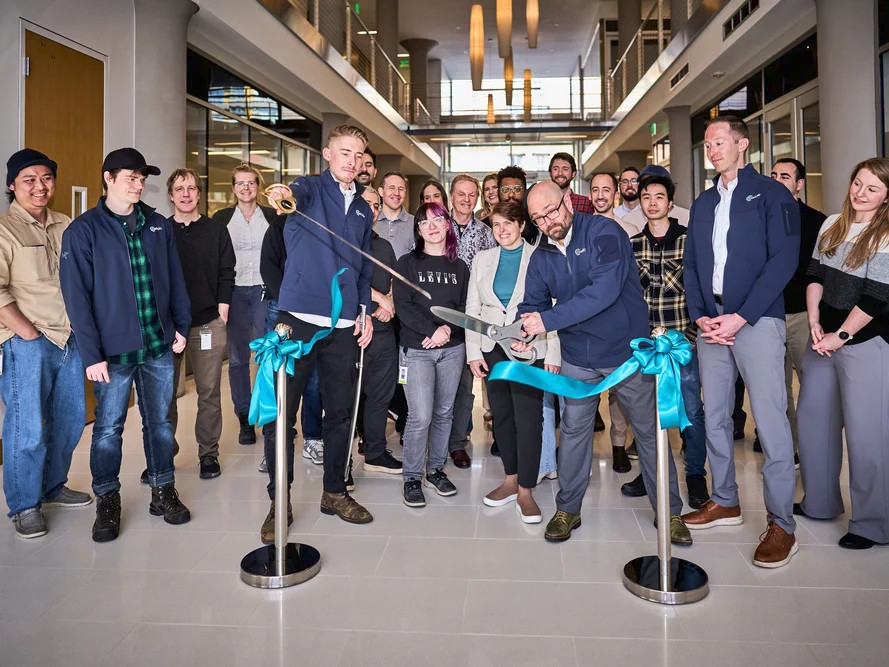
In a significant development for the biotech sector, Seattle-based startup Curi Bio has announced a $10 million Series B funding round to advance its innovative approach to drug testing. The investment, led by Seoul-based research firm DreamCIS, marks a pivotal moment for the company that has been redefining preclinical drug discovery through human-relevant testing methods. At a celebratory ribbon-cutting ceremony in April 2025 at their new waterfront headquarters in Seattle, co-founder Elliot Fisher symbolically cut the ribbon with a sword while CEO Nicholas Geisse stood by with traditional scissors, embodying the company’s blend of bold innovation and scientific precision.
Curi Bio’s breakthrough technology addresses one of the pharmaceutical industry’s most persistent challenges: the high failure rate of drugs in human clinical trials despite promising results in animal testing. As Michael Cho, Curi Bio’s chief strategy officer, pointed out, “The vast majority of new drugs fail in human clinical trials because preclinical animal and 2D cell models have failed to be good predictors of human outcomes.” This reality has long plagued drug development, leading to wasted resources, delayed treatments, and frustration across the industry. Curi Bio’s solution integrates sophisticated bioengineered tissues derived from induced pluripotent stem cells (iPSCs) with advanced data collection and analysis systems, creating a more accurate representation of how drugs will perform in actual human bodies. Their approach has attracted an impressive roster of pharmaceutical giants including Novo Nordisk, Eli Lilly, AstraZeneca, Pfizer, Boehringer Ingelheim, UCB, and Novartis, all seeking more reliable early-stage testing methods.
The fresh capital infusion will enable Curi Bio to accelerate the development of specialized platforms targeting various disease areas. The company plans to expand its capabilities in cardiac, skeletal muscle, metabolic, smooth muscle, and neuromuscular disease models, broadening the scope of conditions that can be studied using their human cell-based approach. This expansion is particularly important as each tissue type presents unique challenges in drug development, and having accurate models for various systems allows for more comprehensive testing before moving to human trials. By providing researchers with tools to test drug candidates across multiple tissue types, Curi Bio is helping pharmaceutical companies make more informed decisions about which compounds to advance, potentially saving billions in development costs and bringing effective treatments to patients faster.
The Seattle region has emerged as a vibrant ecosystem for life science innovation, with Curi Bio exemplifying the area’s leadership in combining advanced biological techniques with cutting-edge data analysis. The company’s approach is particularly relevant in an era when artificial intelligence is increasingly being applied to drug discovery. While AI can generate promising drug candidates computationally, these still require rigorous biological validation – precisely the gap that Curi Bio’s platform fills. By providing more reliable testing systems, the company helps ensure that AI-generated drug candidates can be effectively evaluated before proceeding to costly clinical trials. This synergy between computational and biological approaches represents the future of pharmaceutical research, with Seattle serving as a key hub where these technologies converge and mature.
DreamCIS CEO Jeounghee Yoo expressed strong confidence in Curi Bio’s approach, describing it as “a paradigm shift for preclinical drug discovery.” The investment firm was particularly impressed by “the company’s innovative platforms and their ability to generate functional data from 3D human tissues at scale.” This capability to produce meaningful, actionable data from complex human tissue models represents a significant advance over traditional testing methods that rely on simpler cell cultures or animal models that often fail to predict human responses accurately. The partnership between Curi Bio and DreamCIS reflects a growing international recognition that improved preclinical testing is essential to revitalize pharmaceutical innovation and address the current inefficiencies in drug development that lead to high costs and delayed treatments.
Curi Bio’s journey from its origins as NanoSurface Biomedical, a University of Washington spinout founded a decade ago, to its current position at the forefront of drug discovery innovation illustrates the potential of academic research when successfully commercialized. Having raised a total of $20 million from investors, complemented by $12 million in federal grants, the company has demonstrated both scientific credibility and commercial viability. The inauguration of their expansive 13,942-square-foot headquarters and research facility on the Seattle waterfront symbolizes not just the company’s growth but also the rising prominence of Seattle’s biotech sector. As pharmaceutical companies continue to search for more efficient paths to drug development, Curi Bio’s human-relevant testing platforms offer a promising alternative that could fundamentally change how new medicines are discovered and brought to market, potentially benefiting countless patients waiting for treatments for currently intractable conditions.