


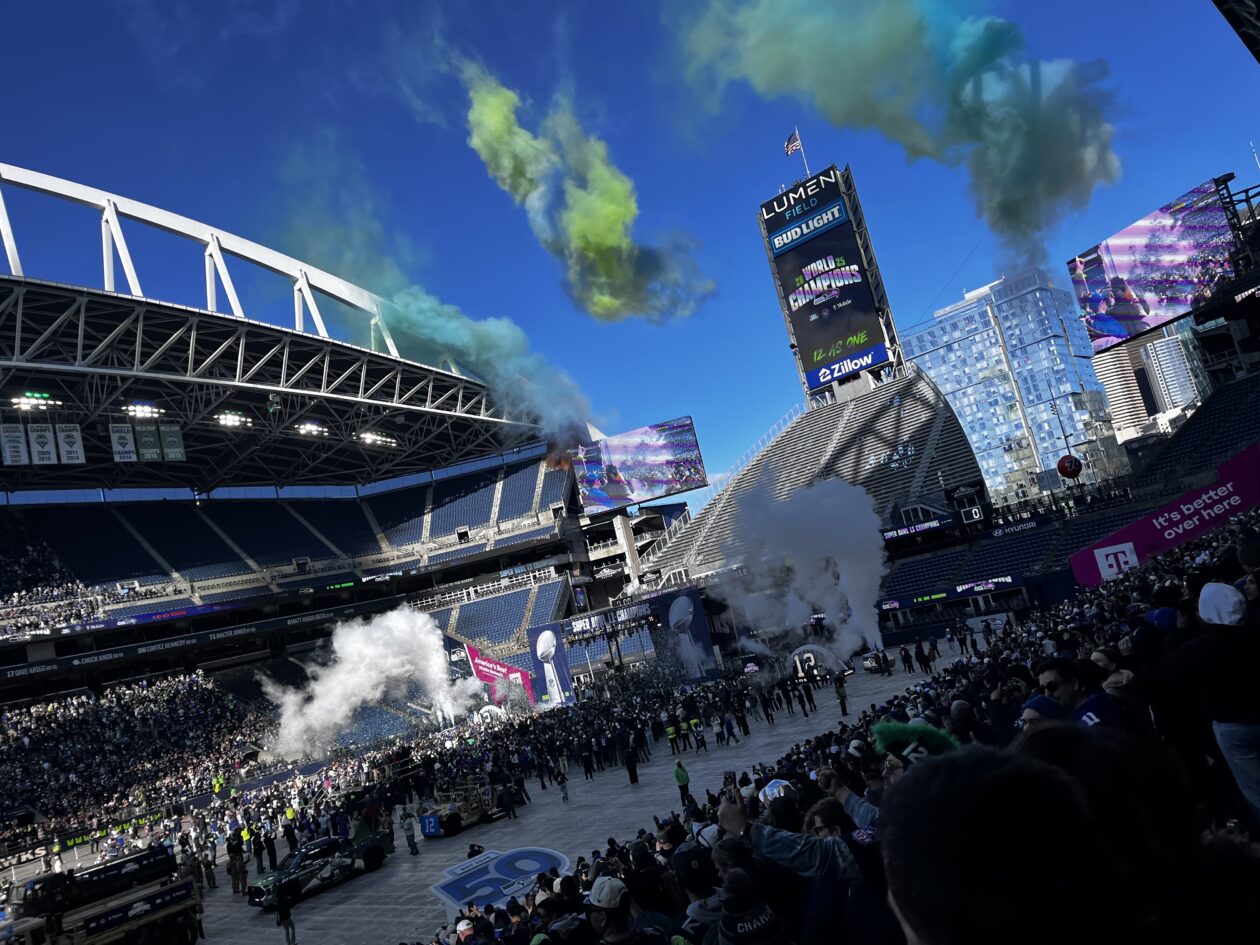
The joy of victory was palpable in the crisp Seattle air on February 11, 2026, as throngs of die-hard football fans converged at Lumen Field, the iconic home of the Seahawks. The atmosphere buzzed with excitement and noise—cheers, chants, and the occasional burst of fireworks echoing off the concrete stands—celebrating the team’s triumphant Super Bowl win just days earlier. It was a moment of pure elation for the Emerald City, a place where sports fandom runs deep in the veins of its residents. Picture the scene: families bundled in Seahawks jerseys, kids perched on shoulders, holding up handmade signs; alumni sharing stories of past glories around street vendors selling hot dogs and beer; and the unmistakable aroma of victory mingling with the salty Puget Sound breeze. For many, this wasn’t just a parade; it was a communal high-five after years of heartbreak, a chance to revel in the underdog spirit that Seattle embodies. But beneath the surface of this festive chaos, an unsettling incident unfolded, highlighting how swiftly technology can intrude on human celebration. A daring pilot, perhaps swept up in the euphoria himself, flew a drone directly into the restricted airspace above Lumen Field, ignoring warnings that had been issued to ensure public safety. This act wasn’t harmless mischief—it sparked immediate concern, transforming a day of triumph into a stark reminder of burgeoning security challenges in an era where unmanned aerial systems, or UAS, are becoming as commonplace as smartphones. Officials from the King County Sheriff’s Office scrambled to address the issue, contacting seven pilots that day alone, but one refused to back down, buzzing his device into the stadium despite clear prohibitions. The repercussions were swift: the pilot now faces reckless endangerment charges from the prosecuting attorney’s office, alongside potential federal penalties under FAA regulations for violating restricted airspace. It’s a story that underscores the delicate balance between innovation and safety, especially in a city gearing up for international events. Seattle’s role as a host for upcoming matches in the 2026 FIFA World Cup adds layers of urgency to these concerns, as experts worry about how easily drones could disrupt massive gatherings. From a broader perspective, this incident reflects a global shift where technology empowers individuals but also poses unprecedented risks. Drones, once the toys of hobbyists and filmmakers, now carry the potential for mischief or malice, whether it’s obstructing ceremonies or worse. As the crowds swelled along the parade route from the stadium to Belltown—hundreds of thousands strong, spilling onto sidewalks and streets—the sight of unauthorized drones hovering overhead became a recurring motif. KOMO News reported spotting at least 30 such devices during the procession, each a small speck against the gray Seattle sky, piloted by unseen hands with varying intentions. Some were likely spectators recording the spectacle for personal keepsakes, capturing sweeping shots of the emerald-and-blue sea of humanity. But others veered perilously close, prompting ground crews to issue stern radio broadcasts and urge compliance with flight restrictions implemented specifically for the event. The seven contacted pilots ranged from cooperative enthusiasts to defiant thrill-seekers, but it was the one who defied all pleas, zipping his drone into Lumen Field, that escalated matters. He wasn’t a terrorist or saboteur—at least, not overtly—but his recklessness jeopardized bystanders below, forcing authorities to intervene. In today’s hyper-connected world, where instant footage from events goes viral in seconds, such lapses can amplify public anxiety. Newscasters often frame these as isolated blunders, but they resonate deeply with everyday people who worry about aviation safety and event security. After all, who hasn’t glanced skyward during a parade and wondered if that buzzing sound could spell trouble? The pilot’s actions painted a vivid picture of unchecked technology intersecting with public spaces, evoking memories of past scares like rogue drones near airports. And yet, human nature being what it is, many dismissed it initially as harmless hype amid the celebratory haze. The charges against him—reckless endangerment at the local level and possible FAA fines or worse federally—serve as a deterrent, but they also invite questions about privacy, freedom, and the evolving landscape of aerial regulations. Seattleites, accustomed to an independent streak, might grumble about overreach, arguing that a drone over a parade isn’t akin to piloting a plane. Still, the potential for chaos looms large, especially with pieds-à-terres and commercial flights routinely navigating nearby airspace. This case isn’t just about one man and his gadget; it’s a microcosm of societal debates on where personal liberties end and communal responsibilities begin. Looking back at that day, it’s easy to imagine the pilot’s perspective—perhaps he was a longtime fan, eager to immortalize the moment from above, unaware of the red tape. Or maybe he was testing limits, akin to those who sneak past barricades at concerts. Whatever his motivation, the outcome blurred the lines between joy and jeopardy, reminding us how fragile our public festivities can be in the face of modern threats.
As the dust settled on the parade’s aftermath, the incident quickly snowballed into a broader conversation about drone proliferation and its implications for Seattle’s future. The city, with its iconic skyline of the Space Needle and Mount Rainier looming in the distance, is no stranger to hosting high-profile events, from the World’s Fair decades ago to modern tech summits and rock concerts. But the 2026 FIFA World Cup marks a pinnacle—a global soccer extravaganza drawing millions, with Lumen Field slated for matches that could pit the world’s best teams against one another. Washington state officials are rightfully alarmed, recognizing that drones represent a modern wild card in event planning. The King County Sheriff’s Office, weaving through the debris of the parade, emphasized that this wasn’t a fluke; it was symptomatic of a trend where cheap drones are everywhere, empowering hobbyists but straining resources. At Joint Base Lewis-McChord, the Washington National Guard had preempted such worries just days prior, hosting a FIFA Field Ready Range Day—a hands-on exercise where troops trained in countering unmanned aerial systems (UAS). Participants simulated scenarios where drones could menace crowds, blending military precision with real-world applications. It was a sobering spectacle: soldiers in camouflage firing at drone replicas, analyzing trajectories, and strategizing defenses all in the name of securing football fields turned soccer pitches. This wasn’t just bureaucracy in action; it was proactive thinking in a state that’s seen its share of natural disasters and man-made challenges. The Guard’s involvement humanizes the stakes—imagine dedicated young people, many from Seattle-area families, preparing for hypothetical swarms of airborne nuisances. Their efforts culminated in a Counter-UAS (CUAS) Summit held last fall, where planners staged a mock attack on Lumen Field during a simulated soccer match: harmless pop-ups mimicking coordinated drone assaults disrupted the “game,” evacuations unfolded chaotically, and teams strategized responses. These exercises aren’t born from paranoia; they’re lessons from past global incidents, like drone-related scares at major events abroad, adapted to American soil. Participants shared war stories and technical insights, fostering a collaborative spirit among local law enforcement, federal agencies, and tech experts. For residents, it’s a reassurance that behind the scenes, a network of protectors is at work, albeit one that’s constantly adapting to rapid technological advances. Yet, it also raises ethical dilemmas—how do we balance drone access for legitimate uses, like journalism or search-and-rescue, against the risks? Seattle’s creative community thrives on innovation, from drones filming wake waves on Lake Union to aiding in wildfire surveillance, but events like the World Cup demand stricter controls. The Guard’s support for a burgeoning state law, HB 2462, aims to formalize Washington’s role in counter-drone operations, potentially allowing quicker responses without relying solely on federal oversight. This bill envisions a framework where state resources coordinate seamlessly, perhaps deploying interdiction tools or integrating AI-driven detection. It’s a legislative push that’s both practical and promising, reflecting grassroots advocacy from officials who’ve witnessed firsthand the chaos of unmanaged skies. As Seattle braces for the soccer spectacle—envisioning tourists flooding Pike Place Market, global broadcasters splicing highlights, and fans chanting in multiple languages—these preparations underscore a community’s resilience. But they also evoke a poignant truth: while technology connects us, it can just as easily divide if not managed wisely. The parade incident, with its echoes of what-ifs, serves as a catalyst, humanizing the need for preparedness in ways that resonate with everyday citizens who cherish their city’s welcoming vibe.
Reflecting on the human element in all this, it’s worth pausing to consider the stories of those directly impacted by the parade’s drone drama. Take the vendors hawking Seahawks memorabilia—aging entrepreneurs who’ve peddled gear through rain and shine, their livelihoods tied to events like these. For them, a disruptive drone wasn’t just annoying; it risked scaring away customers, potentially tainting the economic glow of victory. Or think of the families crowding the sidewalks, parents shielding children from the overhead buzz, turning a fun outing into a tense vigilance. One father recounted to locals how his daughter clung to him as drones whirred by, her face a mix of wonder and worry, turning the celebration into a teachable moment about safety. Then there are the law enforcement officers on the ground, those unsung heroes in reflective vests, juggling crowd control with airspace monitoring—men and women whose shifts blend routine patrols with high-stakes improvisation. They communicated via radios, eyes scanning the heavens, echoing warnings that went unheeded by the rogue pilot. In the background, city planners and event organizers must have felt the weight, knowing that one misstep could mar Seattle’s reputation as a safe, vibrant host. The pilot himself remains a shadowy figure—perhaps an impulsive thrill-seeker or a well-intentioned amateur filmmaker retorted by passion, now facing charges that could upend his life. Stories like his remind us of human fallibility; in the rush of adrenaline following the Super Bowl victory, rules might blur for some. Legal experts weigh in on the charges: reckless endangerment, a misdemeanor in many jurisdictions, could mean fines or jail time, while FAA violations might escalate to federal misdemeanors with stiffer repercussions. But beyond the courtroom drama, there’s room for empathy—understanding that drones democratize photography and exploration, yet requiring education on boundaries. Seattle’s community, diverse and progressive, often debates these nuances in coffee shops and online forums, balancing innovation’s freedoms with the need for guardrails. The incident has sparked local conversations, with some advocating for drone-free zones around events, akin to alcohol bans at sports smashes, and others pushing for better public awareness campaigns. Psychologically, it taps into primal fears of the unknown above, amplified by media tales of hijacked drones. Yet, positive outcomes emerge: it fosters dialogue, encouraging people to report suspicious activity and appreciate the complexities of modern security. At its core, this episode humanizes the tech-security nexus, showing how one person’s choices ripple through a community, urging vigilance without paranoia.
Looking ahead to the World Cup, the drone concerns amplify into a symphony of preparation and anticipation. Seattle, a city of contrasts—towering skyscrapers alongside serene waterways—stands ready to embrace soccer’s global fervor, with Lumen Field as the epicenter. Matchdays could draw upwards of 70,000 fans per game, their energy fusing American sport culture with international flair. But the shadow of drone threats looms, prompting stakeholders to reevaluate protocols. From ticketing and traffic flow to emergency responses, officials are integrating UAS risks into comprehensive plans. The Washington National Guard’s initiatives, born from that Range Day and Summit, highlight a proactive stance. Troops trained in CUAS tactics—using jammers, nets, or laser dazzlers—represent a human-centric defense, empowering on-site personnel to act decisively. These aren’t faceless operatives; they’re local recruits, often balancing military duty with civilian lives, their expertise imported to civilian arenas. Partnerships with tech firms yield innovations like AI-powered drone detection, scanning skies for anomalies and alerting teams. Yet, the human factor endures—overworked planners grappling with budget constraints or volunteers manning fan zones, all striving for seamless experiences. HB 2462, if enacted, would streamline inter-agency cooperation, potentially designating state liaisons for drone interdictions during events. This legislation, championed by lawmakers attuned to community pulse, aims to close loopholes, ensuring local voices steer national priorities. For residents, the World Cup is an opportunity—a boost to tourism, culture, and economy—but it demands sacrifice, like temporary flight bans that might inconvenience pilots. Seattleites share stories of past hostings, from Puget Sound logs to indie films, weaving optimism with caution. The parade incident, far from a detraction, galvanizes this spirit, transforming potential crises into teachable moments. As the city readies, fan excitement builds, imagining goals scored under those famous Hawks’ nest lights, all while experts whisper assurances that skies stay secure.
In the spirit of transparency, media outlets like KOMO News play a pivotal role, shedding light on these dynamics. Amid the drone hysteria, KOMO secured an FAA waiver to operate their own unit during the parade, capturing ethereal footage that edited the chaos into comprehensible narratives for viewers. Theirs is a nuanced dance: reporting risks while exemplifying ethical drone use, fostering public trust. Without such journalism, events like this would remain opaque enigmas, buried in official statements. Beyond KOMO, local outlets and social media amplify voices—fans posting clips, experts debating regulations—creating a tapestry of informed discourse. This humanizes security threats, turning abstract dangers into relatable stories: a violator’s hubris, a community’s vigilance, a city’s readiness. Emerson once spoke of events shaping character; here, the drone breach shapes Seattle’s, urging balance between freedom and safety. As 2026 unfolds, lessons from the parade endure, reminding us that progress thrives on proactive hearts.
Ultimately, the tale of that reckless drone pilot intertwines personal folly with collective fortitude, echoing through Seattle’s streets as it prepares for brighter horizons. Incidents like these challenge us to innovate responsibly, blending technological wonders with human empathy. Fans, planners, and protectors alike draw from it, emerging wiser, their bonds strengthened by shared vigilance. For in the end, events aren’t just about spectacles—they’re about the people who make them, their joys, their fears, and their unwavering quest for security in an ever-changing sky. Seattle stands poised, its spirit unbroken, ready to host the world not just as a venue, but as a beacon of resilient humanity, where even the buzz of drones can’t drown out the roar of celebration.