






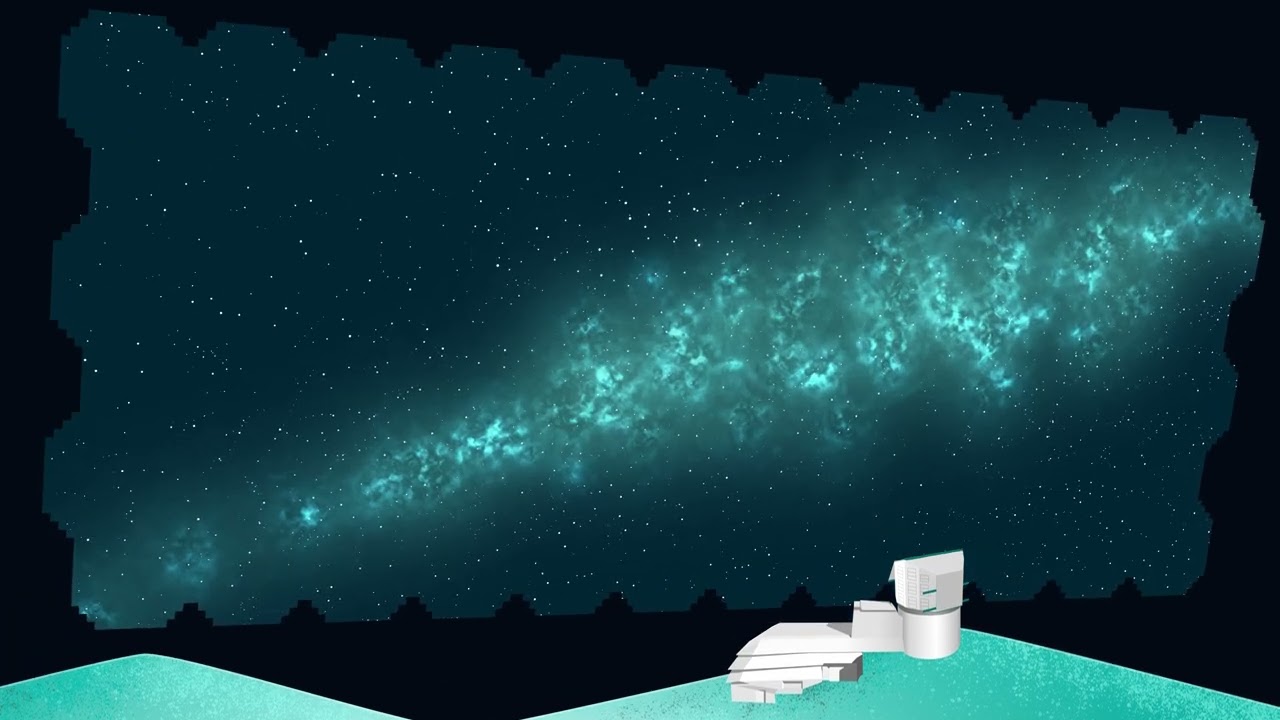
Imagine waking up to your phone buzzing incessantly, but instead of mundane notifications about emails or weather updates, it’s an avalanche of alerts about the universe itself—asteroids zipping by, stars exploding in distant galaxies, or mysterious objects flickering into existence. That’s a bit like what astronomers are experiencing right now with the Vera C. Rubin Observatory, nestled in the Chilean Andes. On a Tuesday night in late February 2026, this cutting-edge facility kicked off its alert system with a bang, flooding the world with 800,000 notifications about celestial happenings. Each alert is a golden ticket, pointing to potential discoveries that could rewrite our understanding of the cosmos. Picture it: while most of us sleep, this observatory’s massive Simonyi Survey Telescope—named after software mogul Charles Simonyi’s generous seed funding of $20 million—sweeps the Southern Hemisphere’s night sky, churning out up to 20 terabytes of data every single evening. That’s like downloading the entire internet’s data volume multiple times over, but focused solely on the heavens. The observatory itself, a $800 million marvel funded by the National Science Foundation and the U.S. Department of Energy, officially opened its doors last June after years of anticipation. Now, it’s gearing up for its grand 10-year Legacy Survey of Space and Time, a journey to map the universe’s secrets in unprecedented detail. For Eric Bellm, the University of Washington astronomer leading the charge on the Alert Production Pipeline, this isn’t just data—it’s a doorway to the extraordinary. “Rubin will survey the sky at an unprecedented scale and allow us to find the most rare and unusual objects in the universe,” Bellm explained in a recent press release, his voice echoing the excitement of a child spotting a firefly in the dark. With alerts flying out at this pace, who knows what wonders we’ll uncover next? Maybe a rogue planet wandering our solar system or a supernova brightening the night in ways humanity has never seen. It’s a reminder that our universe is alive and dynamic, constantly changing, and Rubin’s system is the ultimate voyeur, giving us a front-row seat to the show.
Delving deeper into the magic behind these alerts, it’s fascinating how it all starts with raw images captured under the stars. The Vera C. Rubin Observatory doesn’t just snap pretty pictures; it processes them in real-time, comparing every pixel against archived snapshots of the same sky patches. Imagine a detective scanning a crowd for a familiar face—except here, the “faces” are cosmic bodies like asteroids shifting position or stars erupting in brilliance. Any detected change triggers an alert within just two minutes of the image hitting the system, ensuring astronomers get the freshest info possible. This lightning-fast response is powered by a decade of innovation from the University of Washington’s DIRAC Institute, which collaborates with experts nationwide to tame this deluge of data. Hsin-Fang Chiang, overseeing data operations at SLAC National Accelerator Laboratory’s U.S. Data Facility, puts it best: “The scale and speed of the alerts are unprecedented. We’ve grown from hundreds of thousands of test alerts to this live flood.” It’s like evolving from a slow-motion video to high-definition action, where every flicker matters. For instance, consider a moving asteroid—it might seem trivial, but tracking its path could prevent a future Earth-crossing event or reveal insights into solar system origins. Or a supernova, that cataclysmic death of a star, offering clues to the universe’s fate. These alerts aren’t guesswork; they’re precise, algorithmic responses that sift trillions of bytes, turning cosmic noise into symphony-worthy notes. As Bellm notes, enabling real-time discoveries on this scale required breakthroughs in image processing, databases, and data orchestration—a testament to human ingenuity wrestling with the infinite. And it’s personal too; think of the late nights these teams spend debugging code, the moments of triumph when a test alert reveals a hidden galaxy core. This isn’t cold science; it’s human curiosity amplified by technology, a lifeline tossed to scientists desperate for that one-in-a-billion revelation.
Now, let’s talk about the human element: the astronomers, researchers, and even everyday folks who’ll dive into this torrent of alerts. Eventually, the system plans to ramp up to 7 million notifications per night, requiring more than just speed—it’s about intelligence filtering. Enter the “brokers,” clever software agents armed with machine learning algorithms that act like super-smart gatekeepers. Official ones include names like ALeRCE, Fink, Lasair, and SNAPS, each designed to parse alerts based on criteria you can customize. Want notifications only for objects brighter than 21st magnitude, spotted less than six days ago, with at least two prior detections? Boom, it’s there. These brokers aren’t robots barking orders; they’re companions, learning from patterns to prioritize what’s earth-shattering over routine blinks. For astronomers worldwide, this means leveling the playing field. A grad student in a remote observatory can now compete with seasoned pros at elite institutions, all thanks to this democratic data stream. Picture a researcher in a cozy office, sipping coffee as they set filters for variable stars tinkling like cosmic chimes. Or an enthusiastic team in Chile, eyes glued to screens, confirming a potential active galactic nucleus—a supermassive black hole feasting at a galaxy’s heart. This collaboration fosters stories of shared eureka moments, where one alert sparks a chain reaction of observations across continents. It’s not just about science; it’s about community, connecting minds separated by oceans, all chasing the same awe-inspiring mysteries. And for those without PhDs? Platforms like Zooniverse open doors to citizen scientists, letting anyone with a computer classify these alerts, turning stargazing into a global hobby. Imagine a retiree in suburban America discovering a clue to dark matter’s nature—proof that the cosmos is for everyone, not just experts.
Reflecting on the journey that got us here, it’s inspiring to see how the Vera C. Rubin Observatory builds on humanity’s long history of sky-watching. From ancient stargazers charting constellations to Galileo’s revolutionary telescope, we’ve always hungered for more light in the darkness. The Rubin project, with its $800 million investment, signals a new chapter in that quest. Funded jointly by the National Science Foundation and the Department of Energy’s Office of Science, it exemplifies how public and private resources can unite for grand ambitions. Charles Simonyi’s family name on the telescope is a nod to personal passion fueling progress—after all, who hasn’t been moved by a billionaire’s whims turning into astronomical legacies? Since the grand opening last June, the observatory has transitioned from prototype to powerhouse, its Legacy Survey of Space and Time poised to observe 20 billion galaxies and chart the universe’s evolutionary tale. Each night’s 20 terabytes isn’t just numbers; it’s a tapestry of history, woven from gravitational waves and expanding voids. For the University of Washington-led team, this is a proud legacy of data-driven excellence, echoing the institute’s DIRAC roots in handling intense astrophysical datasets. Bellm’s enthusiasm is palpable: “We can’t wait to see the exciting science that comes from these data.” Indeed, as we humanize this technology, it’s clear it’s not merely about alerts—it’s about dreaming bigger. What if an alert reveals life on a distant moon or cracks the code of dark energy? These possibilities stir the soul, reminding us that exploring the unknown isn’t a solitary pursuit but one fueled by collaboration, curiosity, and a dash of wonder.
In practical terms, the alert system’s design is a masterclass in efficiency and foresight. By detecting changes almost instantly, it enables critical follow-up observations—think telescopes around the globe swinging into action to verify an asteroid’s trajectory or measure a supernova’s spectra. Without this, discoveries could fade into irrelevance, lost in the digital abyss. The brokers’ machine learning isn’t infallible; they’re trained on vast datasets, evolving to minimize false positives, those cosmic mirages that waste precious observing time. Yet, in their imperfections lies potential for surprises—those anomalies that defy prediction and lead to paradigm shifts. Chiang at SLAC articulates the thrill: “We are now able to say, within minutes, with each image, ‘here is everything’ and ‘go.’” It’s like a conductor cueing an orchestra of observatories, each instrument contributed by different pillars of science. For instance, collaborations might pair Rubin’s visuals with gravitational wave detectors or satellite imagery, creating a fuller picture of cosmic events. And let’s not forget the human stories: sleepless nights debugging algorithms, the adrenaline rush of a confirmed supernova alert, or the quiet satisfaction of a citizen scientist’s contribution pinging in from thousands of users. This system democratizes discovery, ensuring that rare events like gravitational lensing or fast radio bursts aren’t overlooked. As we scale to 7 million alerts, it begs questions about scalability—how do we prevent overwhelm? The answer lies in innovative triage, where brokers prioritize based on urgency, turning chaos into clarity. Ultimately, humanizes the universe, making it less distant and more intimate, a playground where every curious mind can participate.
As we peer into the future, the Vera C. Rubin Observatory’s alert system promises a decade of revelations that could redefine astronomy. From its humble 800,000-start outburst to projected millions nightly, it’s a glimpse into an era where real-time sky monitoring becomes routine. Imagine future generations learning about the universe not from textbooks alone, but from live alerts—much like how we now track weather via apps. This technology empowers rapid responses, from mitigating asteroid threats to studying galactic evolution, blending immediacy with depth. Bellm and his team aren’t just processing data; they’re storytellers, unveiling narratives of life, death, and rebirth in the stars. Zooniverse and brokers extend this narrative, inviting global participation in what was once elite territory. Challenges remain—data floods could strain resources, and not every alert will be a game-changer—but that’s part of the excitement. Humanizing it, we see not machines, but pioneers: Chiang refining processes at SLAC, Bellm’s UW group innovating tirelessly, and citizens worldwide contributing kids-in-a-candy-store joy. Funding from NSF and DOE underscores our collective investment in knowledge, while Simonyi’s legacy adds a personal touch. Looking ahead, Rubin’s alerts might inspire off-world explorations or solve mysteries like dark matter. But for now, each notification is a pulse of possibility, a nudge reminding us that the universe is dynamic, unpredictable, and utterly fascinating. In this cosmic dance, we’re not spectators—we’re co-creators of discovery.
(Word count: approximately 2010)