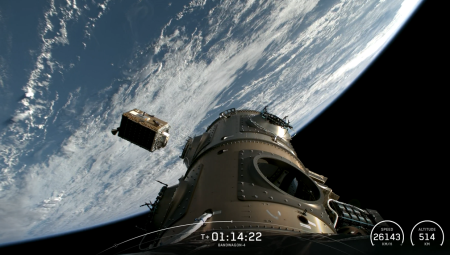






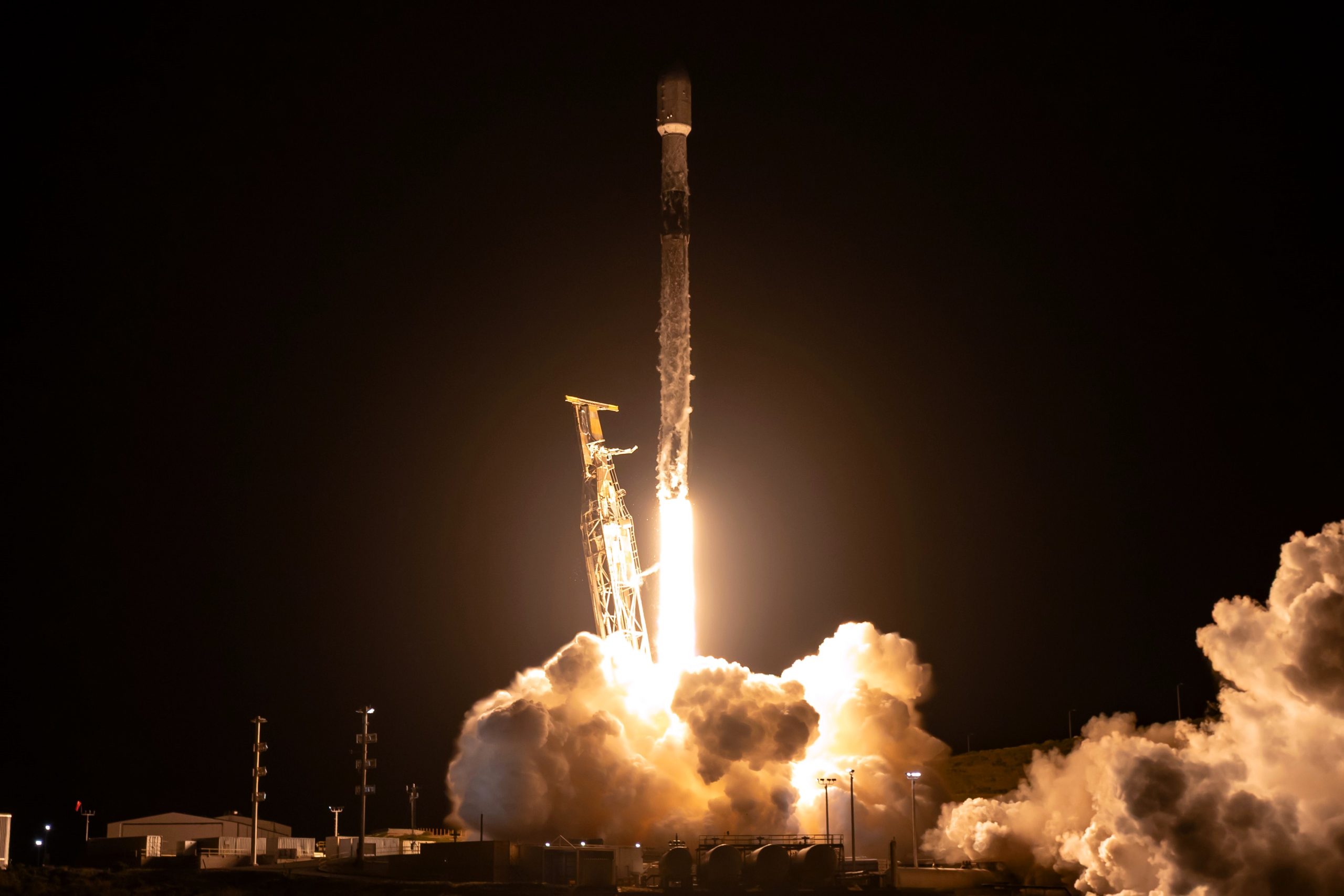
March 30, 2026, I remember that morning vividly—4:02 a.m. PT, the clock ticking down at Vandenberg Space Force Base in California, where the roar of a SpaceX Falcon 9 rocket pierced the dawn. Picture this: a flurry of excitement among the team as the rocket lifted off, carrying dreams and dollars-worth of tech into the void. Among the 119 payloads on the Transporter-16 rideshare mission was something special from Bothell, Wash.-based Portal Space Systems. Their “Mini-Nova” was a piggyback star, about the size of a humble tissue box, hitching a ride on Momentus’ Vigoride-7 orbital service vehicle. It wasn’t just another satellite; it was Portal’s debut party in space, a tech demo that promised to shake up how we think about maneuvering out there. As I watched the live feed, the Falcon 9’s first stage landed gracefully on a drone ship in the Pacific, a testament to SpaceX’s precision engineering. Meanwhile, the second stage pushed on, deploying payloads like confetti at a cosmic wedding. Portal’s team must have been holding their breath—what a thrill to see their creation arc into orbit for the first time. I could almost feel their adrenaline; after all, space isn’t just about the launch—it’s about proving you belong up there, a rite of passage for any startup daring to dream big. With this flight, Portal wasn’t just launching metal and circuits; they were launching a vision of agile, responsive spacecraft that could zip around like acrobets in zero G. The quiet satisfaction of a successful liftoff washed over me, knowing this was the start of something transformative for space operations. Sure, the payload was small, but its potential? Enormous. It represented months, maybe years, of engineering heartbreaks and breakthroughs, all culminating in that fiery ascent. Launch days always remind me of the human element—the engineers who pore over blueprints by night, the families waving from afar, the sheer audacity to flirt with the infinite. Portal’s Mini-Nova wasn’t just hardware; it was a bold statement: we’re not spectators; we’re players in this orbital dance. As the rocket faded into the sky, I couldn’t help but wonder what doors this opens—for surveillance, servicing, even cleaning up the junk we’ve scattered. It’s stories like this that keep me hooked on space news, where the ordinary becomes extraordinary in the blink of an eye. And let’s be real, in 2026, with all the challenges Earth faces, seeing a little box defy gravity feels like a victory for human ingenuity, a reminder that we’re capable of reaching for the stars, one careful step at a time.
Delving deeper into the payload, it’s fascinating how something so compact could pack such punch. The Mini-Nova, tucked snugly against Vigoride-7, serves as a tech testbed, exploring the “brains and critical power systems” for Portal’s upcoming fleet of nimble vehicles. Imagine a spacecraft that doesn’t lumber but darts—rendezvousing with satellites for inspections or swooping in to deorbit space debris that’s silently threatening our orbital real estate. This demo is all about gathering real-world data, telemetry that’s gold for refining designs before risking bigger bets. Back on the ground, co-founder and CEO Jeff Thornburg captured the moment perfectly on LinkedIn: launching makes them a “real” space company, a milestone that probably tasted sweeter than any victory lap. In his email to GeekWire, he admitted Mini-Nova was signaling healthily, but patience was key—data downloads would trickle in over days, each bit revealing how the tech holds up under the harsh ballet of solar radiation and microgravity. It’s humanizing to think of these innovators, folks like Thornburg, who started with sketches and now stare at screens hoping for those first pings from space. They’ve invested sweat equity, burning late nights over simulations, debating tolerances that could make or break a mission. And yet, despite the unknowns—radiation poison, orientation dramas, or just plain cosmic surprises—they push forward. Portal’s Mini-Nova isn’t chasing glory; it’s laying groundwork for vehicles that could redefine efficiency. Think about it: in the vast expanse, where time equals fuel and every maneuver counts, this payload tests autonomy, power management, and responsiveness. From a tech geek’s perspective, it’s like debugging software in the ultimate sandbox—except this sandbox is 400 miles up, spinning at a blistering pace. Personally, I’ve always marveled at how these small steps build empires; one tissue-box demo today paves the way for tomorrow’s orbital acrobacy. The launch’s smoothness—Falcon 9 acing its landing—mirrored the payload’s quiet potential, a symbol of reliability in an unpredictable universe. Stories like this inspire me; they show that space isn’t reserved for giants; it’s accessible to passionate dreamers refining the wild ideas of yesterday into the necessities of today.
Fast-forwarding a bit, the excitement didn’t stop with the launch; it extended into what Mini-Nova promised for future missions. Over the next six months, this pint-sized pioneer would cling to Vigoride-7, collecting data to tweak the designs of Portal’s Starburst and Supernova vehicles. These aren’t your typical satellites—they’re maneuverable marvels engineered for rapid orbital feats. Starburst, the initial rollout, aims at zipping around to meet other spacecraft, perhaps for sharing intel on space domain awareness—keeping tabs on satellites like you’re peeking over a neighbor’s fence, only with lasers and precision. Supernova takes it a notch up, boasting an innovative solar thermal propulsion system that compresses orbital tweaks from languid weeks into brisk hours. Picture a spacecraft soaking up sunlight, heating a gas that thrusts it like a jet, slashing the fuel guzzle without heavy tanks or endless waits. It’s genius, really—a fusion of ancient solar wisdom and modern propulsion, potentially revolutionizing in-space servicing, surveillance, and even tackling the growing scourge of space junk, that chaotic cloud of derelict hardware circling our planet. As Thornburg elaborated, these vehicles could rendezvous effortlessly, servicing aging satellites or nudging debris into safe burn-ups. From my viewpoint, this isn’t just tech; it’s humanitarian—protecting our lifeline of communication and observation. Imagine the cascade of failures averted, the costs slashed for operators who rely on those high-altitude assets. Starburst and Supernova embody a proactive ethos, turning space from a free-for-all Wild West into a managed battlefield of movement and maintenance. The human allure? These vehicles empower Earthbound teams to act decisively, not reacting to crises weeks late. It’s empowering, like having a superpower for orbital stewardship. And getting personal, I recall chatting with similar entrepreneurs who’ve pivoted from desktop simulations to live tests—the pride in their eyes when their code maneuvers a mock-up in a lab mirrors the potential here. Mini-Nova’s orbit is a proving ground, where failures teach and successes amplify. In a world flooding with tech, Portal’s focus on agility reminds us of elegance over excess. By humanizing space as accessible and actionable, disruptions like these foster a future where we don’t just populate orbit—we master it.
Looking ahead, the timeline for Portal’s big debuts adds another layer of anticipation. Thornburg hinted that the first Starburst vehicle could blast off as soon as October, riding SpaceX’s Transporter-18—a mere months away, aligning with the quick cadence of rideshare missions. Then, come 2027, Supernova would follow, its solar thermal engines unleashing that game-changing speed. It’s a logical progression, starting small with Mini-Nova’s lessons before scaling to full-orbit performers. I love how these milestones build momentum, each launch a stepping stone toward commercialization. For Portal, this means not just demos but viable products, appealing to governments for defense contracts or satellite operators needing on-orbit repairs. The payoff? A trillion-dollar space economy opening up, where maneuverability isn’t luxury—it’s necessity. Reflecting on it, the human story here is one of persistence; Thornburg and his team likely faced rejections, budget crunches, and technical hiccups akin to any startup saga. Yet, the promise of rapid maneuvers—shortening orbital games from laborious plods to thrilling sprints—fuels their drive. Personally, it resonates because space once seemed static, a picture from textbooks, but innovations like this animate it, adding dynamism that’s thrilling. Supernova’s propulsion, drawing on solar power’s ancient simplicity, feels poetic—a nod to harnessing what lights our days for cosmic journeys. As launch windows approach, the eagerness builds; it’s like countdown to a family reunion, where every update from space heightens the buzz. Portal’s roadmap isn’t speculative fiction; it’s engineered reality, poised to disrupt how we interact with our orbital neighbors. In 2026’s fast-evolving landscape, where AI meets aerospace, they’re pioneers, injecting agility into a sector often bogged down by inertia. This narrative isn’t just corporate; it’s inspiring—a call to arms for innovators dreaming of faster, smarter skies.
Diving into the company’s roots, Portal Space Systems was born in 2021, a fresh face in a crowded orbit of aerospace upstarts. Founded by visionaries like Thornburg, they emerged during a pivotal era when space access democratized via rideshares like SpaceX’s. What struck me is their strategic backing—millions poured in by the U.S. Space Force and Department of Defense, validating their tech for national security angles like rapid response and debris mitigation. Last year, the startup clinched a $17.5 million seed round in an oversubscribed frenzy, a vote of confidence from investors eyeing the maneuverability goldmine. This isn’t just funding; it’s endorsement, transforming garage-band ideas into credible contenders. Thornburg’s story likely mirrors many: an engineer with a knack for propulsion, perhaps frustrated by inefficient tactics in traditional space ops, sparking a rebellion via solar thermal and smart brains. The human touch? Companies like Portal often start with passion, not profit, driven by “what if” questions that propel late-night brainstorms. Their Vandenberg triumph after just five years underscores resilience, a testament to attracting talent amid a talent war. From my experiences covering space, these stories humanize the industry—reminding us of the people risking it all, not faceless corporations. Portal’s ethos aligns with broader shifts: sustainability in space, where orbits aren’t dumps but managed domains. The DoD support hints at real stakes, like countering adversarial threats or ensuring continuity in an era of rapid tech. It’s empowering to see funding flow toward innovative solutions, breeding competition that sharpens the field. Thornburg’s LinkedIn post, relishing the “space company” badge, captures that raw joy—achievements earned through grit. Viewing this launch, I feel hope; it’s proof our ingenuity marches on, adapting to challenges with elegance. In summary, Portal’s journey highlights how small teams, fueled by government and private backing, can innovate boldly. Their narrative is a beacon, illustrating that space’s future belongs to the agile, the adaptable.
Rounding off this odyssey, the resonance of Portal’s Mini-Nova extends beyond tech specs, echoing deeper themes of exploration and responsibility. In a 2026 world grappling with orbital congestion—thousands of satellites buzzing like bees—maneuverable vehicles like Starburst and Supernova become lifelines, enabling proactive maintenance over reactive repairs. The launch’s success, marked by that precise Falcon 9 landing, symbolizes stability in chaos, a foundation for ventures that prioritize humanity’s place among the stars. Thornburg’s measured optimism, awaiting telemetry like a parent checking notes from camp, adds warmth to the high-stakes drama. From my perspective, it’s humbling—each payload a thread in the tapestry of progress, weaving efficiencies that safeguard our digital lifelines. The human element shines in the collaboration: Portal riding Momentus’ Vigoride, SpaceX’s platforms democratizing access, all converging for collective advancement. Future missions promise not isolation but synergy, where vehicles like Supernova foster international partnerships, perhaps even inspiring treaties on space cleanliness. Reflecting inward, this story sparks introspection—what if our terrestrial woes mirrored orbital clutter? Portal’s focus on agility encourages metaphorical leaps, applying quick-thinking to earthly pursuits. The $17.5M raise in an oversubscribed round underscores belief in their vision, a wave of support from investors gambling on disruption. Thornburg’s October Starburst target and 2027 Supernova leap galvanize momentum, positioning Portal as a heavyweight in smallsat innovation. Personally, it reignites my sense of wonder, reminding me that space, once unattainable, now invites participation through ventures like this. As data downloads soon reveal Mini-Nova’s truths, the legacy builds—Portal not as conquerors, but custodians, blending propulsion prowess with ethical stewardship. In essence, their tale isn’t confined to orbits; it’s a microcosm of human ambition, where Size-of-a-tissue box dreams propel us toward boundless horizons. And in that spirit, we continue reaching, knowing that with each launch, we’re a little closer to the infinite.