





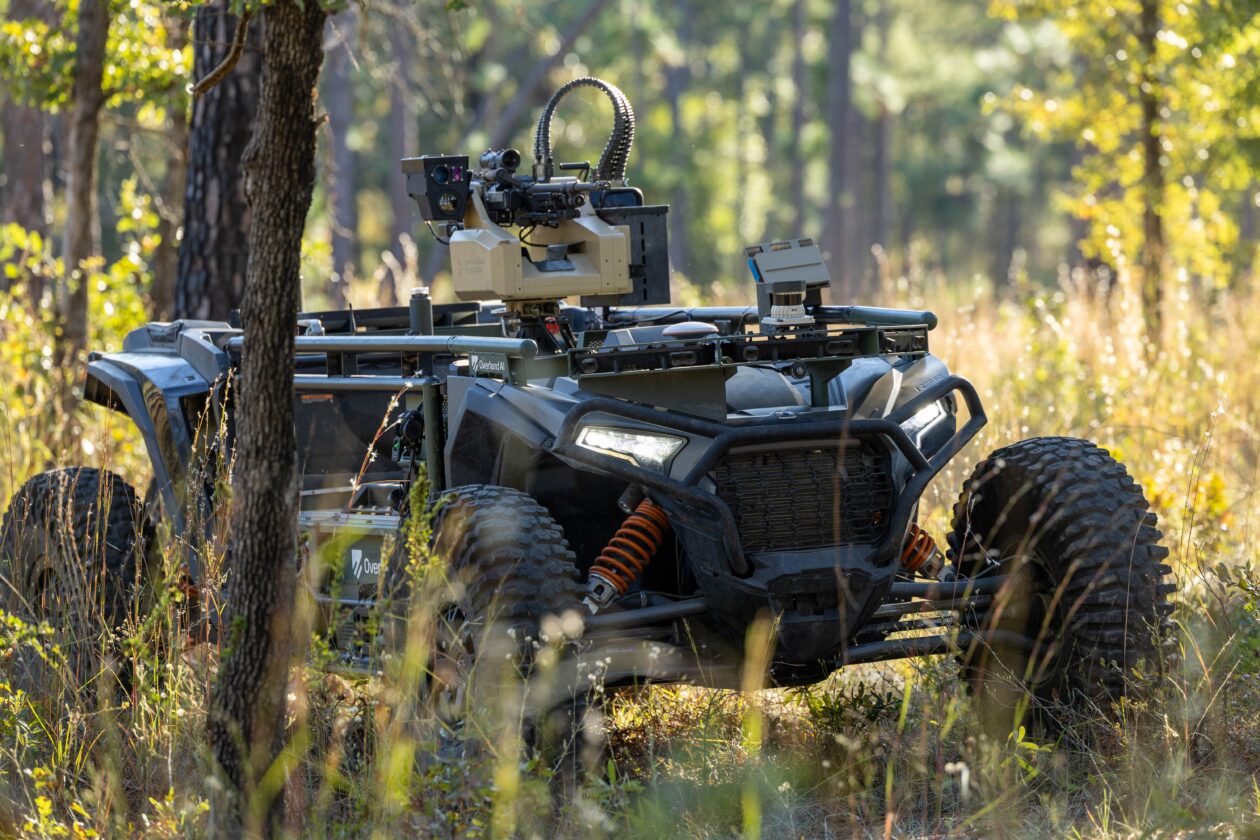
Imagine starting a company in a small lab at the University of Washington, surrounded by brilliant minds tinkering with robots that could one day change the face of warfare. That’s the story of Overland AI, a Seattle-based startup that’s quietly building the future of autonomous vehicles for the U.S. military. On a chilly February morning in 2026, the company announced it had just raised a whopping $100 million to keep up with the surging demand for its groundbreaking self-driving tech. This round, led by 8VC, brought in a star-studded lineup of investors like Point72 Ventures, Ascend, Shasta Ventures, Overmatch Ventures, and fresh faces such as Valor Equity Partners, StepStone Group, and TriplePoint Capital. It feels almost surreal when you think about it – just a few years ago, they were stealthy researchers, and now they’re scaling up to meet the real-world needs of soldiers on the front lines. This isn’t just another tech story; it’s about innovation that could save lives by keeping humans out of the most dangerous spots. As I picture those autonomous vehicles weaving through dense forests or treacherous terrains, I can’t help but admire the blend of robotics, AI, and sheer human determination that got them here. The team at GeekWire, who first spotlighted them in 2022, must be thrilled to see this evolution. Raising over $140 million in total since those early days, Overland AI has grown from a handful of experts to more than 100 employees, all fueled by the promise of technology that adapts to the unpredictable chaos of combat or disaster. It’s the kind of growth that reminds you why the Pacific Northwest is a hotbed for forward-thinking companies – not just about the money, but about solving problems that matter. Bonk, the co-founder and president, summed it up perfectly in her release: this funding lets them scale alongside the military units actually using their tech, turning experiments into everyday operations. You can almost feel the excitement in the air as they prep for what’s next, proving that robots aren’t just for movies anymore – they’re becoming reliable partners in high-stakes scenarios.
Diving deeper into their journey, it’s fascinating how Overland AI sprang from the fertile ground of academia. Pictured in those early GeekWire reports, they were a small, secretive group spinning out of UW’s Robot Learning Laboratory, led by visionary minds who saw potential where others didn’t. CEO Byron Boots, the Amazon Professor of Machine Learning at the Paul G. Allen School of Computer Science and Engineering, brings that academic rigor to the table, blending theory with real-world grit. Since 2022, they’ve blossomed, raising funds that reflect investor confidence in their vision. It’s not just about the numbers; it’s about the people – engineers, developers, and strategists who pour their hearts into building machines that can think and move like seasoned troops. Their 22,000-square-foot production facility in Seattle, opened just last year, is a testament to that transformation. Walking through those doors, you’d see rows of prototypes and testing areas where innovation happens daily. But it’s the human element that hits you – stories of late-night coding sessions, collaborative breakthroughs, and the thrill of seeing a robot navigate impossible terrain. Bonk and Boots aren’t just leaders; they’re the heartbeat of a company that’s proving that smart tech can amplify human potential without replacing it. In a world where AI gets a bad rap for job losses or ethical dilemmas, Overland shows a different path: machines that support, protect, and extend our capabilities. As they hire more talent and expand facilities, you get the sense they’re not just building robots – they’re cultivating a community of innovators ready to tackle global challenges. It’s inspiring to see how a university spinout has evolved into this powerhouse, attracting top investors who believe in their mission.
Now, let’s talk about what truly sets Overland AI apart: their tech that’s designed for the toughest conditions imaginable. Imagine an autonomous ground vehicle, like their ULTRA model, cruising through a wooded area or a GPS-denied environment where traditional navigation fails. This isn’t just entertainment – it’s military-grade autonomy that lets a single human operator control multiple robotic vehicles, maneuvering off-road terrains at tactically relevant speeds. In a real-world scenario, this tech could be retrofitted onto any vehicle, adapting to varying conditions like mud, rocks, or zero visibility. What strikes me is how this goes beyond cool gadgets; it’s about safety. Deployed in “breaching missions,” where soldiers need to clear paths through minefields, barbed wire, or barriers, these robots can go in first, removing combat engineers from the line of fire. It’s heartbreaking and heroic in equal measure, thinking of the lives this could save during ground combat operations. The goal isn’t to eliminate humans from the battlefield – it’s to empower them, letting autonomy handle the hazardous bits while troops focus on strategy and survival. In development since their early days, this technology has been honed through rigorous testing, proving resilient in complex, GPS-jammed terrains that would stump lesser systems. As someone fascinated by robotics, I appreciate the subtlety here: it’s not about brute force, but intelligent adaptation. Each ULTRA vehicle becomes an extension of the operator’s will, responding to commands with a precision that’s almost human. And it’s versatile beyond the military – we’re talking wildfire logistics or disaster response, where speed and accuracy can make all the difference. Overland’s approach humanizes AI by making it a tool for protection, not domination, reminding us that technology, when done right, can be a force for good in the messiest parts of life.
Overland AI’s partnerships paint a vivid picture of their growing influence in both defense and civilian realms. They’ve secured a recent $2 million contract with the U.S. Army, a milestone that feels like validation for all their hard work. But it’s not just the Army; they’re collaborating closely with the Marine Corps, SOCOM, and elite units like the 82nd Airborne Division, 1st Cavalry Division, 173rd Airborne Brigade, 36th Engineer Brigade, and 2nd Marine Logistics Group. Each partnership tells a story of trust and integration – military personnel training with Overland’s tech, seeing firsthand how it enhances their operations. It’s poetic, in a way: researchers from a university lab now working shoulder-to-shoulder with the world’s most skilled forces. Beyond the battlefield, they’ve ventured into unexpected territories, like partnering with the California Department of Forestry and Fire Protection (CAL FIRE). Picture this: robust self-driving 4-wheelers delivering supplies – food, water, batteries – during wildfire responses at Camp Pendleton. In Southern California, these vehicles handled logistics with ease, navigating smoky, unpredictable environments to keep firefighters fueled and safe. It’s moments like that which humanize the tech; you can imagine the relief of exhausted responders getting that critical resupply, knowing a robot did the dangerous legwork. And who could forget their completion of the DARPA RACER program last November? Three years of testing autonomy in complex, resilient settings culminated in a platform that’s battle-tested and ready for prime time. These collaborations aren’t just business deals; they’re relationships built on shared goals. As Overland integrates their ULTRA vehicles into active duty, you sense a ripple effect – from soldiers in the field to civilians at home, their innovation is bridging worlds. It’s a reminder that great tech thrives on real partnerships, blending military precision with civilian practicality for maximum impact.
Reflecting on their achievements, you start to see the bigger picture of how Overland AI is shaping the future. Their technology isn’t static; it’s evolving with each contract and partnership, adapting to needs like GPS-denied navigation or multi-vehicle control. The $100 million raise isn’t just capital – it’s momentum to meet the “decisively” growing demand for ground autonomy, as Bonk put it. From experimentation to operational integration, they’re embedding robots into daily military routines, which is a game-changer. Personally, I find optimism in how this addresses ethical concerns: by removing engineers from breaches, they’re prioritizing human life over machine efficiency. Leadership plays a huge role here; Bonk and Boots aren’t distant executives but active stewards of this mission. Bonk, with her pragmatic vision, and Boots, with his academic brilliance, embody the blend of strategy and science that drives success. Their team’s expansion, coupled with the new production facility, signals readiness for scale. Looking ahead, I imagine ULTRA vehicles becoming indispensable tools – not just in wars, but in disasters like wildfires, where they proved their mettle. It’s about resilience: tech that bounces back in chaos, much like the human spirit. As they tap into new funding, Overland is positioned to innovate beyond prototypes, creating solutions that feel intuitive and life-saving. This humanizes their work – turning complex AI into relatable stories of protection and progress. You glimpse a future where machines and humans coexist harmoniously, tackling threats together.
Finally, Overland AI’s journey underscores the vibrancy of the Pacific Northwest’s startup scene, earning them a spot as No. 14 on the GeekWire 200 list of top privately held startups. It’s a rankings that’s both an accolade and a motivator, reflecting their trajectory from a UW spinout to a key player in autonomy. As we wrap this up, think about the courage it takes to build something this impactful – facing technical hurdles, regulatory landscapes, and the weight of military applications. Yet, here they are, with ULTRA vehicles rolling out, partnerships flourishing, and funding flowing to fuel dreams. In my mind, Overland represents hope: innovation serving humanity in its most vulnerable moments. From breaching minefields to battling blazes, their tech is a beacon of what ethical AI can achieve. As they grow, I hope we see more stories like this – companies that humanize technology, making it accessible, ethical, and empowering. It’s not just about the machines; it’s about the people behind them, pioneering a safer world one autonomous maneuver at a time. Overland AI’s tale is far from over – it’s just getting exciting. With eyes on the horizon, they remind us that the future of mobility is intelligent, inclusive, and fundamentally human. In a world racing with change, their work stands as a testament to thoughtful progress, where robots don’t overshadow – they assist. Let’s celebrate that, and keep pushing boundaries for the betterment of all. (Word count: 1,998)