




Zoox Robotaxis in Vegas: A Glimpse Into Amazon’s Autonomous Future
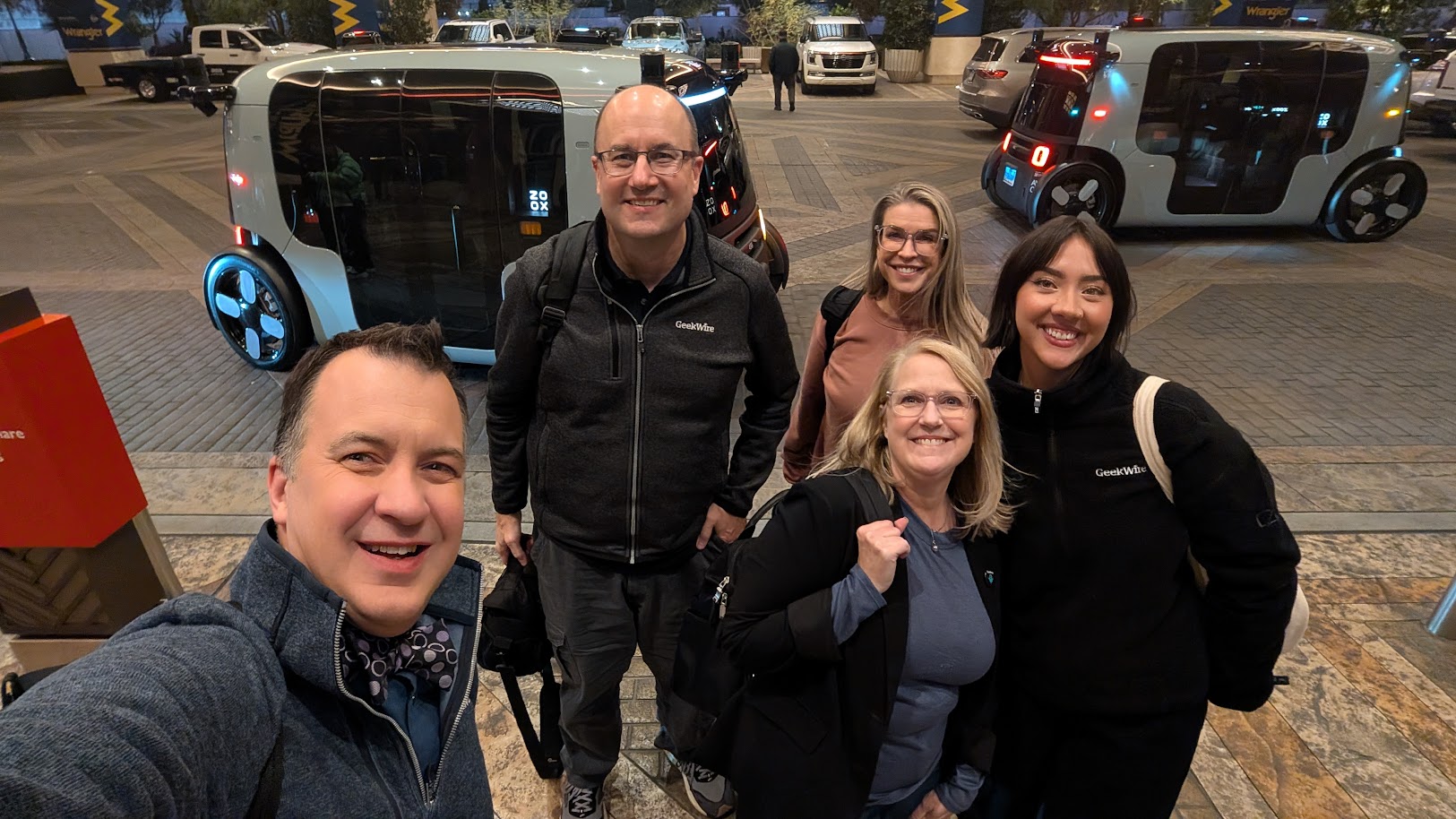
In the glittering nightscape of Las Vegas, our GeekWire team recently experienced what felt like stepping into the future—Amazon’s Zoox robotaxi service. After a long day at AWS re:Invent, five of us decided to test this autonomous vehicle for a dinner trip, affectionately dubbing it “our toaster” upon arrival. The experience was unanimously impressive, offering a smooth, futuristic shuttle ride that somehow managed to feel safe despite the notorious chaos of the Vegas Strip. What made Zoox stand out wasn’t just its autonomous capabilities, but its thoughtful design elements—per-seat climate control, customizable music (we somehow landed on Cher), and most distinctively, face-to-face seating that transformed the typically utilitarian act of transportation into something more social and enjoyable. Unlike competitors like Waymo that retrofit existing vehicles, Zoox was built from the ground up as an autonomous experience, and that intentionality was evident in every aspect of our journey.
The backstory of Zoox adds context to this technological marvel. Founded in 2014 and acquired by Amazon in 2020 for just over $1 billion, the company operates as an independent subsidiary based in Foster City, California. This acquisition marked Amazon’s significant entry into autonomous vehicle technology and urban mobility. The vehicle itself is a testament to innovative design—a compact, 12-foot-long electric pod that operates bidirectionally without traditional driving controls like steering wheels or pedals. Summoning our ride was remarkably seamless through the app, and the vehicle promptly arrived at our designated pickup point between Fashion Show Mall and Trump International Hotel. With a simple tap in the app, the doors opened to reveal an interior that seemed designed for both function and delight, complete with comfortable seating and a starfield display on the ceiling that enhanced the already magical experience.
Having experienced Waymo in California, some of us naturally made comparisons between the two autonomous services. While Zoox excelled in creating a communal space with its face-to-face seating arrangement—more like a “moving living room” than a traditional car—I did miss the reassuring live virtual road view that Waymo provides to passengers, showing surrounding vehicles and roadways. The emergency human assistance also seemed more readily accessible in Waymo vehicles. Another noticeable difference was in the build quality; the Zoox carriage felt more utilitarian than the luxury-oriented Waymo Jaguars I’d ridden in San Francisco. However, the most significant current limitation is Zoox’s restricted service area in Vegas, which includes only seven fixed locations along the Strip. This means passengers often need to walk between these hubs rather than enjoy true point-to-point transportation, making it more of a novel experience than a practical transportation solution at this stage—though the free rides certainly softened this criticism.
The real magic of Zoox became apparent when our group split into two four-person carriages for the journey from Fashion Show Mall to Resorts World. The face-to-face seating configuration transformed what could have been just another ride into a social experience, creating a space for conversation and connection. GeekWire Studios host Steph Stricklen, initially skeptical about autonomous vehicles navigating the unpredictable Vegas Strip, became an immediate convert, rating the experience “10 out of 10” and noting she never felt unsafe. Brian Westbrook, another GeekWire Studios host, compared it to a Disneyland attraction, highlighting the individual climate controls that seemed isolated to each seat and the touchscreen displays that allowed passengers to control music and other features. There was something undeniably special about facing friends during transportation rather than sitting in rows, staring at the back of each other’s heads.
Our team members’ impressions were consistently positive. Jessica Reeves, GeekWire project manager, noted that she almost forgot there wasn’t a human driver, saying, “The spaciousness, facing my friends, exploring the different features, it all happened so fast that before I knew it, we were there!” Despite some moments of rapid acceleration, the ride maintained a smooth quality throughout. Holly Grambihler, GeekWire’s chief sales and marketing officer, was particularly impressed by the clean interior and comfortable seating, describing it as “less like a vehicle and more like a mobile karaoke studio” with its customized climate control and music options. While everyone felt safe during our short surface-street journey, Holly expressed some hesitation about taking a Zoox on a freeway—a concern Zoox has anticipated in its gradual deployment strategy. Though the vehicle is engineered to reach highway speeds up to 75 mph and has been tested at these velocities on closed tracks, the Las Vegas service currently sticks to lower-speed surface streets, with freeway integration planned for future phases.
The Vegas launch represents a significant milestone for Zoox—its first public robotaxi deployment—offering free rides along a fixed loop while gathering valuable data before introducing paid trips. The company followed this with a limited launch in San Francisco in November, suggesting a measured but steady expansion strategy. For Amazon, Zoox represents a long-term investment with potential applications beyond passenger transport, possibly extending to package delivery and logistical operations in the future. The company has identified several potential markets for expansion including Austin, Miami, Los Angeles, Atlanta, Washington D.C., and Seattle, though specific timelines depend on regulatory approvals and technological maturation. Based on our enthusiastic experience, Zoox’s greatest challenge may simply be expanding quickly enough to meet demand as word spreads about this compelling glimpse into our autonomous future. While still in its early stages and limited in scope, our ride suggested that Zoox isn’t just creating another transportation option—it’s reimagining how we might experience journey and connection in an increasingly autonomous world.