





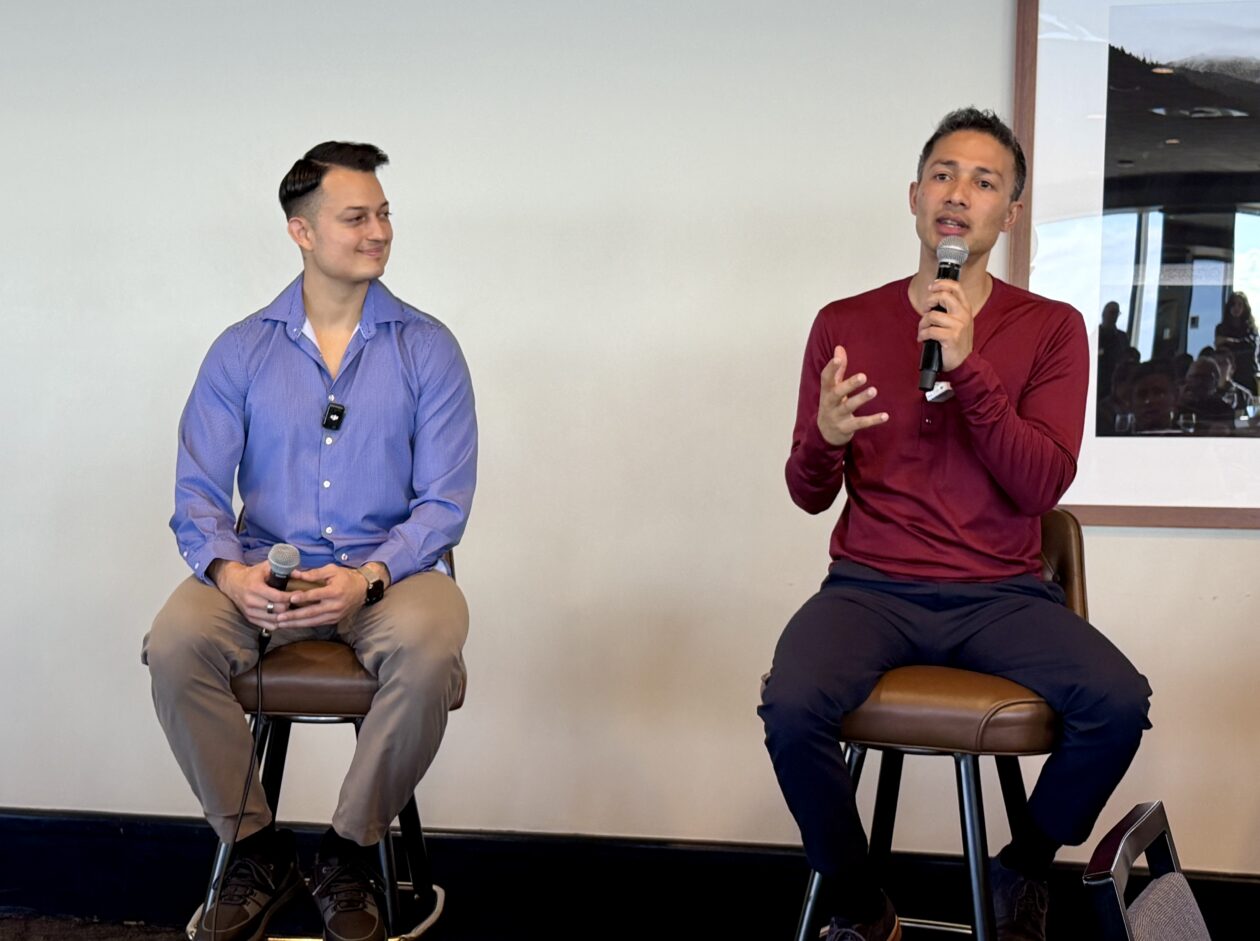
In the bustling heart of Seattle, on a crisp March day in 2026, the air hummed with a palpable energy as innovators gathered for the Enterprise AI Summit. Hosted by OneSixOne Ventures, the event felt like a gathering of dreamers and doers, united by the promise of artificial intelligence reshaping the world. Pablo Casilimas, the firm’s founding partner, mingled with the crowd, his presence a reminder of the venture capital fuel powering these aspirations. At the center of it all was Sudheesh Nair, a seasoned tech leader with a sparkle in his eye, sharing his vision as co-founder and CEO of TinyFish. Nair, whose journey included building massive enterprises like Nutanix and ThoughtSpot, stood before the audience, not just as a speaker, but as a storyteller weaving tales of transformation. He captured everyone’s imagination by declaring that this AI moment isn’t merely another tech wave—it’s a golden era, pulsating with opportunities that founders haven’t seen in decades. Imagine waking up to a world where your wildest ideas about AI-powered web agents aren’t pie-in-the-sky dreams, but tangible realities enabled by millions in funding. That’s the magic Nair evoked, painting AI as the catalyst for a new industrial revolution, where startups could etch their names into history alongside titans of past booms.
As Nair delved deeper, he likened the current AI landscape to the California Gold Rush of 1849, drawing chuckles and nods from the crowd. Back then, sure, gold seekers struck it rich momentarily, but the real legacies emerged from the chaos: sturdy Levi’s jeans that withstood rugged work, safer elevators transforming skyscrapers, and modern banking systems that streamlined commerce for generations. Nair argued that AI’s explosive growth—seen in companies like his own TinyFish, which secured $47 million in 2025 to build essential infrastructure for web-operating AI agents—isn’t just about the gleaming “gold” of quick profits. It’s about the enduring tools and systems born from the frenzy, creations that society couldn’t live without. For Nair, this meant that even if you’re not chasing the next big model breakthrough, you could be crafting the scaffolding that supports it all. Picture a young entrepreneur, fresh out of college, noticing how AI agents struggle to navigate the messy sprawl of the internet seamlessly—that’s the kind of second-order innovation Nair championed. He urged attendees to think beyond the hype, to innovate in the trenches where the real value lies, much like how the Gold Rush inadvertently invented hydraulic mining or consolidated railroads. In a world where AI could reason “on tap” like never before, the constraints are self-imposed; imagination becomes the only limit.
Yet, Nair wasn’t all starry-eyed optimism; he grounded his exuberance with a dose of reality, humanizing the highs and lows of entrepreneurship. Reflecting on his own path, he admitted that starting TinyFish in 2024 felt like jumping off a cliff without a net. The tech veteran had watched colleagues scale behemoths, but the pull to create something new, something that bridges AI agents with the vast web, was too strong. “I couldn’t stand on the sidelines,” he confessed, evoking the restlessness many in the room knew intimately. It’s that very human itch—the blend of fear and excitement—that Nair celebrated. But he cautioned that company-building isn’t a universal calling, not everyone has the grit to endure the sleepless nights, the pivots, and the failures. Some thrive better in the stability of established firms or as employees in growing startups, contributing without the full brunt of ownership weight. Nair painted this portrait with empathy, sharing anecdotes from his past: late-night coding sessions at Nutanix that birthed industry-shifting hyper-converged infrastructure, or the euphoric yet exhausting launch of ThoughtSpot’s AI-driven analytics. He emphasized that this AI era amplifies that personal drive, making it a rarer, more intoxicating moment for those ready to leap.
Expanding on the unprecedented nature of this wave, Nair described AI as possibly surpassing even the internet’s impact, a bold claim that stirred whispers among the summit attendees. For the first time, he explained, “reasoning” isn’t just a buzzword—it’s accessible, embedded in tools that can simulate human thought patterns across digital realms. Back in the early days of the web, people wondered if it could transform society; today, with AI, we’re seeing it fulfill that promise in ways like predictive assistants that anticipate needs before we voice them or agents that negotiate deals autonomously online. Nair urged the crowd to constrain their ambitions only by imagination, envisioning a future where personalized AI tutors revolutionize education, or web agents mediate global trade with unparalleled efficiency. He drew parallels to his TinyFish venture, where the goal is to make AI avatars “live” on the internet, interacting as dynamically as humans do. Imagine a therapist’s AI counterpart conducting virtual sessions with empathy, or a legal AI parsing contracts in seconds—not dystopian fears, but bright possibilities. This reasoning capability, Nair said, unlocks doors that were once locked to everything but elite researchers, democratizing innovation and inviting everyday creators into the mix.
Nair’s advice resonated deeply in an era where frontier labs—from OpenAI to deep-pocketed players—are still grappling with AI’s quirks and unpredictabilities. “No one really knows what the heck is happening,” he quipped, drawing laughter that masked the truth in the room. Markets shift rapidly, models evolve unpredictably, and regulations lag behind. Startups often feel like sailing uncharted seas, but Nair saw beauty in the chaos, pushing against the paralyzing instinct to wait for perfect clarity. He shared stories of his earlier ventures, like building ThoughtSpot during cloud computing’s infancy, where uncertainty bred breakthroughs in data analytics that powered everything from retail forecasts to medical diagnostics. The message was clear: in this gold rush, the victors aren’t those who hoard information but those who dive in with a “pickaxe and shovel,” metaphorically arming themselves with curiosity and resourcefulness. For attendees, this meant dusting off half-formed ideas—an app that uses AI to optimize home energy use, perhaps, or a platform for collaborative web agents in logistics—and bringing them to life. Nair humanized the process by acknowledging the fear: the risk of failure loomed large, but so did the thrill of creation, reminding us that history’s great leaps came from bold explorers, not cautious observers.
Wrapping up his talk, Nair left the audience with a profound yet approachable reflection on the human spirit at play in this AI renaissance. He invited them to envision a mosaic of innovations, where TinyFish’s web agents aren’t just cool gadgets but essential bridges connecting fragmented digital worlds. In essence, this moment is about harnessing AI’s potential to amplify human ingenuity, much like how the Gold Rush’s hustle birthed the tools that civilized the American West. But at its core, it’s people—pioneers like Nair himself—who drive change, blending technology with the messy, beautiful unpredictability of life. Whether you’re a seasoned executive or a wide-eyed newcomer, the invitation is there: grab your shovel, jump into the fray, and help shape the infrastructure of tomorrow. As the summit concluded and conversations spilled into networking cocktails, one thing was clear—the AI boom isn’t just an opportunity; it’s a call to adventure, infused with the same pioneering spirit that built modern civilization. And for those willing to listen, it’s a reminder that in the dance of progress, humanity’s imagination leads the way. The crowd departed inspired, not just by the tech, but by the enduring belief that our dreams, unconstrained by anything but ourselves, can forge a future as vast as the digital frontier itself.