






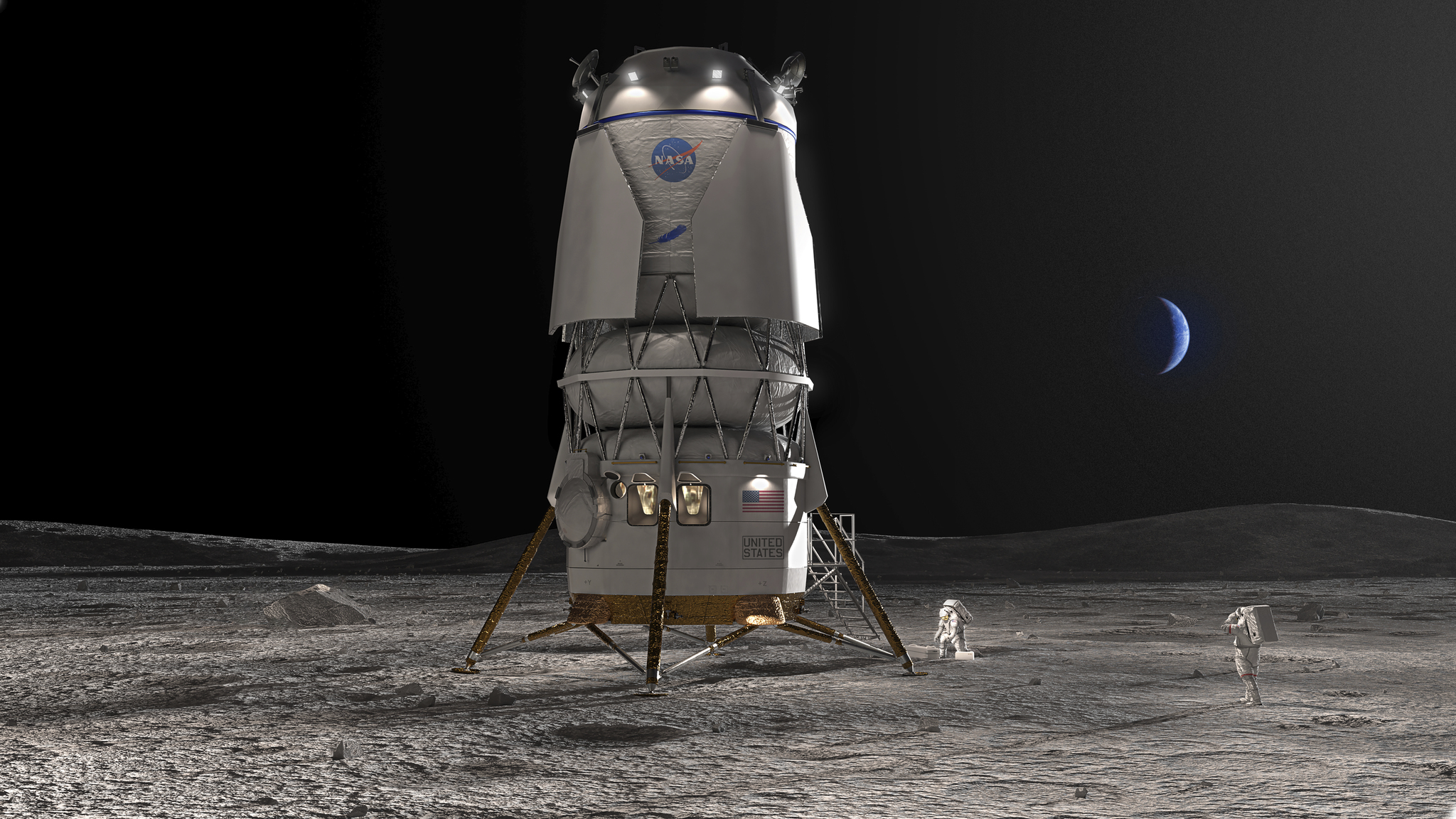
In the ever-evolving saga of humanity’s quest to return to the moon, NASA’s Artemis program has undergone a pivotal shift, reminiscent of those thrilling, high-stakes decisions that defined the Apollo era decades ago. Imagine a world where dreams of lunar footprints once again ignite imaginations, but with a modern twist involving private ventures like Jeff Bezos’ Blue Origin. As of late February 2026, NASA Administrator Jared Isaacman, who stepped into his role just months prior, revealed plans to compress the timeline for testing commercial lunar landers. Instead of rushing straight to a crewed moon landing in 2027, the agency is inserting a crucial low-Earth-orbit test mission next year. This move elevates the Blue Moon Mark 2 lander from Blue Origin onto center stage, blending private innovation with government ambition. Picture Dave Limp, Blue Origin’s CEO, enthusiastically posting on X: “We’re all in!” It’s a human moment of excitement, harkening back to the trailblazers who dared to aim for the stars, now infused with the energy of billion-dollar entrepreneurs and cutting-edge tech. Isaacman framed it simply during his announcement: “This is going to be our pathway back to the moon.” But beyond the headlines, this isn’t just about celestial conquests; it’s about real people—engineers, astronauts, and families—betting on safe, sustainable progress. The Space Launch System (SLS) rocket, that colossal piece of machinery towering at Kennedy Space Center, remains the cornerstone, set to propel four brave astronauts on a 10-day loop around the moon in the Orion capsule. Dubbed Artemis 2, this mission was poised for April or beyond, though a pesky helium leak forced a rollback for fixes—a reminder that even in the space age, Murphy’s Law still holds sway, turning what could be a routine prep into nail-biting drama. Families of these astronauts, perhaps watching from living rooms with fingers crossed, understand the tension: one delay could ripple into careers, dreams, and legacies. Yet, this mission persists as the unchanged first step, a psychological and technical bridge between blue-sky ambitions and terra firma realities. The revised plan breathes life into this endeavor by acknowledging the harsh truths of development timelines, ensuring that haste doesn’t compromise the lives of those who dare to go where few have returned.
Delving deeper into the mechanics, NASA’s original blueprint envisioned Artemis 3 as a full-fledged crewed lunar touchdown in 2027, with SpaceX’s Starship lander as the star. But Starship’s progress has lagged, echoing the unpredictable rhythms of technological leaps. The new architecture cleverly transforms Artemis 3 into an orbital rehearsal in low Earth orbit, testing not just Starship but potentially Blue Origin’s Blue Moon as well. This could even include trials of next-gen spacesuits designed for moon walks, where astronauts don suits that might feel like bulky armor but are engineered for survival in vacuum’s unforgiving embrace. The true payoff? A crewed landing would slide to 2028 or later, a pragmatic pivot that parallels the Apollo missions’ own methodical dance: Apollo 9’s Earth-orbit tests paved the way for Apollo 10’s lunar rehearsals and the euphoric Apollo 11 touchdown. It’s a testament to human ingenuity—adapting lessons from 1969 to forge today’s path, proving that progress isn’t linear but a spiral of trial and triumph. For those ground crews at space centers, this means intensified training simulations, where they rehearse every scenario from the mundane (equipment checks) to the catastrophic (emergency aborts). Isaacman’s words resonate personally: “Standardizing vehicle configuration, increasing flight rate and progressing through objectives in a logical, phased approach is how we achieved the near-impossible in 1969, and it is how we will do it again.” Behind the scenes, engineers and technicians aren’t faceless cogs; they’re passionate professionals, perhaps inspired by childhood moon landings, now channeling that same wonder into reliable rockets that could enable annual lunar voyages. This shift humanizes the endeavor, turning abstract timelines into a story of resilience, where setbacks become stepping stones toward lasting human presence beyond Earth.
At the heart of these changes lies a sobering reality check that speaks to the human element of space exploration. The old 2027 landing deadline was slipping into the realm of fantasy, a rushed gamble that risked lives in the name of national pride. Going from Artemis 2’s lunar flyby directly to a landing without orbital vetting of the lander felt akin to leaping into deep water without testing the life jacket first—a perilous shortcut. NASA’s Associate Administrator Amit Kshatriya articulated it with quiet candor: “The new plan ‘reflects the adjustments that we need to keep our schedule credible and our teams focused on what matters most, which is safe and achievable missions.’” This isn’t bureaucratic jargon; it’s a pledge to astronauts like those from Artemis 2, whose families hold their breath as launch preparations unfold. Imagine the psychological toll: months of isolation in orbit, followed by the harrowing descent to a desolate moonscape, all hinging on impeccable tech. By prioritizing safety, NASA echoes the unspoken mantra of explorers past—that exploration demands caution as much as courage. Stakeholders, from Congress to industry folks, echo this sentiment, recognizing that rushing for the sake of optics could tarnish the legacy of figures like Neil Armstrong. The human side emerges in these deliberations: doctors monitoring astronaut health, psychologists preparing for the mental maze of space, and communities rallying around the program as a symbol of collective aspiration. It’s a reminder that behind the machinery are lives—real, irreplaceable lives—driving the resolve to do it right, not just fast.
Boeing’s involvement infuses the narrative with layers of industrial grit and cooperative spirit, underscoring how partnerships fuel progress. Having spearheaded the upgraded upper stage for SLS originally slated for Artemis 3, Boeing swiftly adapted to the standardized rocket config that’s now supposed to enable yearly lunar missions. Their president and CEO, Steve Parker, voiced unwavering support: “As NASA lays out an accelerated launch schedule, our workforce and supply chain are prepared to meet the increased production needs.” Picture the Boeing factory floors in places like Seattle or Huntsville, where workers—many veterans of past space programs—gear up for ramped-up production. These aren’t nameless laborers; they’re craftsmen and engineers, perhaps passing down stories of their own parent’s involvement in Apollo or Shuttle eras, now contributing to rockets that could shorten Earth’s horizons. Standardizing the SLS means fewer customized nightmares, allowing for predictable launches that build momentum, much like Henry Ford’s assembly line revolutionized automotive production. In a world of global challenges, this efficiency feels empowering, a way to stretch taxpayer dollars further while creating jobs that sustain families. Boeing’s buy-in symbolizes the broader ecosystem: suppliers, subcontractors, and local economies interlocking in a mission that’s as much about earthly prosperity as celestial reach. It’s human scale meets epic scope, where a single engineer’s precision weld safeguards the dreams of millions gazing at the night sky, dreaming of what lies among the stars.
Then there’s the subtle undercurrent of international rivalry, adding a dash of geopolitical drama to the lunar lore. With China potentially eyeing a lunar landing before NASA, Isaacman acknowledged the competition but framed it as a motivating force rather than a panic button. “I think competition is good,” he remarked to reporters, emphasizing that the revised strategy stems from practical sense, not reactionary haste. Whether China’s space program surges ahead or not, NASA’s commitment is rooted in resources and a presidential mandate to restore American dominance in space. Launching every three years or more, he argued, isn’t a viable rhythm for sustainable exploration. This humanizes the stakes—it’s not just about flags on the moon, but about inspiring the next generation of scientists and dreamers. Imagine young students in classrooms, watching launches not as distant spectacles but as catalysts for STEM careers, their curiosity sparked by rivalries that push boundaries. Isaacman’s downplaying of China’s role suggests a confident outlook, grounded in thorough reviews with industry partners and congressional stakeholders, all aligned behind the plan. “Everybody agrees this is the only way forward,” he noted, after cross-agency dialogues that likely involved heated debates and breakthrough consensus. In essence, this competition isn’t a zero-sum game; it’s a shared impetus for humanity, where even adversaries propel us toward greater heights, reminding us that exploration unites as much as it divides. For American taxpayers, it validates the investment, turning space spending into a legacy of ingenuity that transcends borders and ideologies.
Finally, Blue Origin’s fervor brings a private-sector pulse to this public endeavor, injecting entrepreneurial zest into the narrative. The company’s decision to pause its New Shepard suborbital launches for two years, reallocating resources to lunar efforts, underscores a palpable urgency. An uncrewed cargo version of the Blue Moon is slated for a maiden moon voyage this year, a precursor to the crewed iterations. This pivot, announced last month, highlights the human drive behind blue-chip ventures: executives like Dave Limp and John Couluris chasing accelerated timelines. Couluris, vice president of Blue Origin’s lunar permanence division, had hinted last September that if NASA accelerated, so would they— “It’s right now gauged on Artemis 5. If they want us to go earlier, we would engage a lot faster.” With their $3.4 billion NASA contract from three years ago originally targeting 2029, Blue Origin is now poised for a starring role sooner, potentially in that 2028 landing. Envision the excitement at their Kent, Washington facilities: engineers burning the midnight oil, families of staffer’s sacrificing vacations for this cosmic sprint, all fueled by Bezos’ vision of multi-planetary humanity. It’s a privatization parable, where profit motives align with public missions, democratizing space access and fostering inclusivity. The Blue Moon, with its sleek design ready for integration, represents untold possibilities—not just for NASA but for commercial ventures like tourism or mining in the future. As humanity’s moon story unfolds, Blue Origin’s “all in” stance humanizes it further: a blend of passion, precision, and the indefatigable spirit that turns distant rocks into stepping stones for our species. In the end, these revisions aren’t just policy overhauls; they’re chapters in an ongoing epic, where ordinary individuals, through extraordinary collaboration, redefine what it means to reach for the stars.