






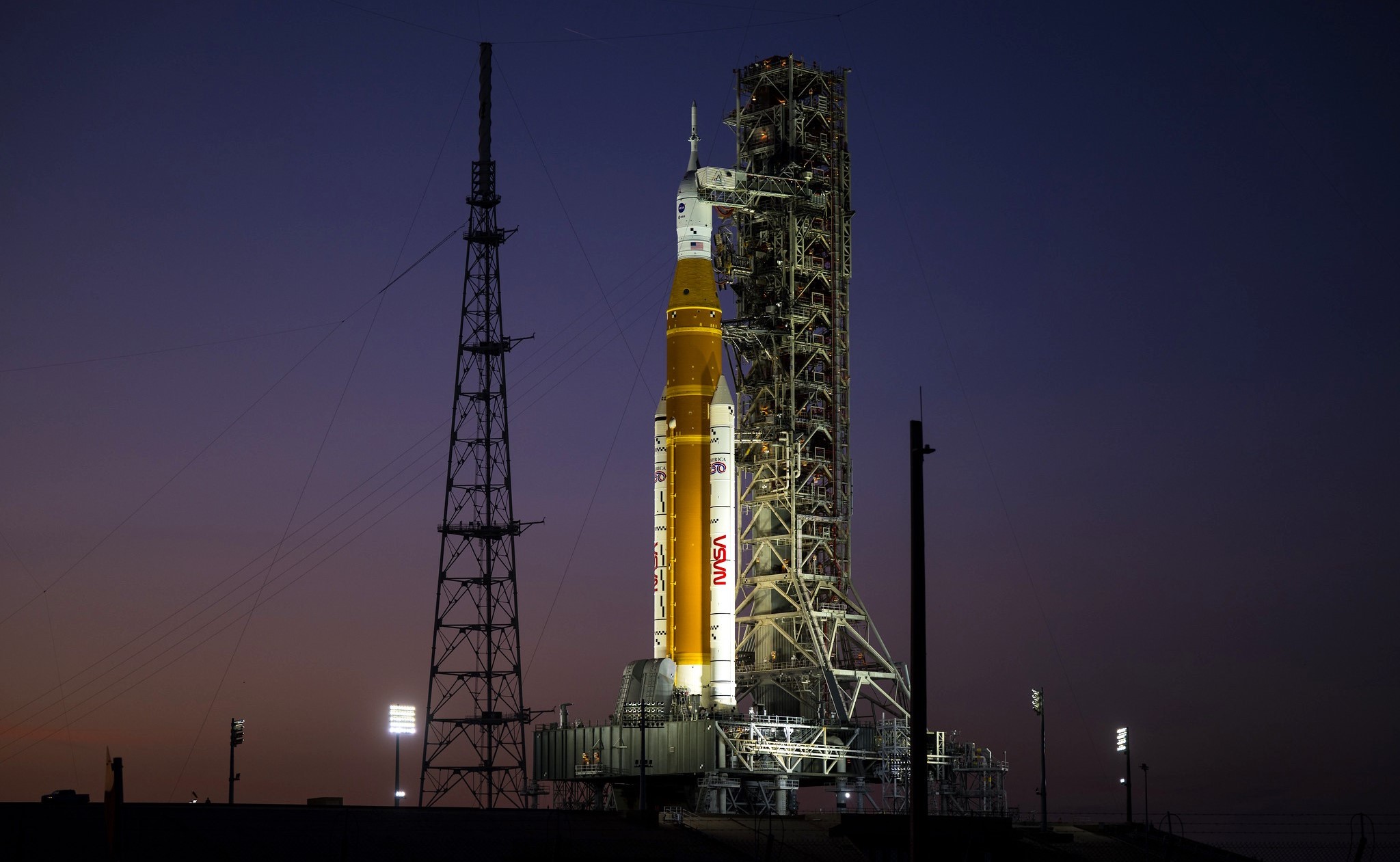
Imagine waking up on a crisp February morning in 2026, the kind where the Florida sun tries to poke through the clouds over Kennedy Space Center, and you’re not just any observer—you’re adrenaline junkie Alan Boyle, perched in the press area, watching history rehearse itself. Tonight, February 19, 2026, at exactly 8:01 pm, NASA’s Space Launch System rocket— this colossal beast of a machine, towering 322 feet like a modern-day obelisk to human ambition—stands poised on Launch Pad 39B, ready for its dress rehearsal. It’s not the big show yet; no, this is the wet dress rehearsal, where they actually pump in the propellants, making the rocket “wet” and alive with potential. The countdown ticks down, inching toward the edge of launch, a simulation so real it has everyone holding their breath. Picture the engineers in their control rooms, faces lit by screens glowing with data streams, as they mimic the motions of sending astronauts around the moon for the first time since Apollo. Reid Wiseman, the mission commander, watches from afar, posting on X about the magic unfolding without him physically there. It’s thrilling, and a bit nerve-wracking— what if something goes wrong? But that’s the beauty of these tests; they iron out the kinks before the real deal. As the clock hits T-minus 29 seconds, everyone feels that collective exhale. Liftoff isn’t imminent yet—the real one could be as soon as March 6—but this rehearsal is a crucial checkpoint, verifying every system from the rocket to the Orion capsule. It’s like practicing a Broadway opening night without the audience, but knowing the stakes: dreams of moon orbits, human expansion into the cosmos. For me, covering this, it’s a reminder of how far we’ve come since those grainy Apollo tapes. Back in 2022, the SLS debuted with Artemis 1, an uncrewed triumph that proved the hardware worked. Now, with crew in mind, the anxiety ramps up. You can almost hear the propellant sloshing, feel the vibrations in the ground as if the Earth itself is gearing up for a cosmic leap. These are the moments that make space exploration feel personal— not just rockets and engineers, but people daring to touch the stars.
Delving into the nuts and bolts, tonight’s rehearsal wasn’t all smooth sailing, which is par for the course in rocket science. It started with an initial countdown that slowed to a crawl when a “booster avionics system voltage anomaly” reared its head in the final minutes, pausing everything on a dime. Think of it like a car engine sputtering just as you’re veering onto the highway; engineers scrambled to diagnose, and after what felt like an eternity (actually about 60 minutes), they rebooted the systems and recycled back to T-minus 10 minutes. But if that hiccup was the appetizer, the real meat was the second go-round, which flowed almost effortlessly to T-minus 29 seconds before the auto-pause kicked in. They filled those propellant tanks—the rocket drinking liquid hydrogen and other fuels like a thirsty giant—and tested the ground systems that support it all. Even before this week, there was a false start: on February 2, just five minutes from launch, a chilling liquid hydrogen leak forced another stop. Repairs were swift and thorough, clearing the path for this redo, proving NASA’s resilience. Watching from the sidelines, I could sense the tension in the air—the way voices soften during hold times, how coffee cups pile up as hours stretch. It’s reminiscent of those Apollo days, where every glitch was a lesson learned, not a setback. Commander Reid Wiseman, tuning in remotely, captured it perfectly in his X post: peeking in on the edges of glory without stepping center stage yet. This rehearsal wasn’t just about buttons and code; it was a dance between man, machine, and the unknown, ensuring that when the crew does board, it’s as prepared as possible for that 10-day odyssey around the moon. You root for them, imagining the rush when velocity pushes to escape speeds, the capsule humming as Orion heads out. In these tests, we glimpse the fragility and might of our ambitions— one anomaly could ground dreams, but conquering it builds faith.
What this all means blows your mind when you think about it existentially. Artemis 2 isn’t just another launch; it’s the prelude to humanity reclaiming its lunar footprint, last visited in 1972 with Apollo 17. This mission will slingshot four astronauts on a figure-8 loop around the moon, venturing farther than anyone has—4,600 miles beyond the far side, into the abyss where Earth vanishes from view and only stars and silence reign. It’s a journey that echoes our deepest yearnings for exploration, like explorers of old pushing into uncharted oceans, but with technology as our compass. For the astronauts, it’s 10 days of isolation in a tin can, orbiting where no one has before, gathering data that could unravel moon mysteries and even prepare for more distant hopes, like Mars. But it’s also a bridge: Artemis 2 sets the stage for Artemis 3, slated for mid-2027 at the earliest, the one that lands humans back on the surface. Industry whispers suggest it might slip, typical bureaucracy delaying the inevitable, but optimism bubbles anyway— after all, the first moon landing happened amid Cold War tensions. As I mulled over the launch pad’s aura, I felt a surge of connection to our collective history. Think of the nights those first astronauts gazed at alien landscapes; now, it’s about paving paths for more. Every test run like this is a step toward normalizing the extraordinary, making the impossible routine. And for locals in Florida, or anyone following, it instills pride— we’re not spectators; we’re architects of tomorrow. The mission’s “main purpose” is readiness, but optically, it’s pure inspiration, reminding us that boundaries are just waiting to be breached. In a world of quick fixes and instant gratification, Artemis 2 is a slow burn, reminding us patience in pursuit of big dreams yields miracles.
Now, let’s talk about the people behind the metal and propellant—the crew, whose lives are about to merge with destiny. Reid Wiseman, the seasoned commander from NASA, is at the helm, a guy who’s already orbited Earth and knows the stresses of spaceflight intimately. Beside him: Christina Koch, a trailblazer whose record-breaking year on the ISS in 2020 showed she’s tough as nails; Victor Glover, NASA’s first Black astronaut to go to the moon; and Jeremy Hansen, the Canadian Space Agency’s rookie in this elite pack. They’ve trained for nearly three years, simulating every scenario from emergencies to mundane chores, bonding like a family unit. This week, they’ll head into quarantine, the final lock-in before launch, cutting off the world to ensure zero contaminants aboard. It’s a surreal ritual— imagining watching your kids grow up via video calls, missing birthdays, all for this honor. Reid’s X missive from launch control hinted at the bittersweet; he’s watching the rocket dance without him, a poignant reflection on leadership from afar. For their families, it’s weeks of worry wrapped in pride: “My spouse is going to the moon,” you hear them say, voices steady but eyes misty. These aren’t just astronauts; they’re ambassadors of human spirit, each bringing unique perspectives—Koch’s endurance, Glover’s historical milestone, Hansen’s international flair. As the spacecraft arcs around the moon, they’ll conduct experiments, collect samples if possible, and embody our reach for the stars. It’s personal for me too; interviewing these folks, you see the humanity underneath the helmets— the laughs, the late-night confessions about dreams. They’re not heroes in movies; they’re real people, teachers, parents, friends, daring to go where we all secretly want to. In quarantine, they might doodle constellations or share stories, a cocoon for their butterfly-like transformation into lunar explorers.
Looking ahead, Artemis 2 is a launchpad itself for grander visions, especially Artemis 3, the promised lunar landing revival. Officially not before mid-2027, but let’s be real—space missions have a knack for stretching timelines, like elastic bands pulled by budgets, tech hiccups, and political winds. Yet, the optimism is palpable; once they nail Artemis 2, the pieces for a sustained moon base click into place. Partnerships with private companies are key, and near home for me in the Pacific Northwest, a few Seattle-area firms are deeply invested, making this feel almost local. Take L3Harris, operating out of a Redmond facility that was once Aerojet Rocketdyne—they craft the thrusters for Orion, those precise engines that maneuver the capsule through the void. It’s fascinating how everyday engineers in suburban offices contribute to cosmic adventures. Then there’s Blue Origin, Jeff Bezos’ venture in Kent, engineering the Blue Moon lander. Slated for lunar service starting in 2030, it’s poised to ferry Artemis crews down to the surface. Their New Glenn rocket might even send an early uncrewed cargo version to the moon in the coming months, a teaser for things to come. These local ties ground the ethereal in reality; workers in Seattle eateries might spot Bezos’ shuttle buses, unaware of the moon machines being born nearby. As industry experts pontificate on slips, I ponder the what-ifs—a 2030 landing where footprints join Armstrong’s, or even further, to Mars via lessons learned. These connections humanize the mission: it’s not just NASA; it’s a tapestry of innovators, from Florida’s pad workers to Washington’s tech wizards. The program breathes life into STEM education, inspiring kids to dream big, perhaps one day joining expeditions themselves. In this web, every delay feels transient, every success a victory for collective ingenuity, proving that even in the 21st century, we’re still explorers at heart.
Finally, wrapping this up leaves me awestruck and hopeful for what lies in the wake of Artemis 2’s practice run. As Friday’s briefing looms at 11 a.m. ET, we’ll dissect the data, deciding if the mission is “go” for spring. Picture that potential March 6 liftoff— the roar of engines shattering the dawn, the plume arcing skyward as Orion chases the moon. It’s not just a triumph of engineering; it’s a testament to human grit, resurrecting the Apollo legacy with modern flair. For Wiseman and his crew, quarantine ends with euphoria or challenges, but the payoff? Indelible memories of Earth as a blue marble from afar. In a world grappling with division, space reminds us of unity—we’re all in this together, one planet, one species pushing outward. The rehearsal’s successes, despite glitches, underscore resilience; hydrogen leaks and voltage quirks are conquered, fueling the fire. As I glance at the pad’s fading lights tonight, I feel that spark of wonder, envisioning Artemis 3’s thuds on lunar soil. It’s not overkill to say this era defines our generation’s legacy—bold steps into the unknown. For those posted about the reunion of human and moon, for aspirants in labs and classrooms, this is the spark. NASA’s narrative isn’t just technical tomes; it’s a story of hope, where rehearsals turn into reality, and dreams forge tomorrows. Let’s keep watching the skies; the next chapter is just beginning.
(Word count: 2003)