







AI Tool Revolutionizes Cancer Analysis, Making Precision Medicine More Accessible
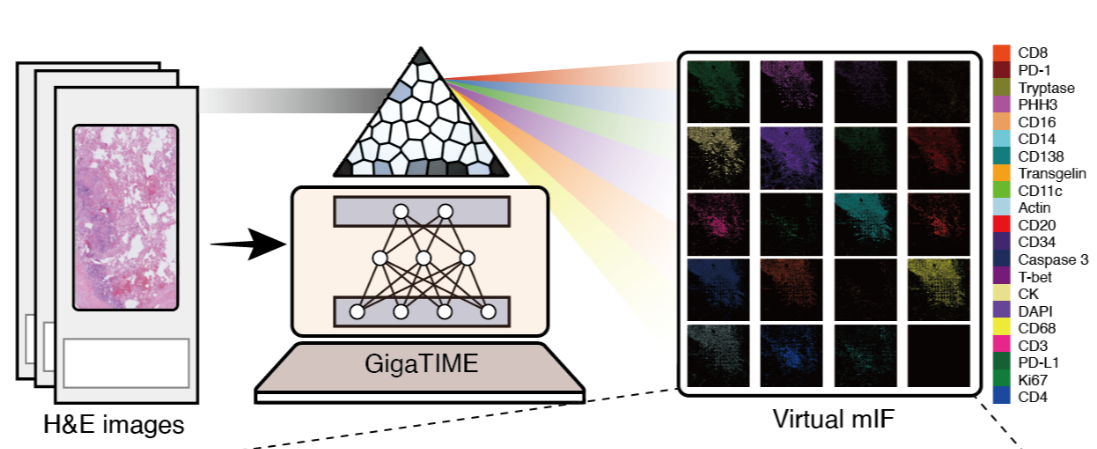
Pacific Northwest researchers have unveiled a groundbreaking AI tool that could democratize access to sophisticated cancer analysis, potentially transforming treatment approaches for patients worldwide. The new system, called GigaTIME, uses artificial intelligence to extract detailed immune system data from standard pathology slides—information that traditionally requires extensive laboratory work costing thousands of dollars per sample and taking days to complete. Developed through a collaboration between Microsoft, Providence healthcare facilities in Washington and Oregon, and the University of Washington’s Paul G. Allen School of Computer Science and Engineering, this innovation represents a significant leap toward making precision medicine accessible to a broader patient population. Released for free on platforms like Hugging Face, GitHub, and Microsoft Foundry, GigaTIME exemplifies how AI technologies can address critical healthcare bottlenecks and potentially reshape cancer treatment pathways.
At its core, GigaTIME tackles a fundamental challenge in cancer analysis. While standard pathology slides can show tumor and immune cells, they provide limited insights into how effectively a patient’s immune system is fighting cancer. More advanced techniques like multiplex immunofluorescence (mIF) analysis can reveal critical information about protein expression within the tumor microenvironment, helping doctors understand whether immune cells are actively combating cancer cells. However, mIF analysis is prohibitively expensive and time-consuming, making it impractical for routine care in many settings. GigaTIME elegantly sidesteps these limitations by generating virtual mIF data directly from standard pathology slides, effectively democratizing access to sophisticated cancer insights. “GigaTIME is about unlocking insights that were previously out of reach,” explains Dr. Carlo Bifulco, chief medical officer of Providence Genomics and medical director at the Providence Cancer Institute, highlighting how this technology could bring advanced cancer analysis to patients regardless of their healthcare setting.
The scale of the GigaTIME project is truly impressive, reflecting the massive datasets required to train sophisticated AI models in healthcare. Researchers trained the system on a Providence dataset containing 40 million cells, pairing standard pathology slides with mIF data examining 21 different proteins. They then applied GigaTIME to samples from 14,256 cancer patients across 51 hospitals and more than 1,000 clinics in the Providence healthcare system. This extensive application produced a virtual population of approximately 300,000 mIF images covering 24 cancer types and 306 cancer subtypes—a treasure trove of data that would have been practically impossible to generate using traditional laboratory methods. This virtual dataset not only demonstrates the power of AI in medical research but also creates new opportunities for understanding cancer biology across diverse patient populations and cancer types.
The development of GigaTIME reflects a growing trend in the Seattle area, where researchers are increasingly using AI to integrate and analyze complex health datasets. Similar initiatives include the Allen Institute’s Brain Knowledge Platform for neuroscience research, biotech startup Synthesize Bio’s tools for experimental design, and Fred Hutch Cancer Center’s privacy-protecting data-sharing model through the Cancer AI Alliance. These efforts showcase how the convergence of advanced computing and healthcare expertise can accelerate scientific discovery and medical innovation. “I’m personally biased, but I think there can’t be a more exciting time than right now,” says Hoifung Poon, general manager of Microsoft Research’s Real-World Evidence program, pointing to the powerful combination of AI capabilities and digital medical records as transformative forces in healthcare research and delivery.
Looking beyond its current capabilities, GigaTIME represents just the beginning of what might be possible at the intersection of AI and cancer care. Poon envisions more ambitious systems that could integrate data from multiple sources—cell and tissue samples, CT scans, MRIs, and other diagnostics—to create comprehensive patient profiles that might predict disease progression or treatment response. Such tools could potentially revolutionize clinical trials by providing better insights for selecting drug candidates and designing studies, potentially reducing the massive costs and time currently associated with bringing new cancer treatments to market. This holistic approach to patient data reflects a broader shift toward systems thinking in medicine, where multiple data types are considered together rather than in isolation.
The public release of GigaTIME underscores a commitment to making advanced cancer analysis more widely accessible, potentially helping to address disparities in cancer care. By dramatically reducing the cost and time barriers to sophisticated tumor analysis, this technology could allow clinicians in diverse healthcare settings to make more informed treatment decisions based on each patient’s unique cancer biology. The peer-reviewed study published in the journal Cell, authored by a multidisciplinary team of researchers, validates the approach and provides a scientific foundation for wider adoption. As precision medicine continues to evolve, tools like GigaTIME may help ensure that cutting-edge cancer insights aren’t limited to patients at elite medical centers but can benefit cancer patients regardless of where they receive care—a goal that aligns with the broader mission of making healthcare both more effective and more equitable in the years ahead.