


Microsoft’s Copilot Checkout: Reimagining Retail in the Age of AI
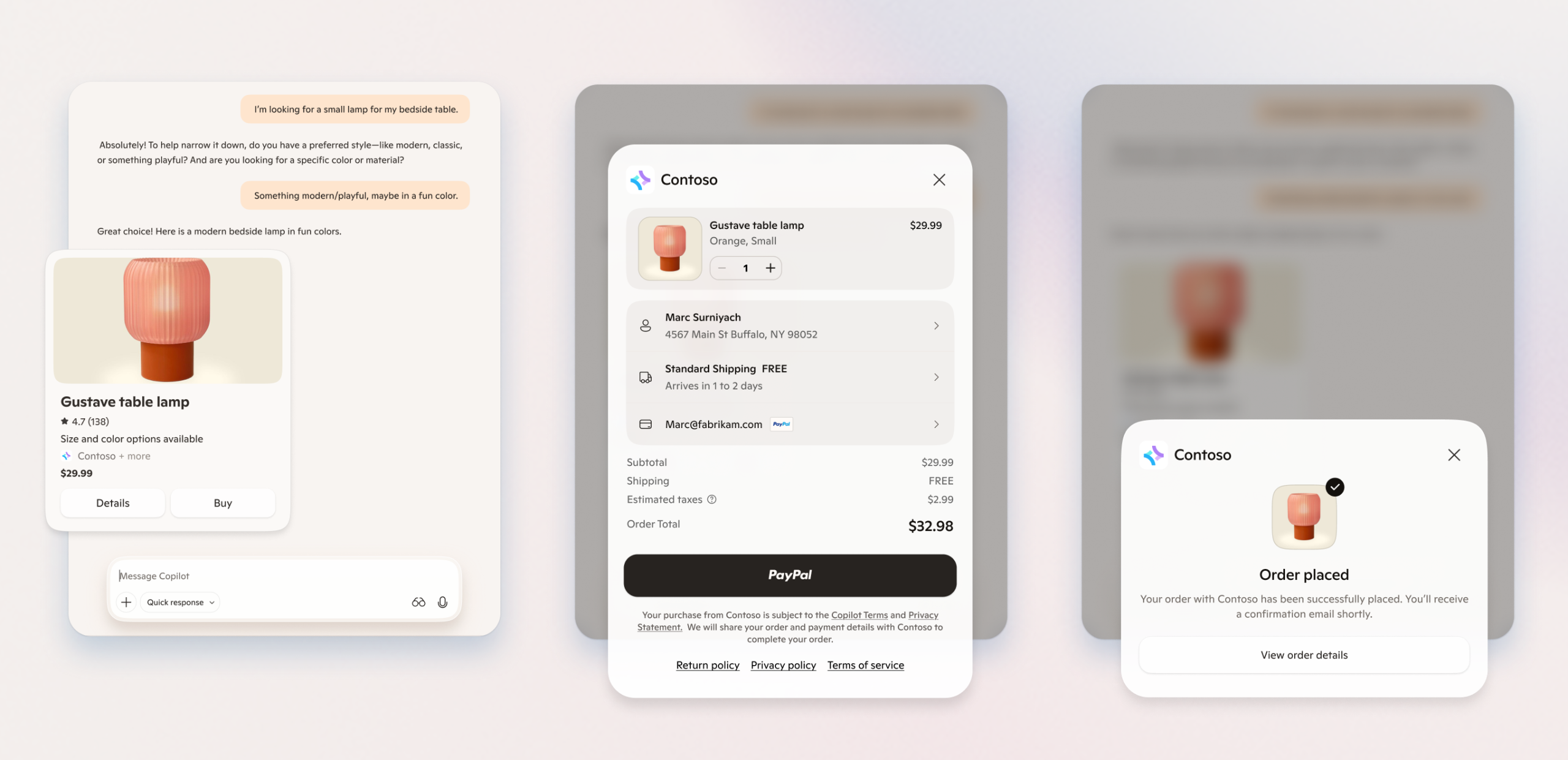
In a bold move that signals the next evolution of e-commerce, Microsoft has unveiled Copilot Checkout, a feature that allows consumers to complete purchases directly within its AI chatbot without being redirected to external websites. Announced at NRF 2026, the retail industry’s premier annual conference in New York, this innovation represents Microsoft’s strategic entry into “agentic commerce” – where AI assistants not only help users discover products but facilitate the entire transaction journey. The feature is rolling out now in the U.S. on Copilot.com, with PayPal, Shopify, and Stripe handling payment processing. Etsy sellers are among the first merchants available on the platform, while Shopify merchants will be automatically enrolled following an opt-out window – a detail that might raise eyebrows given the controversy surrounding similar approaches by competitors like Amazon’s “Buy for Me” feature, where brands complained about being included without consent.
Microsoft’s approach to agentic commerce is distinctly different from its competitors, emphasizing retailer control and relationship ownership. “We’ve designed it in such a way that retailers own those relationships with the customers,” explains Kathleen Mitford, Microsoft’s corporate vice president of global industry marketing. “It is their data, it is their relationship, and that’s something that’s really important to us.” This retailer-centric philosophy stands in stark contrast to the strategies of Amazon and Google, which often compete directly with the merchants on their platforms. Microsoft, having no retail marketplace of its own, positions itself as a neutral partner – leveraging its extensive enterprise technology footprint and established relationships with large retailers as competitive advantages. The company believes this trust foundation, built through years of providing cloud and software solutions to the retail sector, will help overcome the wariness many merchants feel about surrendering control to AI intermediaries or retail rivals.
The unveiling of Copilot Checkout is just one component of Microsoft’s comprehensive AI retail strategy. The company is simultaneously launching Brand Agents, marketed as a complete solution for Shopify merchants to integrate AI assistants into their websites. Additionally, Microsoft is introducing new AI tools designed to assist store employees and help retailers enhance their online product listings and metadata. This multi-faceted approach reflects Microsoft’s understanding that the retail transformation extends beyond just the consumer purchase experience to encompass the entire retail ecosystem. Despite these innovations, Microsoft faces significant challenges in the consumer AI space, where it currently trails behind competitors. Recent data from Similarweb’s Global AI Tracker shows ChatGPT dominating with about 68% of AI chatbot web traffic, followed by Google Gemini at 18%, with Microsoft’s Copilot lingering in the single digits.
The fundamental question surrounding these innovations remains: Will consumers embrace chat-based commerce as the next big thing? Industry perspectives are divided. Forrester analyst Sucharita Kodali has expressed skepticism, suggesting that “e-commerce isn’t a problem that needs to be fixed” and questioning what value chat-based commerce brings to retailers “other than disintermediating Google.” Mitford offers a contrasting viewpoint, drawing parallels to how quickly businesses moved from AI experimentation to implementation over the past year. “I see the same thing happening with consumers… it just takes a little bit of time,” she predicts, expressing confidence that consumer adoption will eventually accelerate to match the rapid uptake seen in the business world. This optimism is backed by tangible data – a Microsoft-commissioned study from IDC found that retail and consumer packaged goods companies are seeing a 2.7x return on every dollar spent on generative AI, suggesting real economic value behind the technology.
The competitive landscape for AI-driven commerce is rapidly evolving, with major tech players staking their claims. OpenAI pioneered this space with its Instant Checkout feature in ChatGPT last September, partnering with Shopify and Stripe to enable purchases from over a million merchants. Google followed suit in November with its “Buy for Me” feature, allowing its Gemini assistant to make purchases on users’ behalf. Microsoft’s entry, while later to market, differentiates itself through its enterprise connections and retailer-friendly approach. The company emphasizes that with Copilot Checkout, the retailer remains the merchant of record, handling fulfillment and customer service – maintaining the critical direct relationship with consumers that many brands fear losing to AI intermediaries. This preservation of retailer control, combined with Microsoft’s commitment to responsible AI development, forms the core of its value proposition to potential merchant partners.
The retail sector’s response to AI technologies appears overwhelmingly positive, according to Mitford, who brings a unique perspective as a former fashion designer with extensive technology industry experience. She observes that retail is among the leaders in AI adoption across all business sectors, with the technology being “adopted at a pace that I’ve never seen.” This enthusiasm likely stems from AI’s potential to address multiple retail pain points simultaneously – from personalizing customer experiences to optimizing inventory management and streamlining operations. As Microsoft continues to refine Copilot Checkout and its suite of retail AI solutions, the true test will be whether consumers embrace this new shopping paradigm and if retailers see the promised returns on their AI investments. If successful, Microsoft’s approach could help reshape not just how people shop, but the fundamental relationship between brands, technology platforms, and consumers in the digital age.