






The Uncommon Thinkers of 2025: Six Innovators Changing Our World
In an era where technological advancement often feels like a relentless march forward, GeekWire’s “Uncommon Thinkers” program, now in its third year, shines a spotlight on those who are not just participating in innovation but fundamentally reimagining it. Partnering with Greater Seattle Partners, this initiative celebrates six remarkable individuals whose visions extend beyond conventional boundaries to address real-world challenges. From revolutionizing drug design to reimagining childhood communication, these innovators represent the fascinating intersection of ambition, expertise, and a deep commitment to making meaningful change. Their colleagues describe them with words like “creative,” “mission-driven,” “laser-focused,” and “brilliant” – apt descriptors for people who have chosen to swim against technological currents rather than simply float with them.
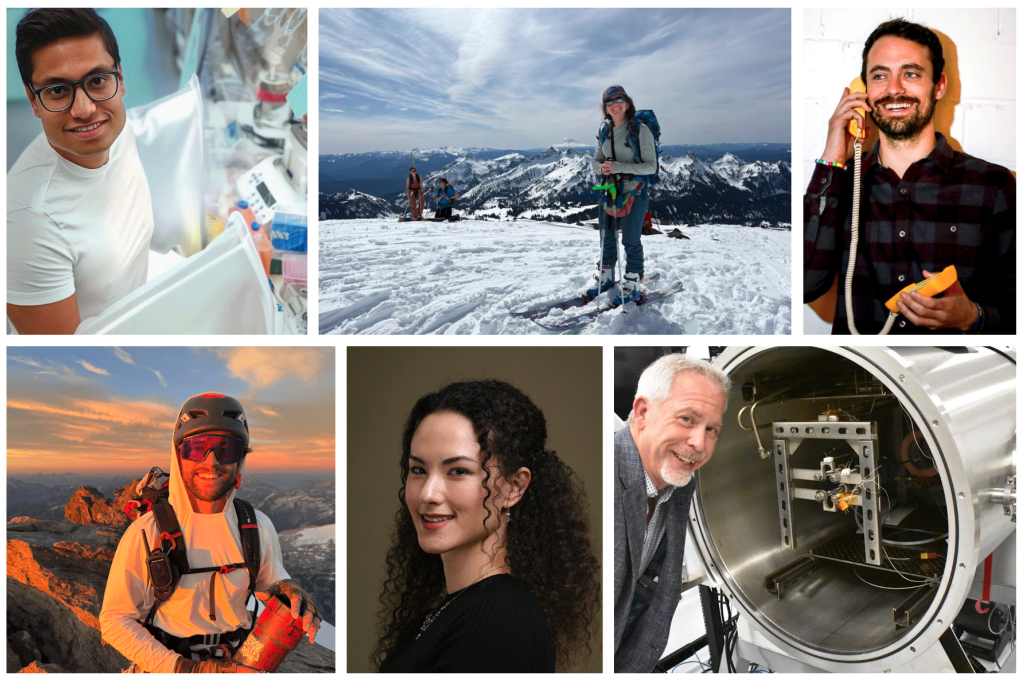
The first of these visionaries, Anindya Roy, traveled an extraordinary path from a small village in rural India to co-founding Seattle’s Lila Biologics. Roy’s journey through top American research institutions, including the University of Washington’s prestigious Baker Lab, equipped him with the expertise to transform theoretical protein design into practical drug candidates. At Lila Biologics, Roy bridges computational innovation with real-world medical needs, developing treatments ranging from cancer therapies to long-acting injectable medications. His story exemplifies how scientific curiosity, coupled with persistence and unconventional thinking, can drive biomedical innovation forward. Roy represents a new generation of scientists who are leveraging computational tools to solve problems that seemed insurmountable just a few years ago, potentially changing how we approach disease treatment in the decades to come.
In a refreshing counterpoint to the digital immersion that defines modern childhood, Chet Kittleson has created something both revolutionary and nostalgic with Tin Can. As co-founder and CEO, Kittleson has reimagined the humble telephone for today’s youth – creating bright, WiFi-enabled landline phones that allow children to communicate voice-to-voice with friends and trusted contacts, free from the distractions of apps and social media. The company’s rapid success – raising $3.5 million and selling out its first two production runs to customers across North America – reveals a significant unmet need in today’s market. Parents, increasingly concerned about screen time and digital distraction, have embraced Tin Can’s vision of returning to more meaningful, direct communication. Kittleson’s innovation proves that sometimes moving forward means revisiting and reimagining the technologies we’ve left behind.
Environmental scientist Brian Pinkard has dedicated his career to tackling one of our most persistent pollution challenges: per- and polyfluoroalkyl substances (PFAS), commonly known as “forever chemicals.” As co-founder and CTO of Tacoma-based Aquagga, Pinkard has developed advanced chemical processes to destroy these notoriously stubborn compounds at their source. His journey from “flipping rocks” on Colorado trail crews to engineering innovative environmental solutions demonstrates how hands-on experience with natural systems can inform technological breakthroughs. Aquagga’s modular PFAS-destruction systems have already been tested in Alaska and deployed for firefighting-foam cleanup and municipal wastewater projects. Pinkard’s work stands as a powerful example of impact-focused engineering that refuses to accept “unsolvable” environmental problems, instead creating practical pathways toward remediation and prevention.
Space innovation reaches dramatic new heights with Jeff Thornburg’s Portal Space Systems, which is developing spacecraft that quite literally ride on sunlight. As co-founder and CEO, Thornburg is pioneering solar-thermal propulsion through the company’s flagship Supernova design – technology that promises to give satellites unprecedented maneuverability, longer mission lifetimes, and flexibility for both defense and commercial applications. With $17.5 million in seed funding and a manufacturing facility under development in Bothell, Washington, Portal is rapidly transitioning from concept to aerospace industry player. Thornburg’s background includes work with SpaceX and Amazon’s Project Kuiper, but his current venture represents a bold step beyond existing capabilities. His work exemplifies how ambitious engineering, backed by deep industry expertise, can transform our approach to space exploration and satellite deployment, potentially opening new frontiers for communication, observation, and defense systems above our planet.
The overwhelming complexity of modern digital workflows is what motivated Kiana Ehsani to create Vercept and its flagship tool, Vy. As co-founder and CEO, Ehsani has developed artificial intelligence that “sees” computer screens as humans do, learns workflows through observation, and then automates them through natural-language commands. This Seattle-based innovation aims to free users from the cognitive burden of juggling dozens of applications, remembering keyboard shortcuts, or writing automation code. Ehsani’s vision extends beyond mere efficiency – she sees her technology as a way to reclaim human time and attention for more meaningful pursuits, whether hiking trails, skiing mountains, or simply being present with loved ones. Her approach to AI development focuses not on replacing human capabilities but on enhancing them, allowing people to focus on creative and interpersonal aspects of work while technology handles repetitive digital tasks.
Completing this remarkable group is Jay Graber, who as CEO of Bluesky is reimagining social media not as a walled garden but as an open ecosystem. Graber describes herself as a “pragmatic idealist,” and her platform reflects this philosophy by building on the open AT Protocol – an approach that allows users to maintain ownership of their posts, followers, and digital identity across platforms. This decentralized vision means that even if Bluesky itself were to disappear, users’ digital presence could continue on other services built on the same protocol. Graber conceives of Bluesky less as a product and more as a “collective organism” that might form the foundation for a more flexible, user-controlled social internet. Her work represents a direct challenge to the current paradigm of proprietary social platforms and suggests a future where digital connection might be both more resilient and more responsive to user needs rather than corporate imperatives.
These six uncommon thinkers, celebrated at GeekWire’s 2025 Gala in Seattle, represent diverse approaches to innovation, but share a common thread: they’ve identified problems others have overlooked or accepted as inevitable, and developed solutions that challenge fundamental assumptions. From Roy’s computational biology to Kittleson’s back-to-basics communication devices, from Pinkard’s environmental remediation to Thornburg’s space propulsion, from Ehsani’s human-centered AI to Graber’s decentralized social media, each innovator demonstrates how stepping outside conventional thinking can lead to breakthroughs with far-reaching implications. Their work reminds us that the most valuable technological advancements aren’t always about novelty for its own sake, but about solving real problems in ways that enhance human experience, protect our planet, and expand our capabilities in both digital and physical realms. As we look toward the future, these uncommon thinkers provide both inspiration and practical pathways toward addressing some of our most pressing challenges.