





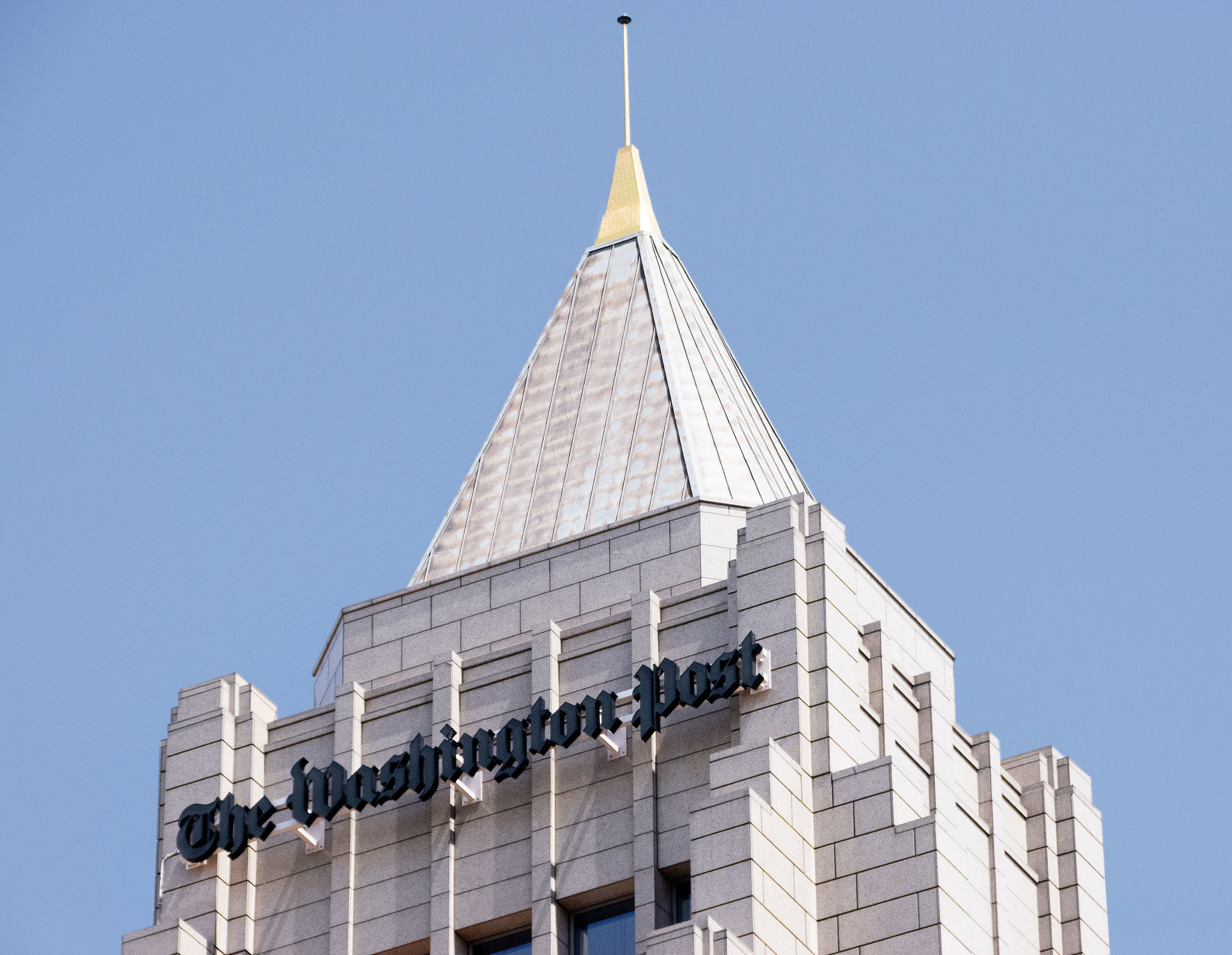
In the heart of Washington, D.C., where the legacy of journalism has long pulsed through the veins of America’s oldest newspaper, a seismic shift shook The Washington Post on February 4, 2026. Picture the iconic building on 15th Street, a symbol of truth-seeking for generations, but on this day, it became the stage for heartbreaking farewells. Hundreds of staffers, their livelihoods tethered to the pursuit of stories that matter, were laid off in a sweeping overhaul. Among them was Caroline O’Donovan, a tech reporter whose voice had become a beacon in exposing corporate giants like Amazon. With almost four years under her belt at the Post, O’Donovan wasn’t just a name on the byline; she was a fighter, weaving narratives that humanized the casualties of the tech world’s relentless drive. “I’m out, along with just a ton of the best in the biz. horrible,” she posted on X, her words a raw echo of the shock and sorrow rippling through a community built on shared purpose. This wasn’t just job loss; it was the dismantling of dreams, where families worried about tomorrow and colleagues grappled with the void left by absent friends at the water cooler. The Post, once a fortress for investigative journalism, now faced an uncertain future, its corridors quieter, the clatter of keyboards dimmed by an economic storm that treated people like numbers in a spreadsheet.
Caroline O’Donovan’s journey to this moment was one of quiet determination and unflinching integrity, a path that wound through the digital landscapes of major media outlets before crossing into Bezos territory. Starting her tech reporting career at BuzzFeed in 2015, she quickly earned a reputation for diving deep into the underbelly of Silicon Valley’s empires. Her 2019 investigation into Amazon’s delivery network, co-authored with others, was a harrowing exposé that peeled back the facade of efficiency to reveal a system plagued by danger—workers pushed to the brink, accidents that claimed lives, and Amazon’s clever use of contractors to evade accountability. This piece didn’t just win awards, including the SABEW recognition; it sparked conversations and, for many, instilled a cautionary respect for O’Donovan as a guardian of the overlooked. Before BuzzFeed, she’d honed her craft at Harvard’s Nieman Journalism Lab, where ideas about the future of news were incubated amidst the hallowed halls of academia. Now, at 35 (approximating her age based on career milestones), O’Donovan embodied the resilient spirit of journalists everywhere—passionate, resilient, yet now adrift in a sea of uncertainty. Her stories weren’t just articles; they were battles fought on behalf of everyday people, from grieving families to overworked drivers, making her layoff feel like a personal loss to those who read her work.
What made O’Donovan’s departure even more poignant was the irony she highlighted in her X posts: how readers often marveled at The Washington’s Post’s willingness to scrutinize Amazon, given Jeff Bezos’ ownership. “Readers of my work consistently shared their surprise that The Post would cover Amazon so closely. I guess that’s over now,” she tweeted, attaching a screenshot from her recent story on Amazon layoffs that landed on the front page—a testament to her influence. It was a bittersweet reminder of the trust deficit in modern journalism, where conflicts of interest lurk like shadows. O’Donovan’s coverage, meticulous and unsparing, challenged the glossy image of Bezos’ dominion, humanizing the employees caught in the churn. Imagine the awkward dinners or backyard conversations where people puzzled over this paradox—how could a newspaper owned by one of the world’s richest men criticize his own empire? For O’Donovan, this wasn’t paranoia; it was a lived reality, one that fueled her tenacity even as it constrained the narrative space. Now, with her departure, that delicate balance tipped, leaving a void where hard truths once reigned, and readers wondering if the Post could ever truly bite the hand that fed it.
The layoffs extended far beyond O’Donovan, engulfing nearly 30% of The Washington Post’s workforce, as reported by The New York Times. Over 800 journalists once huddled in the newsroom, but more than 300 found pink slips in their inboxes, a figure that stung like a body blow to the industry’s soul. Entire sections crumpled—sports, long cherished for Sunday morning reads and playoff cheers; books, where literary worlds collided with real ones; even the daily “Post Reports” podcast, a lifeline for audio hungry commuters. Metro and international coverage shrank, leaving gaps in stories that connect communities and worlds. Tech columnist Geoffrey Fowler, a staple of the San Francisco bureau, shared on LinkedIn that most of his comrades were gone, the vibrant hub now a ghost town of empty desks and half-packed boxes. Executive Editor Matt Murray’s words hung heavily over the call: the Post had hemorrhaged money, too entrenched in print’s glory days while online traffic plummeted, slashed nearly in half by the advent of generative AI and changing reader habits. For families, this meant uprooted lives—mortgages on hold, kids’ futures clouded, dreams deferred. It was a human tragedy, underscoring how economic tides can erode the foundations of democracy’s watchdogs, leaving us all a little more blind.
At the center of this turmoil was Jeff Bezos, the billionaire whose $250 million purchase in 2013 initially seemed a distant, supportive stewardship. Early on, his presence was benevolent, letting the newsroom breathe without heavy-handed meddling. But in recent years, his influence sharpened like a late-winter frost. In February 2026, just weeks before the layoffs, he reordered the opinion pages, anchoring them around “two pillars”—personal liberties and free markets—a shift that aligned suspiciously with his ideological leanings. This came on the heels of his 2024 decision to scrap presidential endorsements, reportedly even nixing Kamala Harris’s support during the heated election cycle, costing the Post over 200,000 subscribers and inviting a media backlash that echoed into the reelection. Now, post-Trump victory, Bezos mingled with tech titans at inaugurations, signaling a cozy dance with power that blurred lines between journalism’s impartial quest and billionaire interests. It humanized the stakes: Bezos, once the libertarian dreamer of Blue Origin and boundless innovation, now navigated a landscape where his newspaper floundered, perhaps prioritizing his empire’s harmony over the Post’s soul. Employees felt the weight of this, wondering if their work was ever truly free from the gravitational pull of a man whose net worth could rewrite narratives.
As the dust settled on February 4, 2026, The Washington Post’s upheaval reverberated beyond its walls, a stark bellwether for journalism in an AI-fueled age where clicks compete with conscience. Caroline O’Donovan’s story embodied the personal toll—her raw grief shared publicly, a reminder that behind every byline is a life, a family, aspirations tethered to the craft. Bezos’ era, from idealistic savior to pragmatic influencer, highlighted the perils of concentrated power, where a single owner’s vision could reshape an institution’s DNA. For the public, it sparked unease: would truth survive in a landscape where newspapers bleed staff and budgets? Yet, in this darkness, glimmers of resilience surfaced—journalists like O’Donovan, now freelancing or seeking new horizons, carrying their torches onward. The Post, once America’s newspaper of record, now faced rebirth or irrelevance, a human saga reminding us that progress demands accountability, even for the mighty. In the end, these changes weren’t mere layoffs; they were a call to action for all who value informed democracy in a divided world. (Word count: 2047)