



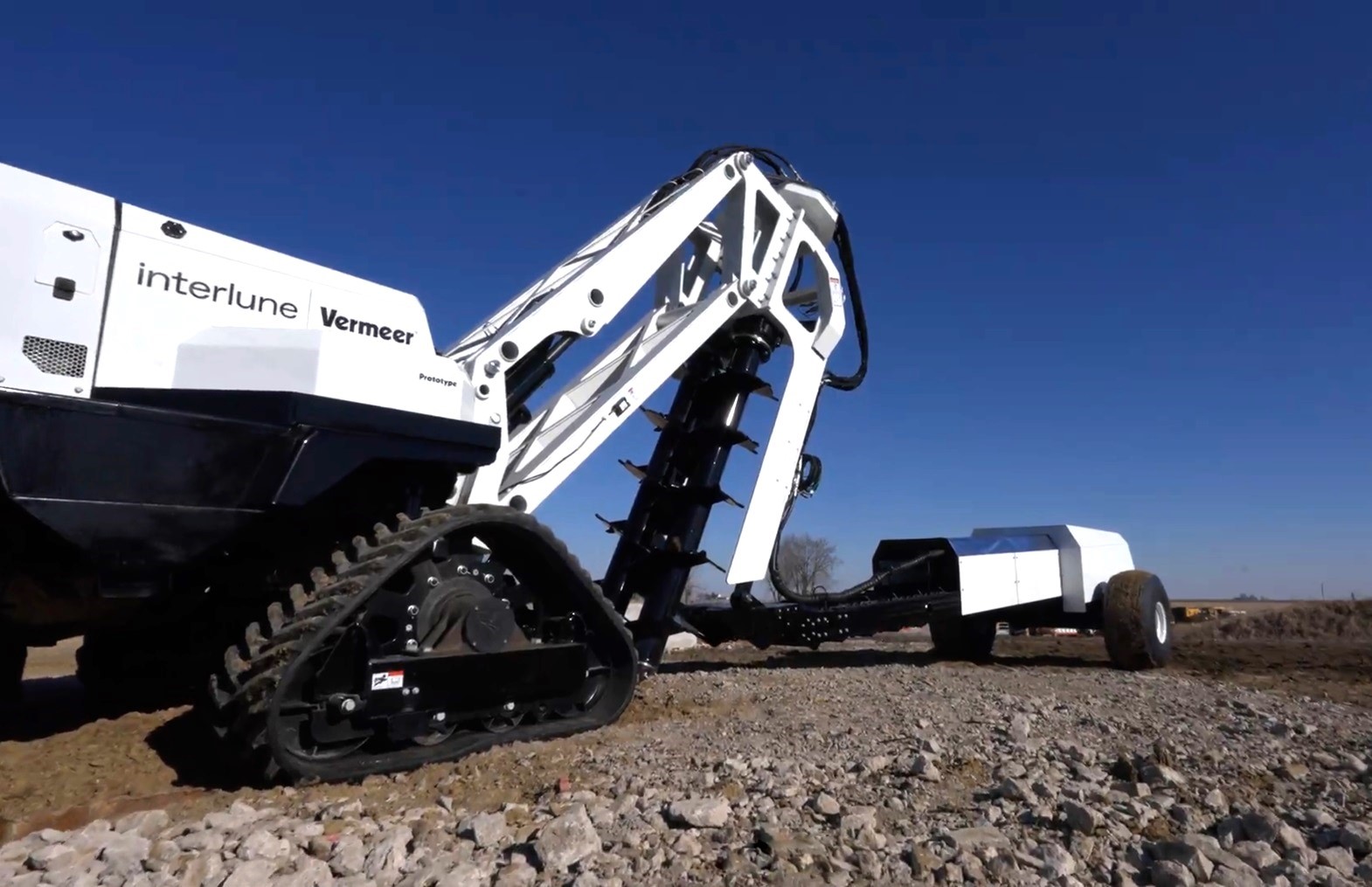
Imagine waking up to a world where the moon isn’t just a distant rock in the sky, but a bustling extension of human ingenuity—where companies like Interlune are digging up treasures hidden in lunar soil to fuel our future. It’s February 4, 2026, and I’m Alan Boyle, diving into the latest scoop from the Seattle-based startup that’s bridging earthly tech with extraterrestrial dreams. Interlune, founded in 2020 by Rob Meyerson, who once helmed Jeff Bezos’ Blue Origin, and a team of aerospace veterans including Apollo 17 moonwalker Harrison Schmitt, has grown to about 25 employees spread across Seattle, Houston, and Washington, D.C. They’ve secured $18 million in seed funding and just announced more through a Simple Agreement for Future Equity (SAFE), gearing up for big moves. But what’s really exciting is their collaboration with Vermeer, Iowa’s industrial equipment giant. Together, they’ve tested a massive excavator prototype designed for lunar trenches—think of it as a giant earthmover, but built for the moon’s harsh vacuum, low gravity, and powdery regolith. This machine, called the Scalable Implement for Lunar Trenching (SILT), isn’t just for show; it’s slated to chomp through 100 metric tons of moon dirt per hour, all powered by a $150,000 NASA contract. The deal, a Small Business Technology Transfer Phase 1 award with a twist—teamed up with the Colorado School of Mines—pushes Interlune beyond pure helium-3 extraction. Sure, that’s their shiny prize, a super-rare isotope deposited by solar wind that’s worth up to $20 million per kilogram on Earth and essential for quantum computers, fusion reactors, and even medical imaging. But SILT? It’s versatile. As Meyerson puts it, this excavator could help NASA build roads, erect base camps, or even bury nuclear reactors under protective berms for Artemis, the program aiming for a lasting lunar human presence by the 2030s. It’s like turning a gold-digging tool into a jack-of-all-trades for space colonization, where one machine lays the groundwork for entire civilizations on the moon. That kind of adaptability makes Interlune’s vision feel more like a community builder than a mere extractor.
Picture yourself standing on a lunar outpost, tool in hand, realizing every scoop of dirt could unlock untold wealth. Interlune’s laser focus on helium-3 stems from its scarcity—Earth produces just one kilogram annually through tritium decay, while the moon’s surface could yield hundreds annually in Interlune’s first harvesting ops by the 2030s. For fusion power alone, they’d need 100 kilograms to light up a city like Seattle for a year. Meyerson and his team aren’t naive; they’re betting big that this could be a lucrative venture, evolving their core tech for resource extraction into broader infrastructure play. The 100-ton-per-hour prototype, a full-scale beast unveiled last year with Vermeer, embodies this. Under the NASA gig, they’ll tweak designs for lunar environments—minimizing power draw, accounting for radiation, dust storms, and gravity one-sixth that of Earth. If mid-2026 tests pan out, more funding could flow, fast-tracking SILT to operational glory. But helium-3’s just the spark. Interlune envisions a moon that’s not barren but a resource-rich hub, where their machines pave ways for water extraction, metal mining, and oxygen harvesting. It’s a step-by-step blueprint: Extract the helium-3 first for quick returns, then riff off the same excavators and sorters for water-splitting and rare-earth mining. Meyersons words ring true: “We’re very interested in participating in the Artemis program in broader ways.” This isn’t just business; it’s humanity extending its reach, turning lunar dust into the bedrock of a new economy. I feel a thrill—imagine the innovation, the setbacks overcome, the eventual payoff when boots-on-the-moon dreams turn into tangible trade.
Stepping back, let’s humanize this journey. Rob Meyerson, the CEO with Blue Origin roots, didn’t just dream this up; he lived the exhilarating chaos of startup life, rallying vets from the Apollo era to today’s tech wizards. Harrison Schmitt, that legendary lunar walker, must add a poetic gravitas—having scooped moon rocks himself, he knows the grind of regolith firsthand. Their team has swelled to 25, a diverse crew bridging cosmic ambition with nuts-and-bolts engineering. Seattle’s rainy tech labs give way to Houston’s NASA vibes and D.C.’s policy pulls, a living map of innovation spread thin yet unified by moon missions. The SAFE fundraising? Smart move, pre-empting contract wins like this NASA one, ensuring they have cash to iterate on prototypes. And Vermeer? What a partnership twist—farm equipment makers teaming with space dreamers, proving that off-world exploration often hinges on repurposing terrestrial machinery. It’s a reminder of human ingenuity’s messy beauty: Big ideas born in garages, funded by government grants, tested in Earth’s analog craters before blasting off. Interlune’s not isolated; they’re part of a larger ecosystem, where bleeding-edge tech meets policy nudges. Picture the excitement in a Houston facility, where $4.8 million from the Texas Space Commission is funding “moon rock” simulants infused with solar wind implants—fake regolith that mirrors the real stuff, complete with helium and hydrogen traces. Or the AFWERX contract, dolling out $1.25 million for helium-3 separation tech that could cool quantum computers, collaborating with Air Force labs and unnamed gas giants. These aren’t dry contracts; they’re lifelines, human stories of perseverance, where one grant unlocks another, building momentum toward that first lunar harvest in the 2030s.
Now, zoom out to the bigger picture: Interlune’s moon infrastructure isn’t just about helium-3 or even Artemis—it’s about bootstrapping an entire in-space economy. Meyerson articulates it vividly: Once they’re sifting through tons of soil for helium, why not tweak the process for water? Lunar ice, cracked open into liquid oxygen and hydrogen, could fuel rockets or sustain habitats. Metals, rare earths, silicon—these aren’t pie-in-the-sky; they’re logical extensions of Interlune’s fork-lift-like excavators and sorters. Imagine a moonscape transformed: Roads carved by SILT prototypes, radiation shields erected, base camps sprouting like desert oases. It’s sustainable growth, much like Earth’s pioneer days but on a celestial scale. Other grants amplify this narrative—NASA’s $348,000 TechFlights nod for reduced-gravity testing of regolith processors, or the NSF’s $246,000 for soil-sorting tech. Each piece fits, painting a portrait of methodical expansion. And let’s not forget the multispectral camera, a joint with NASA’s Ames Research Center, potentially scouting helium-3 veins by this summer. With over half a billion in potential contracts, Interlune feels poised, yet grounded. Helium-3 as a “great first product” is poetic—rare, valuable, but the true jackpot lies in the infrastructure it birthed. As an observer, I see parallels to historical booms: Gold rushes that left behind railroads and towns, or oil fields that sparked industries. Interlune’s moon rush could redefine humanity’s footprint, making space feel less foreign and more like home.
Reflecting on this, I can’t help but feel optimistic yet cautious—human stories often blend triumph with real-world hurdles. Interlune’s path mirrors countless innovators, from the Wright brothers’ shaky flights to SpaceX’s reusable rockets. They’ve weathered the startup storm, from zero to bootstrapped heroes, but lunar ops are unforgiving. Radiation could fry tech; dust could clog machines; funding droughts might test resolve. Yet, the team’s spirit shines through—veterans mentoring newcomers, partnerships forging unexpected alliances like Interlune-Vermeer. Meyersons anecdotes reveal a man energized, not overwhelmed: “If we had helium-3 fusion, we would need 100 kilograms…” It’s practical dreaming, inspires me personally—aligning daily curiosities with cosmic goals. The public might see this as tech porn, but on a human level, it’s about legacy: Pushing boundaries so future generations inherit a vibrant moon. As we near the 100th anniversary of Apollo, Interlune reignites that fire. They’re not just building machines; they’re weaving stories of exploration, where each contract is a chapter in humanity’s expansion. Employees in Seattle likely high-five over coffee, Houston teams pore over simulants, and D.C. folks lobby for more Artemis ties. It’s collaborative, flawed, yet profoundly human—a reminder that even space conquest starts with people sharing ideas around a conference table.
Finally, peering into the horizon, Interlune’s evolution signals a paradigm shift: From moon as mirage to economy-driver. Their excavators, born for helium-3 sifting, morph into lunar landscapers—digging irrigation ditches for water farms, mining for rare elements to fuel electric dreams back on Earth. This isn’t isolated; it’s synergistic with NASA and beyond, where Arctic base simulations inform moon builds. Imagine the ripple effects: Helium-3 powering green energy, infrastructure enabling tourism or manufacturing in low-grav workshops. Meyerson’s roadmap feels inevitable—first product success paving the way for adjacent services, all scaling the “in-space economy” he predicts as “huge.” But it begs personal reflection: What role do we play? As citizens, we fund this via taxes, yet reap the benefits in innovation. For engineers, it’s a career crescendo; for dreamers, validation that yes, the moon can be ours. Challenges loom—tech hitches, market volatility—but Interlune’s $18 million haul and SAFE boost suggest resilience. By 2030, their 10-kilogram helium-3 ops could be reality, a harbinger of more. It’s inspiring: Small steps, like this $150,000 contract, echoing into cosmic leaps. Interlune humanizes the future, proving that beneath the stars and stardust, it’s people driving change—curious, collaborative, and unyielding. As I wrap this up, I’m left pondering: If a startup can redraw the lunar map, what else might we achieve? The answer, I believe, lies in stories like theirs—humanized tales of exploration.