






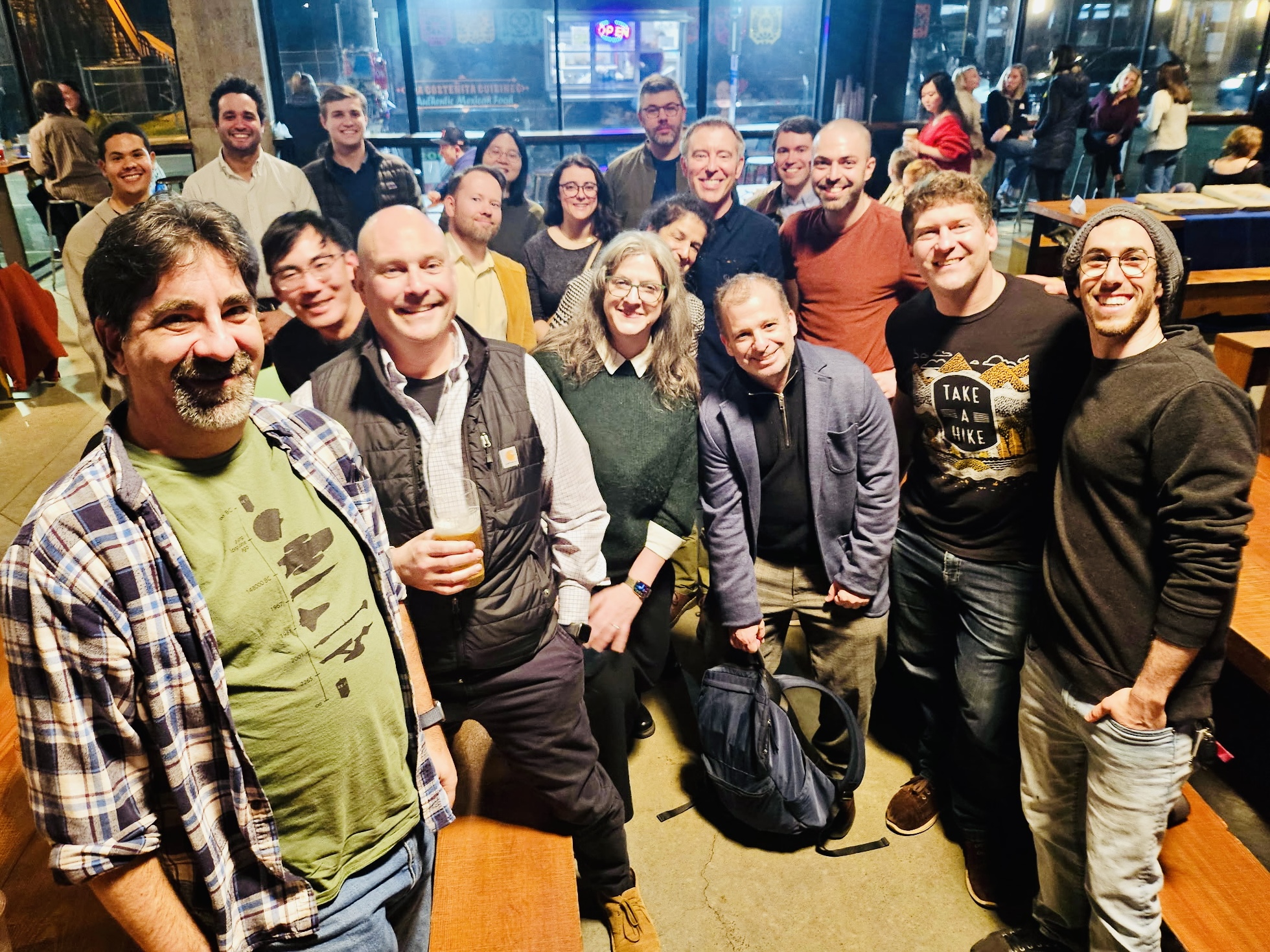
Imagine stepping into a lively brewery on Capitol Hill in Seattle on a crisp autumn evening, where the air buzzes with the hum of conversation and the clinking of glasses. This isn’t just any gathering; it’s the launch of the Pacific Northwest Battery Collaborative, a nonprofit born from the vision of Grayson Shor, a man with a diplomat’s charm and an entrepreneur’s fire. Shor, standing far right in a group photo, exudes an infectious energy, his tie a symbol of formality in a room packed beyond capacity. The event was so popular that chairs vanished halfway through, forcing attendees to mingle standing up. Now, two years later, the collaborative has become a powerhouse, drawing 1,400 people to 17 events across Washington, Oregon, and online. Shor’s latest brainchild? A battery-themed mini-series that’s part travelogue, part science documentary, blending the global explorations of Anthony Bourdain’s “Parts Unknown” with the cosmic wonders of Carl Sagan’s “Cosmos.” It’s not just about batteries; it’s about humanizing the tech that powers our modern world. As Shor quips, “Batteries are sexy right now,” a line that captures the raw excitement propelling this revolution. Picture everyday scenes we’ve all lived: that frustrating wait for your phone to charge, the thrill of a Tesla’s instant acceleration, or the grid’s groan under AI data centers’ demands. Shor reminds us that batteries aren’t cold machines—they’re the unsung heroes bridging our fossil fuel past to a sustainable future. In 2025 alone, we’re installing more grid batteries than the entire global total from just two years ago. This isn’t incremental change; it’s a seismic shift, reimagining economies powered by clean energy stored in sleek, powerful cells. Shor sees this as a story of hope, where innovation meets humanity’s deepest needs, from affordable power to resilient communities. As a father himself, he thinks about his kids’ future, driving home the point that these devices aren’t just hardware—they’re lifelines.
Grayson Shor’s journey didn’t start in Seattle; it began in D.C., where he served as a diplomat, navigating the high-stakes world of international policy. But sustainability and the circular economy called him, leading to roles at Amazon and various startups focused on batteries. Landing in the Pacific Northwest more than two years ago, he was blown away by the region’s untapped potential—a hotspot for electric aviation startups, sodium battery pioneers, and silicon material innovators, all backed by the University of Washington’s Clean Energy Institute. Yet, despite this richness, the community felt fragmented, like islands in an archipelago. No one was knitting them together. “I saw this disconnect,” Shor reflects, his voice tinged with the quiet urgency of someone who’s witnessed missed opportunities. Having worked on global initiatives for the Department of State, he knew the power of connections: how a single meeting could spark a breakthrough. Spurred by personal passion—born from a lifetime of environmental concerns and a belief in collaborative progress—he launched the PNWBC in October 2024. It’s not just an organization; it’s an act of faith in human ingenuity, proving that even introverted engineers in this famously reserved region crave connection. Shor, ever the optimist, poured his heart into it, dedicating late nights to curate events that feel like family reunions rather than corporate schmoozes. He dreamt of breaking down silos, fostering friendships that transcend lab coats and boardrooms. In a world where climate anxiety looms, Shor’s story humanizes the fight: he’s not some distant expert, but a relatable figure, sipping craft beer at a meetup, sharing his dreams and listening to others’. This is Grayson, the connector, turning isolation into synergy, reminding us that real change starts with people opening up to one another.
The collaborative’s momentum is nothing short of electrifying, a testament to how mixed emotions—from skepticism to euphoria—can fuel a movement. Early events were tentative, with modest turnouts that grew into standing-room-only phenomenon. Shor jokes about the irony of running out of chairs at a battery conference; it’s both humorous and profound, symbolizing the surging demand that’s become uncontainable. Capping RSVPs now isn’t a restriction; it’s a celebration of success. Even online, the group’s Zoom calls overflow with eager faces from coast to coast, where participants share not just data, but personal stories—the anxieties of startup founders, the triumphs of researchers seeing their work finally connect. This human tapestry weaves entrepreneurs, academics, and investors into a vibrant ecosystem that was once dispersed. Shor’s advocacy extends beyond events; he’s lobbying state legislators, championing policies and incentives to deploy more batteries locally. It’s about societal good, he explains: better grid resilience during wildfires or heatwaves, equitable access to power for underserved communities, and jobs for locals in a booming industry. Imagine the relief of homeowners in Puget Sound whose homes stayed lit during a blackout thanks to rooftop batteries, or the pride of a young grad hired at a Pacific Northwest firm poised for global impact. This isn’t abstract policy; it’s lived experiences, where batteries save lives and spark hope. Shor’s efforts evoke a sense of shared purpose, much like community gardens that feed neighborhoods—nourishing, inclusive, and deeply personal. Through it all, the group’s story is one of transformation: from fringe idea to essential lifeline, proving that passion can outpace even the fastest-recharging tech.
Endorsements from the community add layers of authenticity, turning praise into heartfelt narratives that humanize Shor’s legacy. Dan Schwartz, the founding director of UW’s Clean Energy Institute, praises Shor as “an unrelenting force,” his words carrying the weight of admiration mixed with awe. Schwartz, a grizzled academic who’s seen many community builders fade, appreciates how Shor amplifies the region’s hidden strengths without ego. It’s a nod to humility in action—Shor doesn’t claim credit alone; he sees himself as a catalyst in a larger symphony. Then there’s Tom Gurski, founder of Blue Dot Motorworks, who attended a casual happy hour and left with new contacts that fueled his plug-in hybrid dreams. In a region known for its “introverted personalities,” Gurski notes how these gatherings shatter stereotypes, fostering bonds over craft beers rather than sterile networking. Picture Gurski at one event, nervously approaching a rival CEO, only to discover shared passions—not just business, but family vacations interrupted by charging anxieties. These stories echo Shor’s belief in human connection, where vulnerability breeds innovation. Attendees often share personal anecdotes: a startup’s founder recounting how $500k in seed funding came from an impromptu chat at a collaborative mixer, or an investor’s tale of redemption after backing a “risky” battery venture that paid off in renewable energy dividends. This isn’t corporate jargon; it’s the warmth of a handshake, the relief of finding kindred spirits in a lonely field. Shor, with his everyman charm, embodies this, reminding everyone that behind every breakthrough battery is a person with hopes, fears, and dreams of a greener tomorrow.
Beyond his day job as executive director, Grayson Shor wears multiple hats, each revealing deeper facets of his multifaceted personality. As co-founder and chief product officer of Buckstop, an urban mining startup recovering critical minerals from e-waste, he tackles sustainability hands-on. Volunteering as policy director for the Volta Foundation, the world’s largest battery association, showcases his unyielding commitment—even amidst fundraising and event planning. But perhaps his most ambitious project is “The Battery Life,” that mini-series he co-created, now in production. Filming the first episode in Seattle’s bustling tech scene, the crew immersed themselves in Group14 Technologies’ factories and UW’s Clean Energy Test Beds, capturing CEOs’ unfiltered visions and inventors’ Eureka moments. Shor insists on balance: walking factory floors for gritty realism, interviewing leaders for strategic insights, all underscored by “Carl Sagan’s vibe”—exploring how battery tech touches everyday lives, from the elderly relying on medical devices to kids playing with solar-powered toys. It’s not documentary froideur; it’s storytelling that humanizes tech, making abstract science feel intimate. Episodes in Portland and Vancouver will echo this, blending exploration with education, airing at events like those in Las Vegas. Shor’s passion here is palpable; he sees himself as a modern Bard, weaving narratives that inspire action. Personally, it stems from his global travels, where he witnessed disparities—children in developing countries without reliable power—and vowed to bridge gaps. This venture is his way of saying, “Batteries aren’t just tools; they’re dreams made tangible,” fostering a connection that dares audiences to care deeply about the energy transition.
Looking ahead, Shor’s canvas remains vast, his ideas sparkling like freshly charged cells. A job fair to match talent with battery innovators, a gala to fund future dreams, and even a full-blown convention where entrepreneurs flaunt tech at booths—these plans brim with potential. Yet, beneath the strategy lies a profoundly human motivation: tackling climate change, advancing equity, and creating opportunities in an area where economic disparities persist. Shor speaks of the joy it brings him, a happiness laced with purpose, like a parent watching their child thrive. In his vision, the Pacific Northwest becomes a battery powerhouse, exporting not just tech, but hope worldwide. For Shor, it’s not fame or fortune; it’s legacy, ensuring future generations inherit a world powered by clean, connected energy. His journey reminds us that one person’s enthusiasm can energize a thousand, proving that in the grand battery of life, connection and compassion are the ultimate charges. As he gazes toward the horizon, Grayson Shor embodies the quiet hero, charging forward with boundless optimism, uniting us all in the pursuit of a brighter, more human future. (Word count: 2021)