


Windows 1.0 Team Reunites After 40 Years: The Pioneers Who Changed Computing Forever
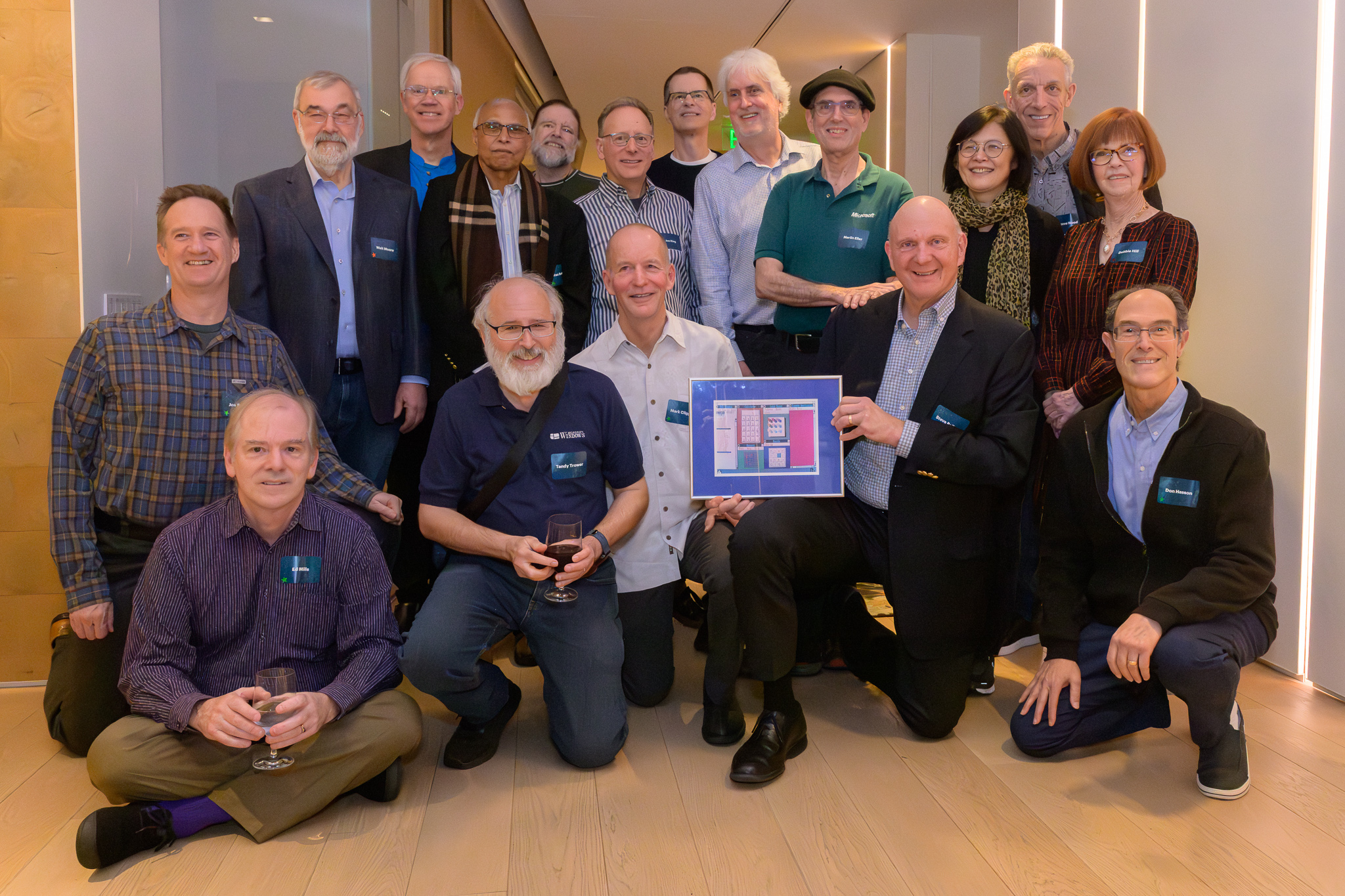
In a heartwarming reunion this week, the creators of Microsoft Windows 1.0 gathered at Steve Ballmer’s Bellevue office to celebrate the 40th anniversary of their groundbreaking work. What made their reunion especially poignant was how they located each other—through an Easter egg they had mischievously hidden in the code decades ago. Back in the mid-1980s, the team secretly inserted their names into Windows 1.0, accessible only through a specific combination of keystrokes. Legend has it that Bill Gates accidentally discovered this hidden roster when he slammed his fists on the keyboard in frustration over the system’s sluggishness. The team was forced to make the sequence more obscure, and it remained undiscovered by the public until 2022 when a researcher reverse-engineering old Windows binaries stumbled upon it. This digital time capsule, originally a playful inside joke, became the perfect guest list for their 40-year reunion.
As these pioneers gathered around the dinner table, they shared memories of creating what would become the world’s dominant PC platform under nearly impossible technical constraints. Rao Remala, an early Windows developer, challenged today’s programmers to build anything comparable under the 64K segment limits they faced, to which Ballmer quipped, “Have you tried it in ChatGPT?” The group reflected on Windows 1.0’s humble beginnings as an “operating environment” that ran on MS-DOS 2.0, shipped on 5.25-inch floppy disks, and finally debuted on November 20, 1985 after numerous delays. While critics favored the more elegant Macintosh interface, Microsoft bet on broad PC compatibility—a strategy that ultimately paid off enormously. For Ballmer, who was tasked with getting Windows 1.0 across the finish line long before becoming Microsoft’s CEO, this project remained a special source of pride: “Of all the things I worked on at Microsoft, in a way, I have the most pride about this project,” he told the group.
The reunion revealed fascinating stories about a young team figuring things out on the fly. Most were in their 20s, with some even in their teens, creating a culture where work and social life completely blended together. Scott Ludwig, who worked on the window manager, recalled how there was no difference between professional and personal time. Lin Shaw joined in August 1984 and found herself building the entire banding architecture for printer drivers from scratch, routinely staying up all night yet considering it “the best job in the world… just like college, except I got paid really well.” The team shared memories of Gates’ meticulous involvement—like when he asked Mark Taylor to remove a timer delay in the Reversi game, not to make it faster but to make Windows look faster. Joe King, who developed the Windows Control Panel, recounted watching a parade of people enter meetings with Ballmer across the hall, hearing the now-familiar pattern of conversations starting quietly before building to Ballmer’s energetic crescendo. Tandy Trower remembered joining despite warnings it was a “dead end” project, only to discover the head development manager had already left and the product Ballmer had described as “virtually done” was anything but.
The stories continued with Marlin Eller, who humorously claimed that “Windows was written so I could do music notation. All those other people were working for me.” Eller had initially pitched Gates on building music notation software, but when Gates asked about market size, the conversation pivoted to developing the foundational graphics technology an operating system needed. The team also engaged in classic programmer pranks—like when Mark Cliggett installed a bit of mischievous code on Ballmer’s machine that gradually turned off bits on the screen. “Multiple bad decisions right there,” Cliggett acknowledged, especially considering it was the future CEO’s computer. During the reunion, the team good-naturedly fact-checked various Windows legends: Yes, Ballmer did call a meeting on Easter Sunday 1985, but no, he didn’t take attendance as a “loyalty test.” They clarified that the infamous 1983 Comdex demo wasn’t just smoke and mirrors as industry lore suggested—Remala insisted “this was real code,” though Ballmer admitted it was “a little more smoky than not.”
Some notable Windows 1.0 team members weren’t present at the reunion, including the famously hard-to-reach Gabe Newell, who later co-founded Valve and built Steam into the dominant PC gaming platform, and Scott McGregor, the lead development manager recruited from Xerox PARC who left before Windows 1.0 shipped. Those who did attend have followed remarkably diverse paths: Neil Konzen worked at Ferrari in Italy and pioneered Formula One telemetry; Ed Mills now runs a movement therapy practice; Cliggett became a long-distance running coach; Eller teaches computer science; Trower founded a robotics company; and Taylor teaches at a Seattle public school. Joe King still proudly introduces himself in the Seattle tech scene by saying he goes back to Windows 1.0—sometimes prompting the surprised response: “There was a 1.0?” Yes, there surely was, and its impact reverberates through computing history four decades later.
For Ballmer, the Windows 1.0 experience taught him the “snicker test”—a management technique he still uses today. On his first day as development manager, when he repeated back the project schedule he’d been given, he heard laughter in response. Now, he repeats what he hears from project leaders to see how the team reacts; if they laugh, he knows he’s not getting the full story. But Windows 1.0’s true legacy is far greater than management techniques. As Ballmer told the group, Windows succeeded by shipping “enough of the right stuff at the right time.” Had it arrived even two or three years later, it might never have become relevant. Instead, this scrappy team of young programmers working under impossible constraints created something that fundamentally changed computing forever. As Ballmer told the assembled pioneers, looking back on their achievement with the perspective of four decades: “You did, and it’s nothing short of amazing. It did change the world.”