




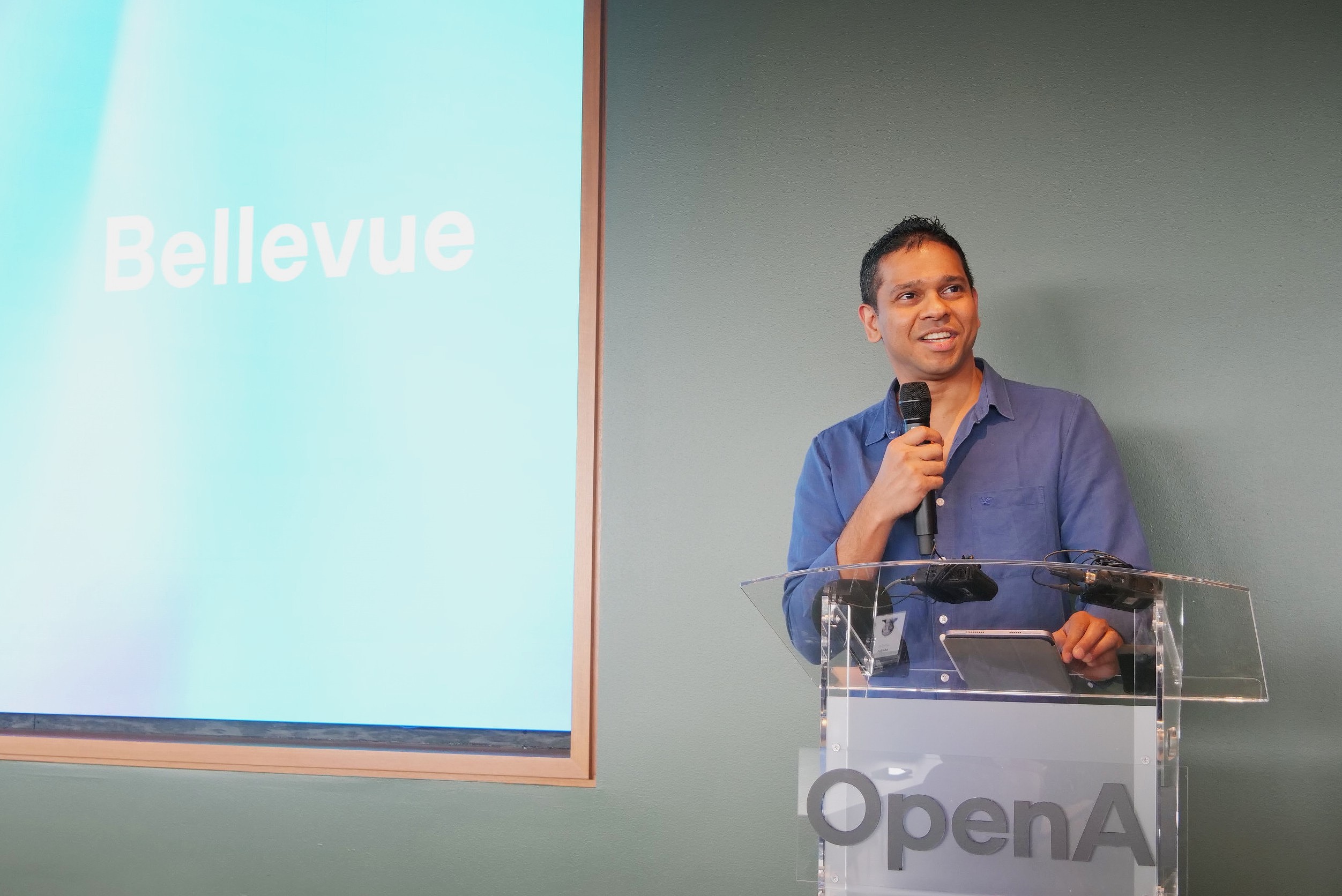
Imagine stepping into the heart of Seattle’s tech renaissance: a gleaming new office in downtown Bellevue, where OpenAI is throwing open the doors to what they’re calling their largest outpost outside San Francisco. As a reporter tagging along for GeekWire’s weekly podcast, I couldn’t help but feel a buzz of excitement walking through those glass doors on a crisp morning. The space buzzes with the energy of innovation—bright, open, and filled with the hum of conversations and clacking keyboards. Vijaye Raji, OpenAI’s CTO of Applications, is front and center, looking every bit the visionary with his easy smile as he welcomes everyone. It’s not just an office opening; it’s a statement. Picture a historic old building transformed into a hub for AI wizards, complete with ribbon-cutting ceremonies and a mayor’s handshake. Mayor Mo Malakoutian joins Raji to officially kick things off, their scissors gleaming under the lights. Behind them, the office unfolds like a high-tech playground: sleek workstations, collaborative lounges, and even a game room that screams “work hard, play harder.” It’s exhilarating to be here, walking through hallways that echo the company’s mission, feeling the tangible pulse of what’s shaping the future of tech. You can almost taste the ambition in the air—OpenAI isn’t just expanding; they’re planting roots deep in the Pacific Northwest soil, where coffee runs as strong as the innovation. As I chat with Raji amidst the festivities, I sense this space isn’t merely functional; it’s a canvas for creativity, a place where ideas flow as freely as the Puget Sound wind.
Diving deeper, the aesthetic hits you like a quirky time warp. I keep thinking, “Mad Men meets the Pacific Northwest”—a retro-modern vibe that’s equal parts Don Draper sophistication and Pacific Northwest rugged informality. Open floor plans dominate, breaking down those old-school cubicle walls, allowing for serendipitous interactions that feel organic, not forced. Common areas abound: cozy nooks for brainstorming, lounges with plush seating that invite lingering chats, even a rooftop terrace hinting at after-hours unwinds. It’s all about fostering a culture of accessibility—ideas bouncing like pinballs across the layout. This isn’t corporate drudgery; it’s designed to spark joy in ideation. You walk in and sense the unspoken ethos: OpenAI values transparency, collaboration, and a hint of whimsy. Team huddles happen organically, not chained to calendars, and the space tells a story of who they are as a company—progressive yet grounded, innovative yet approachable. Gazing at the artful blends of reclaimed wood and cutting-edge tech fixtures, I realize it’s not just an office; it’s a reflection of the region’s ethos. Seattle and Bellevue have long been about mixing the urban hustle with nature’s tranquility, and OpenAI’s space mirrors that. It’s humanizing the tech giant, making them feel like a neighbor rather than a distant titan. Employees here aren’t just cogs; they’re storytellers in this unfolding narrative of AI dominance.
Shifting gears, I pull aside Vijaye Raji for a heart-to-heart, and boy, does he deliver. Fresh off his stint as CEO of Statsig, this guy’s now steering OpenAI’s applications ship, and he’s got stories that make you rethink your own workday drudgery. We settle into a casual chat in the game room—ping pong tables cue-sticked in the background—as he opens up about his evolution. Born in India, educated in the U.S., Raji’s path is a classic immigrant success tale, infused with that Silicon Valley hunger for disruption. He’s passionate, articulate, and refreshingly down-to-earth, sharing how the role isn’t about glory but about nurturing OpenAI’s ecosystem. Cutting the ribbon with the mayor moments earlier? That was his proudest bit, a nod to community roots. But beneath the charm, Raji’s a strategist—he talks hiring woes, the lure of top talent to the region, and how OpenAI’s growth mirrors Seattle’s own tech trajectory. He credits the area’s infrastructure, from high-speed rail ties to a buzzing startup scene, for positioning Bellevue as a jewel. Yet, it’s his vision for application tech that captivates: blending AI with real-world utility, ensuring tools like ChatGPT enhance lives without overwhelming them. I leave the convo feeling inspired—Raji’s not just a exec; he’s a bridge between lofty dreams and gritty reality, humanizing the abstract world of coding and creativity.
Now, the spark plug of our chat: Codex, and how it’s flipped Raji’s professional universe on its head. Picture this: a tool so intuitive it’s like having a supercharged coding sidekick. Raji describes the “aha” moment vividly, his eyes lighting up as he recounts ditching his former reluctance to code. “Before Codex,” he says, “coding felt tedious. Now, it’s playful.” He walks me through his new daily ritual—morning prompts to Codex for mundane tasks, then diving into meetings, only to return to polished code snippets waiting like obedient assistants. It’s not just efficiency; it’s liberating. Teams internally report 2-3x productivity boosts, lines of code flying faster than ever. And it doesn’t stop at engineers—marketers tweak campaigns, salespeople craft pitches, ops teams streamline logistics—all powered by AI generosity. Raji admits it’s transformative: “Hard to imagine going back.” This echoes a broader explosion in coding tools, from Microsoft’s GitHub Copilot to Amazon’s Q Developer and Google’s Gemini. Yet, Codex stands out for its seamlessness, turning coding into a dialogue rather than a drag. I nod along, feeling a pang of envy—here’s tech democratizing creation, making software accessible to everyday dreamers. It humanizes AI’s potential, showing it’s not about replacing humans but amplifying them, letting folks like Raji rediscover the joy in their craft.
Zooming out, the Bellevue office isn’t just a satellite; it’s OpenAI’s blueprint for empire-building. Raji paints it as a “test case,” ideal for its proximity to SF’s HQ (no jet lag woes) and its nestling between giants like Microsoft and Amazon. The talent pool? Insanely deep—engineers, researchers flocking to the region’s infrastructure allure, from fiber-optic webs to a culture of experimentation. He’s pumped: “Make Seattle a success, and replicate it everywhere.” Currently home to 250 souls, it could balloon to 1,400, housing crews on infrastructure, ChatGPT tweaks, research breakthroughs, ad strategies, and partnerships. It’s strategic almonds and bolts—proximity fuels collaboration, reducing isolation while sparking cross-pollination. Raji hints at upcoming plans, like his keynote at GeekWire’s Agents of Transformation event on March 24, where he’ll dive deeper into AI’s shaping force. As we wrap, he shares hiring tales—OpenAI’s magnetizing effect, drawing minds eager to shape humanity’s future. This office humanizes OpenAI’s expansion, grounding lofty goals in community-driven growth. It’s not conquest; it’s symbiosis, where tech titans blend with local flavors, enriching both.
Finally, the podcast wraps with a nostalgic twist: the return of our trusty GeekWire trivia challenge, stirring memories of Seattle’s tech origins. Once the chatter settles, I quiz listeners on early tech outposts—one of the first giants to plant roots here, hinting at Microsoft’s iconic rise from humble Redmond garages to global behemoth. It’s a fun, brain-teasing closer, tying personal tech histories to OpenAI’s bold new chapter. Don’t forget to subscribe via Apple Podcasts, Spotify, or your fave player for more insider scoops—curious minds unite! And for deeper dives, check out our related coverage on the office’s swanky vibes and AI’s regional ripple. Audio maestro Curt Milton deserves kudos for polishing this episode to shine. Listening back, it all feels interconnected: from Bellevue’s ribbon-cut to Codex’s code whispers, OpenAI’s story is ours—the human quest for smarter, kinder innovation. It’s a reminder that behind every algorithm beats a heart, and in Seattle’s evergreens, tech finds its true home. Keep tuning in; the future’s unfolding, one podcast at a time.