







Rad Power Bikes Faces Challenges Amid California Store Fire and Bankruptcy Proceedings
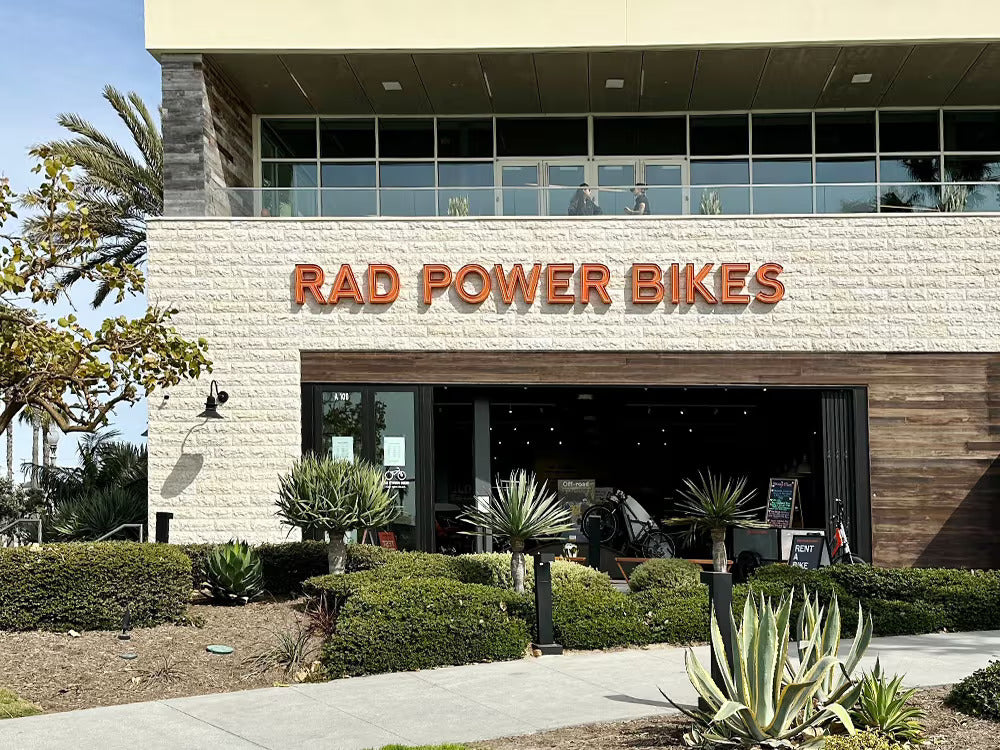
In a concerning development for Seattle-based e-bike company Rad Power Bikes, a fire broke out at their Huntington Beach, California retail location last Sunday evening. The Huntington Beach Fire Department responded to what was classified as a two-alarm structure fire at the plaza containing the store along Pacific Coast Highway. Video footage of the incident showed firefighters battling the blaze, with at least two e-bikes visible on the ground outside the facility. Social media photos captured smoke rising from the building, which also houses an Equinox gym. A Rad spokesperson acknowledged the incident, stating, “We’re working with local authorities to review a thermal incident that occurred at our Huntington Beach store Sunday evening. The incident was contained and happened while the store was closed. The cause of the fire has not been confirmed.” Fortunately, the timing of the fire after business hours meant no customers or staff were endangered.
This fire represents yet another setback in what has become an increasingly difficult period for the once-thriving e-bike manufacturer. Just last month, Rad Power Bikes filed for Chapter 11 bankruptcy protection, following a November announcement that the company was struggling with “significant financial challenges” and fighting for its survival. The company that once symbolized the growth potential of the electric bike industry now finds itself navigating a complex restructuring process while trying to maintain customer confidence. The bankruptcy filing came as a shock to many industry observers who had watched Rad Power Bikes grow into one of the most recognizable names in the e-bike market, with retail locations across the country and a strong online presence that helped popularize electric bikes among mainstream consumers.
Adding to Rad’s troubles, the U.S. Consumer Product Safety Commission (CPSC) issued a warning less than two months ago advising consumers to stop using certain Rad Power Bikes models due to potential dangers posed by their lithium-ion batteries. The CPSC warning cited 31 reports of fire incidents, with 12 involving property damage. Particularly concerning was the Commission’s note that “Some of these incidents occurred when the battery was not charging, the product was not in use, and the product was in storage.” This suggests that the risk exists even when the bikes are idle, raising additional safety concerns for owners who may have purchased these models. The CPSC’s public warning represents a significant blow to a company already facing financial difficulties, as consumer confidence in product safety is fundamental to the e-bike industry.
In response to the CPSC warning, Rad issued a statement defending their products, asserting that the company “firmly stands behind our batteries and our reputation as leaders in the e-bike industry, and strongly disagrees with the CPSC’s characterization of certain Rad batteries as defective or unsafe.” This stance indicates the company is attempting to manage the public relations challenge while maintaining confidence in their product line. However, the Huntington Beach fire may complicate these efforts, as it provides a visible and concerning incident that could reinforce safety worries among current and potential customers. The timing of these events creates a perfect storm of challenges for Rad Power Bikes: financial instability through bankruptcy proceedings, regulatory scrutiny of product safety, and now a high-profile fire at one of their retail locations.
The situation at Rad Power Bikes reflects broader challenges facing the e-bike industry, particularly regarding battery safety. Lithium-ion batteries, while efficient and powerful, have been associated with fire risks across various products when they malfunction. For e-bike manufacturers, ensuring battery safety is particularly crucial as these vehicles are often stored in homes or apartments where a fire could pose significant risks to people and property. The industry has seen growing pains as it has expanded rapidly, with regulatory frameworks sometimes struggling to keep pace with technological developments. Rad’s current difficulties may serve as a cautionary tale for other e-mobility companies about the importance of rigorous quality control and safety testing, especially as the market becomes more competitive and cost pressures increase.
Despite these challenges, the e-bike market itself continues to grow, with consumers increasingly looking for sustainable transportation alternatives. Rad Power Bikes was one of the pioneers that helped bring e-bikes into the mainstream, making them more accessible through direct-to-consumer models and user-friendly designs. The company’s current struggles don’t necessarily indicate problems with the e-bike concept itself but rather highlight the operational, financial, and safety challenges that can arise in a rapidly evolving industry. As Rad navigates through bankruptcy proceedings and addresses safety concerns, the outcome will be closely watched by competitors, investors, and consumers alike. Whether Rad Power Bikes can overcome these obstacles and regain its former prominence remains to be seen, but their experience underscores that even promising green technology companies must balance innovation with rigorous safety standards and sustainable business practices to succeed in the long term.