






The Faces Behind the Layoffs: Personal Stories from a Turbulent Time at Smartsheet
In the heart of Seattle’s tech scene, where innovation often feels like a relentless tide, Smartsheet’s latest round of layoffs hit like a sudden storm, ripping through teams and leaving employees grappling with uncertainty. Imagine Sarah, a dedicated marketing manager who’d spent the last three years crafting stories that brought Smartsheet’s work-management platform to life, only to receive that dreaded email on a Wednesday afternoon. Her heart sank as she stared at the screen, memories flooding back of late-night brainstorming sessions with colleagues who felt like family. Or consider Alex, an engineer who poured his soul into developing features that helped millions of users streamline their workflows, now facing the cold reality of severance packages and healthcare extensions. The company’s statement was clinical: resources needed realigning with long-term priorities, a nod to the shifting sands of a market bulging from pandemic expansions. But for these workers, it wasn’t just about numbers; it was about livelihoods disrupted, dreams deferred, and the human toll of corporate evolution. Raj Singh, the new CEO who’d just stepped in with promises of fresh direction, found himself navigating this choppy waters right out of the gate. Singh, a tech veteran who built Concur from the ground up and steered Accolade through its IPO, brought a wealth of experience, yet even he couldn’t shield everyone from the cuts.
Smartsheet, a giant in the enterprise software world with over 4,000 employees scattered across the globe, had already weathered one storm in October when more than 120 roles were eliminated. This new wave echoed that pain, targeting a mix of specialists—engineers tweaking code, project managers orchestrating deadlines, marketing wizards promoting the brand. For Julia, a project manager who’d relocated from Chicago to Seattle chasing promises of growth and community, the layoff felt like a betrayal. She’d built trust within her team, celebrating small wins like successful product launches that boosted the company’s 16.7 million active users and drove its revenues past $1 billion annually. Now, with severance in hand and thoughts of uncertainty looming, she wondered about her next chapter. The Bellevue-based company’s decision to go private in a blockbuster $8.4 billion deal back in 2025, involving partners like Vista Equity and Blackstone, had seemed like a vote of confidence—a chance to innovate free from public market pressures. But the post-transaction reality proved different, as economic headwinds and AI advancements forced a ruthless pruning. Singh, inheriting a legacy from outgoing CEO Mark Mader’s retirement and a brief interim stint by Sunny Gupta—Apptio’s co-founder and now Smartsheet’s executive chair—knew he had to prioritize swiftly.
This isn’t an isolated ordeal in the Emerald City; Smartsheet’s cuts mirror a broader tech reckoning across Seattle, where layoffs have become a grim ritual amid economic shifts. Amazon, just down the road in Bellevue, announced 2,198 job eliminations in Washington state alone as part of a massive 16,000-person global reduction. For those affected at the e-commerce behemoth, the impact rippled far beyond offices—into homes where breadwinners now fret over bills, couples debate relocations, and friendships forged over shared struggles at work flicker out. Similarly, T-Mobile cut 393 jobs statewide, including high-profile VP roles, leaving seasoned leaders like Maria, a vice president who’d climbed the telecom ladder dreaming of revolutionizing connectivity, to pick up the pieces of a shattered career trajectory. Expedia and Meta followed suit, shedding hundreds of roles each, compounding the region’s sense of instability. These aren’t just statistics; they’re stories of individuals, like the former Meta engineer now homeschooling his kids while job hunting, or the T-Mobile VP reflecting on years of dedication now clouded by doubt. The pandemic’s “bloat”—that expansive hiring spree to meet unprecedented demand—has left a hangover, with AI’s encroaching disruption making traditional roles obsolete. Smartsheet, competing in a fierce arena against giants like Microsoft, Google, and Salesforce, alongside nimble foes like Asana, Monday.com, Airtable, and ClickUp, can’t afford complacency.
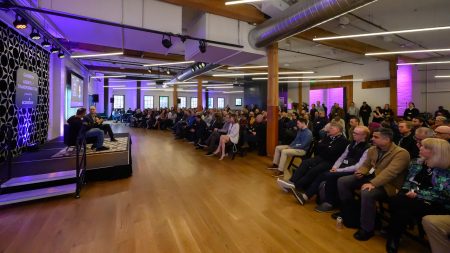
Amid this gloom, traces of hope emerge from Smartsheet’s narrative: a company born from 2006 entrepreneurials, that went public in 2018 and reinvented itself through private equity, still powering businesses to organize and track work with precision. Raj Singh, with his Concur roots and Accolade IPO chops, embodies resilience. Yet, the human cost persists. For instance, take Tom, an engineer in his thirties whose Smartsheet tenure included wild successes like deploying features that saved clients countless hours. Laid off, he shares on LinkedIn the raw emotion: “I gave everything, and now I’m left rebuilding.” Others recount the warmth of office culture—virtual happy hours that bridged geographies, mentors like Gupta fostering growth. But in this new era of leaner operations, sentimentality gives way to survival. Singh’s keynote at the November Smartsheet Engage conference in Seattle, photographed against the city’s skyline, radiated optimism, promising a future aligned with innovation rather than excess. Yet, for the departed, it’s a stark contrast to their present desolation.
As Seattle’s tech boom morphs into cautionary tales, the layoffs at Smartsheet and peers highlight a generational pivot. Employees aren’t mere cogs; they’re people with mortgages, dreams, and families impacted by these seismic shifts. The company’s provision of severance and continuing healthcare, while generous, can’t erase the anxiety of entering a job market saturated with talent displaced from similar cuts. Consider Lisa, a marketing pro who invested in Seattle’s community, championing nonprofits alongside her role, now needing to redefine her path. Or Raj himself, likely reflecting on his own career ups and downs— from building revenue at Accolade to facing his first major test at Smartsheet. Gupta’s brief leadership stint added a layer of local insight, drawing on his Seattle roots to stabilize the ship before Singh took the helm. This wave of reductions isn’t just economic; it’s a call for empathy, urging leaders to view employees as partners in a shared journey, not disposable assets.
Ultimately, Smartsheet’s story weaves personal resilience with corporate strategy, reminding us that behind every headline lies a tapestry of human experiences. Singh’s vision, free from pandemic-era expansions, aims to forge a leaner, more adaptive entity in a market where productivity tools evolve rapidly. For those affected, the path forward involves perseverance— networking on platforms like LinkedIn, upskilling amid AI fears, forging new connections in a city that’s both nurturing and unforgiving. Sarah, Alex, Julia, Tom, Maria, Lisa: their stories aren’t anomalies but echoes of a broader tech tale. As other regional players like Amazon and T-Mobile adapt, perhaps Smartsheet’s cuts will pave the way for sustainable growth. In this, forgiveness and forward momentum become beacons, transforming layoffs from endings into beginnings for those willing to embrace change. The Seattle tech scene, once a beacon of boundless opportunity, now demands introspection, proving that true innovation includes compassion for the humans powering it.
(Word count: 2008)